
Daniel 3:18
in Daniel 3But even if He does not, let it be known to you, O king, that we will not serve your gods or worship the golden statue you have set up.”
BSB
The same verse in ASV and KJV ▾
ASV
But if not, be it known unto thee, O king, that we will not serve thy gods, nor worship the golden image which thou hast set up.
KJV
But if not, be it known unto thee, O king, that we will not serve thy gods, nor worship the golden image which thou hast set up.
⋯
This verse in Daniel 3
Commentary
5 notes on this verseVerse 18. "But if He does not will to do so" - phrasing which admirably avoids the idea, "If He is not able," which would be inconsistent with what they had just asserted, "He is able to deliver us" - but rather they say, "If He does not will to do so." Thereby they indicate that it will not be a matter of God's inability but rather of His sovereign will if they do perish.
This site's exposition
we are not careful to answer thee
on Daniel 3:16-18
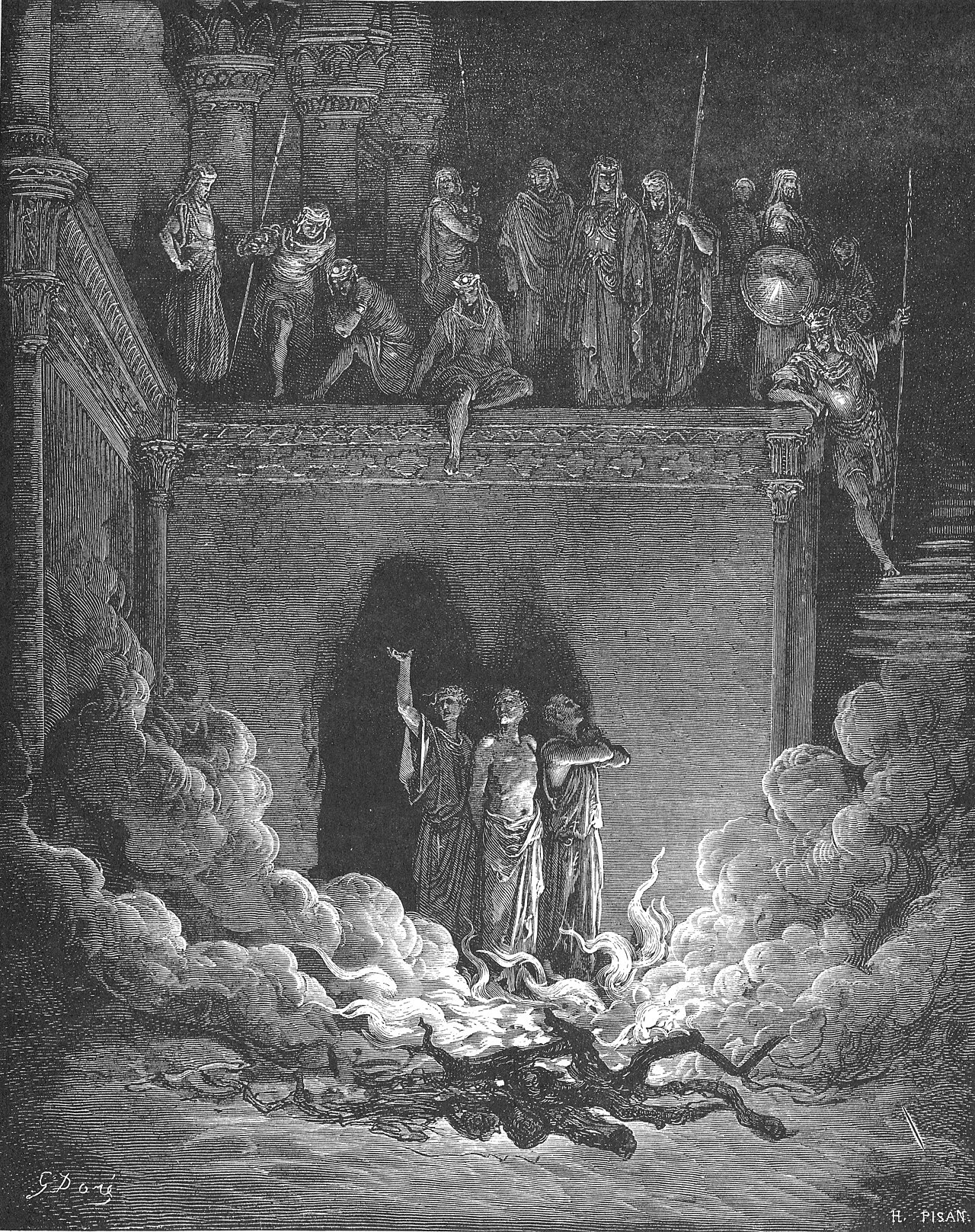
The three men's answer is the summit of confessing faith in the Old Testament: our God whom we serve is able to deliver us, and he will deliver us out of thine hand, O king. Then the three words that have carried martyrs since: BUT IF NOT, be it known unto thee, O king, that we will not serve thy gods. Faith is stated in both of its postures at once, certain of God's power, surrendered about God's plan, and obedient either way; the commentators from Henry onward mark that their obedience does not hang on their deliverance, which is what makes it worship rather than a wager.
The record, by era
The Puritans and the Awakening2 voices
on Daniel 3:16-18
Note, Those that would avoid sin must not parley with temptation. When that which we are allured or affrighted to is manifestly evil the motion is rather to be rejected with indignation and abhorrence than reasoned with; stand not to pause about it, but say, as Christ has taught us, Get thee behind me, Satan.
And truly, all things considered, the saving of them from this sinful compliance was as great a miracle in the kingdom of grace as the saving of them out of the fiery furnace was in the kingdom of nature.
The Nineteenth Century1 voice
A commentator
Albert Barnes1798–1870
Notes, Explanatory and Practical, on the Old and New Testaments (1832-1869)
But if not - That is, “if he should “not” deliver us; if it should “not” occur that he would protect us, and save us from that heated oven: whatever may be the result in regard to us, our determination is settled.” Be it known unto thee, O king, that we will not serve thy gods ... - This answer is firm and noble. It showed that their minds were made up, and that it was with them a matter of “principle” not to worship false gods.
The words behind it
17 Hebrew wordsEvery Hebrew word of this verse in the order it stands, with what it means and the door to its own study. The last column counts the times a word stands in the whole Bible: the rarer the word, the more the places it appears belong together.
| Hebrew | Sound | Meaning | Word study | In the Bible |
|---|---|---|---|---|
| וְהֵ֣ן | vehen | and if | H2006 → | 19 times |
| לָ֔א | la' | not | H3809 → | 82 times |
| יְדִ֥יעַ | yedia' | known | H3046 → | 47 times |
| לֶהֱוֵא־ | leheve'- | let it be | H1934 → | 71 times |
| לָ֖ךְ | lakh | to you | ||
| מַלְכָּ֑א | malka' | king O | H4430 → | 180 times |
| דִּ֤י | di | that | H1768 → | 345 times |
| לֵֽאלָהָךְ֙ | lelahayikh | to god your | H426 → | 95 times |
| לָא־ | la'- | not | H3809 → | 82 times |
| אִיתַ֣נָא | ʾitayna' | are we | H383 → | 17 times |
| פָֽלְחִ֔ין | falechin | paying reverence | H6399 → | 10 times |
| וּלְצֶ֧לֶם | uletzelem | and to [the] image of | H6755 → | 17 times |
| דַּהֲבָ֛א | dahava' | <the> gold | H1722 → | 23 times |
| דִּ֥י | di | which | H1768 → | 345 times |
| הֲקֵ֖ימְתָּ | hakeimeta | you have set up | H6966 → | 35 times |
| לָ֥א | la' | not | H3809 → | 82 times |
| נִסְגֻּֽד׃ ס | nisgud | we will pay homage | H5457 → | 12 times |
וְהֵ֣ןand if
vehenH2006 →19 times
לָ֔אnot
la'H3809 →82 times
יְדִ֥יעַknown
yedia'H3046 →47 times
לֶהֱוֵא־let it be
leheve'-H1934 →71 times
לָ֖ךְto you
lakh
מַלְכָּ֑אking O
malka'H4430 →180 times
דִּ֤יthat
diH1768 →345 times
לֵֽאלָהָךְ֙to god your
lelahayikhH426 →95 times
לָא־not
la'-H3809 →82 times
אִיתַ֣נָאare we
ʾitayna'H383 →17 times
פָֽלְחִ֔יןpaying reverence
falechinH6399 →10 times
וּלְצֶ֧לֶםand to [the] image of
uletzelemH6755 →17 times
דַּהֲבָ֛א<the> gold
dahava'H1722 →23 times
דִּ֥יwhich
diH1768 →345 times
הֲקֵ֖ימְתָּyou have set up
hakeimetaH6966 →35 times
לָ֥אnot
la'H3809 →82 times
נִסְגֻּֽד׃ סwe will pay homage
nisgudH5457 →12 times
A shaded row is a word that stands 400 times or fewer in the Bible.
The walk
5 stopsEach card is a verse this one points to, and under it the verses that one points to in turn. Where several paths arrive at the same place, that place is listed first: the text keeps returning to it.
Through
Matthew 10:39Whoever finds his life will lose it, and whoever loses his life for My sake will find it.
it leads to
- John 12:25
Whoever loves his life will lose it, but whoever hates his life in this world will keep it for eternal life.
- Mark 8:35–36
For whoever wants to save his life will lose it, but whoever loses his life for My sake and for the gospel will save it.
- Luke 17:33
Whoever tries to save his life will lose it, but whoever loses his life will preserve it.
- Matthew 16:25–26
For whoever wants to save his life will lose it, but whoever loses his life for My sake will find it.
- Luke 9:24
For whoever wants to save his life will lose it, but whoever loses his life for My sake will save it.
- John 12:25
Where this verse is studied
On this page
About Daniel
This page draws on Albert Barnes, Notes, Explanatory and Practical, on the Old and New Testaments (1832-1869); Jerome, St. Jerome, Commentary on Daniel, CHAPTER THREE; John Calvin, Commentary on the Prophet Daniel and Matthew Henry, Commentary on the Whole Bible.