
Ruth 4:5
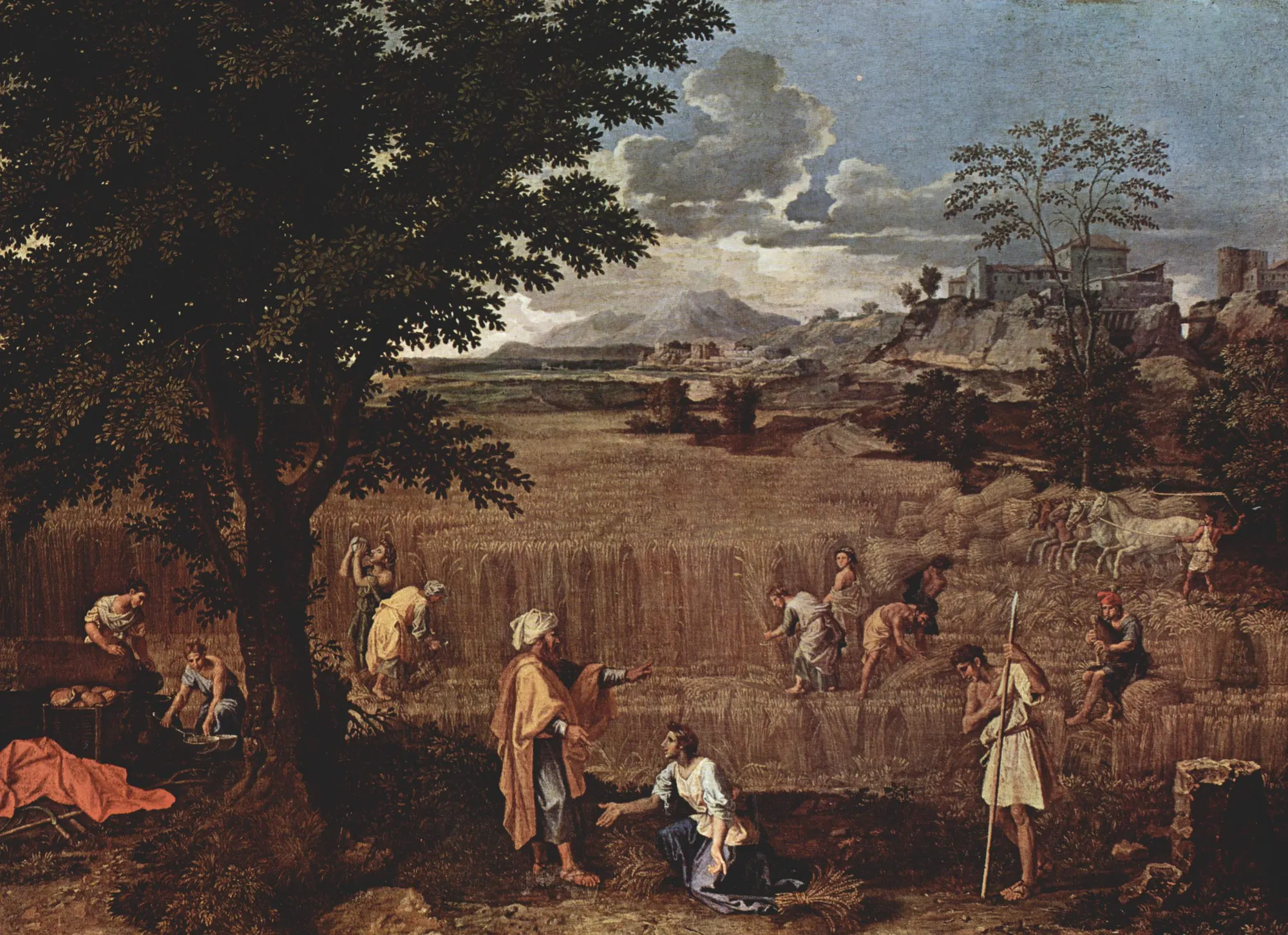
in Ruth 4Then Boaz said, “On the day you buy the land from Naomi and also from Ruth the Moabitess, you must also acquire the widow of the deceased in order to raise up the name of the deceased on his inheritance.”
BSB
The same verse in ASV and KJV ▾
ASV
Then said Boaz, What day thou buyest the field of the hand of Naomi, thou must buy it also of Ruth the Moabitess, the wife of the dead, to raise up the name of the dead upon his inheritance.
KJV
Then said Boaz, What day thou buyest the field of the hand of Naomi, thou must buy it also of Ruth the Moabitess, the wife of the dead, to raise up the name of the dead upon his inheritance.
⋯
This verse in Ruth 4
Commentary
9 notes on this verseFor, by the law, when a man died, the marriage bond with his wife was passed on to his brother or other male next of kin, in order that the seed of the brother or next of kin might renew the life of the house. And so it was that Ruth, though she was foreign-born, had possessed a husband of the Jewish people who had left a kinsman of near relation.
This site's exposition
On the day you buy the land from Naomi
on Ruth 4:5-6
The kinsman fears he would "jeopardize my own inheritance" without saying how. Albert Barnes reads a son counted to Mahlon taking the field from his line. Adam Clarke rejects the Targum's claim that the kinsman was already married.
The record, by era
The Church Fathers1 voice
The man was so virtuous that he did not rush into a marriage outside the law, but he spoke with his neighbors about the marriage. However, his words are also worthy of admiration. For his first words were not about the marriage but about the …
The Medieval Church1 voice
When Ruth entered the land of Israel with her mother-in-law, it was provided (on account of the merits of her prayers) that she be married to a man of the lineage of Abraham and whom, indeed, she at first believed to be her closest kinsman. …
The Puritans and the Awakening3 voices
Buy it - According to the law, Deut. xxv, 5. To raise,&c. - To revive his name, which was buried with his body, by raising up a seed to him, to be called by his name.
5 , unless by custom it was afterwards made to extend to the next of kin), but to the law of redemption of inheritances ( Lev. xxv. 24, 25 ), for it is a goel, a redeemer, that is here enquired for; and if so it was not by the law, but by Naomi's own resolution, that the purchaser was to marry the widow.
quarantine:debris (2026-07-29) — unbalanced-parens
Then said Boaz,....
2 more voices on this verse
The Nineteenth Century2 voices
A commentator
Albert Barnes1798–1870
Notes, Explanatory and Practical, on the Old and New Testaments (1832-1869)
Observe the action of the Levirate law. If there had been no one interested but Naomi, she would have sold the land unclogged by any condition, the law of Levirate having no existence in her case. But there was a young widow upon whom the possession of the land would devolve at Naomi’s death, and who already had a right of partnership in it, and the law of Levirate did apply in her case. It was, therefore, the duty of the גאל gā'al to marry her and raise up seed to his brother, i. e. his kinsman.
Thou must buy it also of Ruth - More properly, Thou wilt also acquire Ruth. Thou canst not get the land without taking the wife of the deceased and then the children which thou mayest have shall be reputed the children of Mahlon, thy deceased kinsman.
The words behind it
18 Hebrew wordsEvery Hebrew word of this verse in the order it stands, with what it means and the door to its own study. The last column counts the times a word stands in the whole Bible: the rarer the word, the more the places it appears belong together.
| Hebrew | Sound | Meaning | Word study | In the Bible |
|---|---|---|---|---|
| וַיֹּ֣אמֶר | vaiyomer | and he said | H559 → | 5305 times |
| בֹּ֔עַז | boaz | Boaz | H1162 → | 24 times |
| בְּיוֹם־ | beyom- | on [the] day | H3117 → | 2304 times |
| קְנוֹתְךָ֥ | kenotcha | acquiring you | H7069 → | 84 times |
| הַשָּׂדֶ֖ה | hasadeh | the field | H7704 → | 334 times |
| מִיַּ֣ד | miyad | from [the] hand of | H3027 → | 1618 times |
| נָעֳמִ֑י | noomi | Naomi | H5281 → | 21 times |
| וּ֠מֵאֵת | umeet | and from with | H854 → | 929 times |
| ר֣וּת | rut | Ruth | H7327 → | 12 times |
| הַמּוֹאֲבִיָּ֤ה | hamoaviyah | the Moabite [woman] | H4125 → | 16 times |
| אֵֽשֶׁת־ | ʾeshet- | [the] wife of | H802 → | 781 times |
| הַמֵּת֙ | hamet | the dead [man] | H4191 → | 839 times |
| קָנִ֔יתָה | kaniti | you have acquired | H7069 → | 84 times |
| לְהָקִ֥ים | lehakim | to raise up | H6965 → | 628 times |
| שֵׁם־ | shem- | [the] name of | H8034 → | 864 times |
| הַמֵּ֖ת | hamet | the dead [man] | H4191 → | 839 times |
| עַל־ | ʾal- | over | H5921 → | 5755 times |
| נַחֲלָתֽוֹ׃ | nachalato | inheritance his | H5159 → | 222 times |
וַיֹּ֣אמֶרand he said
vaiyomerH559 →5305 times
בֹּ֔עַזBoaz
boazH1162 →24 times
בְּיוֹם־on [the] day
beyom-H3117 →2304 times
קְנוֹתְךָ֥acquiring you
kenotchaH7069 →84 times
הַשָּׂדֶ֖הthe field
hasadehH7704 →334 times
מִיַּ֣דfrom [the] hand of
miyadH3027 →1618 times
נָעֳמִ֑יNaomi
noomiH5281 →21 times
וּ֠מֵאֵתand from with
umeetH854 →929 times
ר֣וּתRuth
rutH7327 →12 times
הַמּוֹאֲבִיָּ֤הthe Moabite [woman]
hamoaviyahH4125 →16 times
אֵֽשֶׁת־[the] wife of
ʾeshet-H802 →781 times
הַמֵּת֙the dead [man]
hametH4191 →839 times
קָנִ֔יתָהyou have acquired
kanitiH7069 →84 times
לְהָקִ֥יםto raise up
lehakimH6965 →628 times
שֵׁם־[the] name of
shem-H8034 →864 times
הַמֵּ֖תthe dead [man]
hametH4191 →839 times
עַל־over
ʾal-H5921 →5755 times
נַחֲלָתֽוֹ׃inheritance his
nachalatoH5159 →222 times
A shaded row is a word that stands 400 times or fewer in the Bible.
The walk
8 stopsEach card is a verse this one points to, and under it the verses that one points to in turn. Where several paths arrive at the same place, that place is listed first: the text keeps returning to it.
Through
Matthew 22:24“Teacher,” they said, “Moses declared that if a man dies without having children, his brother is to marry the widow and raise up offspring for him.
it leads to
- Deuteronomy 25:5–10
When brothers dwell together and one of them dies without a son, the widow must not marry outside the family. Her husband’s brother is to take her as his wife and fulfill the duty…
Reached by 3 separate paths from here.
- Luke 20:28
“Teacher,” they said, “Moses wrote for us that if a man’s brother dies and leaves a wife but no children, the man is to marry his brother’s widow and raise up offspring for him.
- Deuteronomy 25:5–10
Through
Genesis 38:8Then Judah said to Onan, “Sleep with your brother’s wife. Perform your duty as her brother-in-law and raise up offspring for your brother.”
it leads to
- Ruth 1:11
But Naomi replied, “Return home, my daughters. Why would you go with me? Are there still sons in my womb to become your husbands?
Reached by 2 separate paths from here.
- Matthew 22:23–27
That same day the Sadducees, who say there is no resurrection, came to Jesus and questioned Him.
- Ruth 4:5–11
Then Boaz said, “On the day you buy the land from Naomi and also from Ruth the Moabitess, you must also acquire the widow of the deceased in order to raise up the name…
- Leviticus 18:16
You must not have sexual relations with your brother’s wife; that would shame your brother.
- Ruth 1:11
Through
Luke 20:28“Teacher,” they said, “Moses wrote for us that if a man’s brother dies and leaves a wife but no children, the man is to marry his brother’s widow and raise up offspring for him.
it leads to
- Genesis 38:8
Then Judah said to Onan, “Sleep with your brother’s wife. Perform your duty as her brother-in-law and raise up offspring for your brother.”
- Genesis 38:11
Then Judah said to his daughter-in-law Tamar, “Live as a widow in your father’s house until my son Shelah grows up.” For he thought, “He may die too, like his brothers.” So Tamar went…
- Genesis 38:8
Where this verse is studied
On this page
Studies18
On this chapter
About Ruth
Who and where
3 names in this verse with a page on the site.
- PersonJudgesRuthThe Moabitess who clave to Naomi — "thy people shall be my people, and thy God my God" — gleaned in the field of Boaz, and became…
- PersonJudgesBoazThe mighty man of wealth in Bethlehem who spread his skirt over Ruth as kinsman-redeemer (goel), bought the inheritance at the gat…
- PersonJudgesNaomiElimelech's widow who returned from Moab calling herself Mara — "the Almighty hath dealt very bitterly with me" — and whose emptin…
This page draws on 9 works. Open the list of works
This page draws on Adam Clarke, Commentary on the Bible; Albert Barnes, Notes on the Old Testament; Albert Barnes, Notes, Explanatory and Practical, on the Old and New Testaments (1832-1869); Ambrose of Milan, Exposition of the Christian Faith 3.69-70; Isidore of Seville, ON RUTH; John Gill, Exposition of the Old Testament (1748-1763); John Wesley, Explanatory Notes upon the Old Testament; Matthew Henry, Commentary on the Whole Bible and Theodoret of Cyrus, QUESTIONS ON RUTH.