
Ruth 2:9
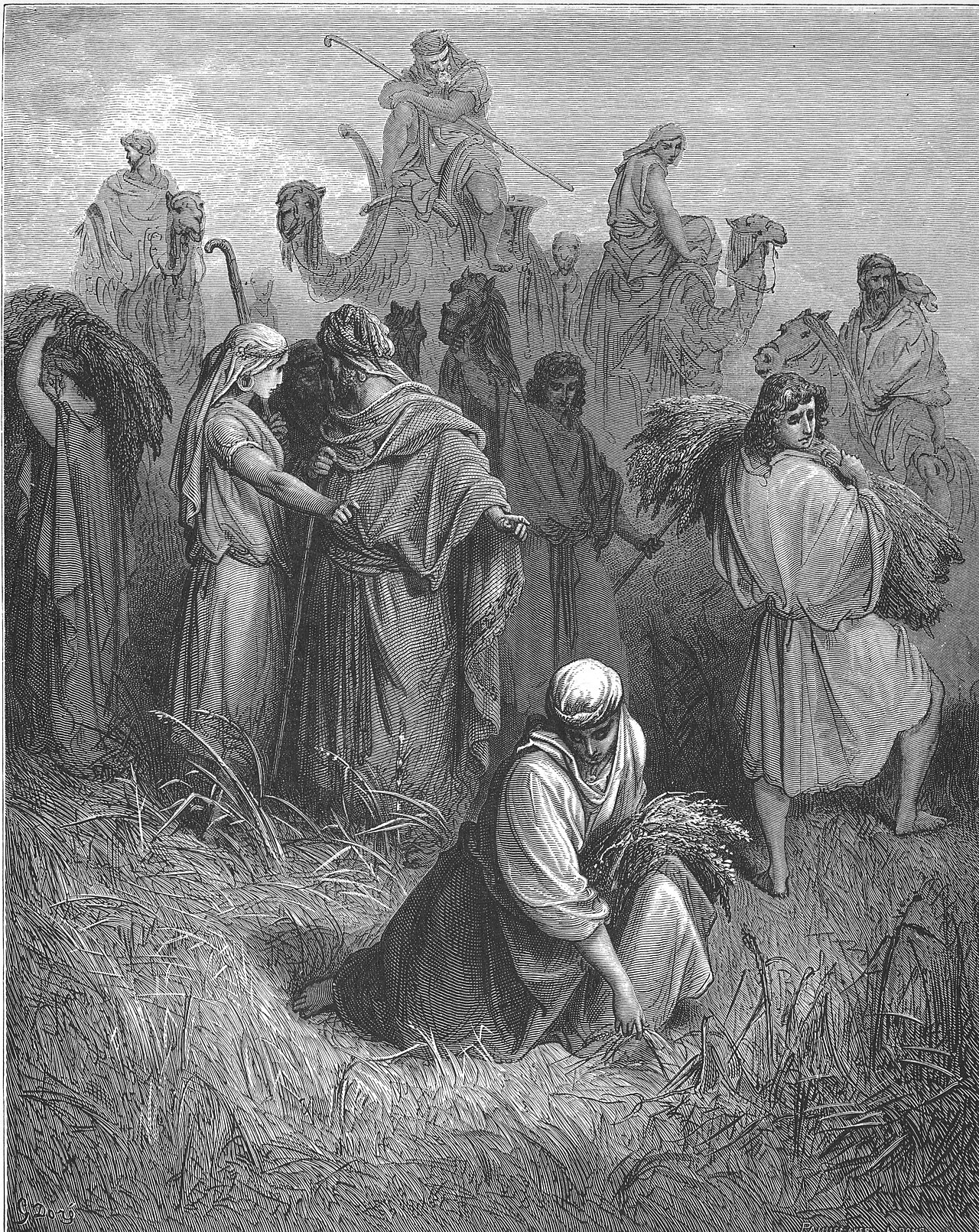
in Ruth 2Let your eyes be on the field they are harvesting, and follow along after these girls. Indeed, I have ordered the young men not to touch you. And when you are thirsty, go and drink from the jars the young men have filled.”
BSB
The same verse in ASV and KJV ▾
ASV
Let thine eyes be on the field that they do reap, and go thou after them: have I not charged the young men that they shall not touch thee? and when thou art athirst, go unto the vessels, and drink of that which the young men have drawn.
KJV
Let thine eyes be on the field that they do reap, and go thou after them: have I not charged the young men that they shall not touch thee? and when thou art athirst, go unto the vessels, and drink of that which the young men have drawn.
⋯
This verse in Ruth 2
Commentary
7 notes on this verseA commentator
Albert Barnes1798–1870
Notes, Explanatory and Practical, on the Old and New Testaments (1832-1869)
After them - i. e. “after my maidens.” The fields not being divided by hedges, but only by unplowed ridges, it would be easy for her to pass off Boaz’s land without being aware of it, and so find herself among strangers where Boaz could not protect her.
This site's exposition
Listen, my daughter
on Ruth 2:8-9
Boaz calls her "my daughter", Naomi's word for her at 1:11 and 2:2. He gives her a field to work, his servant girls for company, a charge on the young men, and water she did not draw. "I have ordered the young men not to touch you" states what a foreign widow alone could expect in the generation of Judges 19.
This site's exposition
go and drink from the jars the young men have filled
Albert Barnes notes that fields had no hedges, only unploughed strips, so a gleaner could drift onto a stranger's field without knowing it. Boaz keeps her eyes on his own field and his own girls. His young men draw the water, and she drinks it.
The record, by era
The Puritans and the Awakening2 voices
, drawn from the famous well of Beth-lehem which was by the gate, the water of which David longed for, 2 Sam. xxiii. 15 ), but at meal-time to come and eat of their bread (
quarantine:debris (2026-07-29) — leading-punctuation
Let thine eyes be upon the field that they do reap, and go thou after them,.... And gather up the loose ears of corn dropped and left by them: have I not charged the young men that they shall not touch thee? do her no hurt, or offer any incivility or rudeness to her, or even play any wanton tricks with her, as is too common with young persons in the fields at harvest time.
The Nineteenth Century2 voices
A commentator
Jamieson, Fausset & Brown1802–1910
Commentary Critical and Explanatory on the Whole Bible (1871)
The vessels alluded to were skin bottles, filled with water--and the bread was soaked in vinegar (Ru 2:14); a kind of poor, weak wine, sometimes mingled with a little olive oil--very cooling, as would be required in harvest-time. This grateful refection is still used in the harvest-field.
The young men that they shall not touch thee - This was peculiarly necessary, as she was a stranger and unprotected.
The words behind it
20 Hebrew wordsEvery Hebrew word of this verse in the order it stands, with what it means and the door to its own study. The last column counts the times a word stands in the whole Bible: the rarer the word, the more the places it appears belong together.
| Hebrew | Sound | Meaning | Word study | In the Bible |
|---|---|---|---|---|
| עֵינַ֜יִךְ | ʾeinayikh | eyes your | H5869 → | 887 times |
| בַּשָּׂדֶ֤ה | basadeh | [be] on the field | H7704 → | 334 times |
| אֲשֶׁר־ | ʾasher- | which | H834 → | 5497 times |
| יִקְצֹרוּן֙ | yiktzorun | they are harvesting ! | H7114 → | 49 times |
| וְהָלַ֣כְתִּ | vehalakht | and you will go | H1980 → | 1546 times |
| אַחֲרֵיהֶ֔ן | ʾachareihen | behind them | H310 → | 715 times |
| הֲל֥וֹא | halo' | ¿ not | H3808 → | 5168 times |
| צִוִּ֛יתִי | tziviti | have I commanded | H6680 → | 494 times |
| אֶת־ | ʾet- | <obj.> | H853 → | 10935 times |
| הַנְּעָרִ֖ים | hanearim | the young men | H5288 → | 239 times |
| לְבִלְתִּ֣י | levilti | to not | H1115 → | 112 times |
| נָגְעֵ֑ךְ | nageekh | to touch you | H5060 → | |
| וְצָמִ֗ת | vetzamit | and you will be thirsty | H6770 → | |
| וְהָלַכְתְּ֙ | vehalakht | and you will go | H1980 → | 1546 times |
| אֶל־ | ʾel- | to | H413 → | 5510 times |
| הַכֵּלִ֔ים | hakelim | the vessels | H3627 → | |
| וְשָׁתִ֕ית | veshatit | and you will drink | H8354 → | 217 times |
| מֵאֲשֶׁ֥ר | measher | some of [that] which | H834 → | 5497 times |
| יִשְׁאֲב֖וּן | yishavun | they will draw ! | H7579 → | |
| הַנְּעָרִֽים׃ | hanearim | the young men | H5288 → | 239 times |
עֵינַ֜יִךְeyes your
ʾeinayikhH5869 →887 times
בַּשָּׂדֶ֤ה[be] on the field
basadehH7704 →334 times
אֲשֶׁר־which
ʾasher-H834 →5497 times
יִקְצֹרוּן֙they are harvesting !
yiktzorunH7114 →49 times
וְהָלַ֣כְתִּand you will go
vehalakhtH1980 →1546 times
אַחֲרֵיהֶ֔ןbehind them
ʾachareihenH310 →715 times
הֲל֥וֹא¿ not
halo'H3808 →5168 times
צִוִּ֛יתִיhave I commanded
tzivitiH6680 →494 times
אֶת־<obj.>
ʾet-H853 →10935 times
הַנְּעָרִ֖יםthe young men
hanearimH5288 →239 times
לְבִלְתִּ֣יto not
leviltiH1115 →112 times
נָגְעֵ֑ךְto touch you
nageekhH5060 →
וְצָמִ֗תand you will be thirsty
vetzamitH6770 →
וְהָלַכְתְּ֙and you will go
vehalakhtH1980 →1546 times
אֶל־to
ʾel-H413 →5510 times
הַכֵּלִ֔יםthe vessels
hakelimH3627 →
וְשָׁתִ֕יתand you will drink
veshatitH8354 →217 times
מֵאֲשֶׁ֥רsome of [that] which
measherH834 →5497 times
יִשְׁאֲב֖וּןthey will draw !
yishavunH7579 →
הַנְּעָרִֽים׃the young men
hanearimH5288 →239 times
A shaded row is a word that stands 400 times or fewer in the Bible.
The walk
8 stopsEach card is a verse this one points to, and under it the verses that one points to in turn. Where several paths arrive at the same place, that place is listed first: the text keeps returning to it.
Through
1 John 5:18We know that anyone born of God does not keep on sinning; the One who was born of God protects him, and the evil one cannot touch him.
it leads to
- 1 John 3:9
Anyone born of God refuses to practice sin, because God’s seed abides in him; he cannot go on sinning, because he has been born of God.
- 1 John 5:4
because everyone born of God overcomes the world. And this is the victory that has overcome the world: our faith.
- Jude 1:21
keep yourselves in the love of God as you await the mercy of our Lord Jesus Christ to bring you eternal life.
- Jude 1:24
Now to Him who is able to keep you from stumbling and to present you unblemished in His glorious presence, with great joy—
- 1 John 5:1
Everyone who believes that Jesus is the Christ has been born of God, and everyone who loves the Father also loves those born of Him.
- 1 John 3:9
Through
Psalms 105:15“Do not touch My anointed ones! Do no harm to My prophets!”
it leads to
- Zechariah 2:8
For this is what the LORD of Hosts says: “After His Glory has sent Me against the nations that have plundered you—for whoever touches you touches the apple of His eye—
- Genesis 26:11
So Abimelech warned all the people, saying, “Whoever harms this man or his wife will surely be put to death.”
- Genesis 20:7
Now return the man’s wife, for he is a prophet; he will pray for you and you will live. But if you do not restore her, be aware that you will surely die—you and…
- Zechariah 2:8
Where this verse is studied
On this page
About Ruth
This page draws on Adam Clarke, Commentary on the Bible; Albert Barnes, Notes, Explanatory and Practical, on the Old and New Testaments (1832-1869); Jamieson, Fausset & Brown, Commentary Critical and Explanatory on the Whole Bible; John Gill, Exposition of the Old Testament (1748-1763) and Matthew Henry, Commentary on the Whole Bible.