
Psalms 69:26
in Psalms 69For they persecute the one You struck and recount the pain of those You wounded.
BSB
The same verse in ASV and KJV ▾
ASV
For they persecute him whom thou hast smitten; And they tell of the sorrow of those whom thou hast wounded.
KJV
For they persecute him whom thou hast smitten; and they talk to the grief of those whom thou hast wounded.
⋯
This verse in Psalms 69
Commentary
10 notes on this verseDavid said in that passage concerning his passion, "They have persecuted him whom you have struck and have added to the affliction of him that was slain." For they added many [afflictions] to him, much that was not written concerning him, cursings and revilings, such as the Scripture could not reveal, for their revilings were hateful. But, however, "the Lord was pleased to humiliate him and afflict him." And "he was slain for our iniquity," and "was humiliated for our sins and was made sin in his own person."
This site's exposition
they persecute the one You struck
on Psalms 69:26-28
They hunt a man God had already struck. Verse 27 asks that iniquity be added to their iniquity and that they get no share in God's righteousness. Verse 28 asks that they be erased from the Book of Life and left off the list of the righteous.
The record, by era
The Church Fathers1 voice
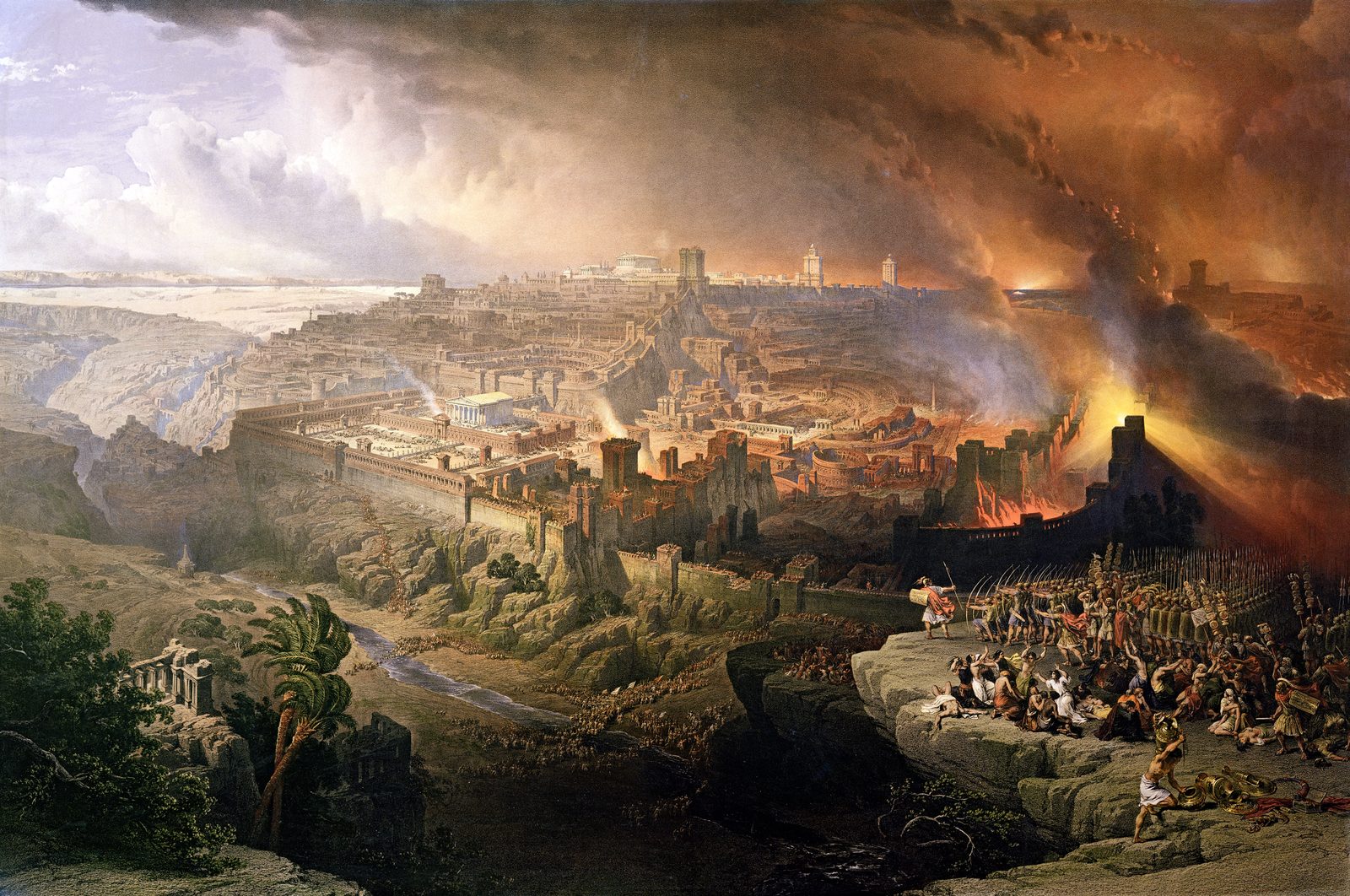
"Let the habitation of them become forsaken." This is now evident. For in the same manner as He hath mentioned not only a secret deliverance of His, saying, "Give heed to My soul, and redeem her;" but also one open after the body, adding, "because of mine enemies deliver me:" so also to these men He foretelleth how there are to be certain secret misfortunes, whereof a little before He was speaking. ...For the blindness of the Jews was secret vengeance: but the open was what? "Let their habitation become forsaken, and in their tabernacles let there not be any one to inhabit." There hath come to pass this thing in the very city Jerusalem, wherein they thought themselves mighty in crying against the Son of God, "Crucify, Crucify;" and in prevailing because they were able to kill Him that raised dead men. How mighty to themselves, how great, they seemed! There followed afterwards the vengeance of the Lord, stormed was the city, utterly conquered the Jews, slain were I know not how many thousands of men. No one of the Jews is permitted to come thither now: where they were able to cry against the Lord, there by the Lord they are not permitted to dwell. They have lost the place of their fury: and O that even now they would know the place of their rest! What profit to them was Caiaphas in saying, "If we shall have let go this man thus, there will come the Romans, and take away from us both place and kingdom"? Behold, both they did not let Him go alive, and He liveth: and there have come the Romans, and have taken from them both place and kingdom. But now we heard, when the Gospel was being read, "Jerusalem, Jerusalem, how often would I have gathered together thy sons, as a hen her chickens under her wings, and thou wouldest not? Behold there is left to you your house forsaken."
The Puritans and the Awakening3 voices
): They persecute him whom thou hast smitten, and talk to the grief of thy wounded. Christ was he whom God had smitten, for it pleased the Lord to bruise him, and he was esteemed stricken, smitten of God, and afflicted, and therefore men hid their faces from him, Isa. liii.
quarantine:debris (2026-07-29) — leading-punctuation+unbalanced-parens
Concludes with praise and thanksgiving, ver. 30-36. In all this David was a type of Christ, and several passages of this psalm are applied to him in the New Testament. So that, like the 22nd psalm, it begins with the humiliation, and ends with the exaltation of Christ.
For they persecute him whom thou hast smitten,.... Meaning the Messiah, who was not only smitten and scourged by men, but was stricken and smitten of God; according to his determinate counsel and foreknowledge, and agreeably to his will and plea sure; with the rod of his justice for the satisfaction of it; for the sins of his people, whose surety he was.
The Nineteenth Century1 voice
A commentator
Jamieson, Fausset & Brown1802–1910
Commentary Critical and Explanatory on the Whole Bible (1871)
Though smitten of God (Isa 53:4), men were not less guilty in persecuting the sufferer (Ac 2:23). talk to the grief--in respect to, about it, implying derision and taunts. wounded--or, literally, "mortally wounded." 27, 28. iniquity--or, "punishment of iniquity" (Ps 40:12). come . . . righteousness--partake of its benefits.
3 more voices on this verse
The Nineteenth Century3 voices
For they persecute him whom thou hast smitten. They are cruel where they should be pitiful. When a stroke comes to any in the providence of God, their friends gather around them and condole, but these wretches hunt the wounded and vex the sick. Their merciless hearts invent fresh blows for him who is "smitten of God and afflicted." And they talk to the grief of those whom thou hast wounded. They lay bare his wounds with their rough tongues. They lampoon the mourner, satirise his sorrows, and deride his woes. They pointed to the Saviour's wounds, they looked and stared upon him, and then they uttered shameful accusations against him. After this fashion the world still treats the members of Christ. "Report, "say they, "and we will report it." If a godly man be a little down in estate, how glad they are to push him over altogether, and, meanwhile, to talk everywhere against him. God takes note of this, and will visit it upon the enemies of his children; he may allow them to act as a rod to his saints, but he will yet avenge his own elect. "Thus saith the Lord of hosts; I am jealous for Jerusalem, and for Zion, with a great jealousy; and I am very sore displeased with the heathen that are at ease: for I was but a little displeased, and they helped forward the affliction."
For they persecute him whom thou hast smitten. They are cruel where they should be pitiful. When a stroke comes to any in the providence of God, their friends gather around them and condole, but these wretches hunt the wounded and vex the sick. Their merciless hearts invent fresh blows for him who is "smitten of God and afflicted." And they talk to the grief of those whom thou hast wounded. They lay bare his wounds with their rough tongues. They lampoon the mourner, satirise his sorrows, and deride his woes.
A commentator
Albert Barnes1798–1870
Notes, Explanatory and Practical, on the Old and New Testaments (1832-1869)
proposed
For they persecute him whom thou hast smitten - That is, instead of pitying one who is afflicted of God, or showing compassion for him, they “add” to his sorrows by their own persecutions. The psalmist was suffering as under the hand of God. He needed sympathy from others in his trials. Instead of that, however, he found only reproaches, opposition, persecution, calumny. There was an entire want of sympathy and kindness. There was a disposition to take advantage of the fact that he was suffering at the hand of God, to increase his sorrows in all ways in which they could do it. And they talk to the grief of those - What they say adds to their sorrow. They speak of the character of those who are afflicted; they allege that the affliction is the punishment of some crime which they have committed; they take advantage of any expressions of impatience which they may let fall in their affliction to charge them with being of a rebellious spirit, or regard it as proof that they are destitute of all true piety. See the notes at Psa 41:5-8. It was this which added so much to the affliction of Job. His professed friends, instead of sympathizing with him, endeavored to prove that the fact that he suffered so much at the hand of God demonstrated that he was a hypocrite; and the expressions of impatience which he uttered in his trial, instead of leading them to sympathize with him, only tended to confirm them in this belief. Whom thou hast wounded - literally, as in the margin, “thy wounded.” That is, of those whom “thou” hast afflicted. The reference is to the psalmist himself as afflicted by God, while, at the same time, he makes the remark general by saying that this was their character; this was what they were accustomed to do.
The words behind it
9 Hebrew wordsEvery Hebrew word of this verse in the order it stands, with what it means and the door to its own study. The last column counts the times a word stands in the whole Bible: the rarer the word, the more the places it appears belong together.
| Hebrew | Sound | Meaning | Word study | In the Bible |
|---|---|---|---|---|
| כִּֽי־ | ki- | for | H3588 → | 4482 times |
| אַתָּ֣ה | ʾatah | you | H859 → | 1094 times |
| אֲשֶׁר־ | ʾasher- | [those] whom | H834 → | 5497 times |
| הִכִּ֣יתָ | hikita | you struck | H5221 → | 499 times |
| רָדָ֑פוּ | radafu | they have harassed | H7291 → | 143 times |
| וְאֶל־ | veel- | and concerning | H413 → | 5510 times |
| מַכְא֖וֹב | makhov | [the] pain of | H4341 → | 16 times |
| חֲלָלֶ֣יךָ | chalaleikha | fatally wounded [ones] your | H2491 → | 94 times |
| יְסַפֵּֽרוּ׃ | yesaperu | they have recounted | H5608 → | 159 times |
כִּֽי־for
ki-H3588 →4482 times
אַתָּ֣הyou
ʾatahH859 →1094 times
אֲשֶׁר־[those] whom
ʾasher-H834 →5497 times
הִכִּ֣יתָyou struck
hikitaH5221 →499 times
רָדָ֑פוּthey have harassed
radafuH7291 →143 times
וְאֶל־and concerning
veel-H413 →5510 times
מַכְא֖וֹב[the] pain of
makhovH4341 →16 times
חֲלָלֶ֣יךָfatally wounded [ones] your
chalaleikhaH2491 →94 times
יְסַפֵּֽרוּ׃they have recounted
yesaperuH5608 →159 times
A shaded row is a word that stands 400 times or fewer in the Bible.
The walk
8 stopsEach card is a verse this one points to, and under it the verses that one points to in turn. Where several paths arrive at the same place, that place is listed first: the text keeps returning to it.
Through
Isaiah 53:4Surely He took on our infirmities and carried our sorrows; yet we considered Him stricken by God, struck down and afflicted.
it leads to
- Galatians 3:13
Christ redeemed us from the curse of the law by becoming a curse for us. For it is written: “Cursed is everyone who is hung on a tree.”
Reached by 2 separate paths from here.
- 1 Peter 2:24
He Himself bore our sins in His body on the tree, so that we might die to sin and live to righteousness. “By His stripes you are healed.”
- Matthew 8:17
This was to fulfill what was spoken through the prophet Isaiah: “He took on our infirmities and carried our diseases.”
- 1 John 2:2
He Himself is the atoning sacrifice for our sins, and not only for ours but also for the sins of the whole world.
- 1 Peter 3:18
For Christ also suffered for sins once for all, the righteous for the unrighteous, to bring you to God. He was put to death in the body but made alive in the Spirit,
- Galatians 3:13
Through
Isaiah 53:10Yet it was the LORD’s will to crush Him and to cause Him to suffer; and when His soul is made a guilt offering, He will see His offspring, He will prolong His days,…
it leads to
- 2 Corinthians 5:21
God made Him who knew no sin to be sin on our behalf, so that in Him we might become the righteousness of God.
- Romans 8:32
He who did not spare His own Son but gave Him up for us all, how will He not also, along with Him, freely give us all things?
- 2 Corinthians 5:21
Through
1 Thessalonians 2:15who killed both the Lord Jesus and their own prophets, and drove us out as well. They are displeasing to God and hostile to all men,
it leads to
- Matthew 5:12
Rejoice and be glad, because great is your reward in heaven; for in the same way they persecuted the prophets before you.
- Matthew 5:12
Where this verse is studied
About Psalms
This page draws on 10 works. Open the list of works
This page draws on Albert Barnes, Notes, Explanatory and Practical, on the Old and New Testaments (1832-1869); Aphrahat the Persian Sage, DEMONSTRATIONS 17:10; Augustine of Hippo, Exposition on Psalm 69; Charles Spurgeon, The Treasury of David, Vol. 3; Franz Delitzsch, Biblical Commentary on the Psalms; Jamieson, Fausset & Brown, Commentary Critical and Explanatory on the Whole Bible; John Gill, Exposition of the Old Testament; John Gill, Exposition of the Old Testament (1748-1763); John Wesley, Explanatory Notes upon the Old Testament and Matthew Henry, Commentary on the Whole Bible.