
Psalms 69:25
in Psalms 69May their place be deserted; let there be no one to dwell in their tents.
BSB
The same verse in ASV and KJV ▾
ASV
Let their habitation be desolate; Let none dwell in their tents.
KJV
Let their habitation be desolate; and let none dwell in their tents.
⋯
This verse in Psalms 69
Commentary
9 notes on this verse"May his habitation become desolate, and may there be none to dwell in it, and may another take his office." Indeed these verses are clear and plainly set forth by the blessed Peter's interpretation. On the one hand Judas received a deserved penalty for his …
This site's exposition
May their place be deserted
Verse 25 asks that their place be deserted and their tents left with no one to dwell in them. Acts 1:20 has Peter quote it of Judas from the book of Psalms, turning the plural into a singular. The psalm's tents become one man's empty place.
The record, by era
The Church Fathers1 voice
"Pour forth upon them Your anger, and let the indignation of Your anger overtake them" [Psalm 69:25], are plain words: but nevertheless, in "overtake them" we perceive them as it were fleeing. But whither are they to flee? Into Heaven? You are there. Into Hell? You are present. Their wings they will not take to fly straight: "Let the indignation of Your anger overtake them," let it not permit them to escape.
The Puritans and the Awakening3 voices
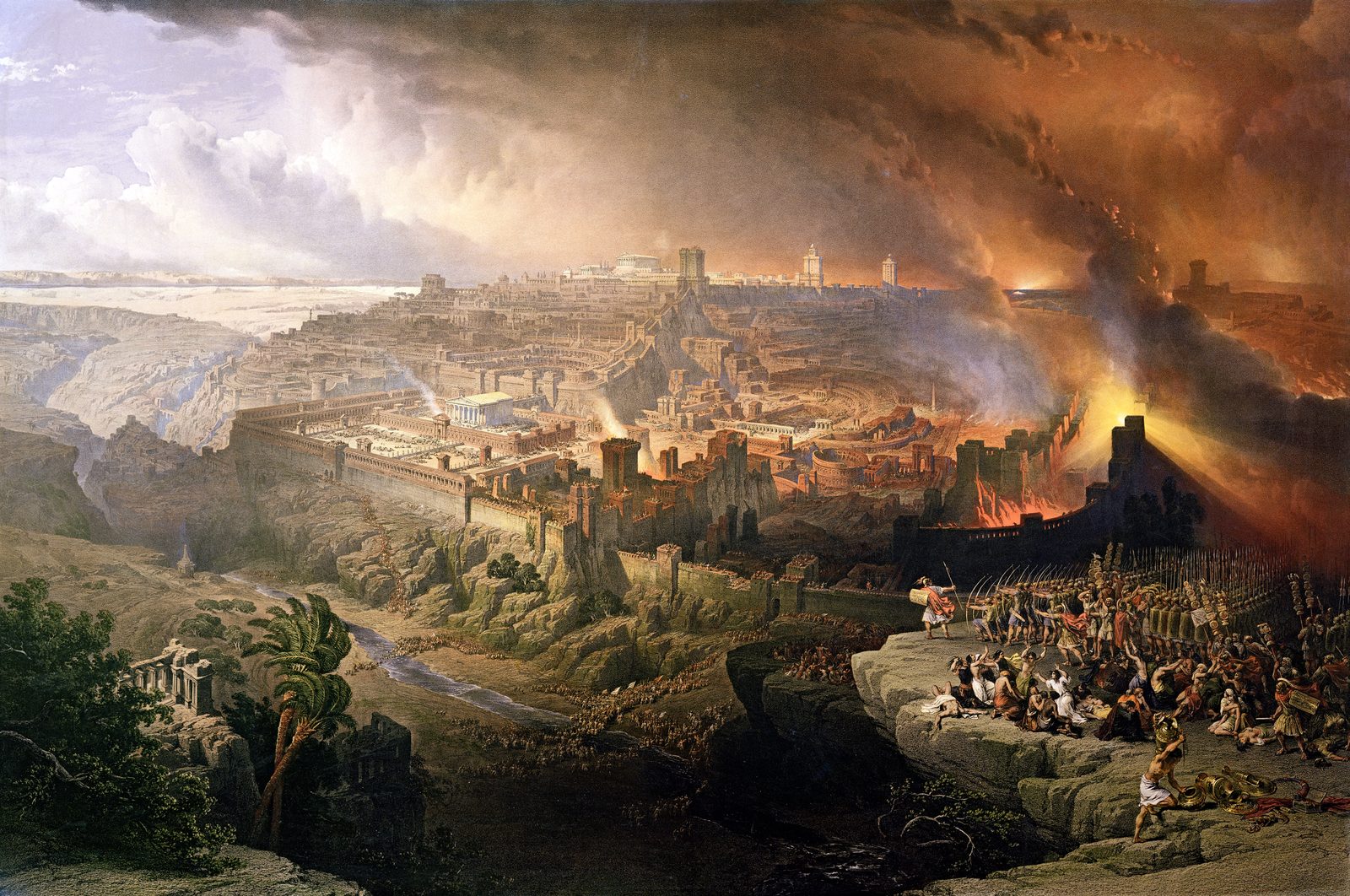
), which was fulfilled when their country was laid waste by the Romans, and Zion, for their sakes, was ploughed as a field, Mic. iii. The temple was the house which they were in a particular manner proud of, but this was left unto them desolate, Matt. xxiii.
quarantine:debris (2026-07-29) — leading-punctuation+unbalanced-parens
Concludes with praise and thanksgiving, ver. 30-36. In all this David was a type of Christ, and several passages of this psalm are applied to him in the New Testament. So that, like the 22nd psalm, it begins with the humiliation, and ends with the exaltation of Christ.
Let their habitation be desolate,....
The Nineteenth Century1 voice
Let their habitation be desolate; and let none dwell in their tents. This may signify that their posterity shall be cut off, and the abode which they occupy shall be left a ruin; or, as our Lord quoted it, it refers to the temple, which was left by its divine occupant and became a desolation.
2 more voices on this verse
The Nineteenth Century2 voices
Let their habitation be desolate; and let none dwell in their tents. This may signify that their posterity shall be cut off, and the abode which they occupy shall be left a ruin; or, as our Lord quoted it, it refers to the temple, which was left by its divine occupant and became a desolation. What occurs on a large scale to families and nations is often fulfilled in individuals, as was conspicuously the case with Judas, to whom Peter referred this prophecy, Ac 1:20, "For it is written in the book of Psalms, let this habitation be desolate, and let no man dwell therein." The fierce proclamation of Nebuchadnezzar, "that every people, nation, and language, that speak anything amiss against the God of Shadrach, Meshach, and Abednego, shall be cut in pieces, and their houses shall be made a dunghill, "is but an anticipation of that dread hour when the enemies of the Lord shall be broken in pieces, and perish out of the land.
A commentator
Albert Barnes1798–1870
Notes, Explanatory and Practical, on the Old and New Testaments (1832-1869)
proposed
Let their habitation be desolate - Margin, “their palace.” The Hebrew word means properly a wall; then, a fortress or castle; and then it means also a nomadic encampment, a rustic village, a farm-hamlet. The word conveys the idea of an “enclosure,” with special reference to an encampment, or a collection of tents. The Septuagint renders it here ἔπαυλις epaulis, meaning a place to pass the night in, especially for flocks and herds. The Hebrew word - טירה ṭı̂yrâh - is rendered “castles” in Gen 25:16; Num 31:10; 1Ch 6:54; “palaces” in Son 8:9; Eze 25:4; “rows” in Eze 46:23; and “habitation” in this place. It does not occur elsewhere. Here it means their “home,” - their place of abode, - but with no particular reference to the “kind” of home, whether a palace, a castle, or an encampment. The idea is, that the place which they had occupied, or where they had dwelt, would be made vacant. They would be removed, and the place would be solitary and forsaken. It is equivalent to a prayer that they might be destroyed. And let none dwell in their tents - Margin, as in Hebrew, “let there not be a dweller.” That is, Let their tents where they had dwelt be wholly forsaken. This passage is quoted in Act 1:20, as applicable to Judas. See the notes at that passage.
The words behind it
7 Hebrew wordsEvery Hebrew word of this verse in the order it stands, with what it means and the door to its own study. The last column counts the times a word stands in the whole Bible: the rarer the word, the more the places it appears belong together.
| Hebrew | Sound | Meaning | Word study | In the Bible |
|---|---|---|---|---|
| תְּהִי־ | tehi- | may it be | H1961 → | 3559 times |
| טִֽירָתָ֥ם | tiratam | encampment their | H2918 → | |
| נְשַׁמָּ֑ה | neshamah | made desolate | H8074 → | 86 times |
| בְּ֝אָהֳלֵיהֶ֗ם | beoholeihem | in tents their | H168 → | 345 times |
| אַל־ | ʾal- | may not | H408 → | 724 times |
| יְהִ֥י | yehi | anyone be | H1961 → | 3559 times |
| יֹשֵֽׁב׃ | yoshev | dwelling | H3427 → | 1079 times |
תְּהִי־may it be
tehi-H1961 →3559 times
טִֽירָתָ֥םencampment their
tiratamH2918 →
נְשַׁמָּ֑הmade desolate
neshamahH8074 →86 times
בְּ֝אָהֳלֵיהֶ֗םin tents their
beoholeihemH168 →345 times
אַל־may not
ʾal-H408 →724 times
יְהִ֥יanyone be
yehiH1961 →3559 times
יֹשֵֽׁב׃dwelling
yoshevH3427 →1079 times
A shaded row is a word that stands 400 times or fewer in the Bible.
The walk
8 stopsEach card is a verse this one points to, and under it the verses that one points to in turn. Where several paths arrive at the same place, that place is listed first: the text keeps returning to it.
Through
Acts 1:20“For it is written in the book of Psalms: ‘May his place be deserted; let there be no one to dwell in it,’ and, ‘May another take his position.’
it leads to
- Psalms 109:8–15
May his days be few; may another take his position.
- Acts 1:25
to take up this ministry and apostleship, which Judas abandoned to go to his rightful place.”
- Psalms 109:8–15
Through
Luke 13:35Look, your house is left to you desolate. And I tell you that you will not see Me again until you say, ‘Blessed is He who comes in the name of the Lord.’”
it leads to
- Psalms 118:26
Blessed is he who comes in the name of the LORD. From the house of the LORD we bless you.
- Mark 11:9–10
The ones who went ahead and those who followed were shouting: “Hosanna!” “Blessed is He who comes in the name of the Lord!”
- John 12:13
They took palm branches and went out to meet Him, shouting: “Hosanna!” “Blessed is He who comes in the name of the Lord!” “Blessed is the King of Israel!”
- Matthew 21:9
The crowds that went ahead of Him and those that followed were shouting: “Hosanna to the Son of David!” “Blessed is He who comes in the name of the Lord!” “Hosanna in the highest!”
- Psalms 118:26
Through
Matthew 23:38Look, your house is left to you desolate.
it leads to
- Jeremiah 22:5
But if you do not obey these words, then I swear by Myself, declares the LORD, that this house will become a pile of rubble.’”
- Luke 13:35
Look, your house is left to you desolate. And I tell you that you will not see Me again until you say, ‘Blessed is He who comes in the name of the Lord.’”
- Jeremiah 22:5
Where this verse is studied
About Psalms
This page draws on Albert Barnes, Notes, Explanatory and Practical, on the Old and New Testaments (1832-1869); Augustine of Hippo, Exposition on Psalm 69; Bede, Commentary on Acts 1:20; Charles Spurgeon, The Treasury of David; Charles Spurgeon, The Treasury of David, Vol. 3; John Gill, Exposition of the Old Testament (1748-1763); John Wesley, Explanatory Notes upon the Old Testament and Matthew Henry, Commentary on the Whole Bible.