
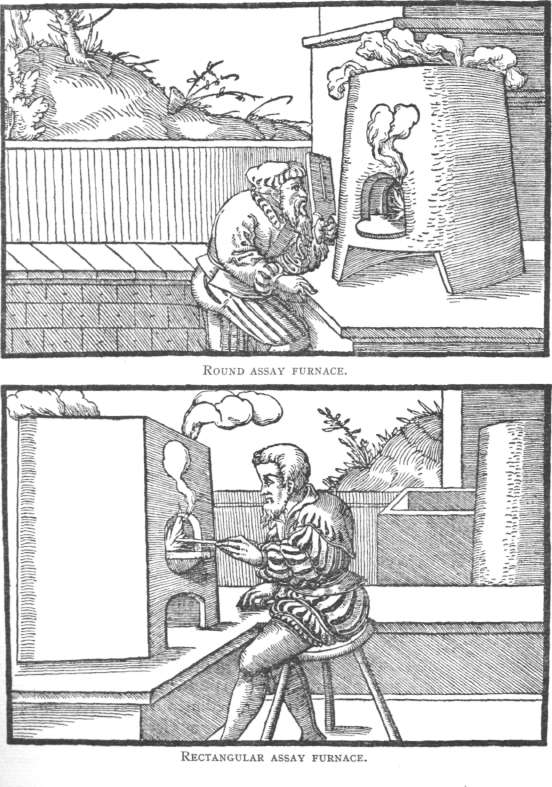
G. Agricola, Cupellation furnaces, 1556. Public domain.
Psalm 12 · Subject · Featured Study
The Keeping of the Words of the LORD
Psalm 12 praises the words of the LORD as refined silver, and readers differ over whom the next verse says He will keep.
One pronoun in the psalm decides what the LORD promises to keep.
You, O LORD, will keep us; You will forever guard us from this generation.
You, O LORD, will keep us; You will forever guard us from this generation.
- Books
- Psalms, Proverbs
- Hold in memory
- Psalm 12:6, Psalm 12:7
Summary
Psalm 12 is a complaint against flattering lips and a boasting tongue. The LORD answers it with a promise of safety, and the psalmist answers the LORD.
- Franz Delitzsch hears the LORD Himself speak in Psalm 12:5 and the psalmist add his Amen in the verse after it.
- J. J. Stewart Perowne takes the psalm as a place where the poet speaks as a prophet and seems to hear God speaking.
- John Gill grants that God has kept the sacred writings and keeps every word of promise, while he reads the keeping of this psalm as the keeping of the poor.
Flawless Words
Psalm 12 sets the words of the LORD against the flattering lips of men.
The words of the LORD are flawless, like silver refined in a furnace, like gold purified sevenfold.The psalmist praises what the LORD has just said.
Perowne reads the purity of the LORD's words against the lying lips of men in Psalm 12:2 to 4. He adds a second purpose: the psalmist presses the point so that the afflicted will trust the promise to be fulfilled.
The Pronouns of Verse 7
Two Hebrew verbs carry the promise, each with its pronoun joined to its end.
The Hebrew says them and then him; the King James says them twice.
| Hebrew | Gloss of the Hebrew | King James | Berean |
|---|---|---|---|
| תִּשְׁמְרֵ֑ם | you will keep them | Thou shalt keep them | You, O LORD, will keep us |
| תִּצְּרֶ֓נּוּ׀ | you will guard him | thou shalt preserve them | You will forever guard us |
The Same Purity Elsewhere
Delitzsch sets three other verses beside the verse of the refined silver.
As for God, His way is perfect; the word of the LORD is flawless. He is a shield to all who take refuge in Him.In Delitzsch's list this is the first verse that calls God's word refined.
Your promise is completely pure; therefore Your servant loves it.He cites this verse of Psalm 119 as the second.
Every word of God is flawless; He is a shield to those who take refuge in Him.Proverbs gives his third, with the same refining word.
Silver Refined Seven Times
Delitzsch explains the furnace and the seven times of the refining.
Delitzsch reads the silver as smelted and left free of every impurity. Seven times, in his reading, means the purest silver, because seven marks a process brought to completion.
He renders the furnace phrase as silver purified down to the earth. With Olshausen he points to every smelting hut, where the pure liquid silver flows out of the furnace to the ground.
Voices on Psalm 12
Matthew Henry and Theodoret of Cyrus wrote on whom the keeping protects.
Theodoret of Cyrus (died 458)
COMMENTARY ON THE PSALMS 12:4
Theodoret speaks as one of the people kept.
“Guarded by your grace we shall not only escape the wiles of the present generation but shall also be provided with everlasting salvation.”
on Psalm 12:7Patristic
Matthew Henry (1662 to 1714)
Commentary on the Whole Bible
Henry turns the keeping into a prayer for a corrupt age.
“In the worst of times God has his remnant, and in every age will reserve to himself a holy seed and preserve that to his heavenly kingdom. In singing this psalm, and praying it over, we must bewail the general corruption of manners, thank God that things are not worse than they are, but pray and hope that they will be better in God's due time.”
on Psalm 12:7Puritan
Who Is Kept
Commentators give the pronouns to the needy or to the words of the LORD, and old versions read us.
“For the cause of the oppressed and for the groaning of the needy, I will now arise,” says the LORD. “I will bring safety to him who yearns.”The LORD's promise here is the one the keeping answers.
The afflicted and the needyJohn Gill, after Kimchi; J. J. Stewart Perowne; Franz Delitzsch; Albert Barnes
Gill, following Kimchi, takes both pronouns of the poor and needy, the second of each one of them. Perowne refers them to the afflicted and poor of Psalm 12:5 and hears the singer place himself among them.
Delitzsch refers the plural to the poor and the singular, him, to the man who longs for deliverance. Albert Barnes, in his Notes, reads the poor and the needy who were suffering wrong.
Against this reading, the plural pronoun stands directly after the verse whose subject is the words of the LORD.
The words of the LORDAben-Ezra, as John Gill reports him
On this reading the LORD keeps the words the psalm has just praised.
Against this reading, Gill answers that the pronoun is masculine and the Hebrew noun for words is feminine.
Keep usManuscripts and versions Clarke names; Augustine; the Berean text
Adam Clarke records that several manuscripts, with the Septuagint, the old Greek translation, the Vulgate and the Arabic, read us in both clauses. He finds the sense equally good either way. Augustine's text of the verse reads preserve us and keep us.
Against this reading, the Hebrew text reads them and him.
Gill also reports translators who render the verse as a prayer to the LORD to keep them: the Tigurine version, Vatablus, Junius and Tremellius, and Piscator.
Books to Read Next
Both works are in the public domain, and each has a free copy to read.
The Book of Psalms: A New Translation, with Introductions and Notes, Explanatory and Critical
J. J. Stewart Perowne · 1876
Perowne gives his notes on the close of the psalm on pages 153 to 154.
Read at the Internet ArchiveBiblical Commentary on the Psalms, volume 1
Franz Delitzsch, translated by Francis Bolton · 1880
Delitzsch counts the heading as the first verse, so his notes on the refining and the keeping stand under his verses 7 and 8, on pages 196 to 197.
Read at the Internet ArchiveThe Wicked Wander Freely
Perowne calls the last verse perplexing, because it seems to contradict the confidence of the verse before it.
The wicked wander freely, and vileness is exalted among men.The psalm ends where it began, among the wicked.
Sources
Scripture is the Berean Standard Bible.
- King James Version, Psalm 12:6 to 7.
- The Hebrew of Psalm 12:6 to 7 with Strong's numbers and glosses.
- J. J. Stewart Perowne, The Book of Psalms, from the third London edition, Warren F. Draper, 1876, vol. 1, pp. 151 to 154.
- Franz Delitzsch, Biblical Commentary on the Psalms, translated by Francis Bolton, T. and T. Clark, 1880, vol. 1, pp. 195 to 197.
- John Gill, Exposition of the Old Testament, on Psalm 12:7.
- Adam Clarke, Commentary on the Bible (1832), on Psalm 12:7.
- Albert Barnes, Notes, Explanatory and Practical, on the Old and New Testaments (1832 to 1869), on Psalm 12:7.
- Augustine of Hippo, Exposition on Psalm 12, on verse 7.
- Matthew Henry, Commentary on the Whole Bible (1710), on Psalm 12:7.
- Theodoret of Cyrus, Commentary on the Psalms, on Psalm 12:7.