
Numbers 16:30
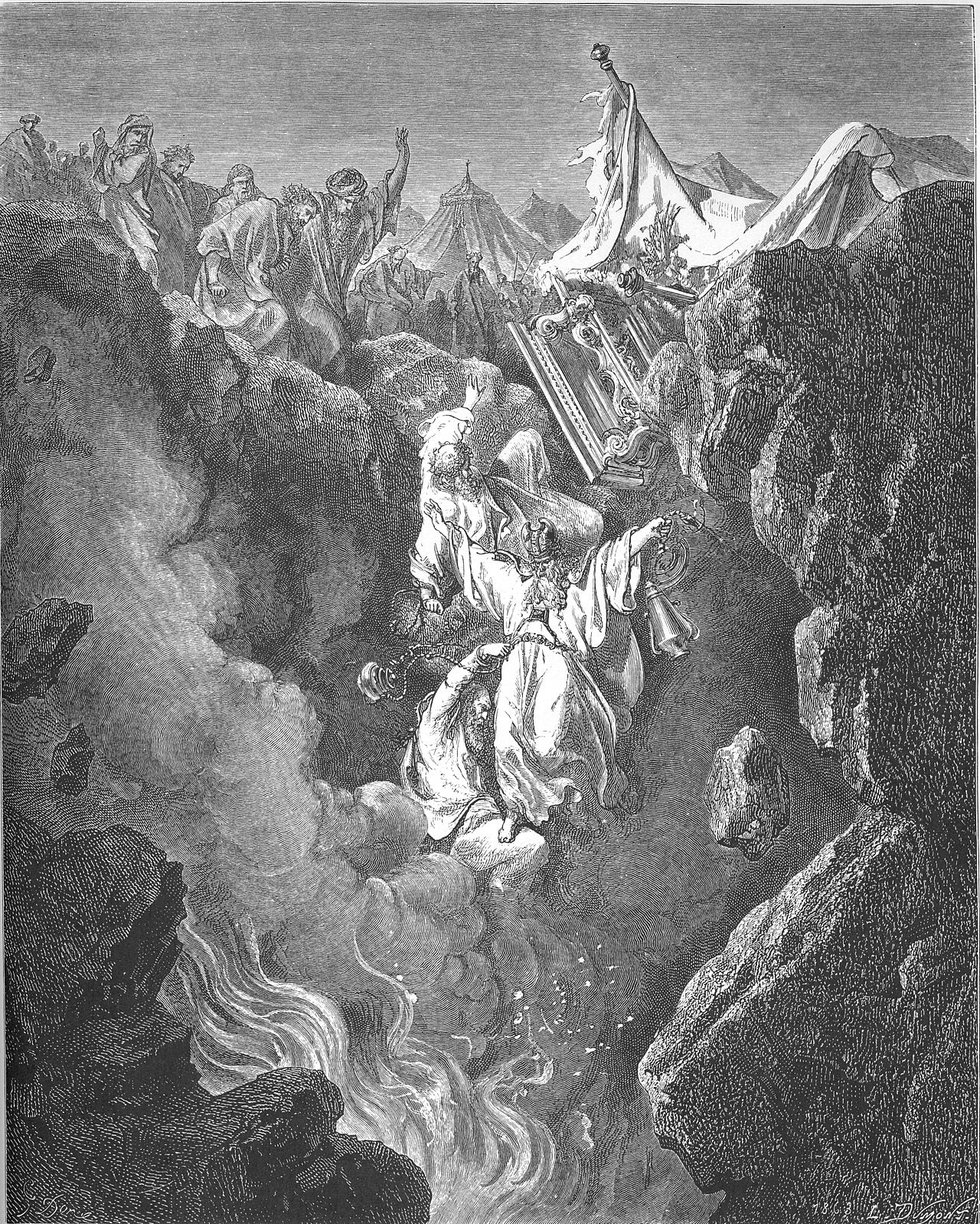
in Numbers 16But if the LORD brings about something unprecedented, and the earth opens its mouth and swallows them and all that belongs to them so that they go down alive into Sheol, then you will know that these men have treated the LORD with contempt.”
BSB
The same verse in ASV and KJV ▾
ASV
But if Jehovah make a new thing, and the ground open its mouth, and swallow them up, with all that appertain unto them, and they go down alive into Sheol; then ye shall understand that these men have despised Jehovah.
KJV
But if the Lord make a new thing, and the earth open her mouth, and swallow them up, with all that appertain unto them, and they go down quick into the pit; then ye shall understand that these men have provoked the Lord.
⋯
This verse in Numbers 16
Commentary
5 notes on this verseIf the Lord make a new thing - ואם בריאה יברא יהוה veim beriah yibra Yehovah, and if Jehovah should create a creation, i. e., do such a thing as was never done before.
This site's exposition
This is how you will know
on Numbers 16:28-30
Moses stakes his commission on an outcome named in advance, the shape of the test Deuteronomy 18:21-22 later sets for a prophet. The something unprecedented he asks for uses the verb of Genesis 1:1 for creating. They go down alive into Sheol, so the grave takes them before death does.
This site's exposition
these men have treated the LORD with contempt
The charge at the end uses the verb of 14:11 and 14:23, where the LORD complains of the people's contempt for him. Dathan and Abiram have repeated the spies' sin. Adam Clarke renders the sign literally as the LORD creating a creation, a thing never done before.
The record, by era
The Puritans and the Awakening2 voices
But if the Lord make a new thing,....
If the rebels die a common death, he will be content to be called and counted an impostor; not only if they die a natural death, but if they die by any sort of judgment that has formerly been executed on other malefactors. "If they die by the plague, or by fire from heaven, or by the sword, then say, God has disowned Moses;" but, 2.
The words behind it
24 Hebrew wordsEvery Hebrew word of this verse in the order it stands, with what it means and the door to its own study. The last column counts the times a word stands in the whole Bible: the rarer the word, the more the places it appears belong together.
| Hebrew | Sound | Meaning | Word study | In the Bible |
|---|---|---|---|---|
| וְאִם־ | veim- | and if | H518 → | 1069 times |
| בְּרִיאָ֞ה | beriah | a creation | H1278 → | |
| יִבְרָ֣א | yivra' | he will create | H1254 → | |
| יְהוָ֗ה | yahweh | Yahweh | H3068 → | 6520 times |
| וּפָצְתָ֨ה | ufatzetah | and it will open | H6475 → | |
| הָאֲדָמָ֤ה | haadamah | the ground | H127 → | 225 times |
| אֶת־ | ʾet- | <obj.> | H853 → | 10935 times |
| פִּ֙יהָ֙ | piha | mouth its | H6310 → | 498 times |
| וּבָלְעָ֤ה | uvalah | and it will swallow | H1104 → | 49 times |
| אֹתָם֙ | ʾotam | <obj.> them | H853 → | 10935 times |
| וְאֶת־ | veet | and <obj.> | H853 → | 10935 times |
| כָּל־ | kol- | all | H3605 → | 5413 times |
| אֲשֶׁ֣ר | ʾasher | that | H834 → | 5497 times |
| לָהֶ֔ם | lahem | [belongs] to <the> them | ||
| וְיָרְד֥וּ | veyaredu | and they will go down | H3381 → | 381 times |
| חַיִּ֖ים | chaiyim | alive | H2416 → | 498 times |
| שְׁאֹ֑לָה | sheolah | Sheol towards | H7585 → | |
| וִֽידַעְתֶּ֕ם | vida'tem | and you will know | H3045 → | 945 times |
| כִּ֧י | ki | that | H3588 → | 4482 times |
| נִֽאֲצ֛וּ | niatzu | they have spurned | H5006 → | 25 times |
| הָאֲנָשִׁ֥ים | haanashim | the men | H582 → | 566 times |
| הָאֵ֖לֶּה | haeleh | <the> these | H428 → | 746 times |
| אֶת־ | ʾet- | <obj.> | H853 → | 10935 times |
| יְהוָֽה׃ | yahweh | Yahweh | H3068 → | 6520 times |
וְאִם־and if
veim-H518 →1069 times
בְּרִיאָ֞הa creation
beriahH1278 →
יִבְרָ֣אhe will create
yivra'H1254 →
יְהוָ֗הYahweh
yahwehH3068 →6520 times
וּפָצְתָ֨הand it will open
ufatzetahH6475 →
הָאֲדָמָ֤הthe ground
haadamahH127 →225 times
אֶת־<obj.>
ʾet-H853 →10935 times
פִּ֙יהָ֙mouth its
pihaH6310 →498 times
וּבָלְעָ֤הand it will swallow
uvalahH1104 →49 times
אֹתָם֙<obj.> them
ʾotamH853 →10935 times
וְאֶת־and <obj.>
veetH853 →10935 times
כָּל־all
kol-H3605 →5413 times
אֲשֶׁ֣רthat
ʾasherH834 →5497 times
לָהֶ֔ם[belongs] to <the> them
lahem
וְיָרְד֥וּand they will go down
veyareduH3381 →381 times
חַיִּ֖יםalive
chaiyimH2416 →498 times
שְׁאֹ֑לָהSheol towards
sheolahH7585 →
וִֽידַעְתֶּ֕םand you will know
vida'temH3045 →945 times
כִּ֧יthat
kiH3588 →4482 times
נִֽאֲצ֛וּthey have spurned
niatzuH5006 →25 times
הָאֲנָשִׁ֥יםthe men
haanashimH582 →566 times
הָאֵ֖לֶּה<the> these
haelehH428 →746 times
אֶת־<obj.>
ʾet-H853 →10935 times
יְהוָֽה׃Yahweh
yahwehH3068 →6520 times
A shaded row is a word that stands 400 times or fewer in the Bible.
The walk
8 stopsEach card is a verse this one points to, and under it the verses that one points to in turn. Where several paths arrive at the same place, that place is listed first: the text keeps returning to it.
Through
Isaiah 28:21For the LORD will rise up as at Mount Perazim. He will rouse Himself as in the Valley of Gibeon, to do His work, His strange work, and to perform His task, His disturbing…
it leads to
- 1 Chronicles 14:11
So David and his men went up to Baal-perazim, where he defeated the Philistines and said, “Like a bursting flood, God has burst out against my enemies by my hand.” So they called that…
- Joshua 10:12
On the day that the LORD gave the Amorites over to the Israelites, Joshua spoke to the LORD in the presence of Israel: “O sun, stand still over Gibeon, O moon, over the Valley…
- 2 Samuel 5:20
So David went to Baal-perazim, where he defeated the Philistines and said, “Like a bursting flood, the LORD has burst out against my enemies before me.” So he called that place Baal-perazim.
- Joshua 10:10
And the LORD threw them into confusion before Israel, who defeated them in a great slaughter at Gibeon, pursued them along the ascent to Beth-horon, and struck them down as far as Azekah and…
- 1 Chronicles 14:11
Through
Psalms 55:15Let death seize them by surprise; let them go down to Sheol alive, for evil is with them in their homes.
it leads to
- Psalms 59:13
Consume them in wrath; consume them till they are no more, so it may be known to the ends of the earth that God rules over Jacob. Selah
- Psalms 109:6–20
Set over him a wicked man; let an accuser stand at his right hand.
- Psalms 64:7
But God will shoot them with arrows; suddenly they will be wounded.
- Psalms 9:17
The wicked will return to Sheol— all the nations who forget God.
- Psalms 59:13
Where this verse is studied
On this page
Studies6
On this verse
On this chapter
About Numbers
This page draws on Adam Clarke, Commentary on the Bible; John Gill, Exposition of the Old Testament (1748-1763); Keil and Delitzsch, Biblical Commentary on the Old Testament: The Pentateuch and Matthew Henry, Commentary on the Whole Bible.