
Matthew 27:56
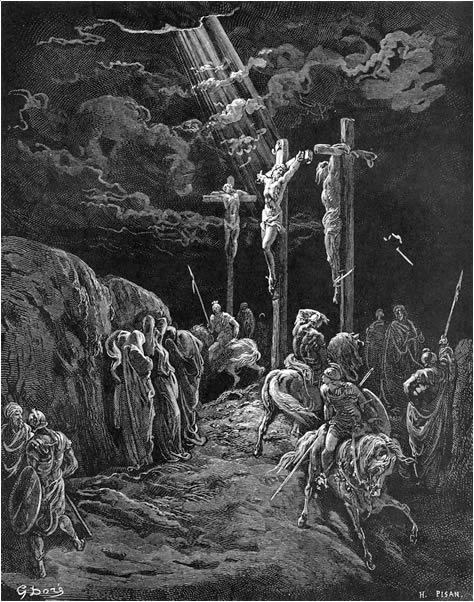
in Matthew 27Among them were Mary Magdalene, Mary the mother of James and Joseph, and the mother of Zebedee’s sons.
BSB
The same verse in ASV and KJV ▾
ASV
among whom was Mary Magdalene, and Mary the mother of James and Joses, and the mother of the sons of Zebedee.
KJV
Among which was Mary Magdalene, and Mary the mother of James and Joses, and the mother of Zebedee’s children.
⋯
This verse in Matthew 27
Commentary
13 notes on this verse(adv. Helvid.) 'See,' says Helvidius, 'Jacob and Joseph are the sons of Mary the Lord's mother, whom the Jews call the brethren of Christ. (Mark 6:3.) He is also called James the less, to distinguish him from James the greater, who was the son of Zebedee.' And he urges that 'it were impious to suppose that His mother Mary would be absent, when the other women were there; or that we should have to invent some other third unknown person of the name of Mary, and that too when John's Gospel witnesses that His mother was present.' O blind folly!
The record, by era
The Church Fathers4 voices
(Verse 55, 56.) And there were many women there from afar who had followed Jesus from Galilee, ministering to him; among whom were Mary Magdalene, and Mary the mother of James, and Joseph's mother, and the mother of the sons of Zebedee. It was a Jewish custom, and it was not considered wrong according to the ancient customs of the gentiles, for women to provide food and clothing to their teachers out of their own means. Paul mentioned that he had rejected this because it could cause scandal among the nations.
"And many women were there beholding afar off, which had followed Him, ministering unto Him, Mary Magdalene, and Mary the mother of James, and Joses, and the mother of Zebedee's sons." These things the women see done, these who were most inclined to feel for Him, who were most of all bewailing Him. And mark how great their assiduity. They had followed Him ministering to Him, and were present even unto the time of the dangers. Wherefore also they saw all; how He cried, how He gave up the ghost, how the rocks were rent, and all the rest. And these first see Jesus; and the sex that was most condemned, this first enjoys the sight of the blessings, this most shows its courage. And when the disciples had fled, these were present. But who were these? His mother, for she is called mother of James, and the rest. But another evangelist saith, that many also lamented over the things that were done, and smote their breasts, which above all shows the cruelty of the Jews, for that they gloried in things for which others were lamenting, and were neither moved by pity, nor checked by fear. For indeed the things that were done were of great wrath, and were not merely signs, but signs of anger all of them, the darkness, the cloven rocks, the veil rent in the midst, the shaking of the earth, and great was the excess of the indignation.
It was a Jewish custom, and held no disgrace, according to the manners of the people of old, for women to minister of their substance, food, and clothing to their teachers. This Paul says, that he refused, because it might occasion scandal among the Gentiles. They ministered to the Lord of their substance, that He might reap their carnal things, of whom they reaped spiritual things. Not that the Lord needed food of the creature, but that He might set an example for the teacher, that He should be content to receive food and clothing from His disciples. But let us see what sort of attendants He had; Among whom was Mary Magdalene, and Mary the mother of James and Joseph, and the mother of Zebedee's children.
(ubi sup.) We might have supposed that some of the women stood afar off, as three Evangelists say, and others near the cross, as John says, had not Matthew and Mark reckoned Mary Magdalen among those that stood afar off, while John puts her among those that stood near. This is reconciled if we understand the distance at which they were to be such that they might be said to be near, because they were in His sight; but far off in comparison of the crowd who stood nearer with the centurion and soldiers. We might also suppose that they who were there together with the Lord's mother, began to depart after He had commended her to the disciple, that they might extricate themselves from the crowd, and looked on from a distance at the other things which were done, so that the Evangelists, who speak of them after the Lord's death, speak of them as standing afar off.
The Medieval Church1 voice
"Among whom was Mary Magdalen and Mary the mother of James and Joseph and the mother of the sons of Zebedee." From this statement Helvidius took occasion for his error, who said that Jesus was born from the seed of Joseph. To this Jerome says …
7 more voices on this verse
The Medieval Church1 voice
Among which was Mary Magdalene, and Mary the mother of James and Joses, and the mother of the sons of Zebedee. "Mary the mother of James and Joses" means the Theotokos, the Virgin Mother of God, for James and Joses were the sons of Joseph …
The Puritans and the Awakening1 voice
Among which was Mary Magdalene,.... Out of whom Christ had cast out seven devils; and who having received much from him, loved much, which she showed by her zealous and constant attachment to him. She was called Magdalene, either because she was an inhabitant of Magdala, Mat 15:39, so we read (e) of R.
The Nineteenth Century5 voices
Mary Magdalene - She probably had her name from Magdala, a village or district in Lower Galilee. See Mat 15:39. Some think she was called Magdalene from מגדלא magdala, which signifies a plaiter of hair. See Lightfoot. Mary the mother of James - She was mother of him called James the lesser, or junior, who was son of Alpheus or Cleopas - see Mat 10:3; Mar 15:40; Joh 19:25; and she was sister to the holy virgin. Thus it appears that there were four remarkable Marys mentioned in the Gospels. 1. Mary the Virgin, wife of Joseph.
A commentator
Jamieson, Fausset & Brown1802–1910
Commentary Critical and Explanatory on the Whole Bible (1871)
Among which was Mary Magdalene--(See on Lu 8:2). and Mary the mother of James and Joses--the wife of Cleophas, or rather Clopas, and sister of the Virgin (Joh 19:25). See on Mt 13:55,56. and the mother of Zebedee's children--that is, Salome: compare Mr 15:40.
In these verses we read the conclusion of our Lord Jesus Christ’s passion. After six hours of agonizing suffering, he became obedient even unto death, and “yielded up the ghost.” Three points in the narrative demand a special notice: to them let us confine our attention. Let us observe in the first place the remarkable words which Jesus uttered shortly before his death: “My God, my God, why hast thou forsaken me?” There is a deep mystery in these words, which no mortal man can fathom.
In these verses we read the conclusion of our Lord Jesus Christ’s passion. After six hours of agonizing suffering, he became obedient even unto death, and “yielded up the ghost.” Three points in the narrative demand a special notice: to them let us confine our attention. Let us observe in the first place the remarkable words which Jesus uttered shortly before his death: “My God, my God, why hast thou forsaken me?” There is a deep mystery in these words, which no mortal man can fathom. No doubt they were not wrung from our Lord by mere bodily pain: such an explanation is utterly unsatisfactory, and dishonorable to our blessed Saviour. They were meant to express the real pressure on his soul of the enormous burden of a world’s sins; they were meant to show how truly and literally he was our substitute—was made sin, and a curse for us, and endured God’s righteous anger against a world’s sin in his own person. At that awful moment the iniquity of us all was laid on him to the uttermast. It pleased the Lord to bruise him and put him to grief ( Isaiah 53:10 ). He bore our sins: he carried our transgressions. Heavy must have been that burden, real and literal must have been our Lord’s substitution for us when he, the eternal Son of God, could speak of himself as for a time “forsaken.” Let the expression sink down into our hearts, and not be forgotten. We can have no stronger proof of the sinfulness of sin, or of the vicarious nature of Christ’s sufferings, than his cry, “My God, my God, why hast thou forsaken me?” It is a cry that should stir us up to hate sin, and encourage us to trust in Christ. Let us observe in the second place how much is contained in the words which describe our Lord’s end. We are simply told, “he yielded up the ghost.” There never was a last breath drawn of such deep import as this. There never was an event on which so much depended.
A commentator
Albert Barnes1798–1870
Notes, Explanatory and Practical, on the Old and New Testaments (1832-1869)
proposed
Mary Magdalene - Mary of Magdala. She had a special cause of attachment to the Saviour, having been relieved by him of a most dreadful calamity and restored to her right mind, after being possessed by seven devils. See the notes at Luk 8:2. And the mother of Zebedee’s children - That is, of James and John, Mat 10:2. Her name was Salome, Mar 15:40.
The words behind it
20 Greek wordsEvery Greek word of this verse in the order it stands, with what it means and the door to its own study. The last column counts the times a word stands in the whole Bible: the rarer the word, the more the places it appears belong together.
| Greek | Sound | Meaning | Word study | In the Bible |
|---|---|---|---|---|
| ἐν | en | among | G1722 → | 2738 times |
| αἷς | hais | whom | G3739 → | 1405 times |
| ἦν | en | was | G1510 → | 2333 times |
| Μαρία | maria | Mary | G3137 → | 53 times |
| ἡ | he | <the> | G3588 → | 19766 times |
| Μαγδαληνὴ | magdalene | Magdalene | G3094 → | 11 times |
| καὶ | kai | and | G2532 → | 9120 times |
| Μαρία | maria | Mary | G3137 → | 53 times |
| ἡ | he | she | G3588 → | 19766 times |
| τοῦ | tou | <the> | G3588 → | 19766 times |
| Ἰακώβου | iakobou | of James | G2385 → | 42 times |
| καὶ | kai | and | G2532 → | 9120 times |
| Ἰωσὴφ | ioseph | of Joseph | G2501 → | 35 times |
| μήτηρ | meter | [the] mother | G3384 → | 83 times |
| καὶ | kai | and | G2532 → | 9120 times |
| ἡ | he | the | G3588 → | 19766 times |
| μήτηρ | meter | mother | G3384 → | 83 times |
| τῶν | ton | of the | G3588 → | 19766 times |
| υἱῶν | huion | sons | G5207 → | 377 times |
| Ζεβεδαίου.¶ | zebedaiou | of Zebedee. | G2199 → | 12 times |
ἐνamong
enG1722 →2738 times
αἷςwhom
haisG3739 →1405 times
ἦνwas
enG1510 →2333 times
ΜαρίαMary
mariaG3137 →53 times
ἡ<the>
heG3588 →19766 times
ΜαγδαληνὴMagdalene
magdaleneG3094 →11 times
καὶand
kaiG2532 →9120 times
ΜαρίαMary
mariaG3137 →53 times
ἡshe
heG3588 →19766 times
τοῦ<the>
touG3588 →19766 times
Ἰακώβουof James
iakobouG2385 →42 times
καὶand
kaiG2532 →9120 times
Ἰωσὴφof Joseph
iosephG2501 →35 times
μήτηρ[the] mother
meterG3384 →83 times
καὶand
kaiG2532 →9120 times
ἡthe
heG3588 →19766 times
μήτηρmother
meterG3384 →83 times
τῶνof the
tonG3588 →19766 times
υἱῶνsons
huionG5207 →377 times
Ζεβεδαίου.¶of Zebedee.
zebedaiouG2199 →12 times
A shaded row is a word that stands 400 times or fewer in the Bible.
The walk
8 stopsEach card is a verse this one points to, and under it the verses that one points to in turn. Where several paths arrive at the same place, that place is listed first: the text keeps returning to it.
Through
John 19:25Near the cross of Jesus stood His mother and her sister, as well as Mary the wife of Clopas and Mary Magdalene.
it leads to
- Mark 15:40–41
And there were also women watching from a distance. Among them were Mary Magdalene, Mary the mother of James the younger and of Joses, and Salome.
Reached by 2 separate paths from here.
- Luke 23:49
But all those who knew Jesus, including the women who had followed Him from Galilee, stood at a distance watching these things.
- John 20:11–18
But Mary stood outside the tomb weeping. And as she wept, she bent down to look into the tomb,
Reached by 2 separate paths from here.
- Matthew 27:55–56
And many women were there, watching from a distance. They had followed Jesus from Galilee to minister to Him.
- John 20:1
Early on the first day of the week, while it was still dark, Mary Magdalene went to the tomb and saw that the stone had been removed from the entrance.
- Mark 15:40–41
Through
Matthew 28:1After the Sabbath, at dawn on the first day of the week, Mary Magdalene and the other Mary went to see the tomb.
it leads to
- Mark 16:1–8
When the Sabbath was over, Mary Magdalene, Mary the mother of James, and Salome bought spices so they could go and anoint the body of Jesus.
- Matthew 27:61
Mary Magdalene and the other Mary were sitting there opposite the tomb.
Reached by 2 separate paths from here.
- John 20:1–10
Early on the first day of the week, while it was still dark, Mary Magdalene went to the tomb and saw that the stone had been removed from the entrance.
- Mark 16:1–8
Where this verse is studied
On this page
Studies18
On this verse
On this chapter
About Matthew
Who and where
1 name in this verse with a page on the site.
This page draws on 11 works. Open the list of works
This page draws on Adam Clarke, Commentary on the Bible; Albert Barnes, Notes, Explanatory and Practical, on the Old and New Testaments (1832-1869); Augustine of Hippo, Catena Aurea by Aquinas; J.C. Ryle, Expository Thoughts on the Gospels: Matthew; Jamieson, Fausset & Brown, Commentary Critical and Explanatory on the Whole Bible; Jerome, Catena Aurea by Aquinas; Jerome, Commentary on Matthew; John Chrysostom, Homily on the Gospel of Matthew 88; John Gill, Exposition of the New Testament (1746-1748); Theophylact of Ohrid, Commentary on Matthew and Thomas Aquinas, Commentary on Matthew.