
Jonah 4:2
in Jonah 4So he prayed to the LORD, saying, “O LORD, is this not what I said while I was still in my own country? This is why I was so quick to flee toward Tarshish. I knew that You are a gracious and compassionate God, slow to anger, abounding in loving devotion—One who relents from sending disaster.
BSB
The same verse in ASV and KJV ▾
ASV
And he prayed unto Jehovah, and said, I pray thee, O Jehovah, was not this my saying, when I was yet in my country? Therefore I hasted to flee unto Tarshish; for I knew that thou art a gracious God, and merciful, slow to anger, and abundant in lovingkindness, and repentest thee of the evil.
KJV
And he prayed unto the Lord, and said, I pray thee, O Lord, was not this my saying, when I was yet in my country? Therefore I fled before unto Tarshish: for I knew that thou art a gracious God, and merciful, slow to anger, and of great kindness, and repentest thee of the evil.
⋯
This verse in Jonah 4
Commentary
12 notes on this verse"But it displeased Jonah exceedingly and he was very angry. [And he prayed unto the LORD, and said]" LXX: 'Jonah was saddened by a great sadness, and he was confounded. And he prayed to the Lord, and he said'. Seeing the crowd of gentiles enter [Rom. 11:25], and that fulfils what is written in Deuteronomy: "they annoyed me with these gods who are not gods, so I will annoy them with a people that is not one; I shall anger them like a foolish nation" [Deut. 32:21].
This site's exposition
But it displeased Jonah exceedingly
on Jonah 4:1-3
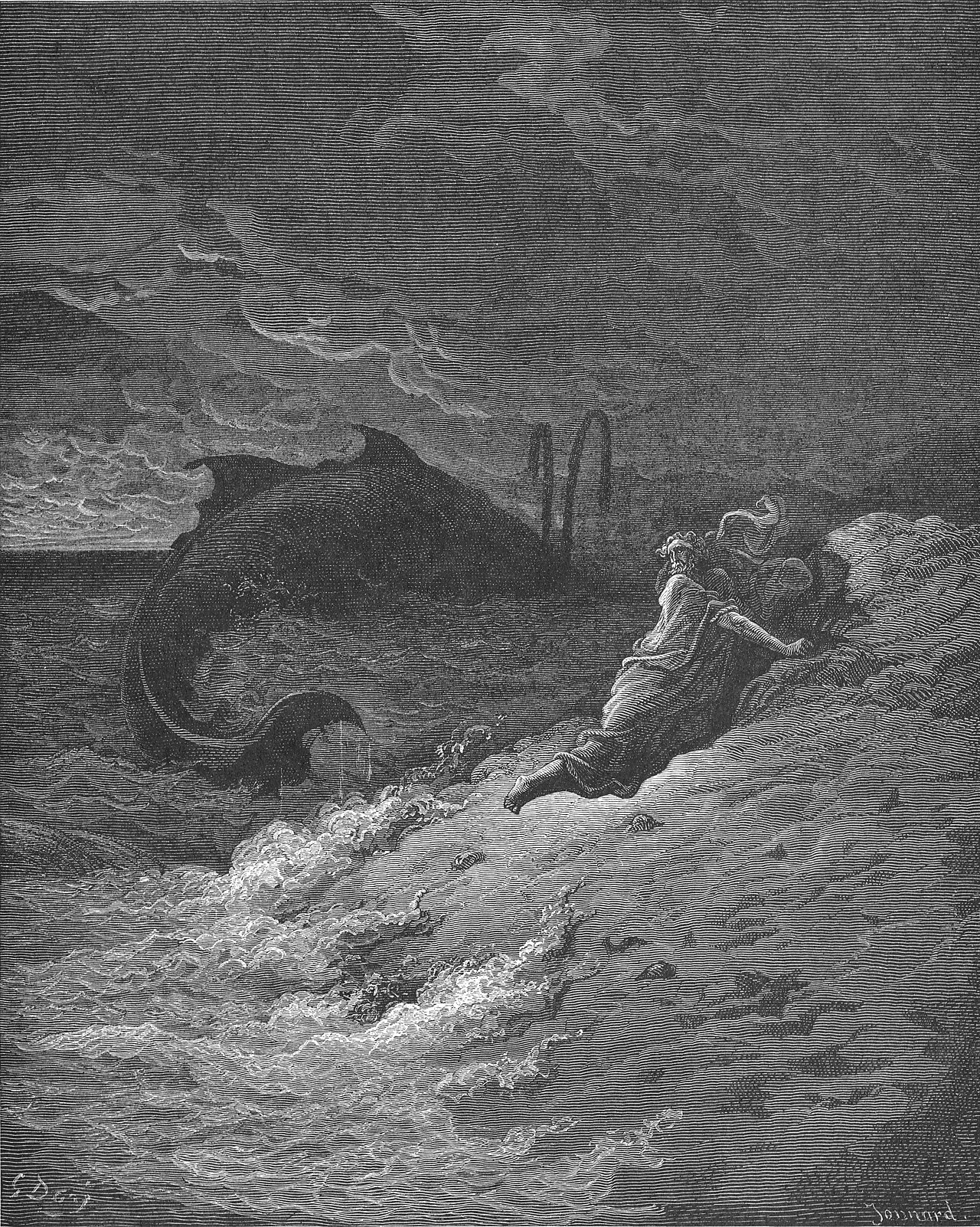
Jonah's anger erupts the moment mercy is confirmed: Nineveh spared displeases him exceedingly, and he asks the Lord to take his life rather than let him live to see it stand. His prayer names the reason he fled to Tarshish in the first place, quoting back to God his own self-description, a gracious God, and merciful, slow to anger, and of great kindness, and repentest thee of the evil, the same formula the Lord proclaimed of himself at Sinai. Jonah preached judgment and got mercy, and the prophet who ran from that mercy for Nineveh now begs to die rather than watch it stand. Calvin reads the prayer as Jonah's confession turned complaint, the truth about God's character used as an accusation against God's own kindness.
The record, by era
The Church Fathers3 voices
"[And he prayed unto the LORD, and said], I pray you, O LORD, was not this my saying, when I was yet in my country? Therefore I fled before unto Tarshish: for I knew that you are a gracious God, and merciful, slow to anger, and of great kindness, and you repent of the evil. Therefore now, O LORD, take, I beseech you, my life from me; for it is better for me to die than to live." LXX: 'O Lord, is this not what I said when I was still in my country?
But God will reply by the mouth of Jeremiah, "At what instant I will speak concerning a nation, and concerning a kingdom, to pluck up, and to break down, and to destroy it; if that nation, concerning what I have spoken, turn from their evil, I will repent of the evil that I thought to do to them. And at what instant I will speak concerning a nation, and concerning a kingdom, to build and to plant it; if it does evil in my sight, that it obeys not my voice, then I will repent of the good wherewith I said I would benefit them." Jonah was indignant because, at God's command, he had spoken falsely; but his sorrow was proved to be ill founded, since he would rather speak truth and have a countless multitude perish than speak falsely and have them saved.
A commentator
John ChrysostomHOMILIES ON REPENTANCE AND ALMSGIVING 2:20 · Written in the 5th century.
proposed
After he preached in the midst of Nineveh, he went out of the city in order to observe if anything should happen. When he saw that three days had passed and nothing had happened anywhere near what was threatened, he then put forward his first thought and said, "Are these not my words that I was saying that God is merciful and longsuffering and repents for people's evils?"
The Medieval Church1 voice
Partly Jonah prays, partly he complains, saying he did not wish to flee.
The Puritans and the Awakening1 voice
Being in discontent, he applied to the duty of prayer, as he used to do in his troubles, but his corruptions got head of his graces, and, when he should have been praying for benefit by the mercy of God himself, he was complaining of the benefit others had by that mercy.
5 more voices on this verse
The Puritans and the Awakening2 voices
), and foolish silly ones indeed those are that cut their own throats with their own passions, that fret themselves into consumptions and other weaknesses, and put themselves into fevers with their own intemperate heats.
quarantine:debris (2026-07-29) — leading-punctuation+unbalanced-parens
And he prayed unto the Lord,.... But in a very different manner from his praying in the fish's belly: this was a very disorderly prayer, put up in the hurry of his spirit, and in the heat of passion: prayer should be fervent indeed, but not like that of a man in a fever; there should be a warmth and ardour of affection in it, but it should be without wrath, as well as without doubting: this is called a prayer, because Jonah thought it to be so, and put it up to the Lord as one.
The Nineteenth Century3 voices
A commentator
Albert Barnes1798–1870
Notes, Explanatory and Practical, on the Old and New Testaments (1832-1869)
And he prayed unto the Lord - Jonah, at least, did not murmur or complain of God. He complained to God of Himself. He expostulates with Him. Shortsighted indeed and too wedded to his own will! Yet his will was the well-being of the people whose prophet God had made him. He tells God, that this it was, which he had all along dreaded. He softens it, as well as he can, by his word, “I pray Thee,” which expresses deprecation anti-submissiveness. Still he does not hesitate to tell God that this was the cause of his first rebellion!
A commentator
Jamieson, Fausset & Brown1802–1910
Commentary Critical and Explanatory on the Whole Bible (1871)
proposed
my saying--my thought, or feeling. fled before--I anticipated by fleeing, the disappointment of my design through Thy long-suffering mercy. gracious . . . and merciful, &c.--Jonah here has before his mind Ex 34:6; as Joel (Joe 2:13) in his turn quotes from Jonah.
quarantine:debris (2026-07-29) — starts-lowercase
I know that thou art a gracious God - See the note on Exo 34:6.
How the passage was read
What the Jewish commentators add
was this not my contention —I know that, if they repent, You will not destroy them, and I will appear to them as a liar.
3 more on this passage, in their own words ▾
Now it displeased Jonah —He said, “Now the nations will say that I am a false prophet.” [from Pirké d’Rabbi Eliezer ch. 10]
Now, please, take my life: so that I do not see the harm to Israel, like Moses our Teacher of blessed memory said, "erase me from Your book," and "kill me, please."
And this displeased Jonah as greatly evil, and he raised an objection.
This section is reception history: how the passage was read and kept in the Jewish tradition. Where a reading parts from an essential of the Christian faith, the section says so at that point.
Texts and citation data: Sefaria; each excerpt follows its version’s licence. 2 further sources are cited on this chapter that carry no English text this site may quote or only restate the verse.
The words behind it
32 Hebrew wordsEvery Hebrew word of this verse in the order it stands, with what it means and the door to its own study. The last column counts the times a word stands in the whole Bible: the rarer the word, the more the places it appears belong together.
| Hebrew | Sound | Meaning | Word study | In the Bible |
|---|---|---|---|---|
| וַיִּתְפַּלֵּ֨ל | vaiyitpalel | and he prayed | H6419 → | |
| אֶל־ | ʾel- | to | H413 → | 5510 times |
| יְהוָ֜ה | yahweh | Yahweh | H3068 → | 6520 times |
| וַיֹּאמַ֗ר | vaiyomar | and he said | H559 → | 5305 times |
| אָנָּ֤ה | ʾanah | I beg you | H577 → | |
| יְהוָה֙ | yahweh | O Yahweh | H3068 → | 6520 times |
| הֲלוֹא־ | halo'- | ¿ not | H3808 → | 5168 times |
| זֶ֣ה | zeh | [was] this | H2088 → | 1180 times |
| דְבָרִ֗י | devari | word my | H1697 → | 1440 times |
| עַד־ | ʾad- | until | H5704 → | 1261 times |
| הֱיוֹתִי֙ | heyoti | was I | H1961 → | 3559 times |
| עַל־ | ʾal- | on | H5921 → | 5755 times |
| אַדְמָתִ֔י | ʾadmati | own land my | H127 → | |
| עַל־ | ʾal- | there- | H5921 → | 5755 times |
| כֵּ֥ן | ken | -fore | H3651 → | |
| קִדַּ֖מְתִּי | kidamti | I did [the] first time | H6923 → | |
| לִבְרֹ֣חַ | livroach | to flee | H1272 → | 63 times |
| תַּרְשִׁ֑ישָׁה | tarshishah | Tarshish towards | H8659 → | 28 times |
| כִּ֣י | ki | that | H3588 → | 4482 times |
| יָדַ֗עְתִּי | yada'ti | I knew | H3045 → | 945 times |
| כִּ֤י | ki | that | H3588 → | 4482 times |
| אַתָּה֙ | ʾatah | you | H859 → | 1094 times |
| אֵֽל־ | ʾel- | [are] a God | H410 → | |
| חַנּ֣וּן | chanun | gracious | H2587 → | |
| וְרַח֔וּם | verachum | and compassionate | H7349 → | |
| אֶ֤רֶךְ | ʾerekh | long of | H750 → | |
| אַפַּ֙יִם֙ | ʾapayim | anger<s> | H639 → | |
| וְרַב־ | verav- | and great of | H7227 → | 454 times |
| חֶ֔סֶד | chesed | covenant loyalty | H2617 → | |
| וְנִחָ֖ם | venicham | and [who] relents | H5162 → | 108 times |
| עַל־ | ʾal- | on | H5921 → | 5755 times |
| הָרָעָֽה׃ | haraah | <the> evil | H7451 → | 662 times |
וַיִּתְפַּלֵּ֨לand he prayed
vaiyitpalelH6419 →
אֶל־to
ʾel-H413 →5510 times
יְהוָ֜הYahweh
yahwehH3068 →6520 times
וַיֹּאמַ֗רand he said
vaiyomarH559 →5305 times
אָנָּ֤הI beg you
ʾanahH577 →
יְהוָה֙O Yahweh
yahwehH3068 →6520 times
הֲלוֹא־¿ not
halo'-H3808 →5168 times
זֶ֣ה[was] this
zehH2088 →1180 times
דְבָרִ֗יword my
devariH1697 →1440 times
עַד־until
ʾad-H5704 →1261 times
הֱיוֹתִי֙was I
heyotiH1961 →3559 times
עַל־on
ʾal-H5921 →5755 times
אַדְמָתִ֔יown land my
ʾadmatiH127 →
עַל־there-
ʾal-H5921 →5755 times
כֵּ֥ן-fore
kenH3651 →
קִדַּ֖מְתִּיI did [the] first time
kidamtiH6923 →
לִבְרֹ֣חַto flee
livroachH1272 →63 times
תַּרְשִׁ֑ישָׁהTarshish towards
tarshishahH8659 →28 times
כִּ֣יthat
kiH3588 →4482 times
יָדַ֗עְתִּיI knew
yada'tiH3045 →945 times
כִּ֤יthat
kiH3588 →4482 times
אַתָּה֙you
ʾatahH859 →1094 times
אֵֽל־[are] a God
ʾel-H410 →
חַנּ֣וּןgracious
chanunH2587 →
וְרַח֔וּםand compassionate
verachumH7349 →
אֶ֤רֶךְlong of
ʾerekhH750 →
אַפַּ֙יִם֙anger<s>
ʾapayimH639 →
וְרַב־and great of
verav-H7227 →454 times
חֶ֔סֶדcovenant loyalty
chesedH2617 →
וְנִחָ֖םand [who] relents
venichamH5162 →108 times
עַל־on
ʾal-H5921 →5755 times
הָרָעָֽה׃<the> evil
haraahH7451 →662 times
A shaded row is a word that stands 400 times or fewer in the Bible.
The walk
8 stopsEach card is a verse this one points to, and under it the verses that one points to in turn. Where several paths arrive at the same place, that place is listed first: the text keeps returning to it.
Through
Psalms 86:15But You, O Lord, are a compassionate and gracious God, slow to anger, abounding in loving devotion and faithfulness.
it leads to
- Psalms 103:8
The LORD is compassionate and gracious, slow to anger, abounding in loving devotion.
Reached by 2 separate paths from here.
- Ephesians 2:4–7
But because of His great love for us, God, who is rich in mercy,
- Psalms 130:7
O Israel, put your hope in the LORD, for with the LORD is loving devotion, and with Him is redemption in abundance.
- Ephesians 1:7
In Him we have redemption through His blood, the forgiveness of our trespasses, according to the riches of His grace
- Psalms 145:8
The LORD is gracious and compassionate, slow to anger and abounding in loving devotion.
- Psalms 103:8
Through
Psalms 145:8The LORD is gracious and compassionate, slow to anger and abounding in loving devotion.
it leads to
- Numbers 14:18
‘The LORD is slow to anger and abounding in loving devotion, forgiving iniquity and transgression. Yet He will by no means leave the guilty unpunished; He will visit the iniquity of the fathers upon…
- Psalms 86:5
For You, O Lord, are kind and forgiving, rich in loving devotion to all who call on You.
- Psalms 100:5
For the LORD is good, and His loving devotion endures forever; His faithfulness continues to all generations.
- Numbers 14:18
Where this verse is studied
By subject
Grace35 verses
Mercy35 verses
On this page
About Jonah
This page draws on 10 works. Open the list of works
This page draws on Adam Clarke, Commentary on the Bible; Albert Barnes, Notes, Explanatory and Practical, on the Old and New Testaments (1832-1869); Haimo of Auxerre, Commentary (church-history corpus); Jamieson, Fausset & Brown, Commentary Critical and Explanatory on the Whole Bible; Jerome, Commentary on Jonah, Chapter 4; Jerome, Against the Pelagians 3.6; John Calvin, Commentaries on the Twelve Minor Prophets; John Chrysostom, HOMILIES ON REPENTANCE AND ALMSGIVING 2:20; John Gill, Exposition of the Old Testament (1748-1763) and Matthew Henry, Commentary on the Whole Bible.