
Judges 16:20
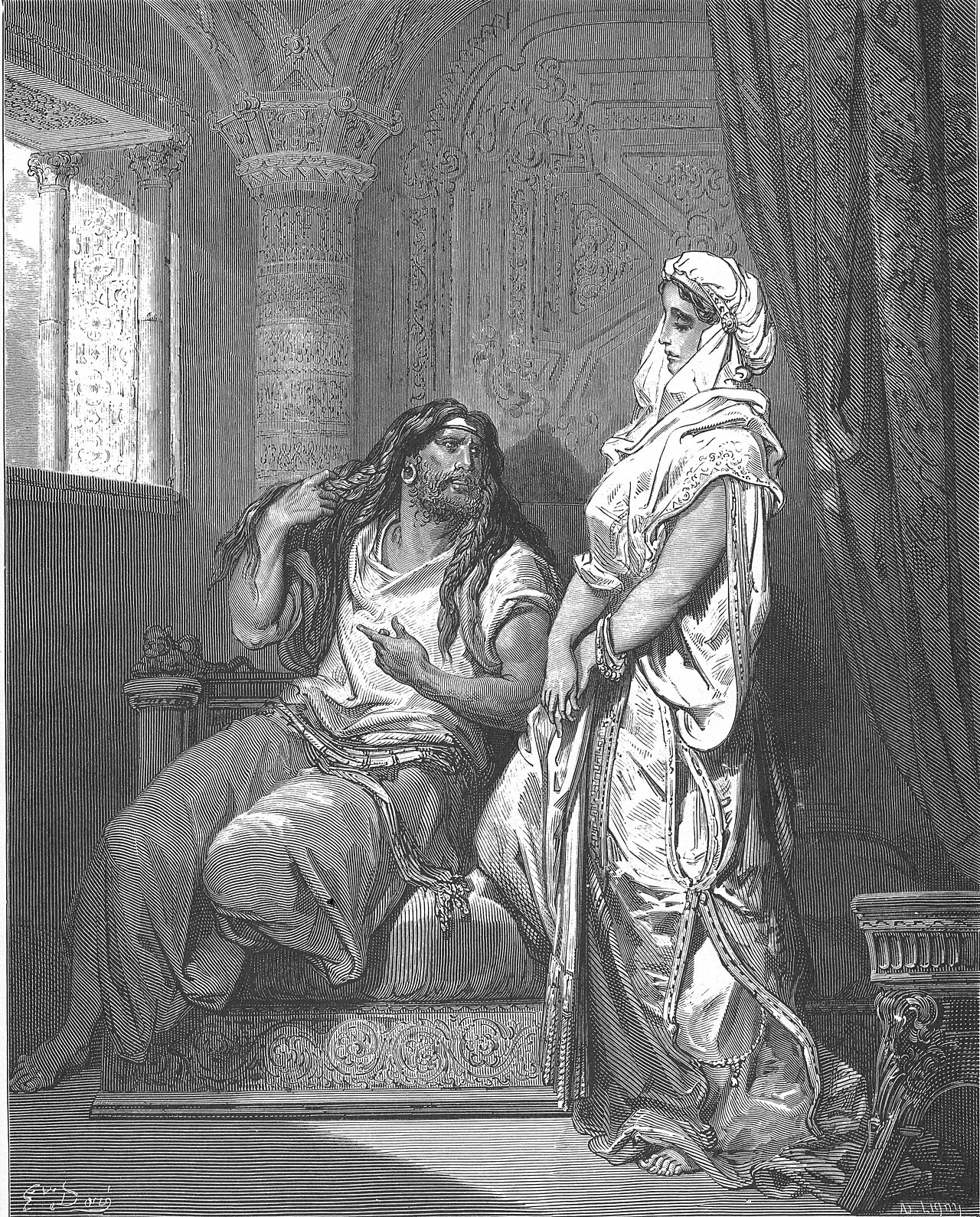
in Judges 16Then she called out, “Samson, the Philistines are here!” When Samson awoke from his sleep, he thought, “I will escape as I did before and shake myself free.” But he did not know that the LORD had departed from him.
BSB
The same verse in ASV and KJV ▾
ASV
And she said, The Philistines are upon thee, Samson. And he awoke out of his sleep, and said, I will go out as at other times, and shake myself free. But he knew not that Jehovah was departed from him.
KJV
And she said, The Philistines be upon thee, Samson. And he awoke out of his sleep, and said, I will go out as at other times before, and shake myself. And he wist not that the Lord was departed from him.
⋯
This verse in Judges 16
Commentary
10 notes on this verseBut the one who has taken root as "a fruitful olive tree in the house of God" composes those words against the tyrant which we have heard in the psalm, saying, "Why do you glory in evil, you who are mighty in iniquity," whose "tongue" is "like a sharp razor." It was by means of these two things that [Samson] was led off, after [Delilah] had removed the beauty of his hair and cut off the "seven locks of curls" in which our strength lies.
This site's exposition
he did not know that the LORD had departed from him
He means to “shake myself free”, and the chapters have been moving toward this sentence: “he did not know that the LORD had departed from him”. Four of the book's seven comings of the Spirit fell on Samson, the most gifted man in Judges. Keil and Delitzsch read the hair as the badge of the vow rather than the seat of the power, and the verse leaves the mechanism unstated.
The record, by era
The Church Fathers1 voice
Now what does it mean that Samson possessed strength in his hair? Notice this carefully, too, brothers. He did not have strength in his hand, his foot, his chest, not even in his head, but in his hair. What is hair? If we perceive it, …
The Puritans and the Awakening3 voices
He soon found in himself some change, we have reason to think so, and yet wist not that the Lord had departed from him: he did not consider that this was the reason of the change. Note, Many have lost the favourable presence of God and are not aware of it; they have provoked God to withdraw from them, but are not sensible of their loss, nor ever complain of it.
Shake myself - That is, put forth my strength. Knew not - Not distinctly feeling the loss of his hair, or not considering what would follow. Many have lost the favourable presence of God, and are not aware of it.
And she said, the Philistines be upon thee, Samson,....
The Nineteenth Century1 voice
A commentator
Albert Barnes1798–1870
Notes, Explanatory and Practical, on the Old and New Testaments (1832-1869)
The possession of his extraordinary strength is ascribed (e. g. Jdg 13:25) to the presence of the Spirit of the Lord. Now the Lord, or the Spirit of the Lord, had departed from him, and so his strength had gone too. The practical lesson against the presumption of self-dependence, and the all-importance of a hearty dependence upon God’s Holy Spirit, must not be overlooked.
3 more voices on this verse
The Nineteenth Century3 voices
A commentator
Jamieson, Fausset & Brown1802–1910
Commentary Critical and Explanatory on the Whole Bible (1871)
proposed
he wist not that the Lord was departed from him--What a humiliating and painful spectacle! Deprived of the divine influences, degraded in his character, and yet, through the infatuation of a guilty passion, scarcely awake to the wretchedness of his fallen condition!
quarantine:debris (2026-07-29) — starts-lowercase
SAMSON IS, IN MANY RESPECTS, one of the most remarkable men whose history is recorded in the pages of inspiration. He enjoyed a singular privilege only accorded to one other person in the Old Testament. His birth was foretold to his parents by an angel. Isaac was promised to Abraham and Sarah by angels whom they entertained unawares; but save Isaac, Samson was the only one whose birth was foretold by an angelic messenger before the opening of the gospel dispensation. Before his birth he was dedicated to God, and set apart as a Nazarite.
SAMSON IS, IN MANY RESPECTS, one of the most remarkable men whose history is recorded in the pages of inspiration. He enjoyed a singular privilege only accorded to one other person in the Old Testament. His birth was foretold to his parents by an angel. Isaac was promised to Abraham and Sarah by angels whom they entertained unawares; but save Isaac, Samson was the only one whose birth was foretold by an angelic messenger before the opening of the gospel dispensation. Before his birth he was dedicated to God, and set apart as a Nazarite. Now, a Nazarite was a person who was entirely consecrated to God, and in token of his consecration he drank no wine; and allowed his hair to grow, untouched by the razor. Samson, you may therefore understand, was entirely consecrated to God, and when any saw him, they would say, “That man is God’s man, a Nazarite, set apart.” God endowed Samson with supernatural strength, a strength which never could have been the result of mere thews and sinews. It was not the fashioning of Samson’s body that made him strong; it was not the arm, or the fist with which he smote the Philistines; it was a miracle that dwelt within him, a continued going forth of the omnipotence of God, which made him mightier than thousands of his enemies. Samson appears very early to have discovered in himself this great strength, for “the Spirit of the Lord began to move him at times in the camp of Dan.” He judged Israel for thirty years, and gloriously did he deliver them. What a noble being he must have been! See him, when he steps into the vineyard for a moment from his parents. A lion that has been crouching there springs upon him, but he meets him all unarmed, receives him upon his brawny arms and rends him like a kid.
The words behind it
18 Hebrew wordsEvery Hebrew word of this verse in the order it stands, with what it means and the door to its own study. The last column counts the times a word stands in the whole Bible: the rarer the word, the more the places it appears belong together.
| Hebrew | Sound | Meaning | Word study | In the Bible |
|---|---|---|---|---|
| וַתֹּ֕אמֶר | vatomer | and she said | H559 → | 5305 times |
| פְּלִשְׁתִּ֥ים | pelishtim | [the] Philistines | H6430 → | 287 times |
| עָלֶ֖יךָ | ʾaleikha | [are] on you | H5921 → | 5755 times |
| שִׁמְשׁ֑וֹן | shimshon | O Samson | H8123 → | 38 times |
| וַיִּקַ֣ץ | vaiyikatz | and he awoke | H3364 → | |
| מִשְּׁנָת֗וֹ | mishenato | from sleep his | H8142 → | |
| וַיֹּ֙אמֶר֙ | vaiyomer | and he said | H559 → | 5305 times |
| אֵצֵ֞א | ʾetze' | I will go out | H3318 → | 1067 times |
| כְּפַ֤עַם | kefaam | as time | H6471 → | 118 times |
| בְּפַ֙עַם֙ | befaam | on time | H6471 → | 118 times |
| וְאִנָּעֵ֔ר | veinaer | so I may shake myself free | H5287 → | |
| וְהוּא֙ | vehu' | and he | H1931 → | 1879 times |
| לֹ֣א | lo' | not | H3808 → | 5168 times |
| יָדַ֔ע | yada' | he knew | H3045 → | 945 times |
| כִּ֥י | ki | that | H3588 → | 4482 times |
| יְהוָ֖ה | yahweh | Yahweh | H3068 → | 6520 times |
| סָ֥ר | sar | he had departed | H5493 → | 299 times |
| מֵעָלָֽיו׃ | mealav | from with <the> him | H5921 → | 5755 times |
וַתֹּ֕אמֶרand she said
vatomerH559 →5305 times
פְּלִשְׁתִּ֥ים[the] Philistines
pelishtimH6430 →287 times
עָלֶ֖יךָ[are] on you
ʾaleikhaH5921 →5755 times
שִׁמְשׁ֑וֹןO Samson
shimshonH8123 →38 times
וַיִּקַ֣ץand he awoke
vaiyikatzH3364 →
מִשְּׁנָת֗וֹfrom sleep his
mishenatoH8142 →
וַיֹּ֙אמֶר֙and he said
vaiyomerH559 →5305 times
אֵצֵ֞אI will go out
ʾetze'H3318 →1067 times
כְּפַ֤עַםas time
kefaamH6471 →118 times
בְּפַ֙עַם֙on time
befaamH6471 →118 times
וְאִנָּעֵ֔רso I may shake myself free
veinaerH5287 →
וְהוּא֙and he
vehu'H1931 →1879 times
לֹ֣אnot
lo'H3808 →5168 times
יָדַ֔עhe knew
yada'H3045 →945 times
כִּ֥יthat
kiH3588 →4482 times
יְהוָ֖הYahweh
yahwehH3068 →6520 times
סָ֥רhe had departed
sarH5493 →299 times
מֵעָלָֽיו׃from with <the> him
mealavH5921 →5755 times
A shaded row is a word that stands 400 times or fewer in the Bible.
The walk
8 stopsEach card is a verse this one points to, and under it the verses that one points to in turn. Where several paths arrive at the same place, that place is listed first: the text keeps returning to it.
Through
1 Samuel 16:14After the Spirit of the LORD had departed from Saul, a spirit of distress from the LORD began to torment him.
it leads to
- 1 Samuel 28:15
Then Samuel said to Saul, “Why have you disturbed me by bringing me up?” “I am deeply distressed,” replied Saul. “The Philistines are fighting against me, and God has turned away from me. He…
Reached by 2 separate paths from here.
- Psalms 51:11
Cast me not away from Your presence; take not Your Holy Spirit from me.
- 1 Samuel 18:12
So Saul was afraid of David, because the LORD was with David but had departed from Saul.
- Judges 9:23
God sent a spirit of animosity between Abimelech and the leaders of Shechem and caused them to treat Abimelech deceitfully,
- 1 Samuel 18:10
The next day a spirit of distress sent from God came upon Saul, and he prophesied inside the house while David played the harp as usual. Now Saul was holding a spear,
- 1 Samuel 28:15
Through
1 Samuel 18:12So Saul was afraid of David, because the LORD was with David but had departed from Saul.
it leads to
- 1 Samuel 18:15
When Saul saw that David was very successful, he was afraid of him.
- 1 Samuel 18:15
Through
Joshua 7:12This is why the Israelites cannot stand against their enemies. They will turn their backs and run from their enemies, because they themselves have been set apart for destruction. I will no longer be…
it leads to
- Psalms 5:4–5
For You are not a God who delights in wickedness; no evil can dwell with You.
- Isaiah 59:2
But your iniquities have built barriers between you and your God, and your sins have hidden His face from you, so that He does not hear.
- Psalms 5:4–5
About Judges
Who and where
1 name in this verse with a page on the site.
This page draws on 9 works. Open the list of works
This page draws on Albert Barnes, Notes, Explanatory and Practical, on the Old and New Testaments (1832-1869); Caesarius of Arles, SERMON 118.6; Charles Spurgeon, The New Park Street Pulpit, Sermon No. 224: “Samson Conquered” (lightly modernized text, CCEL edition); Gregory of Nyssa, ON THE INSCRIPTIONS OF THE PSALMS 2.13.183; Jamieson, Fausset & Brown, Commentary Critical and Explanatory on the Whole Bible; John Gill, Exposition of the Old Testament (1748-1763); John Wesley, Explanatory Notes upon the Old Testament; Keil and Delitzsch, Biblical Commentary on the Old Testament: Joshua, Judges, Ruth and Matthew Henry, Commentary on the Whole Bible.