
Judges 16:12
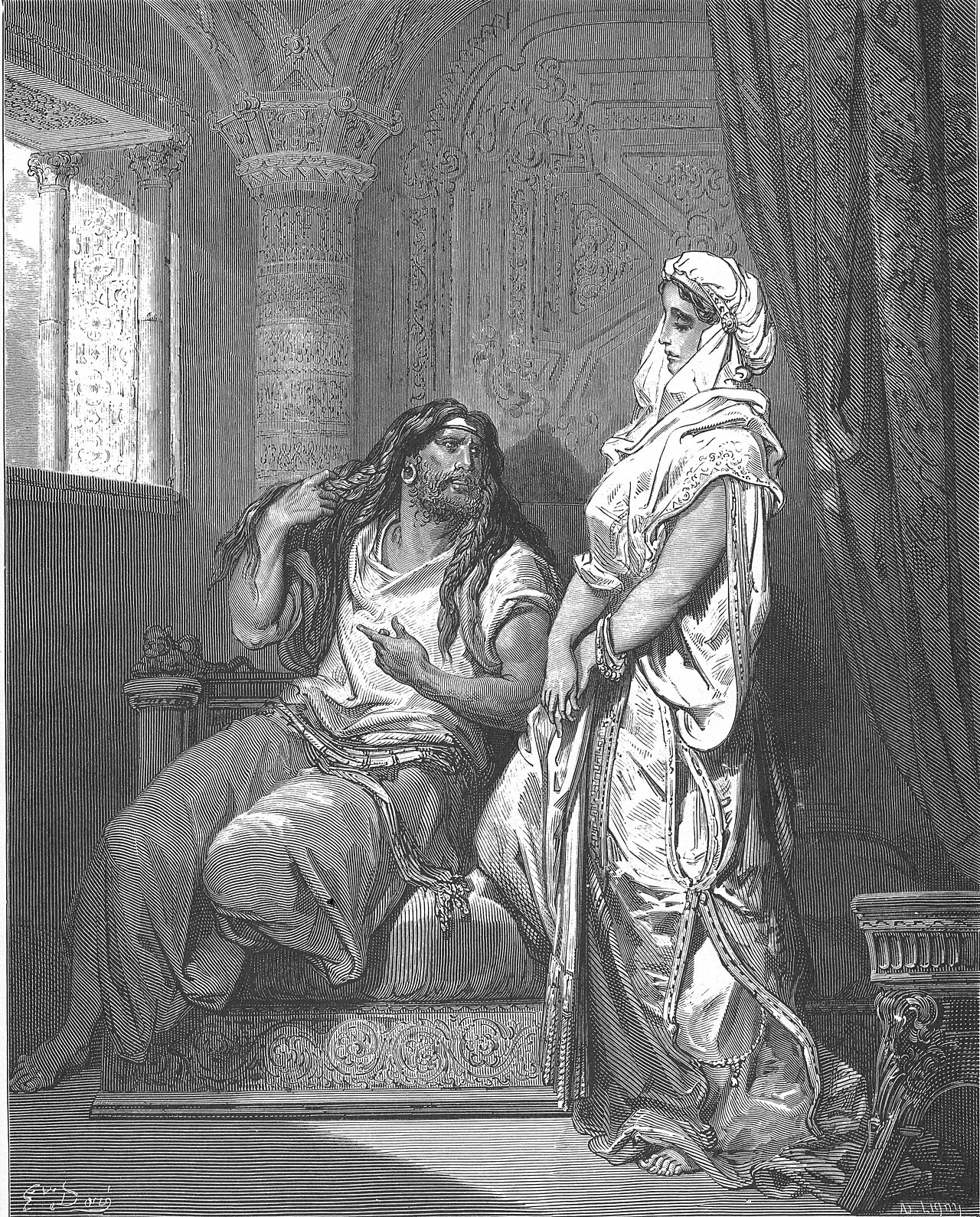
in Judges 16So Delilah took new ropes, tied him up with them, and called out, “Samson, the Philistines are here!” But while the men were hidden in her room, he snapped the ropes off his arms like they were threads.
BSB
The same verse in ASV and KJV ▾
ASV
So Delilah took new ropes, and bound him therewith, and said unto him, The Philistines are upon thee, Samson. And the liers-in-wait were abiding in the inner chamber. And he brake them off his arms like a thread.
KJV
Delilah therefore took new ropes, and bound him therewith, and said unto him, The Philistines be upon thee, Samson. And there were liers in wait abiding in the chamber. And he brake them from off his arms like a thread.
⋯
This verse in Judges 16
Commentary
7 notes on this verseThis site's exposition
Behold, thou hast mocked me
on Judges 16:10-12
New ropes that never were occupied is exactly what the men of Judah used at 15:13, where they bound him with two new cords, and 15:14 says the cords became as flax that was burnt with fire. He is handing Delilah the record of his own deliverances as a game. The liers in wait are in the chamber for this attempt as for the first, so the third answer is given with armed men in the room and the second trap already sprung.
The record, by era
The Church Fathers3 voices
Samson, still firm of purpose, intimated to her that, if he were bound by seven ropes which had never been used, he would fall into the hands of the enemy, but this also was in vain.
What was the meaning of Samson? If I say he signified Christ, it seems to me that I speak the truth. However, the thought immediately occurs to anyone who reflects: Was Christ overcome by the flattery of a woman? How is Christ understood to have …
Like the famed Samson, whose power lay in the strength of his hair, whose locks were endowed with sacred might, he must throttle and bring low the lion by means of the strong arms of prayers and pluck the sweet fruit of notable victory from …
The Puritans and the Awakening2 voices
But first, it is probable, that Samson had in some measure repented of his sin, and begged of God pardon and assistance. 2.This singular strength and courage was not in itself a grace, but a gift, and it was such a gift as did not so much depend on the disposition of his mind, but on the right ordering of his body, by the rule given to him, and others of that order.
Delilah therefore took new ropes, and bound him therewith,....
1 more voice on this verse
The Nineteenth Century1 voice
A commentator
Jamieson, Fausset & Brown1802–1910
Commentary Critical and Explanatory on the Whole Bible (1871)
proposed
new ropes--It is not said of what material they were formed; but from their being dried, it is probable they were of twigs, like the former. The Hebrew intimates that they were twisted, and of a thick, strong description.
quarantine:debris (2026-07-29) — starts-lowercase
How the passage was read
What the Jewish commentators add
On the verses either side of this one
With ropes. Thick rope. 1 Unlike the thin string specified in v.
This section is reception history: how the passage was read and kept in the Jewish tradition. Where a reading parts from an essential of the Christian faith, the section says so at that point.
Texts and citation data: Sefaria; each excerpt follows its version’s licence. 5 further sources are cited on this chapter that carry no English text this site may quote or only restate the verse.
The words behind it
18 Hebrew wordsEvery Hebrew word of this verse in the order it stands, with what it means and the door to its own study. The last column counts the times a word stands in the whole Bible: the rarer the word, the more the places it appears belong together.
| Hebrew | Sound | Meaning | Word study | In the Bible |
|---|---|---|---|---|
| וַתִּקַּ֣ח | vatikach | and she took | H3947 → | 966 times |
| דְּלִילָה֩ | delilah | Delilah | H1807 → | 6 times |
| עֲבֹתִ֨ים | ʾavotim | ropes | H5688 → | 24 times |
| חֲדָשִׁ֜ים | chadashim | new | H2319 → | 53 times |
| וַתַּאַסְרֵ֣הוּ | vataasrehu | and she bound him | H631 → | 72 times |
| בָהֶ֗ם | vahem | with <the> them | ||
| וַתֹּ֤אמֶר | vatomer | and she said | H559 → | 5305 times |
| אֵלָיו֙ | ʾelav | to him | H413 → | 5510 times |
| פְּלִשְׁתִּ֤ים | pelishtim | [the] Philistines | H6430 → | 287 times |
| עָלֶ֙יךָ֙ | ʾaleikha | [are] on you | H5921 → | 5755 times |
| שִׁמְשׁ֔וֹן | shimshon | O Samson | H8123 → | 38 times |
| וְהָאֹרֵ֖ב | vehaorev | and the ambusher | H693 → | 41 times |
| יֹשֵׁ֣ב | yoshev | [was] sitting | H3427 → | 1079 times |
| בֶּחָ֑דֶר | bechader | in the chamber | H2315 → | 38 times |
| וַֽיְנַתְּקֵ֛ם | vaynatekem | and he tore apart them | H5423 → | 27 times |
| מֵעַ֥ל | meal | from on | H5921 → | 5755 times |
| זְרֹעֹתָ֖יו | zerootav | arms his | H2220 → | |
| כַּחֽוּט׃ | kachut | like <the> thread | H2339 → |
וַתִּקַּ֣חand she took
vatikachH3947 →966 times
דְּלִילָה֩Delilah
delilahH1807 →6 times
עֲבֹתִ֨יםropes
ʾavotimH5688 →24 times
חֲדָשִׁ֜יםnew
chadashimH2319 →53 times
וַתַּאַסְרֵ֣הוּand she bound him
vataasrehuH631 →72 times
בָהֶ֗םwith <the> them
vahem
וַתֹּ֤אמֶרand she said
vatomerH559 →5305 times
אֵלָיו֙to him
ʾelavH413 →5510 times
פְּלִשְׁתִּ֤ים[the] Philistines
pelishtimH6430 →287 times
עָלֶ֙יךָ֙[are] on you
ʾaleikhaH5921 →5755 times
שִׁמְשׁ֔וֹןO Samson
shimshonH8123 →38 times
וְהָאֹרֵ֖בand the ambusher
vehaorevH693 →41 times
יֹשֵׁ֣ב[was] sitting
yoshevH3427 →1079 times
בֶּחָ֑דֶרin the chamber
bechaderH2315 →38 times
וַֽיְנַתְּקֵ֛םand he tore apart them
vaynatekemH5423 →27 times
מֵעַ֥לfrom on
mealH5921 →5755 times
זְרֹעֹתָ֖יוarms his
zerootavH2220 →
כַּחֽוּט׃like <the> thread
kachutH2339 →
A shaded row is a word that stands 400 times or fewer in the Bible.
About Judges
Who and where
1 name in this verse with a page on the site.
This page draws on Adam Clarke, Commentary on the Bible; Albert Barnes, Notes on the Old Testament; Ambrose of Milan, Letter 19; Caesarius of Arles, SERMON 118.3; Jamieson, Fausset & Brown, Commentary Critical and Explanatory on the Whole Bible; John Gill, Exposition of the Old Testament (1748-1763); John Wesley, Explanatory Notes upon the Old Testament and Paulinus of Nola, POEM 24.529-581.