
Isaiah 44:2
in Isaiah 44This is the word of the LORD, your Maker, who formed you from the womb and who will help you: “Do not be afraid, O Jacob My servant, Jeshurun, whom I have chosen.
BSB
The same verse in ASV and KJV ▾
ASV
Thus saith Jehovah that made thee, and formed thee from the womb, who will help thee: Fear not, O Jacob my servant; and thou, Jeshurun, whom I have chosen.
KJV
Thus saith the Lord that made thee, and formed thee from the womb, which will help thee; Fear not, O Jacob, my servant; and thou, Jesurun, whom I have chosen.
⋯
This verse in Isaiah 44
Commentary
12 notes on this verseDo not fear their cruelty, my servant Jacob, whom I have chosen. He is also called Israel; Isurun in Hebrew, and the others, the most upright or the straightest. Only the LXX called him the most beloved, combining it with their own, Israel. Specifically, according to the Hebrews and the faith of the scriptures, Israel is called the upright one of God. But a man who sees God is not in the elements, but in the sound of his voice. And the book of Genesis is called εὐθεῖς, that is, the book of the righteous: Abraham, Isaac, and Israel.
This site's exposition
Yet now hear, O Jacob my servant
on Isaiah 44:1-3
Yet now hear, O Jacob my servant opens the chapter on the same servant language that named Israel through the trial of chapter 43, formed thee from the womb reaching back to before birth for the ground of the promise. Fear not repeats a third time in two chapters, now paired with a name found nowhere else in Scripture, Jesurun, which the older writers read as an affectionate name for the upright one. Verse 3 promises water for the thirsty and my spirit upon thy seed together, the Spirit's outpouring set beside physical relief for a people about to be scattered no longer, which Delitzsch and Barnes both connect forward to the later prophets' fuller Spirit promises.
The record, by era
The Church Fathers1 voice
(Chapter 44, verse 1 and 2) Now listen, my servant Jacob, and Israel, whom I have chosen. Thus says the Lord, your maker and shaper from the womb, your helper. Do not fear, my servant Jacob, and you, whom I have chosen. LXX: But now hear, Jacob my servant, and Israel whom I have chosen. I am the Lord your God, who created you and formed you from the womb; you will still have my help. Do not fear, my servant Jacob, and beloved Israel whom I have chosen.
The Medieval Church1 voice
846. And now hear, O Jacob. Here, third, he strengthens them from the worthlessness of the idols, lest perhaps they should believe that the divine promises could be impeded by them. And this is divided into two parts: in the first, he excludes fear; in …
The Puritans and the Awakening2 voices
25 ), I am he that blotteth out thy transgression, which is the only thing that creates this distance; and when that is taken away the streams of mercy run again in their former channel. The pardon of sin is the inlet of all the other blessings of the covenant.
quarantine:debris (2026-07-29) — leading-citation-number+unbalanced-parens
Thus saith the Lord that made thee, and formed thee from the womb,....
The Nineteenth Century1 voice
A commentator
Jamieson, Fausset & Brown1802–1910
Commentary Critical and Explanatory on the Whole Bible (1871)
The sense is similar to that in Isa 1:2, "I have nourished and brought up children." Jesurun--A diminutive term of endearment applied to Israel. The full title of affection was Israelun; contracted it became Jeshurun, with an allusion to the Hebrew root, jashar, "upright," "perfect" (see on Isa 42:19, note on "He that is perfect") [GESENIUS], (De 32:15).
5 more voices on this verse
The Nineteenth Century5 voices
A commentator
Jamieson, Fausset & Brown1802–1910
Commentary Critical and Explanatory on the Whole Bible (1871)
proposed
Yet--Though thou hast sinned, yet hear God's gracious promise as to thy deliverance. chosen-- (Isa 41:8).
WE ought not to overlook the first and immediate meaning of these words. There can be no doubt that we have here a promise made to God's ancient people, the Jews. Whatever their sins may have been, God has not forever cast them away. They have become like the dry and thirsty desert, but the day will yet dawn when God's sovereign love shall again visit them and His Spirit shall distil upon them until Israel shall be glorious among the nations and her children shall be multiplied and saved. O that the long-expected day would hasten! Break, hallowed morning, for earth's watchers are growing weary! The twelve tribes right longingly wait for the appearance of Messiah the Prince and we also who believe in Jesus, joyfully expect His advent and the gathering together of Israel. How great will be the day of the Lord's gracious visitation! "For if the casting away of them is the reconciling of the world, what shall the receiving of them be, but life from the dead?" If the fall of them is the riches of the world and the diminishing of them the riches of the Gentiles, how much more their fullness? The vision tarries, but it will surely come! The Glory of the Lord shall be revealed and all flesh shall see it together, for the mouth of the Lord has spoken it. Be it ours to rejoice in that ancient promise, "There shall come out of Sion the Deliverer and shall turn away ungodliness from Jacob: for this is My Covenant unto them, when I shall take away their sins." Leaving this interesting view of the text, we will meditate on it, for practical purposes of comfort to ourselves. Observe that the text begins with the word, "Yet." What an ominous word as to the past! What a cheering word as to the future! "Yet." "Yet." What black words are those which come before it? Surely all is not well. Look at the preceding verses and see.
WE ought not to overlook the first and immediate meaning of these words. There can be no doubt that we have here a promise made to God's ancient people, the Jews. Whatever their sins may have been, God has not forever cast them away. They have become like the dry and thirsty desert, but the day will yet dawn when God's sovereign love shall again visit them and His Spirit shall distil upon them until Israel shall be glorious among the nations and her children shall be multiplied and saved. O that the long-expected day would hasten!
Jesurun - Jeshurun means Israel. This name was given to that people by Moses, Deu 32:15; Deu 33:5, Deu 33:26. The most probable account of it seems to be that in which the Jewish commentators agree; namely, that it is derived from ישר yashar, and signifies upright.
A commentator
Albert Barnes1798–1870
Notes, Explanatory and Practical, on the Old and New Testaments (1832-1869)
proposed
Thus saith the Lord that made thee - (See the note at Isa 43:1). And formed thee from the womb - This is equivalent to the declaration that he was their Maker, or Creator. It means, that from the very beginning of their history as a people, he had formed and moulded all their institutions, and directed all things in regard to them - as much as he is the former of the body from the commencement of its existence. It may be observed that the words, ‘from the womb,’ are joined by some interpreters with the phrase, ‘that formed thee,’ meaning, that he had been the originator of all their customs, privileges, and laws, from the beginning of their history; and by others with the phrase, ‘will help thee,’ meaning, that from the commencement of their existence as a nation, he had been their helper. According to the Masoretic marks of distinction, the former is the true sense. So the Septuagint, Aben Ezra, Kimchi, Lowth, etc.; but Jerome, Luther, and some others, prefer the latter mode. Fear not - (See the note at Isa 41:10). Though you have sinned as a people Isa 43:23-24, Isa 43:27, and though all these heavy judgments have come upon you Isa 43:28, yet you have no reason to fear that God will finally abandon and destroy you. And thou Jeshurun - (וישׁרוּן vayeshurûn). This word occurs but four times in the Bible, as a poetical name for the people of Israel, apparently expressing affection and tenderness (Deu 32:15; Deu 33:5, Deu 33:26; and in this place). It is, says Gesenius (Commentary in loc.), ‘a flattering appellation (schmeichelwort) for Israel,’ and is probably a diminutive from ישׁור yāshûr = ישׁר yāshâr, the passive form in an intransitive verb with an active signification. The ending ון ôn, he adds, is terminatio charitiva - a termination indicating affection, or kindness. […]
The words behind it
14 Hebrew wordsEvery Hebrew word of this verse in the order it stands, with what it means and the door to its own study. The last column counts the times a word stands in the whole Bible: the rarer the word, the more the places it appears belong together.
| Hebrew | Sound | Meaning | Word study | In the Bible |
|---|---|---|---|---|
| כֹּה־ | koh- | thus | H3541 → | 577 times |
| אָמַ֨ר | ʾamar | he says | H559 → | 5305 times |
| יְהוָ֥ה | yahweh | Yahweh | H3068 → | 6520 times |
| עֹשֶׂ֛ךָ | ʾosekha | [who] made you | H6213 → | 2628 times |
| וְיֹצֶרְךָ֥ | veyotzerkha | and [who] formed you | H3335 → | 62 times |
| מִבֶּ֖טֶן | mibeten | from [the] womb | H990 → | 72 times |
| יַעְזְרֶ֑ךָּ | ya'zereka | he will help you | H5826 → | 81 times |
| אַל־ | ʾal- | may not | H408 → | 724 times |
| תִּירָא֙ | tira' | you be afraid | H3372 → | 315 times |
| עַבְדִּ֣י | ʾavdi | O servant my | H5650 → | 799 times |
| יַֽעֲקֹ֔ב | yaako | Jacob | H3290 → | 350 times |
| וִישֻׁר֖וּן | vishurun | and Jeshurun | H3484 → | |
| בָּחַ֥רְתִּי | bacharti | [whom] I have chosen | H977 → | 171 times |
| בֽוֹ׃ | vo | <in> it |
כֹּה־thus
koh-H3541 →577 times
אָמַ֨רhe says
ʾamarH559 →5305 times
יְהוָ֥הYahweh
yahwehH3068 →6520 times
עֹשֶׂ֛ךָ[who] made you
ʾosekhaH6213 →2628 times
וְיֹצֶרְךָ֥and [who] formed you
veyotzerkhaH3335 →62 times
מִבֶּ֖טֶןfrom [the] womb
mibetenH990 →72 times
יַעְזְרֶ֑ךָּhe will help you
ya'zerekaH5826 →81 times
אַל־may not
ʾal-H408 →724 times
תִּירָא֙you be afraid
tira'H3372 →315 times
עַבְדִּ֣יO servant my
ʾavdiH5650 →799 times
יַֽעֲקֹ֔בJacob
yaakoH3290 →350 times
וִישֻׁר֖וּןand Jeshurun
vishurunH3484 →
בָּחַ֥רְתִּי[whom] I have chosen
bachartiH977 →171 times
בֽוֹ׃<in> it
vo
A shaded row is a word that stands 400 times or fewer in the Bible.
The walk
8 stopsEach card is a verse this one points to, and under it the verses that one points to in turn. Where several paths arrive at the same place, that place is listed first: the text keeps returning to it.
Through
Jeremiah 1:5“Before I formed you in the womb I knew you, and before you were born I set you apart and appointed you as a prophet to the nations.”
it leads to
- Psalms 139:16
Your eyes saw my unformed body; all my days were written in Your book and ordained for me before one of them came to be.
- Isaiah 49:1
Listen to Me, O islands; pay attention, O distant peoples: The LORD called Me from the womb; from the body of My mother He named Me.
- Galatians 1:15–16
But when God, who set me apart from my mother’s womb and called me by His grace, was pleased
- Psalms 71:5–6
For You are my hope, O Lord GOD, my confidence from my youth.
- Romans 8:29
For those God foreknew, He also predestined to be conformed to the image of His Son, so that He would be the firstborn among many brothers.
- Psalms 139:16
Through
Isaiah 43:1Now this is what the LORD says— He who created you, O Jacob, and He who formed you, O Israel: “Do not fear, for I have redeemed you; I have called you by your…
it leads to
- Psalms 100:3
Know that the LORD is God. It is He who made us, and we are His; we are His people, and the sheep of His pasture.
- Isaiah 43:7
everyone called by My name and created for My glory, whom I have indeed formed and made.”
- Zechariah 13:9
This third I will bring through the fire; I will refine them like silver and test them like gold. They will call on My name, and I will answer them. I will say, ‘They…
- Psalms 100:3
Where this verse is studied
About Isaiah
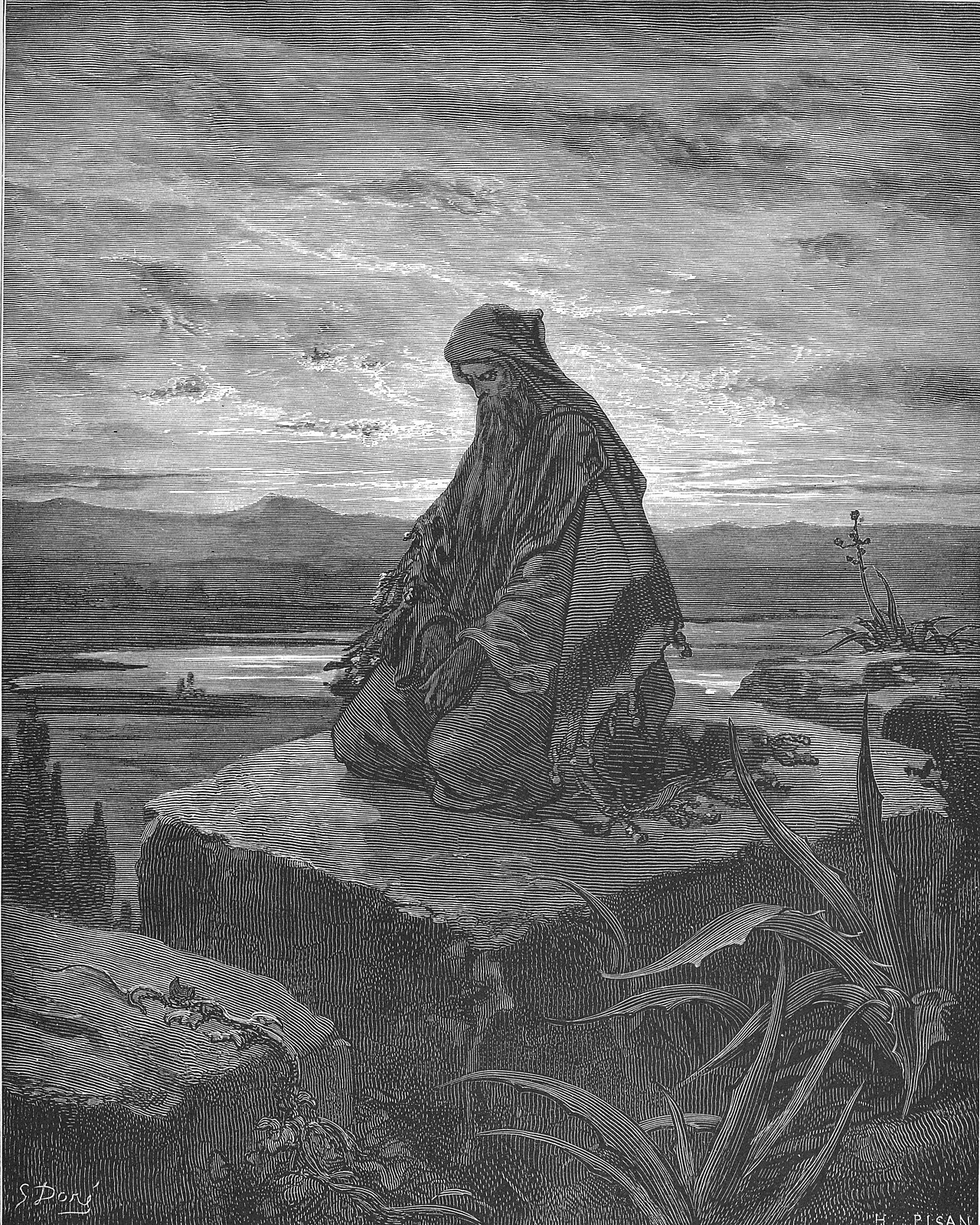
Who and where
1 name in this verse with a page on the site.
This page draws on 10 works. Open the list of works
This page draws on Adam Clarke, Commentary on the Bible; Albert Barnes, Notes on the Book of Isaiah; Albert Barnes, Notes, Explanatory and Practical, on the Old and New Testaments (1832-1869); Charles Spurgeon, The Metropolitan Tabernacle Pulpit, Sermon No. 564: “A Promise For Us And For Our Children” (lightly modernized text, CCEL edition); Franz Delitzsch, Biblical Commentary on the Prophecies of Isaiah; Jamieson, Fausset & Brown, Commentary Critical and Explanatory on the Whole Bible; Jerome, Commentary on Isaiah; John Gill, Exposition of the Old Testament (1748-1763); Matthew Henry, Commentary on the Whole Bible and Thomas Aquinas, Commentary on Isaiah.