
Genesis 45:6
in Genesis 45For the famine has covered the land these two years, and there will be five more years without plowing or harvesting.
BSB
The same verse in ASV and KJV ▾
ASV
For these two years hath the famine been in the land: and there are yet five years, in which there shall be neither plowing nor harvest.
KJV
For these two years hath the famine been in the land: and yet there are five years, in the which there shall neither be earing nor harvest.
⋯
This verse in Genesis 45
Commentary
7 notes on this verseThere shall neither be earing nor harvest - Earing has been supposed to mean collecting the ears of corn, which would confound it with harvest: the word, however, means ploughing or seed-time, from the Anglo-Saxon erian, probably borrowed from the Latin aro, to plough, and plainly means that there should be no seed-time, and consequently no harvest; and why? Because there should be a total want of rain in other countries, and the Nile should not rise above twelve cubits in Egypt; See Clarke on Gen 41:31 (note).
This site's exposition
it was to save lives that God sent me before you
on Genesis 45:5-6
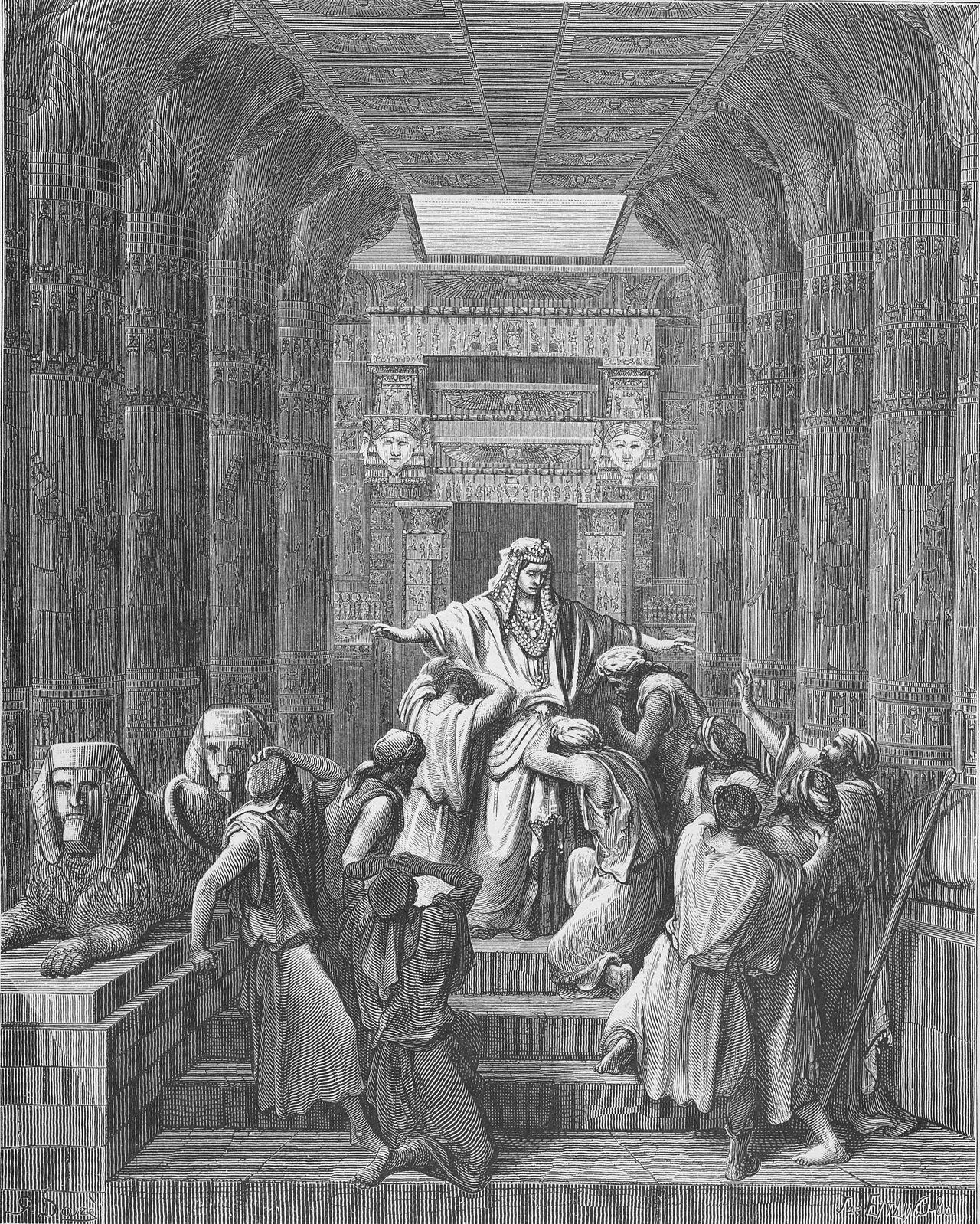
The comfort and the crime stand in one sentence, do not be distressed, and you sold me into this place. Three times in four verses he says that God sent him before them to save lives. He fixes the clock as well. Two years of the famine are gone and five more come without plowing or harvesting.
This site's exposition
without plowing or harvesting
The figures date the scene. Joseph was thirty when he stood before Pharaoh at 41:46, so seven years of plenty and two of famine make him thirty-nine, twenty-two years after his brothers sold him at seventeen. At 47:19 the Egyptians beg for seed to sow, a sign that plowing had stopped.
The record, by era
The Puritans and the Awakening3 voices
God's Israel is the particular care of God's providence. Joseph reckoned that his advancement was not so much designed to save a whole kingdom of Egyptians as to preserve a small family of Israelites: for the Lord's portion is his people; whatever becomes of others, they shall be secured.
) what a capacity he was in of being kind to his relations and friends, which is the greatest satisfaction that wealth and power can give to a good man,
quarantine:debris (2026-07-29) — leading-punctuation+unbalanced-parens
For these two years hath the famine been, in the land,....
The Nineteenth Century1 voice
A commentator
Jamieson, Fausset & Brown1802–1910
Commentary Critical and Explanatory on the Whole Bible (1871)
proposed
and yet there are five years, in the which there shall neither be earing nor harvest--"Ear" is an old English word, meaning "to plough" (compare 1Sa 8:12; This seems to confirm the view given (Ge 41:57) that the famine was caused by an extraordinary drought, which prevented the annual overflowing of the Nile; and of course made the land unfit to receive the seed of Egypt.
quarantine:debris (2026-07-29) — starts-lowercase+unbalanced-parens
The words behind it
13 Hebrew wordsEvery Hebrew word of this verse in the order it stands, with what it means and the door to its own study. The last column counts the times a word stands in the whole Bible: the rarer the word, the more the places it appears belong together.
| Hebrew | Sound | Meaning | Word study | In the Bible |
|---|---|---|---|---|
| כִּי־ | ki- | for | H3588 → | 4482 times |
| זֶ֛ה | zeh | this | H2088 → | 1180 times |
| שְׁנָתַ֥יִם | shenatayim | two years | H8141 → | 877 times |
| הָרָעָ֖ב | haraav | the famine | H7458 → | 101 times |
| בְּקֶ֣רֶב | bekerev | [has been] in [the] midst of | H7130 → | 227 times |
| הָאָ֑רֶץ | haaretz | the land | H776 → | 2504 times |
| וְעוֹד֙ | veod | and still | H5750 → | 490 times |
| חָמֵ֣שׁ | chamesh | five | H2568 → | 343 times |
| שָׁנִ֔ים | shanim | years | H8141 → | 877 times |
| אֲשֶׁ֥ר | ʾasher | when | H834 → | 5497 times |
| אֵין־ | ʾein- | there not | H369 → | 789 times |
| חָרִ֖ישׁ | charish | [will be] plowing | H2758 → | |
| וְקָצִּֽיר׃ | vekatzir | and harvest | H7105 → | 54 times |
כִּי־for
ki-H3588 →4482 times
זֶ֛הthis
zehH2088 →1180 times
שְׁנָתַ֥יִםtwo years
shenatayimH8141 →877 times
הָרָעָ֖בthe famine
haraavH7458 →101 times
בְּקֶ֣רֶב[has been] in [the] midst of
bekerevH7130 →227 times
הָאָ֑רֶץthe land
haaretzH776 →2504 times
וְעוֹד֙and still
veodH5750 →490 times
חָמֵ֣שׁfive
chameshH2568 →343 times
שָׁנִ֔יםyears
shanimH8141 →877 times
אֲשֶׁ֥רwhen
ʾasherH834 →5497 times
אֵין־there not
ʾein-H369 →789 times
חָרִ֖ישׁ[will be] plowing
charishH2758 →
וְקָצִּֽיר׃and harvest
vekatzirH7105 →54 times
A shaded row is a word that stands 400 times or fewer in the Bible.
The walk
8 stopsEach card is a verse this one points to, and under it the verses that one points to in turn. Where several paths arrive at the same place, that place is listed first: the text keeps returning to it.
Through
Genesis 41:54the seven years of famine began, just as Joseph had said. And although there was famine in every country, there was food throughout the land of Egypt.
it leads to
- Acts 7:11
Then famine and great suffering swept across Egypt and Canaan, and our fathers could not find food.
- Genesis 45:11
And there I will provide for you, because there will be five more years of famine. Otherwise, you and your household and everything you own will come to destitution.’
- Psalms 105:16
He called down famine on the land and cut off all their supplies of food.
- Genesis 41:30
but seven years of famine will follow them. Then all the abundance in the land of Egypt will be forgotten, and the famine will devastate the land.
- Acts 7:11
Through
Exodus 34:21Six days you shall labor, but on the seventh day you shall rest; even in the seasons of plowing and harvesting, you must rest.
it leads to
- Exodus 23:12
For six days you are to do your work, but on the seventh day you must cease, so that your ox and your donkey may rest and the son of your maidservant may be…
- Deuteronomy 21:4
bring the heifer to a valley with running water that has not been plowed or sown, and break its neck there by the stream.
- Luke 13:14
But the synagogue leader was indignant that Jesus had healed on the Sabbath. “There are six days for work,” he told the crowd. “So come and be healed on those days and not on…
- Exodus 35:2
For six days work may be done, but the seventh day shall be your holy day, a Sabbath of complete rest to the LORD. Whoever does any work on that day must be put…
- Exodus 23:12
About Genesis
This page draws on Adam Clarke, Commentary on the Bible; Jamieson, Fausset & Brown, Commentary Critical and Explanatory on the Whole Bible; John Calvin, Commentary on Genesis; John Gill, Exposition of the Old Testament; John Gill, Exposition of the Old Testament (1748-1763) and Matthew Henry, Commentary on the Whole Bible.