
Genesis 32:27
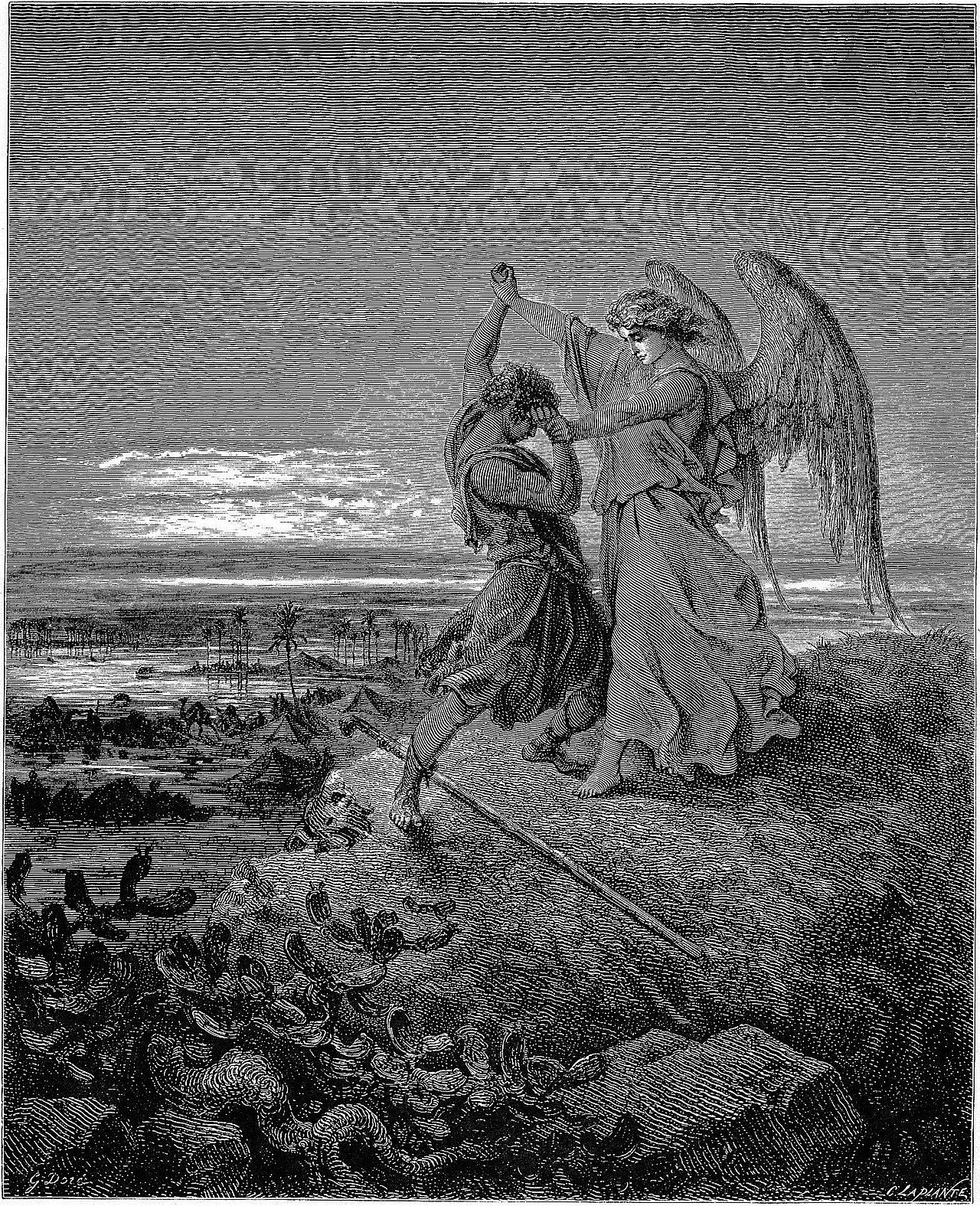
in Genesis 32“What is your name?” the man asked. “Jacob,” he replied.
BSB
The same verse in ASV and KJV ▾
ASV
And he said unto him, What is thy name? And he said, Jacob.
KJV
And he said unto him, What is thy name? And he said, Jacob.
⋯
This verse in Genesis 32
Commentary
6 notes on this verse(Verse 27 and 28.) And he said to him: What is your name? He said, Jacob. And he said to him: Your name shall no longer be called Jacob, but your name shall be called Israel: for you have wrestled with God, and have prevailed with men. Josephus, in the first book of Antiquities, thinks that Israel was called so because he wrestled with an angel. I carefully examined this, but I could not find it at all in Hebrew. And why should I seek the opinions of individuals, when the one who gave the name explains the etymology himself?
This site's exposition
What is your name
on Genesis 32:27-28
The last man who could not see Jacob asked who he was, and that was Isaac at Genesis 27:19, where the answer was Esau. Here he gives his own name. The name Esau threw back at him for supplanting twice is answered with Israel, given for having struggled with God and with men and prevailed.
The record, by era
The Puritans and the Awakening4 voices
What is thy name? - Jacob (saith he) a supplanter, so Jacob signifies. Well, (faith the angel) be thou never so called any more: thou shalt be called Israel, a prince with God. He is a prince indeed, that is a prince with God; and those are truly honourable that are mighty, in prayer.
2 And when Jacob saw them, he said, This is God's host: and he called the name of that place Mahanaim. Jacob, having got clear of Laban, pursues his journey homewards towards Canaan: when God has helped us through difficulties we should go on our way heaven-ward with so much the more cheerfulness and resolution. Here is Jacob's convoy in his journey (
quarantine:debris (2026-07-29) — unbalanced-parens
Lord, what will become of that promise, if they be all cut off? Jacob having piously made God his friend by a prayer, is here prudently endeavouring to make Esau his friend by a present. He had prayed to God to deliver him from the hand of Esau - His prayer did not make him presume upon God's mercy, without the use of means.
And he said unto him, what is thy name?.... Which question is put, not as being ignorant of it, but in order to take occasion from it, and the change of it, to show that he had granted his request, and had blessed him, and would yet more and more: and he said, Jacob; the name given him at his birth, and by which he had always been called, and therefore tells it him at once, not staying to ask the reason of the question.
The words behind it
6 Hebrew wordsEvery Hebrew word of this verse in the order it stands, with what it means and the door to its own study. The last column counts the times a word stands in the whole Bible: the rarer the word, the more the places it appears belong together.
| Hebrew | Sound | Meaning | Word study | In the Bible |
|---|---|---|---|---|
| וַיֹּ֥אמֶר | vaiyomer | and he said | H559 → | 5305 times |
| אֵלָ֖יו | ʾelav | to him | H413 → | 5510 times |
| מַה־ | mah- | what? | H4100 → | 752 times |
| שְּׁמֶ֑ךָ | shemekha | [is] name your | H8034 → | 864 times |
| וַיֹּ֖אמֶר | vaiyomer | and he said | H559 → | 5305 times |
| יַעֲקֹֽב׃ | yaako | Jacob | H3290 → | 350 times |
וַיֹּ֥אמֶרand he said
vaiyomerH559 →5305 times
אֵלָ֖יוto him
ʾelavH413 →5510 times
מַה־what?
mah-H4100 →752 times
שְּׁמֶ֑ךָ[is] name your
shemekhaH8034 →864 times
וַיֹּ֖אמֶרand he said
vaiyomerH559 →5305 times
יַעֲקֹֽב׃Jacob
yaakoH3290 →350 times
A shaded row is a word that stands 400 times or fewer in the Bible.
Where this verse is studied
On this page
About Genesis
Who and where
1 name in this verse with a page on the site.
This page draws on Jerome, Hebrew Questions on Genesis; John Gill, Exposition of the Old Testament (1748-1763); John Wesley, Explanatory Notes upon the Old Testament and Matthew Henry, Commentary on the Whole Bible.