
Genesis 29:3
in Genesis 29When all the flocks had been gathered there, the shepherds would roll away the stone from the mouth of the well and water the sheep. Then they would return the stone to its place over the mouth of the well.
BSB
The same verse in ASV and KJV ▾
ASV
And thither were all the flocks gathered: and they rolled the stone from the well’s mouth, and watered the sheep, and put the stone again upon the well’s mouth in its place.
KJV
And thither were all the flocks gathered: and they rolled the stone from the well’s mouth, and watered the sheep, and put the stone again upon the well’s mouth in his place.
⋯
This verse in Genesis 29
Commentary
6 notes on this verseAll the flocks - Instead of העדרים hadarim, flocks, the Samaritan reads haroim, shepherds; for which reading Houbigant strongly contends, as well in this verse as in Gen 29:8. It certainly cannot be said that all the flocks rolled the stone from the well’s mouth, and watered the sheep: and yet so it appears to read if we prefer the common Hebrew text to the Samaritan. It is probable that the same reading was originally that of the second verse also.
This site's exposition
the land of the people of the east
on Genesis 29:1-3
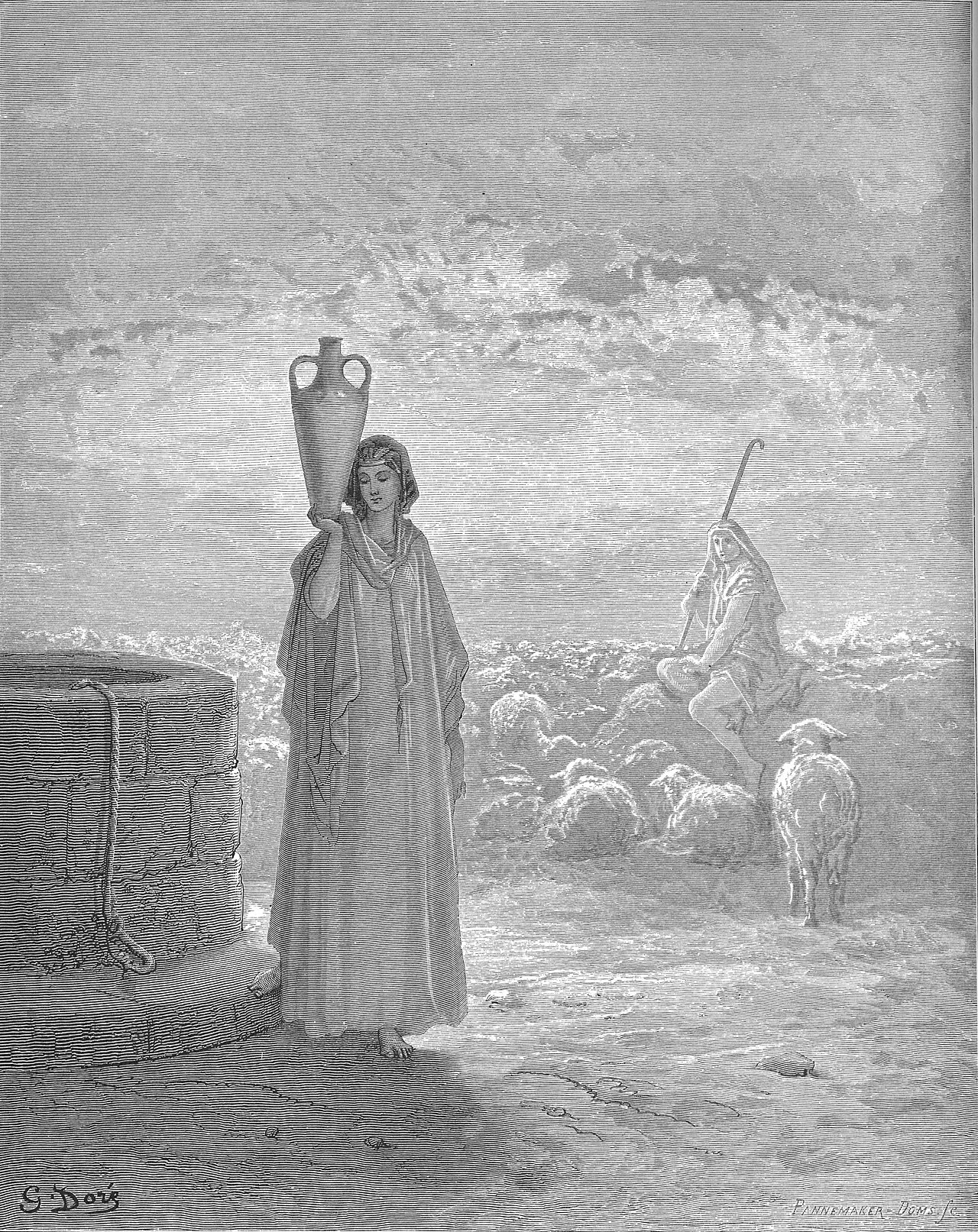
Jacob stops at a well in a field among the people of the east. A large stone covers the mouth of it. The shepherds wait until every flock has gathered, then roll the stone away and water the sheep. He has just left one stone standing as a pillar at Bethel, and now another lies between him and the water.
This site's exposition
roll away the stone from the mouth
Adam Clarke notes that the Samaritan text reads shepherds where the Hebrew reads flocks, a reading Houbigant defended here and at verse 8. Clarke argues that flocks cannot roll a stone. The Berean supplies the shepherds as the ones who roll it.
The record, by era
The Puritans and the Awakening2 voices
The stone at the well's mouth, which is so often mentioned here, was either to secure their property in it (for water was scarce, it was not there usus communis aquarum--for every one's use ), or it was to save the well from receiving damage from the heat of the sun, or from any spiteful hand, or to prevent the lambs of the flock from being drowned in it.
And thither were all the flocks gathered,.... The three above mentioned, Gen 29:2, and they rolled the stone from the well's mouth, and watered the sheep; that is, when they watered the sheep, they used to roll away the stone from the mouth of the well in order to do it; for as yet the flocks, now lying by it, had not been watered, as appears from Gen 29:7, and put a stone upon the well's mouth in this place; this they were wont to do every time they watered the flocks.
The Nineteenth Century1 voice
A commentator
Jamieson, Fausset & Brown1802–1910
Commentary Critical and Explanatory on the Whole Bible (1871)
proposed
thither were all the flocks gathered; and a stone, &c.--In Arabia, owing to the shifting sands and in other places, owing to the strong evaporation, the mouth of a well is generally covered, especially when it is private property. Over many is laid a broad, thick, flat stone, with a round hole cut in the middle, forming the mouth of the cistern.
quarantine:debris (2026-07-29) — starts-lowercase
The words behind it
20 Hebrew wordsEvery Hebrew word of this verse in the order it stands, with what it means and the door to its own study. The last column counts the times a word stands in the whole Bible: the rarer the word, the more the places it appears belong together.
| Hebrew | Sound | Meaning | Word study | In the Bible |
|---|---|---|---|---|
| וְנֶאֶסְפוּ־ | veneesfu- | and they were gathered | H622 → | 200 times |
| שָׁ֣מָּה | shamah | there towards | H8033 → | 834 times |
| כָל־ | khol- | all | H3605 → | 5413 times |
| הָעֲדָרִ֗ים | haadarim | the flocks | H5739 → | 38 times |
| וְגָלֲל֤וּ | vegalalu | and they rolled | H1556 → | 18 times |
| אֶת־ | ʾet- | <obj.> | H853 → | 10935 times |
| הָאֶ֙בֶן֙ | haeven | the stone | H68 → | 273 times |
| מֵעַל֙ | meal | from over | H5921 → | 5755 times |
| פִּ֣י | pi | [the] mouth of | H6310 → | 498 times |
| הַבְּאֵ֔ר | habeer | the well | H875 → | 38 times |
| וְהִשְׁק֖וּ | vehishku | and they watered | H8248 → | 61 times |
| אֶת־ | ʾet- | <obj.> | H853 → | 10935 times |
| הַצֹּ֑אן | hatzon | the sheep | H6629 → | 274 times |
| וְהֵשִׁ֧יבוּ | veheshivu | and they put back | H7725 → | 1056 times |
| אֶת־ | ʾet- | <obj.> | H853 → | 10935 times |
| הָאֶ֛בֶן | haeven | the stone | H68 → | 273 times |
| עַל־ | ʾal- | over | H5921 → | 5755 times |
| פִּ֥י | pi | [the] mouth of | H6310 → | 498 times |
| הַבְּאֵ֖ר | habeer | the well | H875 → | 38 times |
| לִמְקֹמָֽהּ׃ | limkomah | to place its | H4725 → | 401 times |
וְנֶאֶסְפוּ־and they were gathered
veneesfu-H622 →200 times
שָׁ֣מָּהthere towards
shamahH8033 →834 times
כָל־all
khol-H3605 →5413 times
הָעֲדָרִ֗יםthe flocks
haadarimH5739 →38 times
וְגָלֲל֤וּand they rolled
vegalaluH1556 →18 times
אֶת־<obj.>
ʾet-H853 →10935 times
הָאֶ֙בֶן֙the stone
haevenH68 →273 times
מֵעַל֙from over
mealH5921 →5755 times
פִּ֣י[the] mouth of
piH6310 →498 times
הַבְּאֵ֔רthe well
habeerH875 →38 times
וְהִשְׁק֖וּand they watered
vehishkuH8248 →61 times
אֶת־<obj.>
ʾet-H853 →10935 times
הַצֹּ֑אןthe sheep
hatzonH6629 →274 times
וְהֵשִׁ֧יבוּand they put back
veheshivuH7725 →1056 times
אֶת־<obj.>
ʾet-H853 →10935 times
הָאֶ֛בֶןthe stone
haevenH68 →273 times
עַל־over
ʾal-H5921 →5755 times
פִּ֥י[the] mouth of
piH6310 →498 times
הַבְּאֵ֖רthe well
habeerH875 →38 times
לִמְקֹמָֽהּ׃to place its
limkomahH4725 →401 times
A shaded row is a word that stands 400 times or fewer in the Bible.
Where this verse is studied
On this page
About Genesis
This page draws on Adam Clarke, Commentary on the Bible; Jamieson, Fausset & Brown, Commentary Critical and Explanatory on the Whole Bible; John Calvin, Commentary on Genesis; John Gill, Exposition of the Old Testament (1748-1763) and Matthew Henry, Commentary on the Whole Bible.