
Genesis 28:18
in Genesis 28Early the next morning, Jacob took the stone that he had placed under his head, and he set it up as a pillar. He poured oil on top of it,
BSB
The same verse in ASV and KJV ▾
ASV
And Jacob rose up early in the morning, and took the stone that he had put under his head, and set it up for a pillar, and poured oil upon the top of it.
KJV
And Jacob rose up early in the morning, and took the stone that he had put for his pillows, and set it up for a pillar, and poured oil upon the top of it.
⋯
This verse in Genesis 28
Commentary
12 notes on this verseOn the other hand the stone also had been erected and honored as a symbol of Christ and had been sprinkled with oil. The Immanuel was anointed by God the Father "with the oil of gladness above his fellows." Then he was raised from the dead, even though he had descended to death voluntarily. And that is, I believe, the meaning of erecting the stone.
This site's exposition
he set it up as a pillar
on Genesis 28:18-19
The stone under Jacob's head becomes a pillar, and he pours oil on top of it. He sets up pillars again at 31:45 with Laban, at 35:14 on this same spot, and over Rachel's grave at 35:20. Jerome takes the old name Luz to mean almond. Cyril of Alexandria read the anointed stone as a figure of Christ, anointed with the oil of gladness.
The record, by era
The Church Fathers5 voices
In order that what we have mentioned above may adhere more firmly to your pious hearts, we will briefly repeat what was said.
As for the oil that Jacob poured upon the pillar, he either had it with him or he had brought it out of the village. In the oil that he poured upon the stone, he was depicting the mystery of Christ who was hidden inside …
Since he had been granted wonderful favors by way of the vision, [Jacob] wished to make the place memorable by a name and to keep the memory fresh for future ages. He set up the stone as a monument, poured oil on it (this, after all, was probably all he had with him, traveling as he was like this), and to the loving God he offered a prayer characterized by complete good sense.
A commentator
Augustine of HippoTRACTATE ON THE GOSPEL OF JOHN 7.23.2 · Written in the 5th century.
proposed
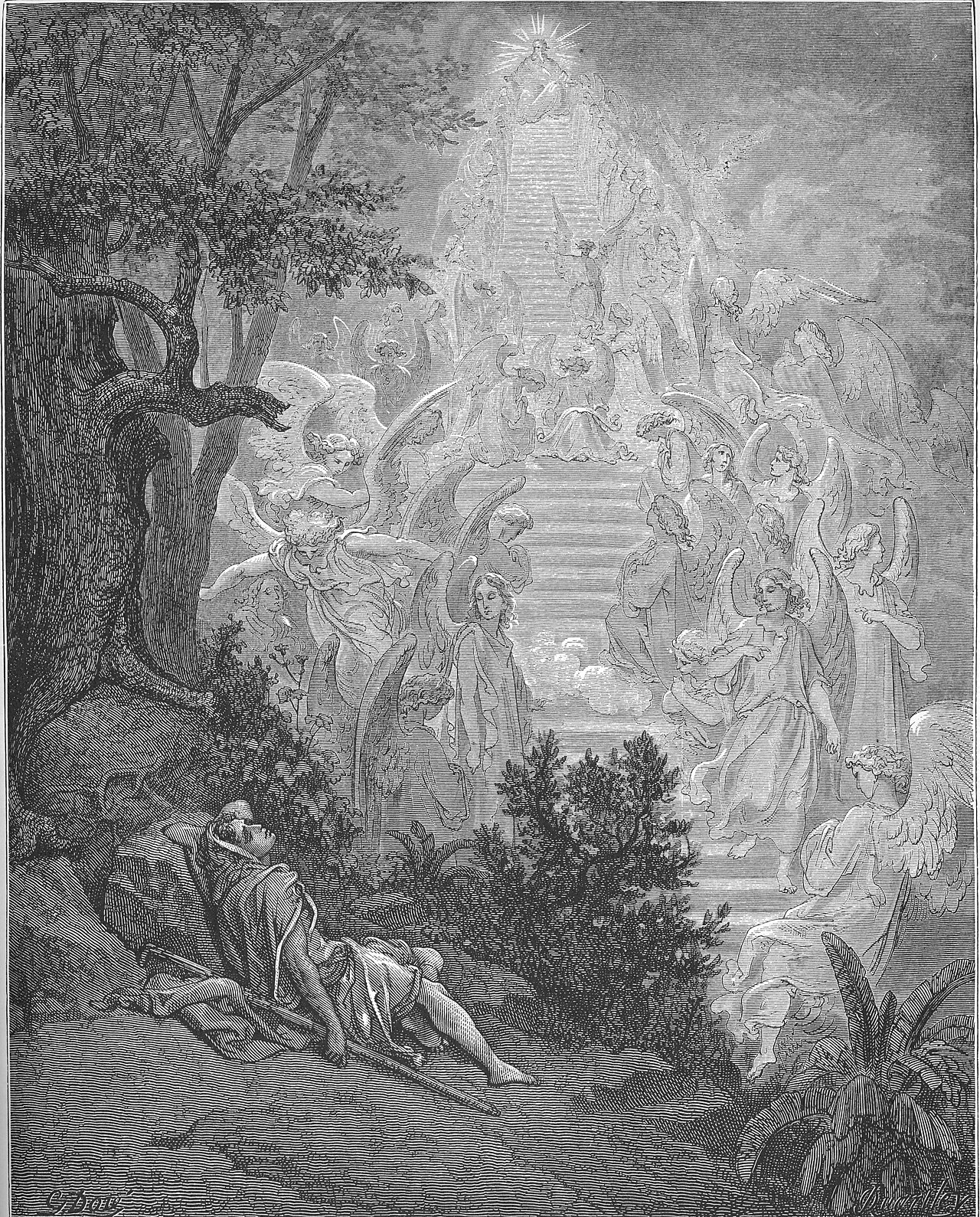
In a dream Jacob saw a ladder, and on this ladder he saw angels ascending and descending; and he anointed the stone that he had placed at his head. You have heard that the Messiah is the Christ; you have heard that the Christ is the Anointed. For he did not place the anointed stone so that he might come and adore it; otherwise it would be idolatry and not a representation of Christ. Therefore a representation was made, so far as a representation needed to be made, and Christ was represented. The stone was anointed. Why a stone? "Behold, I lay in Zion a chosen stone, precious; and he who believes in it shall not be confounded." Why anointed? Because [the name] "Christ" [is derived] from [the word] chrisma.
Now Jacob called that place Bethel; and Jacob raised up there a pillar of stone as a testimony, and he poured oil over it. Our father Jacob did this too in symbol, anticipating that stones would receive anointing, for the peoples who have believed in Christ are the stones that are anointed, just as John says of them: "From these stones God is able to raise up children for Abraham." For in Jacob's prayer the calling of the nations was symbolized.
5 more voices on this verse
The Medieval Church1 voice
The stone under Jacob's head is the Lord, upon whom we ought to support ourselves with all our concentration, the more so insofar as it is surely clear to us that without him we can do nothing.
The Puritans and the Awakening2 voices
And Jacob rose up early in the morning,....
Note, Grants of mercy call for returns of duty, and the sweet communion we have with God ought ever to be remembered. He gave a new name to the place,
The Nineteenth Century2 voices
And Jacob - took the stone - and set it up for a pillar - He placed the stone in an erect posture, that it might stand as a monument of the extraordinary vision which he had in this place; and he poured oil upon it, thereby consecrating it to God, so that it might be considered an altar on which libations might be poured, and sacrifices offered unto God. See Gen 35:14. The Brahmins anoint their stone images with oil before bathing; and some anoint them with sweet-scented oil.
A commentator
Jamieson, Fausset & Brown1802–1910
Commentary Critical and Explanatory on the Whole Bible (1871)
Jacob set up a stone, etc.--The mere setting up of the stone might have been as a future memorial to mark the spot; and this practice is still common in the East, in memory of a religious vow or engagement. But the pouring oil upon it was a consecration.
The words behind it
16 Hebrew wordsEvery Hebrew word of this verse in the order it stands, with what it means and the door to its own study. The last column counts the times a word stands in the whole Bible: the rarer the word, the more the places it appears belong together.
| Hebrew | Sound | Meaning | Word study | In the Bible |
|---|---|---|---|---|
| וַיַּשְׁכֵּ֨ם | vaiyashkem | and he rose early | H7925 → | 65 times |
| יַעֲקֹ֜ב | yaako | Jacob | H3290 → | 350 times |
| בַּבֹּ֗קֶר | baboker | in the morning | H1242 → | 214 times |
| וַיִּקַּ֤ח | vaiyikach | and he took | H3947 → | 966 times |
| אֶת־ | ʾet- | <obj.> | H853 → | 10935 times |
| הָאֶ֙בֶן֙ | haeven | the stone | H68 → | 273 times |
| אֲשֶׁר־ | ʾasher- | which | H834 → | 5497 times |
| שָׂ֣ם | sam | he had put | H7760 → | 584 times |
| מְרַֽאֲשֹׁתָ֔יו | meraashotav | [the] place of head his | H4763 → | |
| וַיָּ֥שֶׂם | vaiyasem | and he set up | H7760 → | 584 times |
| אֹתָ֖הּ | ʾotah | <obj.> it | H853 → | 10935 times |
| מַצֵּבָ֑ה | matzevah | a pillar | H4676 → | 32 times |
| וַיִּצֹ֥ק | vaiyitzok | and he poured | H3332 → | |
| שֶׁ֖מֶן | shemen | oil | H8081 → | |
| עַל־ | ʾal- | on | H5921 → | 5755 times |
| רֹאשָֽׁהּ׃ | roshah | top its | H7218 → | 599 times |
וַיַּשְׁכֵּ֨םand he rose early
vaiyashkemH7925 →65 times
יַעֲקֹ֜בJacob
yaakoH3290 →350 times
בַּבֹּ֗קֶרin the morning
babokerH1242 →214 times
וַיִּקַּ֤חand he took
vaiyikachH3947 →966 times
אֶת־<obj.>
ʾet-H853 →10935 times
הָאֶ֙בֶן֙the stone
haevenH68 →273 times
אֲשֶׁר־which
ʾasher-H834 →5497 times
שָׂ֣םhe had put
samH7760 →584 times
מְרַֽאֲשֹׁתָ֔יו[the] place of head his
meraashotavH4763 →
וַיָּ֥שֶׂםand he set up
vaiyasemH7760 →584 times
אֹתָ֖הּ<obj.> it
ʾotahH853 →10935 times
מַצֵּבָ֑הa pillar
matzevahH4676 →32 times
וַיִּצֹ֥קand he poured
vaiyitzokH3332 →
שֶׁ֖מֶןoil
shemenH8081 →
עַל־on
ʾal-H5921 →5755 times
רֹאשָֽׁהּ׃top its
roshahH7218 →599 times
A shaded row is a word that stands 400 times or fewer in the Bible.
The walk
8 stopsEach card is a verse this one points to, and under it the verses that one points to in turn. Where several paths arrive at the same place, that place is listed first: the text keeps returning to it.
Through
Genesis 31:13I am the God of Bethel, where you anointed the pillar and made a solemn vow to Me. Now get up and leave this land at once, and return to your native land.’”
it leads to
- Genesis 31:3
Then the LORD said to Jacob, “Go back to the land of your fathers and to your kindred, and I will be with you.”
- Genesis 32:9
Then Jacob declared, “O God of my father Abraham, God of my father Isaac, the LORD who told me, ‘Go back to your country and to your kindred, and I will make you prosper,’
- Genesis 28:12–22
And Jacob had a dream about a ladder that rested on the earth with its top reaching up to heaven, and God’s angels were going up and down the ladder.
- Genesis 35:7
There Jacob built an altar, and he called that place El-bethel, because it was there that God had revealed Himself to Jacob as he fled from his brother.
- Genesis 31:3
Through
Numbers 7:1On the day Moses finished setting up the tabernacle, he anointed and consecrated it and all its furnishings, along with the altar and all its utensils.
it leads to
- Leviticus 8:10–11
Next, Moses took the anointing oil and anointed the tabernacle and everything in it; and so he consecrated them.
- Numbers 7:84
So these were the offerings from the leaders of Israel for the dedication of the altar when it was anointed: twelve silver platters, twelve silver bowls, and twelve gold dishes.
- Leviticus 8:10–11
Through
Genesis 35:14So Jacob set up a pillar in the place where God had spoken with him—a stone marker—and he poured out a drink offering on it and anointed it with oil.
it leads to
- Genesis 28:18–19
Early the next morning, Jacob took the stone that he had placed under his head, and he set it up as a pillar. He poured oil on top of it,
- Genesis 28:18–19
Through
Genesis 31:45So Jacob picked out a stone and set it up as a pillar,
it leads to
- Genesis 28:18–22
Early the next morning, Jacob took the stone that he had placed under his head, and he set it up as a pillar. He poured oil on top of it,
- Genesis 28:18–22
Where this verse is studied
On this page
Studies3
On this verse
On this chapter
About Genesis
Who and where
1 name in this verse with a page on the site.
This page draws on 13 works. Open the list of works
This page draws on Adam Clarke, Commentary on the Bible; Aphrahat the Persian Sage, ON PRAYER 5; Augustine of Hippo, TRACTATE ON THE GOSPEL OF JOHN 7.23.2; Bede, Homilies on the Gospels 1.17; Caesarius of Arles, SERMON 87.6; Cyril of Alexandria, GLAPHYRA ON Genesis, 4.4; Cyril of Alexandria, Glaphyra on Genesis; Ephrem the Syrian, COMMENTARY ON GENESIS 26:2; Jamieson, Fausset & Brown, Commentary Critical and Explanatory on the Whole Bible; Jerome, Hebrew Questions on Genesis; John Chrysostom, HOMILIES ON GENESIS 54.23; John Gill, Exposition of the Old Testament (1748-1763) and Matthew Henry, Commentary on the Whole Bible.