
Genesis 11:4
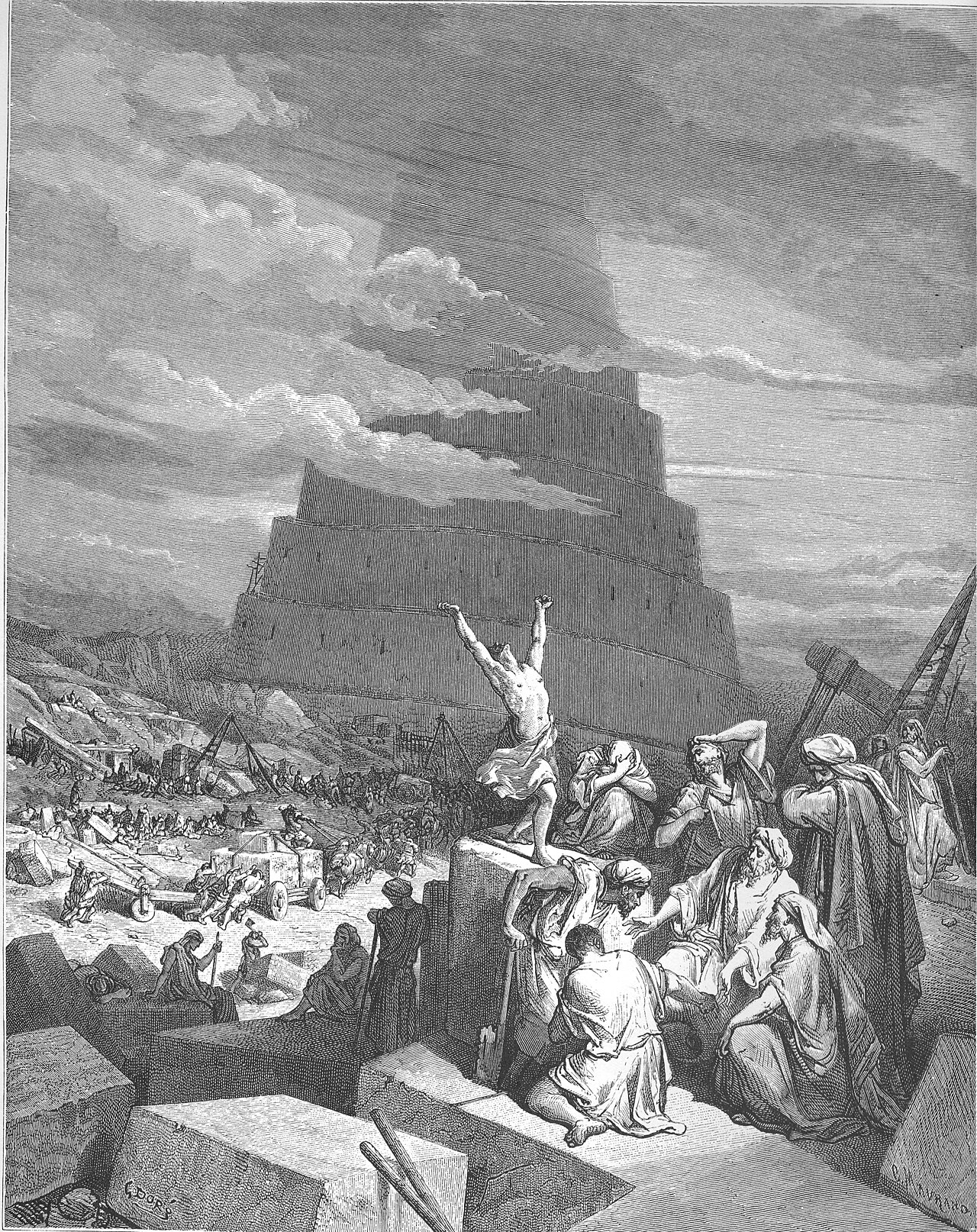
in Genesis 11“Come,” they said, “let us build for ourselves a city with a tower that reaches to the heavens, that we may make a name for ourselves and not be scattered over the face of all the earth.”
BSB
The same verse in ASV and KJV ▾
ASV
And they said, Come, let us build us a city, and a tower, whose top may reach unto heaven, and let us make us a name; lest we be scattered abroad upon the face of the whole earth.
KJV
And they said, Go to, let us build us a city and a tower, whose top may reach unto heaven; and let us make us a name, lest we be scattered abroad upon the face of the whole earth.
⋯
This verse in Genesis 11
Commentary
4 notes on this verseAnd they arose and came from the land of the east; and, as they went through the land, they chanced upon the land of Shinar, which was exceeding broad; where they took in hand to build a tower. They sought means thereby to go up to heaven, and be able to leave their work as a memorial to those men who should come after them.
This site's exposition
Come, let us make bricks
on Genesis 11:3-4
Brick stands in for stone and tar for mortar, so nothing in the tower came out of the ground they stood on. Their stated aim was to make a name for themselves, and God gives that name to Abram at 12:2, to the man who leaves. Their other aim was to keep from being scattered over all the earth. That is the one thing 9:1 had told them to do.
The record, by era
The Puritans and the Awakening2 voices
And they said, go to, let us build us a city and a tower,.... Some Jewish writers (r) say, these are the words of Nimrod to his people; but it is a question whether he was now born, or if he was, must be too young to be at the head of such a body of people; but they are spoken to one another, or by the principal men among them to the common people, advising and encouraging to such an undertaking.
"No," say they, "we will not, we will live and die together." In order hereunto, they engage themselves and one another in this vast undertaking. That they might unite in one glorious empire, they resolve to build this city and tower, to be the metropolis of their kingdom and the centre of their unity. It is probable that the band of ambitious Nimrod was in all this.
The words behind it
17 Hebrew wordsEvery Hebrew word of this verse in the order it stands, with what it means and the door to its own study. The last column counts the times a word stands in the whole Bible: the rarer the word, the more the places it appears belong together.
| Hebrew | Sound | Meaning | Word study | In the Bible |
|---|---|---|---|---|
| וַיֹּאמְר֞וּ | vaiyomeru | and they said | H559 → | 5305 times |
| הָ֣בָה׀ | havah | give ! | H3051 → | 34 times |
| נִבְנֶה־ | nivneh- | let us build | H1129 → | 376 times |
| לָּ֣נוּ | lanu | for <the> ourselves | ||
| עִ֗יר | ʾir | a city | H5892 → | 1090 times |
| וּמִגְדָּל֙ | umigdal | and a tower | H4026 → | |
| וְרֹאשׁ֣וֹ | verosho | and top its | H7218 → | 599 times |
| בַשָּׁמַ֔יִם | vashamayim | [will be] in the heavens | H8064 → | 421 times |
| וְנַֽעֲשֶׂה־ | venaaseh- | and we may make | H6213 → | 2628 times |
| לָּ֖נוּ | lanu | for <the> ourselves | ||
| שֵׁ֑ם | shem | a name | H8034 → | 864 times |
| פֶּן־ | pen- | lest | H6435 → | 133 times |
| נָפ֖וּץ | nafutz | we should be scattered | H6327 → | 67 times |
| עַל־ | ʾal- | over | H5921 → | 5755 times |
| פְּנֵ֥י | penei | [the] surface of | H6440 → | 2123 times |
| כָל־ | khol- | all | H3605 → | 5413 times |
| הָאָֽרֶץ׃ | haaretz | the earth | H776 → | 2504 times |
וַיֹּאמְר֞וּand they said
vaiyomeruH559 →5305 times
הָ֣בָה׀give !
havahH3051 →34 times
נִבְנֶה־let us build
nivneh-H1129 →376 times
לָּ֣נוּfor <the> ourselves
lanu
עִ֗ירa city
ʾirH5892 →1090 times
וּמִגְדָּל֙and a tower
umigdalH4026 →
וְרֹאשׁ֣וֹand top its
veroshoH7218 →599 times
בַשָּׁמַ֔יִם[will be] in the heavens
vashamayimH8064 →421 times
וְנַֽעֲשֶׂה־and we may make
venaaseh-H6213 →2628 times
לָּ֖נוּfor <the> ourselves
lanu
שֵׁ֑םa name
shemH8034 →864 times
פֶּן־lest
pen-H6435 →133 times
נָפ֖וּץwe should be scattered
nafutzH6327 →67 times
עַל־over
ʾal-H5921 →5755 times
פְּנֵ֥י[the] surface of
peneiH6440 →2123 times
כָל־all
khol-H3605 →5413 times
הָאָֽרֶץ׃the earth
haaretzH776 →2504 times
A shaded row is a word that stands 400 times or fewer in the Bible.
The walk
8 stopsEach card is a verse this one points to, and under it the verses that one points to in turn. Where several paths arrive at the same place, that place is listed first: the text keeps returning to it.
Through
John 5:44How can you believe if you accept glory from one another, yet do not seek the glory that comes from the only God?
it leads to
- John 12:43
For they loved praise from men more than praise from God.
- Romans 2:29
No, a man is a Jew because he is one inwardly, and circumcision is a matter of the heart, by the Spirit, not by the written code. Such a man’s praise does not come…
- Philippians 2:3
Do nothing out of selfish ambition or empty pride, but in humility consider others more important than yourselves.
- Matthew 23:5
All their deeds are done for men to see. They broaden their phylacteries and lengthen their tassels.
- Romans 8:7–8
because the mind of the flesh is hostile to God: It does not submit to God’s law, nor can it do so.
- John 12:43
Through
Luke 1:51He has performed mighty deeds with His arm; He has scattered those who are proud in the thoughts of their hearts.
it leads to
- Psalms 98:1
Sing to the LORD a new song, for He has done wonders; His right hand and holy arm have gained Him the victory.
- Isaiah 52:10
The LORD has bared His holy arm in the sight of all the nations; all the ends of the earth will see the salvation of our God.
- 1 Samuel 2:3–4
Do not boast so proudly, or let arrogance come from your mouth, for the LORD is a God who knows, and by Him actions are weighed.
- Psalms 98:1
Where this verse is studied
On this page
Studies7
On this verse
About Genesis
This page draws on Adam Clarke, Commentary on the Bible; Irenaeus, The Demonstration of the Apostolic Preaching; John Calvin, Commentary on Genesis; John Gill, Exposition of the Old Testament (1748-1763) and Matthew Henry, Commentary on the Whole Bible.