
Esther 9:32
in Esther 9So Esther’s decree confirmed these regulations about Purim, which were written into the record.
BSB
The same verse in ASV and KJV ▾
ASV
And the commandment of Esther confirmed these matters of Purim; and it was written in the book.
KJV
And the decree of Esther confirmed these matters of Purim; and it was written in the book.
⋯
This verse in Esther 9
Commentary
6 notes on this verseAnd the decree of Esther confirmed these matters of Purim,.... As a festival to be observed by the Jews in future generations: and it was written in the book; either in this book of Esther; or in the public acts and chronicles of the kings of Persia; or in a book by itself, now lost, as Aben Ezra thinks, as many others are we read of in Scripture, as the books of the chronicles of the kings of Israel and Judah, &c.
This site's exposition
the daughter of Abihail
on Esther 9:29-32
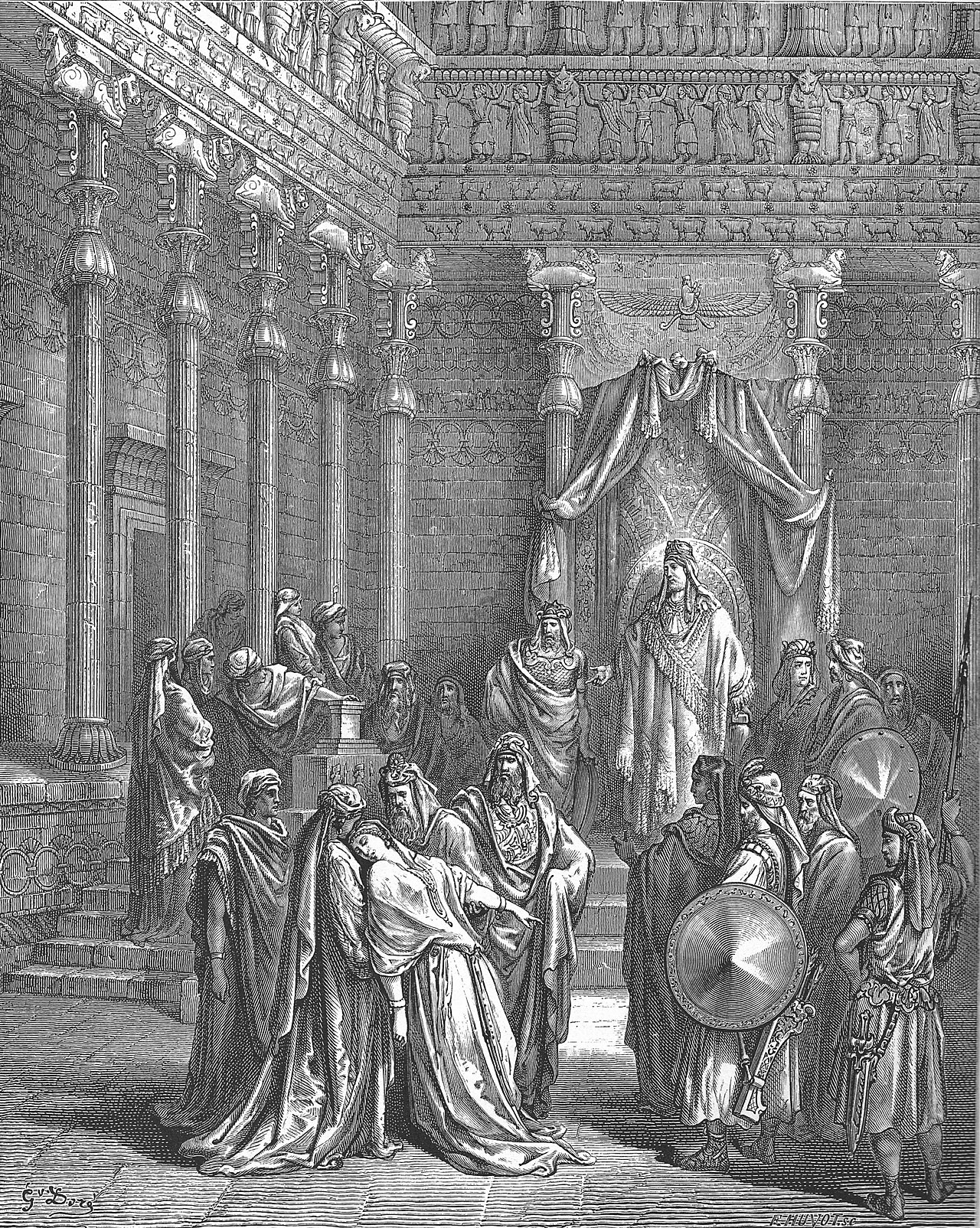
Esther the queen writes WITH ALL AUTHORITY to confirm the second letter, the orphan of 2:7 now legislating for an empire's Jews, and the letters go out with words of peace and truth. The confirmation remembers the dark side by statute, the matters of the fastings and their cry, so the feast carries its own fast (kept as the fast of Esther on Adar's thirteenth) and the joy never forgets what it cost. The decree of Esther confirmed these matters of Purim; and it was written in the book: the chapter ends, like the book, in an archive.
The record, by era
The Medieval Church1 voice
For we require this admonition so that we will have always in our hearts the peace of Christianity, and will adopt the truth of the Gospel itself; which will prevent us from inadvertently falling, through discord and disagreement, into the errors of the heretics from …
The Puritans and the Awakening1 voice
12 And the king said unto Esther the queen, The Jews have slain and destroyed five hundred men in Shushan the palace, and the ten sons of Haman; what have they done in the rest of the king's provinces? now what is thy petition? and it shall be granted thee: or what is thy request further? and it shall be done.
quarantine:scripture (2026-07-29) — verbatim-scripture
The Nineteenth Century2 voices
The decree of Esther confirmed these matters - It was received by the Jews universally with all respect, and they bound themselves to abide by it. The Vulgate gives a strange turn to this verse: Et omnia quae libri hujus, qui vocatur Esther, historia continentur; “And all things which are contained in the history of this book, which is called Esther.” The Targum says, And by the word of Esther all these things relative to Purim were confirmed; and the roll was transcribed in this book.
A commentator
Albert Barnes1798–1870
Notes, Explanatory and Practical, on the Old and New Testaments (1832-1869)
proposed
As “the book” elsewhere in Esther always means a particular book - “the book of the chronicles of the kings of Media and Persia” - Est 2:23; Est 6:1; Est 10:2 it seems best to give it the same sense here.
How the passage was read
On Esther 9:20-32On Esther 9:20-32
The feast this book founds
These verses are the founding charter of Purim, the one feast instituted inside the canon's own narrative books. Its name comes from the “pur,” the lot Haman cast for Israel's destruction. The text itself names the three practices that still define the day: feasting and gladness, sending portions of food to one another, and gifts to the poor (9:22). To this day the whole book of Esther, called the Megillah (“scroll”), is read aloud in the synagogue, with the congregation drowning out Haman's name with noisemakers; the day is kept with costumes, feasting, food baskets to friends, and charity.
This section is reception history: how the passage was read and kept in the Jewish tradition. Where a reading parts from an essential of the Christian faith, the section says so at that point.
Sources: Mishnah Megillah 1:1 (the scroll reading) · Esther 9:22 (the three practices, in the text itself)
The words behind it
8 Hebrew wordsEvery Hebrew word of this verse in the order it stands, with what it means and the door to its own study. The last column counts the times a word stands in the whole Bible: the rarer the word, the more the places it appears belong together.
| Hebrew | Sound | Meaning | Word study | In the Bible |
|---|---|---|---|---|
| וּמַאֲמַ֣ר | umaamar | and [the] command of | H3982 → | 3 times |
| אֶסְתֵּ֔ר | ʾester | Esther | H635 → | 55 times |
| קִיַּ֕ם | kiyam | it confirmed | H6965 → | 628 times |
| דִּבְרֵ֥י | divrei | [the] words of | H1697 → | 1440 times |
| הַפֻּרִ֖ים | hapurim | the Purim | H6332 → | 8 times |
| הָאֵ֑לֶּה | haeleh | <the> these | H428 → | 746 times |
| וְנִכְתָּ֖ב | venikhtav | and [it was] written | H3789 → | 224 times |
| בַּסֵּֽפֶר׃ פ | basefer | in the book | H5612 → | 186 times |
וּמַאֲמַ֣רand [the] command of
umaamarH3982 →3 times
אֶסְתֵּ֔רEsther
ʾesterH635 →55 times
קִיַּ֕םit confirmed
kiyamH6965 →628 times
דִּבְרֵ֥י[the] words of
divreiH1697 →1440 times
הַפֻּרִ֖יםthe Purim
hapurimH6332 →8 times
הָאֵ֑לֶּה<the> these
haelehH428 →746 times
וְנִכְתָּ֖בand [it was] written
venikhtavH3789 →224 times
בַּסֵּֽפֶר׃ פin the book
baseferH5612 →186 times
A shaded row is a word that stands 400 times or fewer in the Bible.
The walk
3 stopsEach card is a verse this one points to, and under it the verses that one points to in turn. Where several paths arrive at the same place, that place is listed first: the text keeps returning to it.
Through
Esther 9:26Therefore these days are called Purim, from the word Pur. Because of all the instructions in this letter, and because of all they had seen and experienced,
it leads to
- Esther 9:20
Mordecai recorded these events and sent letters to all the Jews in all the provinces of King Xerxes, both near and far,
- Ezekiel 39:11
And on that day I will give Gog a burial place in Israel, the Valley of the Travelers, east of the Sea. It will block those who travel through, because Gog and all his…
- Numbers 16:40
just as the LORD commanded him through Moses. This was to be a reminder to the Israelites that no outsider who is not a descendant of Aaron should approach to offer incense before the…
- Esther 9:20
Where this verse is studied
On this page
About Esther
This page draws on Adam Clarke, Commentary on the Bible; Albert Barnes, Notes, Explanatory and Practical, on the Old and New Testaments (1832-1869); John Gill, Exposition of the Old Testament (1748-1763); Keil, The Books of Ezra, Nehemiah, and Esther; Matthew Henry, Commentary on the Whole Bible; Rabanus Maurus, Commentary on Esther and W. F. Adeney, Ezra, Nehemiah and Esther (Expositor's Bible).