
Esther 9:8
in Esther 9Poratha, Adalia, Aridatha,
BSB
The same verse in ASV and KJV ▾
ASV
and Poratha, and Adalia, and Aridatha,
KJV
And Poratha, and Adalia, and Aridatha,
⋯
This verse in Esther 9
Commentary
5 notes on this verseA commentator
Jamieson, Fausset & Brown1802–1910
Commentary Critical and Explanatory on the Whole Bible (1871)
Thus the Jews smote all their enemies--The effect of the two antagonistic decrees was, in the meantime, to raise a fierce and bloody war between the Jews and their enemies throughout the Persian empire; but through the dread of Esther and Mordecai, the provincial governors universally favored their cause, so that their enemies fell in great numbers.
This site's exposition
The Jews put all their enemies
on Esther 9:5-10
Then comes the clause the chapter repeats three times: "they did not lay a hand on the plunder". At 1 Samuel 15:19 Saul lost the kingdom when he rushed upon the plunder of Amalek. Under Mordecai, of Kish's house, the Jews finish that war and leave the plunder untouched.
This site's exposition
Poratha, Adalia, Aridatha
Henry reported a Chaldee tradition: when the Jews killed these ten, Zeresh escaped with seventy more of Haman's children. Gill noted that the Targum gives the distance between the ten sons hanged on the gallows. Both come from Jewish tradition.
The record, by era
The Medieval Church2 voices
Queen Esther's endeavor to successfully crush her enemies and root them out reveals the eagerness and zeal of a true queen, namely, of the holy church that constantly fights against her enemies and strives to defeat them completely and subdue them. And it is her …
What can it mean when we read that the Jews pursued their enemies and killed five hundred men in Shushan, except for the ten sons of Haman whom they nailed to gibbets? Merely that to the people of God, it is not only all the …
The words behind it
6 Hebrew wordsEvery Hebrew word of this verse in the order it stands, with what it means and the door to its own study. The last column counts the times a word stands in the whole Bible: the rarer the word, the more the places it appears belong together.
| Hebrew | Sound | Meaning | Word study | In the Bible |
|---|---|---|---|---|
| וְאֵ֧ת׀ | veet | and <obj.> | H853 → | 10935 times |
| פּוֹרָ֛תָא | porata' | Poratha | H6334 → | |
| וְאֵ֥ת׀ | veet | and <obj.> | H853 → | 10935 times |
| אֲדַלְיָ֖א | ʾadalya' | Adalia | H118 → | |
| וְאֵ֥ת׀ | veet | and <obj.> | H853 → | 10935 times |
| אֲרִידָֽתָא׃ | ʾaridata' | Aridatha | H743 → |
וְאֵ֧ת׀and <obj.>
veetH853 →10935 times
פּוֹרָ֛תָאPoratha
porata'H6334 →
וְאֵ֥ת׀and <obj.>
veetH853 →10935 times
אֲדַלְיָ֖אAdalia
ʾadalya'H118 →
וְאֵ֥ת׀and <obj.>
veetH853 →10935 times
אֲרִידָֽתָא׃Aridatha
ʾaridata'H743 →
A shaded row is a word that stands 400 times or fewer in the Bible.
Where this verse is studied
On this page
About Esther
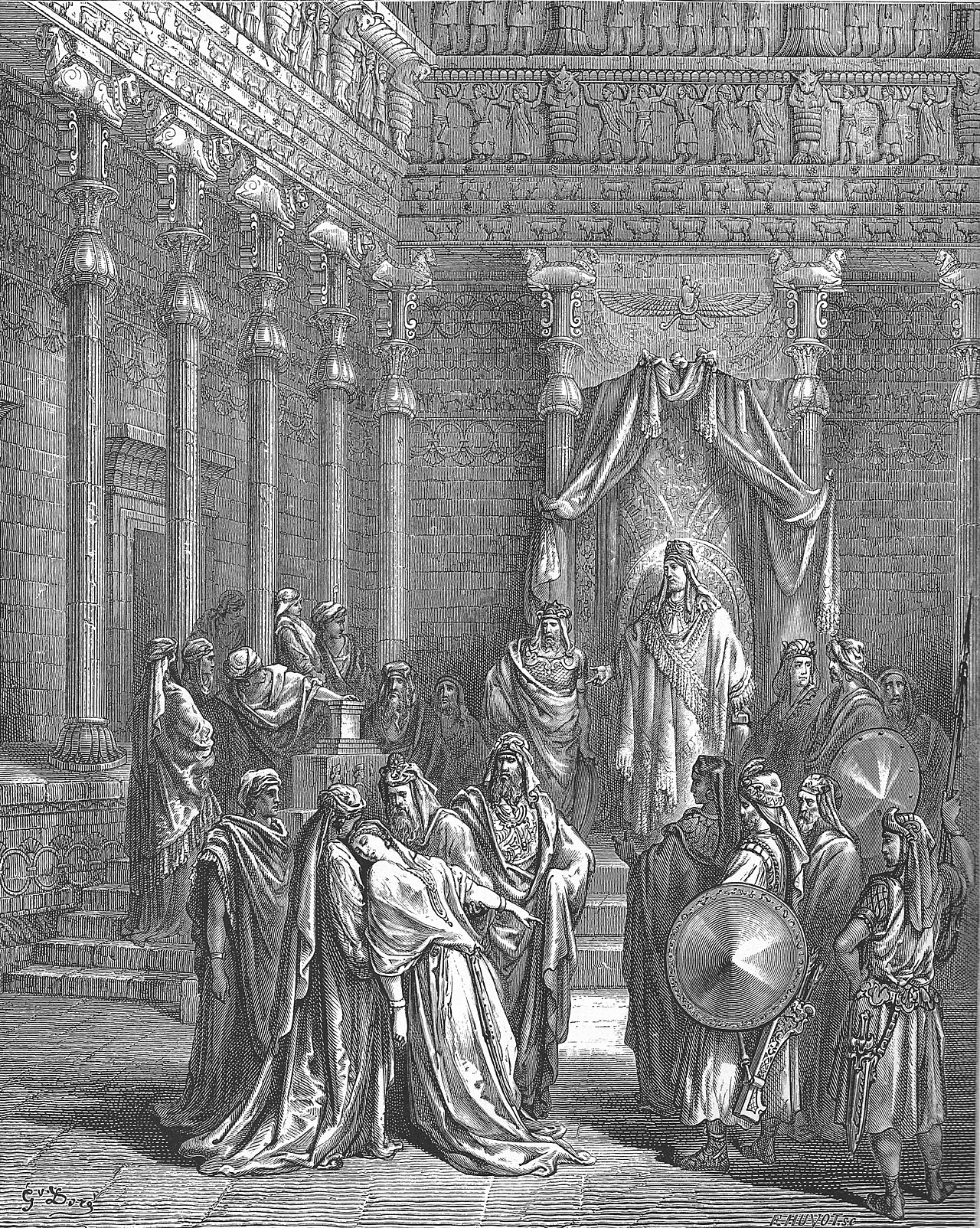
This page draws on Jamieson, Fausset & Brown, Commentary Critical and Explanatory on the Whole Bible; John Gill, Exposition of the Old Testament (1748-1763); Keil, The Books of Ezra, Nehemiah, and Esther; Matthew Henry, Commentary on the Whole Bible; Rabanus Maurus, EXPLANATION ON THE BOOK OF ESTHER 12; Rabanus Maurus, Commentary on Esther and W. F. Adeney, Ezra, Nehemiah and Esther (Expositor's Bible).