
Deuteronomy 33:4
in Deuteronomy 33the law that Moses gave us, the possession of the assembly of Jacob.
BSB
The same verse in ASV and KJV ▾
ASV
Moses commanded us a law, An inheritance for the assembly of Jacob.
KJV
Moses commanded us a law, even the inheritance of the congregation of Jacob.
⋯
This verse in Deuteronomy 33
Commentary
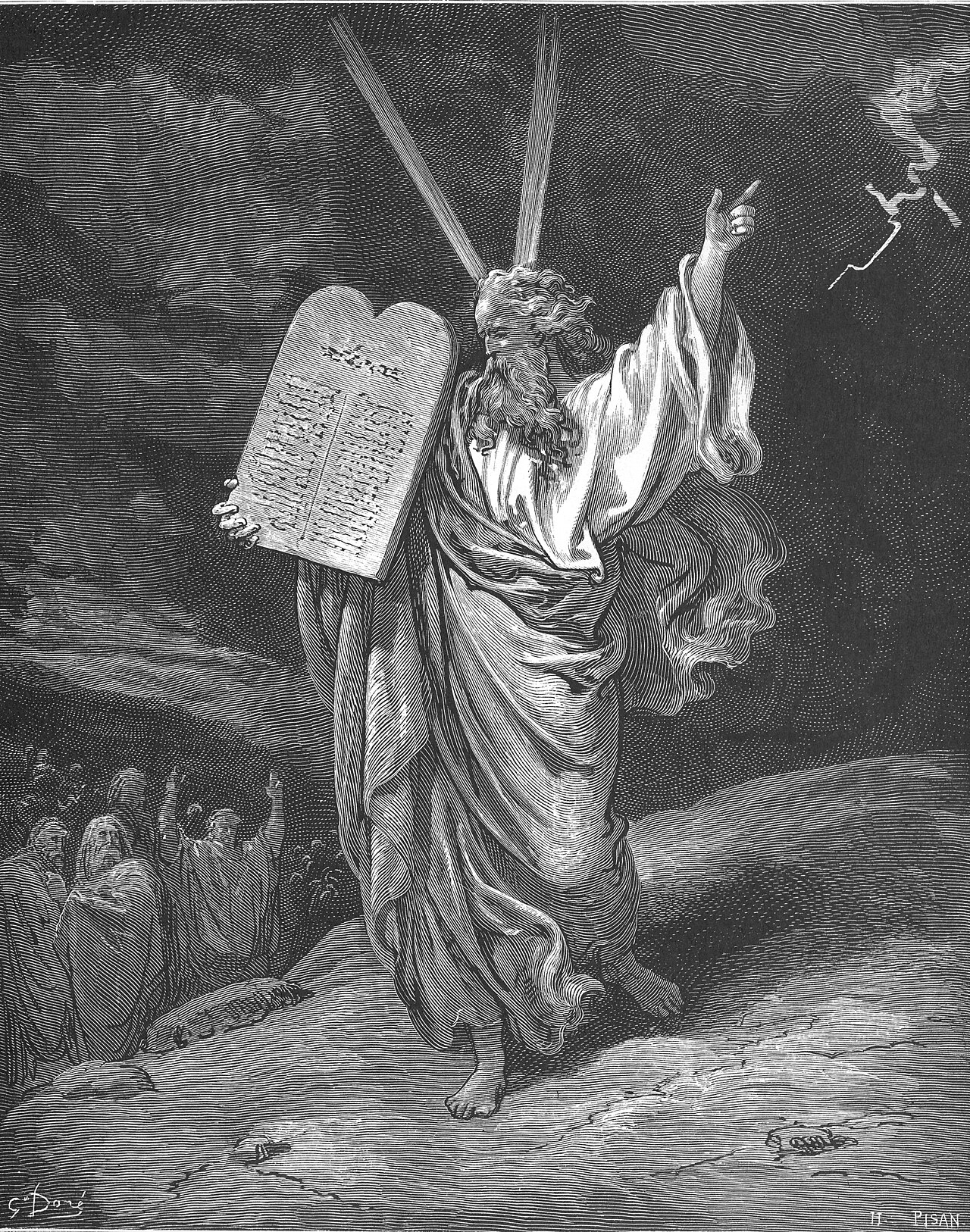
2 notes on this verseMoses - He speaks this of himself in the third person, which is very usual in the Hebrew language. The law is called their inheritance, because the obligation of it was hereditary, passing from parents to their children, and because this was the best part of their inheritance, the greatest of all those gifts which God bestowed upon them.
This site's exposition
Yea, he loved the people
on Deuteronomy 33:3-5
Between the theophany and the tribes stands a people gathered at God's feet to receive his words, and verse 4 calls the law an inheritance, which is the language used elsewhere of land. Jeshurun is a name for Israel that falls four times in Scripture, three of them in this book at 32:15, 33:5 and 33:26, and once at Isaiah 44:2. Commentators divide over who the king of verse 5 is, some reading it of God and others of Moses among the assembled heads, and the Hebrew names neither.
The words behind it
7 Hebrew wordsEvery Hebrew word of this verse in the order it stands, with what it means and the door to its own study. The last column counts the times a word stands in the whole Bible: the rarer the word, the more the places it appears belong together.
| Hebrew | Sound | Meaning | Word study | In the Bible |
|---|---|---|---|---|
| תּוֹרָ֥ה | torah | a law | H8451 → | 219 times |
| צִוָּה־ | tzivah- | he commanded | H6680 → | 494 times |
| לָ֖נוּ | lanu | to <the> us | ||
| מֹשֶׁ֑ה | mosheh | Moses | H4872 → | 765 times |
| מוֹרָשָׁ֖ה | morashah | a possession | H4181 → | |
| קְהִלַּ֥ת | kehilat | [the] assembly of | H6952 → | |
| יַעֲקֹֽב׃ | yaako | Jacob | H3290 → | 350 times |
תּוֹרָ֥הa law
torahH8451 →219 times
צִוָּה־he commanded
tzivah-H6680 →494 times
לָ֖נוּto <the> us
lanu
מֹשֶׁ֑הMoses
moshehH4872 →765 times
מוֹרָשָׁ֖הa possession
morashahH4181 →
קְהִלַּ֥ת[the] assembly of
kehilatH6952 →
יַעֲקֹֽב׃Jacob
yaakoH3290 →350 times
A shaded row is a word that stands 400 times or fewer in the Bible.
The walk
8 stopsEach card is a verse this one points to, and under it the verses that one points to in turn. Where several paths arrive at the same place, that place is listed first: the text keeps returning to it.
Through
John 1:17For the law was given through Moses; grace and truth came through Jesus Christ.
it leads to
- John 14:6
Jesus answered, “I am the way and the truth and the life. No one comes to the Father except through Me.
- Romans 6:14
For sin shall not be your master, because you are not under law, but under grace.
- Romans 3:19–26
Now we know that whatever the law says, it says to those who are under the law, so that every mouth may be silenced and the whole world held accountable to God.
- Romans 5:20–21
The law came in so that the trespass would increase; but where sin increased, grace increased all the more,
- John 1:14
The Word became flesh and made His dwelling among us. We have seen His glory, the glory of the one and only Son from the Father, full of grace and truth.
- John 14:6
Through
Psalms 119:72The law from Your mouth is more precious to me than thousands of pieces of gold and silver.
it leads to
- Proverbs 8:10–11
Receive my instruction instead of silver, and knowledge rather than pure gold.
- Psalms 19:10
They are more precious than gold, than much pure gold; they are sweeter than honey, than honey from the comb.
- Proverbs 8:10–11
Through
Psalms 119:111Your testimonies are my heritage forever, for they are the joy of my heart.
it leads to
- Jeremiah 15:16
Your words were found, and I ate them. Your words became my joy and my heart’s delight. For I bear Your name, O LORD God of Hosts.
- Jeremiah 15:16
About Deuteronomy
Who and where
2 names in this verse with a page on the site.
This page draws on John Gill, Exposition of the Old Testament; John Wesley, Explanatory Notes upon the Old Testament and Keil and Delitzsch, Biblical Commentary on the Old Testament: The Pentateuch.