
Daniel 6:19
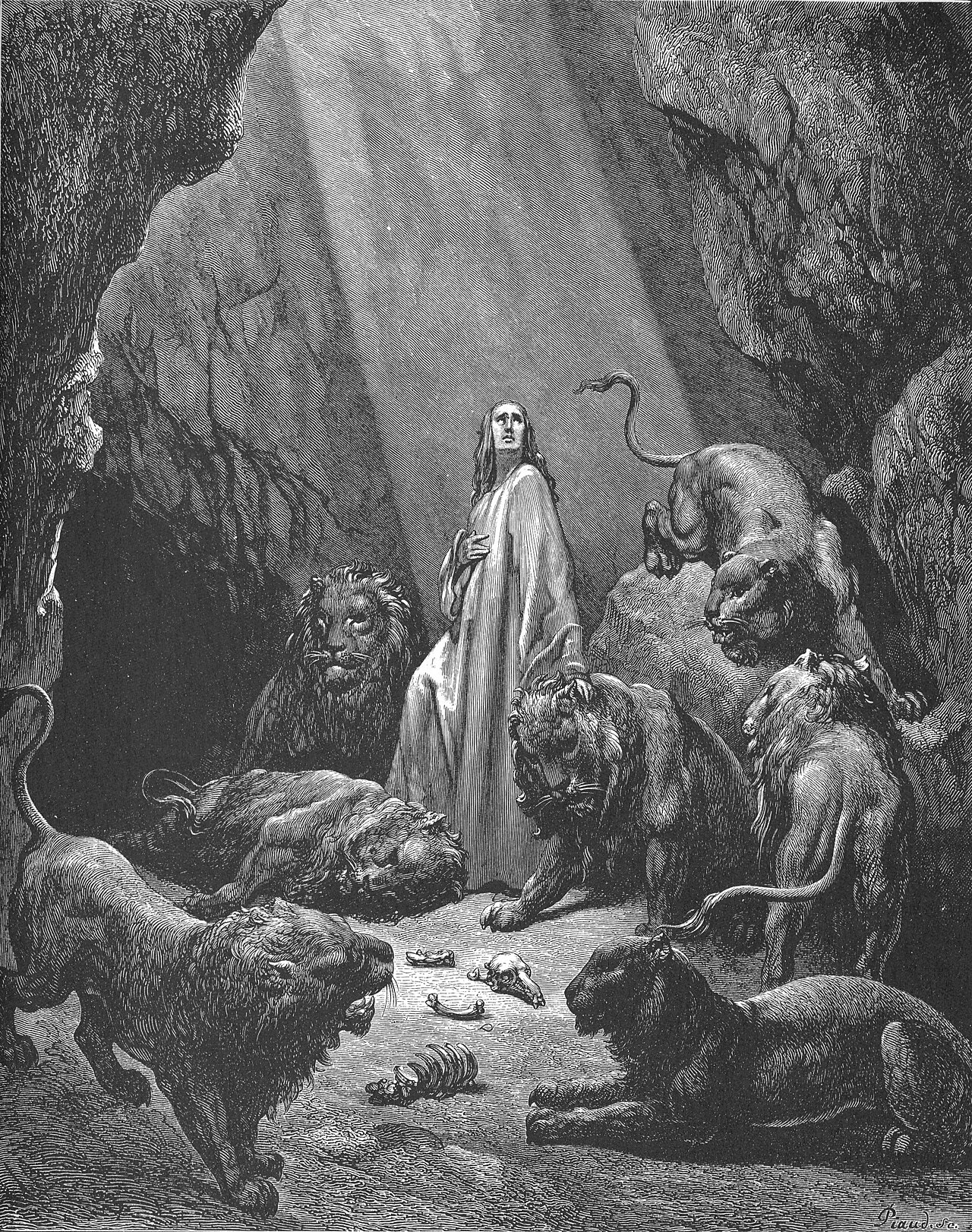
in Daniel 6At the first light of dawn, the king got up and hurried to the den of lions.
BSB
The same verse in ASV and KJV ▾
ASV
Then the king arose very early in the morning, and went in haste unto the den of lions.
KJV
Then the king arose very early in the morning, and went in haste unto the den of lions.
⋯
This verse in Daniel 6
Commentary
10 notes on this verseVerse 19. "Then the king arose at the break of dawn and proceeded with haste to the pit of lions." The term "pit" (lacus) implies a really deep depression, or dry cistern, in which the lions were fed. And so he proceeded hastily to the pit at the break of dawn, believing that Daniel was alive. But in Latin the word lacus is applied to a body of fresh water, such as Lake Benacus and Lake Larius, and the rest of them. The Greeks call it limne, that is, "a body of standing water" (stagnum).
This site's exposition
spent the night fasting
on Daniel 6:18-20
Darius “spent the night fasting,” with no entertainment, and “sleep fled from him,” a vigil kept for his servant. At dawn he “hurried to the den of lions” and “cried out in a voice of anguish”. He calls God “the living God” and asks whether He has “been able to deliver you from the lions,” a confession Nebuchadnezzar reached in his own words earlier in the book.
This site's exposition
At the first light of dawn
Theodoret of Cyrus took the first light of dawn to mean the dark before sunrise, when lamps were still needed. Jerome held that the king hurried, believing Daniel was living. Albert Barnes named the king's anxiety, his remorse and his hope as the reasons he got up so early.
The record, by era
The Church Fathers3 voices
Accordingly, "Then he arose at first light and came to the den of lions in haste, and having called in a strong voice said, 'Daniel, slave of the living God, your God whom you serve perpetually, was he able to take you out from the mouth of the lions?'" [Daniel 6:19-20] And so why, having been disturbed, did the king cry this word, except that he had heard what happened to the boys, who were not willing to obey the prescription of the king, and were preserved from the furnace of fire?... The same happened to him, but he feared God and despised the decree of the Medes and Persians.
The same faith, which on the previous evening had led Darius to seal the entrance of the den, brought him again to that place, as if he would have seen Daniel still alive.
"King Darius rose early at daybreak," that is, while it was still dark, around dawn, so that there was even need of lamps (the meaning of "at daybreak").
The Puritans and the Awakening2 voices
Then the king arose very early in the morning,....
What he doubted of we are sure of, that the servants of the living God have a Master who is well able to protect them and bear them out in his service. The joyful news he meets with-that Daniel is alive, is safe, and well, and unhurt in the lions' den,
2 more voices on this verse
The Nineteenth Century2 voices
The king arose very early - By the break of day.
A commentator
Albert Barnes1798–1870
Notes, Explanatory and Practical, on the Old and New Testaments (1832-1869)
proposed
Then the king arose very early in the morning ... - No one can doubt the probability of what is here said, if the previous account be true. His deep anxiety; his wakefulnight; the remorse which he endured, and his hope that Daniel would be after all preserved, all would prompt to an early visit to the place of his confinement, and to his earnestness in ascertaining whether he were still alive.
The words behind it
10 Hebrew wordsEvery Hebrew word of this verse in the order it stands, with what it means and the door to its own study. The last column counts the times a word stands in the whole Bible: the rarer the word, the more the places it appears belong together.
| Hebrew | Sound | Meaning | Word study | In the Bible |
|---|---|---|---|---|
| בֵּאדַ֣יִן | bedayin | <in> then | H116 → | 57 times |
| מַלְכָּ֔א | malka' | king the | H4430 → | 180 times |
| בִּשְׁפַּרְפָּרָ֖א | bishparpara' | at <the> dawn | H8238 → | |
| יְק֣וּם | yekum | he arose | H6966 → | 35 times |
| בְּנָגְהָ֑א | benageha' | at daylight the | H5053 → | |
| וּבְהִ֨תְבְּהָלָ֔ה | uvehitbehalah | and in haste | H927 → | 11 times |
| לְגֻבָּ֥א | leguba' | to den the | H1358 → | 10 times |
| דִֽי־ | di- | of | H1768 → | 345 times |
| אַרְיָוָתָ֖א | ʾaryavata' | lions the | H744 → | 10 times |
| אֲזַֽל׃ | ʾazal | he went | H236 → | 7 times |
בֵּאדַ֣יִן<in> then
bedayinH116 →57 times
מַלְכָּ֔אking the
malka'H4430 →180 times
בִּשְׁפַּרְפָּרָ֖אat <the> dawn
bishparpara'H8238 →
יְק֣וּםhe arose
yekumH6966 →35 times
בְּנָגְהָ֑אat daylight the
benageha'H5053 →
וּבְהִ֨תְבְּהָלָ֔הand in haste
uvehitbehalahH927 →11 times
לְגֻבָּ֥אto den the
leguba'H1358 →10 times
דִֽי־of
di-H1768 →345 times
אַרְיָוָתָ֖אlions the
ʾaryavata'H744 →10 times
אֲזַֽל׃he went
ʾazalH236 →7 times
A shaded row is a word that stands 400 times or fewer in the Bible.
The walk
8 stopsEach card is a verse this one points to, and under it the verses that one points to in turn. Where several paths arrive at the same place, that place is listed first: the text keeps returning to it.
Through
Matthew 28:1After the Sabbath, at dawn on the first day of the week, Mary Magdalene and the other Mary went to see the tomb.
it leads to
- Mark 16:1–8
When the Sabbath was over, Mary Magdalene, Mary the mother of James, and Salome bought spices so they could go and anoint the body of Jesus.
- John 20:1–10
Early on the first day of the week, while it was still dark, Mary Magdalene went to the tomb and saw that the stone had been removed from the entrance.
- Matthew 27:56
Among them were Mary Magdalene, Mary the mother of James and Joseph, and the mother of Zebedee’s sons.
- Luke 23:56
Then they returned to prepare spices and perfumes. And they rested on the Sabbath, according to the commandment.
- Matthew 27:61
Mary Magdalene and the other Mary were sitting there opposite the tomb.
- Mark 16:1–8
Through
1 Thessalonians 3:5For this reason, when I could bear it no longer, I sent to find out about your faith, for fear that the tempter had somehow tempted you and caused our labor to be in…
it leads to
- James 1:13–14
When tempted, no one should say, “God is tempting me.” For God cannot be tempted by evil, nor does He tempt anyone.
- James 1:13–14
Through
Mark 16:2Very early on the first day of the week, just after sunrise, they went to the tomb.
it leads to
- John 20:1
Early on the first day of the week, while it was still dark, Mary Magdalene went to the tomb and saw that the stone had been removed from the entrance.
- John 20:1
Through
2 Corinthians 2:13I had no peace in my spirit, because I did not find my brother Titus there. So I said goodbye to them and went on to Macedonia.
it leads to
- 2 Corinthians 7:5–6
For when we arrived in Macedonia, our bodies had no rest, but we were pressed from every direction—conflicts on the outside, fears within.
- 2 Corinthians 7:5–6
Where this verse is studied
On this page
About Daniel
This page draws on 9 works. Open the list of works
This page draws on Adam Clarke, Commentary on the Bible; Albert Barnes, Notes on the Book of Daniel; Albert Barnes, Notes, Explanatory and Practical, on the Old and New Testaments (1832-1869); Ephrem the Syrian, COMMENTARY ON DANIEL 6:19; Hippolytus of Rome, Commentary on Daniel 3.28.5-6; Jerome, St. Jerome, Commentary on Daniel, CHAPTER SIX; John Gill, Exposition of the Old Testament (1748-1763); Matthew Henry, Commentary on the Whole Bible and Theodoret of Cyrus, COMMENTARY ON DANIEL 6:19.