
Daniel 6:23
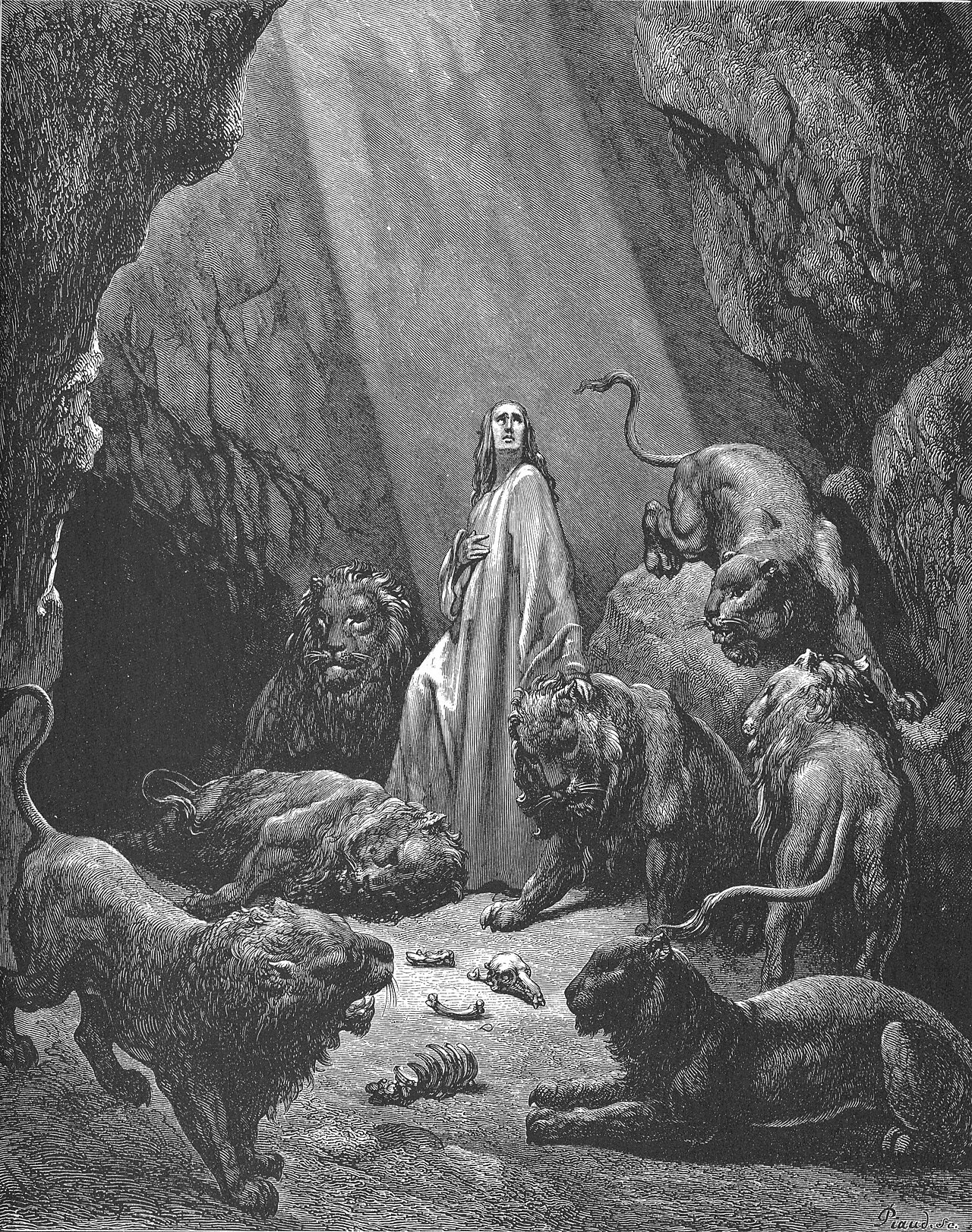
in Daniel 6The king was overjoyed and gave orders to lift Daniel out of the den, and when Daniel was lifted out of the den, no wounds whatsoever were found on him, because he had trusted in his God.
BSB
The same verse in ASV and KJV ▾
ASV
Then was the king exceeding glad, and commanded that they should take Daniel up out of the den. So Daniel was taken up out of the den, and no manner of hurt was found upon him, because he had trusted in his God.
KJV
Then was the king exceeding glad for him, and commanded that they should take Daniel up out of the den. So Daniel was taken up out of the den, and no manner of hurt was found upon him, because he believed in his God.
⋯
This verse in Daniel 6
Commentary
10 notes on this verseThe lesson that was read today invites you to the true faith, by setting before you the way in which you also must please God. It affirms that "without faith it is impossible to please him." For when will an individual resolve to serve God, unless he believes that "he is a giver of reward"? When will a young woman choose a virgin life, or a young man live soberly, if they do not believe that for chastity there is "a crown that does not fade away"? Faith is an eye that enlightens every conscience and imparts understanding.
This site's exposition
O king, may you live forever
on Daniel 6:21-23
Daniel gives the deliverance to God: “My God sent His angel and shut the mouths of the lions”. The older commentators read this beside the angel in chapter 3. The text gives the reason: “no wounds whatsoever were found on him, because he had trusted in his God”.
This site's exposition
he had trusted in his God
Jamieson, Fausset and Brown and John Chrysostom linked Daniel, lifted out of the den with no wounds, to the faith praised in Hebrews 11:33. Daniel trusted without counting on a miracle, the former added. He was sure God would deliver him in a better life, if not in this one.
The record, by era
The Church Fathers2 voices
Then accordingly when the angel appeared in the den, the wild beasts were tamed and the lions, wagging their tails at him, rejoiced as being subjected by a new Adam. They, licking the holy feet of Daniel, rolled around to taste the soles of his feet and they longed to accompany him. For if we believe that, after Paul was condemned to beasts and that a lion was set upon him, it reclined at his feet and licked him all around, how do we not also believe what happened to Daniel, which even Darius himself described to all, having dispatched it through scribes? And in the books of the Persians and Medes it is read up to today that these things really occurred, so that not only the Hebrews nor only the Babylonians, but also the Medes and the Persians and all the nations who live under heaven, having heard the things which happened, they themselves feared God. And then, as Darius heard the voice of Daniel, he was amazed and marveled and commanded the stone to be rolled away and he saw Daniel sitting in the midst of the lions and he was stroking the hair of their heads with his own hands. And then, having invited everyone, he exhibited to them the marvelous spectacle, beasts which were tamed by a man and who were comforted by his hands. Accordingly after taking Daniel up "from the den, no destruction was found in him at all because he trusted in his God." [Daniel 6:23]
A commentator
John ChrysostomON THE EPISTLE TO THE HEBREWS, HOMILY 27:4 · Written before 407.
proposed
"Stopped the mouths of lions, quenched raging fire and escaped the edge of the sword." See how they were in death itself, Daniel encompassed by the lions, the three children abiding in the furnace, the Israelites, Abraham, Isaac, Jacob, in diverse temptations; and yet not even so did they despair. For this is faith. When things are turning out adversely, then we ought to believe nothing adverse is done but all things in due order.
The Puritans and the Awakening2 voices
): The king was exceedingly glad to find him alive, and gave orders immediately that they should take him out of the den, as Jeremiah out of the dungeon; and, when they searched, no manner of hurt was found upon him; he was nowhere crushed nor scarred, but was kept perfectly well, because he believed in his God.
quarantine:debris (2026-07-29) — leading-punctuation+unbalanced-parens
Then was the king exceeding glad for him,....
The Nineteenth Century1 voice
A commentator
Jamieson, Fausset & Brown1802–1910
Commentary Critical and Explanatory on the Whole Bible (1871)
proposed
because he believed--"Faith" is stated in Heb 11:33 to have been his actuating principle: a prelude to the Gospel. His belief was not with a view to a miraculous deliverance. He shut his eyes to the event, committing the keeping of his soul to God, in well-doing, as unto a faithful Creator (1Pe 4:19), sure of deliverance in a better life, if not in this.
quarantine:debris (2026-07-29) — starts-lowercase
2 more voices on this verse
The Nineteenth Century2 voices
No manner of hurt was found upon him - And why? Because he believed in his God. How mighty is faith? It interests that power in the behalf of the believer by which the sea is dried up, the mountains removed, the dead raised to life, sin forgiven, the heart purified, Satan vanquished, death conquered, and God himself delighted and glorified! See Hebrews 11.
A commentator
Albert Barnes1798–1870
Notes, Explanatory and Practical, on the Old and New Testaments (1832-1869)
proposed
Then was the king exceeding glad for him - On account of Daniel. That is, he was rejoiced for the sake of Daniel that he had received no hurt, and that he might be restored to his place, and be useful again in the government.
The words behind it
22 Hebrew wordsEvery Hebrew word of this verse in the order it stands, with what it means and the door to its own study. The last column counts the times a word stands in the whole Bible: the rarer the word, the more the places it appears belong together.
| Hebrew | Sound | Meaning | Word study | In the Bible |
|---|---|---|---|---|
| בֵּאדַ֣יִן | bedayin | <in> then | H116 → | 57 times |
| מַלְכָּ֗א | malka' | king the | H4430 → | 180 times |
| שַׂגִּיא֙ | sagi' | exceedingly | H7690 → | 13 times |
| טְאֵ֣ב | teev | it was good | H2868 → | |
| עֲל֔וֹהִי | alohi | to him | H5922 → | 104 times |
| וּלְדָ֣נִיֵּ֔אל | uledaniyel | and <obj.> Daniel | H1841 → | 57 times |
| אֲמַ֖ר | ʾamar | he said | H560 → | 71 times |
| לְהַנְסָקָ֣ה | lehansakah | to take up | H5559 → | 7 times |
| מִן־ | min- | from | H4481 → | 109 times |
| גֻּבָּ֑א | guba' | den the | H1358 → | 10 times |
| וְהֻסַּ֨ק | vehusak | and he was taken up | H5559 → | 7 times |
| דָּנִיֵּ֜אל | daniyel | Daniel | H1841 → | 57 times |
| מִן־ | min- | from | H4481 → | 109 times |
| גֻּבָּ֗א | guba' | den the | H1358 → | 10 times |
| וְכָל־ | vekhol | and any | H3606 → | 82 times |
| חֲבָל֙ | chaval | hurt | H2257 → | |
| לָא־ | la'- | not | H3809 → | 82 times |
| הִשְׁתְּכַ֣ח | hishtekhach | it was found | H7912 → | 18 times |
| בֵּ֔הּ | beh | on him | ||
| דִּ֖י | di | that | H1768 → | 345 times |
| הֵימִ֥ן | heimin | he had trusted | H540 → | 3 times |
| בֵּאלָהֵֽהּ׃ | belaheh | in God his | H426 → | 95 times |
בֵּאדַ֣יִן<in> then
bedayinH116 →57 times
מַלְכָּ֗אking the
malka'H4430 →180 times
שַׂגִּיא֙exceedingly
sagi'H7690 →13 times
טְאֵ֣בit was good
teevH2868 →
עֲל֔וֹהִיto him
alohiH5922 →104 times
וּלְדָ֣נִיֵּ֔אלand <obj.> Daniel
uledaniyelH1841 →57 times
אֲמַ֖רhe said
ʾamarH560 →71 times
לְהַנְסָקָ֣הto take up
lehansakahH5559 →7 times
מִן־from
min-H4481 →109 times
גֻּבָּ֑אden the
guba'H1358 →10 times
וְהֻסַּ֨קand he was taken up
vehusakH5559 →7 times
דָּנִיֵּ֜אלDaniel
daniyelH1841 →57 times
מִן־from
min-H4481 →109 times
גֻּבָּ֗אden the
guba'H1358 →10 times
וְכָל־and any
vekholH3606 →82 times
חֲבָל֙hurt
chavalH2257 →
לָא־not
la'-H3809 →82 times
הִשְׁתְּכַ֣חit was found
hishtekhachH7912 →18 times
בֵּ֔הּon him
beh
דִּ֖יthat
diH1768 →345 times
הֵימִ֥ןhe had trusted
heiminH540 →3 times
בֵּאלָהֵֽהּ׃in God his
belahehH426 →95 times
A shaded row is a word that stands 400 times or fewer in the Bible.
The walk
8 stopsEach card is a verse this one points to, and under it the verses that one points to in turn. Where several paths arrive at the same place, that place is listed first: the text keeps returning to it.
Through
Mark 9:23“If You can?” echoed Jesus. “All things are possible to him who believes!”
it leads to
- John 11:40
Jesus replied, “Did I not tell you that if you believed, you would see the glory of God?”
- Hebrews 11:6
And without faith it is impossible to please God, because anyone who approaches Him must believe that He exists and that He rewards those who earnestly seek Him.
- Matthew 17:20
“Because you have so little faith,” He answered. “For truly I tell you, if you have faith the size of a mustard seed, you can say to this mountain, ‘Move from here to there,’…
- Mark 11:23
“Truly I tell you that if anyone says to this mountain, ‘Be lifted up and thrown into the sea,’ and has no doubt in his heart but believes that it will happen, it will…
- Matthew 21:21–22
“Truly I tell you,” Jesus replied, “if you have faith and do not doubt, not only will you do what was done to the fig tree, but even if you say to this mountain,…
- John 11:40
Through
Daniel 3:25“Look!” he exclaimed. “I see four men, unbound and unharmed, walking around in the fire—and the fourth looks like a son of the gods!”
it leads to
- Isaiah 43:2
When you pass through the waters, I will be with you; and when you go through the rivers, they will not overwhelm you. When you walk through the fire, you will not be scorched;…
- Isaiah 43:2
Through
1 Chronicles 5:20And because they cried out to God in battle, they were helped against their enemies, and the Hagrites and all their allies were delivered into their hands. Because they put their trust in God,…
it leads to
- Psalms 22:4–5
In You our fathers trusted; they trusted and You delivered them.
- Psalms 9:10
Those who know Your name trust in You, for You, O LORD, have not forsaken those who seek You.
- Psalms 22:4–5
Where this verse is studied
On this page
Studies9
On this chapter
About Daniel
Who and where
1 name in this verse with a page on the site.
This page draws on 10 works. Open the list of works
This page draws on Adam Clarke, Commentary on the Bible; Albert Barnes, Notes, Explanatory and Practical, on the Old and New Testaments (1832-1869); Carl Friedrich Keil, Biblical Commentary on the Book of Daniel; Cyril of Jerusalem, Catechetical Lecture 5:4; Hippolytus of Rome, Commentary on Daniel 3.29.3-6; Jamieson, Fausset & Brown, Commentary Critical and Explanatory on the Whole Bible; John Chrysostom, ON THE EPISTLE TO THE HEBREWS, HOMILY 27:4; John Gill, Exposition of the Old Testament; John Gill, Exposition of the Old Testament (1748-1763) and Matthew Henry, Commentary on the Whole Bible.