
2 Samuel 3:34
in 2 Samuel 3Your hands were not bound, your feet were not fettered. As a man falls before the wicked, so also you fell.” And all the people wept over him even more.
BSB
The same verse in ASV and KJV ▾
ASV
Thy hands were not bound, nor thy feet put into fetters: As a man falleth before the children of iniquity, so didst thou fall. And all the people wept again over him.
KJV
Thy hands were not bound, nor thy feet put into fetters: as a man falleth before wicked men, so fellest thou. And all the people wept again over him.
⋯
This verse in 2 Samuel 3
Commentary
5 notes on this verseA commentator
Albert Barnes1798–1870
Notes, Explanatory and Practical, on the Old and New Testaments (1832-1869)
Thy hands were not bound ... - This thought prepares the way for the solution; Abner had been treacherously murdered by wicked men.
This site's exposition
Died Abner as a fool dieth
on 2 Samuel 3:33-34
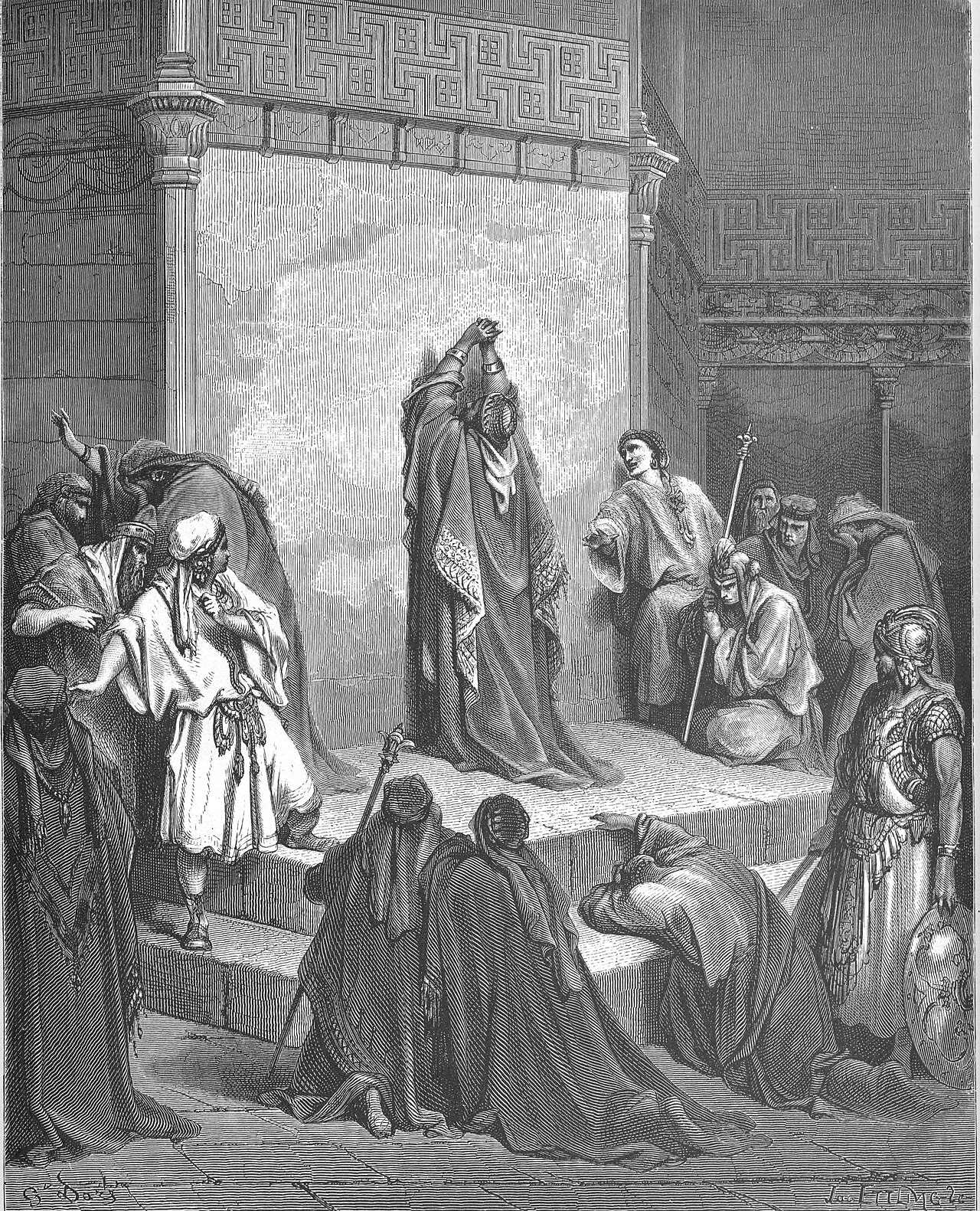
David composes a dirge over Abner, the second such lament the book records after the one over Saul and Jonathan at 1:19-27, and its question answers itself in the next line: thy hands were not bound, nor thy feet put into fetters, a man cut down by treachery rather than by any justice he had earned. Barnes reads the whole lament as the deliberate opposite of a fool's death, since Abner was neither guilty nor helpless but simply unwarned, and Wesley reads the line as a general warning against any death a man brings nearer by his own folly, applied here to the man who struck rather than the man who fell.
The record, by era
The Puritans and the Awakening3 voices
David's Wives and Children. 1 Now there was long war between the house of Saul and the house of David: but David waxed stronger and stronger, and the house of Saul waxed weaker and weaker. 2 And unto David were sons born in Hebron: and his firstborn was Amnon, of Ahinoam the Jezreelitess;
quarantine:scripture (2026-07-29) — scripture-overlap:92%@v1-3
Thy hands were not bound, nor thy feet put into fetters,.... As malefactors are when they are taken up for any crime, and especially when proved upon them, and condemned for it, and brought forth to be executed.
A man may have his life, and all that is dear to him, taken from him, and not be able to prevent it with all his wisdom, care, and integrity; but there is that which no thief can break through to steal. See here how much more we are beholden to God's providence than to our own prudence for the continuance of our lives and comforts.
The words behind it
17 Hebrew wordsEvery Hebrew word of this verse in the order it stands, with what it means and the door to its own study. The last column counts the times a word stands in the whole Bible: the rarer the word, the more the places it appears belong together.
| Hebrew | Sound | Meaning | Word study | In the Bible |
|---|---|---|---|---|
| יָדֶ֣ךָ | yadekha | hand your | H3027 → | 1618 times |
| לֹֽא־ | lo'- | not | H3808 → | 5168 times |
| אֲסֻר֗וֹת | ʾasurot | [were] bound | H631 → | |
| וְרַגְלֶ֙יךָ֙ | veragleikha | and feet your | H7272 → | 247 times |
| לֹא־ | lo'- | not | H3808 → | 5168 times |
| לִנְחֻשְׁתַּ֣יִם | linchushtayim | to bronze fetters | H5178 → | 140 times |
| הֻגָּ֔שׁוּ | hugashu | they were brought near | H5066 → | 125 times |
| כִּנְפ֛וֹל | kinfol | as falls | H5307 → | 435 times |
| לִפְנֵ֥י | lifnei | <to> before | H6440 → | 2123 times |
| בְנֵֽי־ | venei- | sons of | H1121 → | 4930 times |
| עַוְלָ֖ה | ʾavlah | injustice | H5766 → | |
| נָפָ֑לְתָּ | nafalta | you have fallen | H5307 → | 435 times |
| וַיֹּסִ֥פוּ | vaiyosifu | and they repeated | H3254 → | 212 times |
| כָל־ | khol- | all | H3605 → | 5413 times |
| הָעָ֖ם | haam | the people | H5971 → | 1873 times |
| לִבְכּ֥וֹת | livkot | to weep | H1058 → | 114 times |
| עָלָֽיו׃ | ʾalav | on him | H5921 → | 5755 times |
יָדֶ֣ךָhand your
yadekhaH3027 →1618 times
לֹֽא־not
lo'-H3808 →5168 times
אֲסֻר֗וֹת[were] bound
ʾasurotH631 →
וְרַגְלֶ֙יךָ֙and feet your
veragleikhaH7272 →247 times
לֹא־not
lo'-H3808 →5168 times
לִנְחֻשְׁתַּ֣יִםto bronze fetters
linchushtayimH5178 →140 times
הֻגָּ֔שׁוּthey were brought near
hugashuH5066 →125 times
כִּנְפ֛וֹלas falls
kinfolH5307 →435 times
לִפְנֵ֥י<to> before
lifneiH6440 →2123 times
בְנֵֽי־sons of
venei-H1121 →4930 times
עַוְלָ֖הinjustice
ʾavlahH5766 →
נָפָ֑לְתָּyou have fallen
nafaltaH5307 →435 times
וַיֹּסִ֥פוּand they repeated
vaiyosifuH3254 →212 times
כָל־all
khol-H3605 →5413 times
הָעָ֖םthe people
haamH5971 →1873 times
לִבְכּ֥וֹתto weep
livkotH1058 →114 times
עָלָֽיו׃on him
ʾalavH5921 →5755 times
A shaded row is a word that stands 400 times or fewer in the Bible.
The walk
8 stopsEach card is a verse this one points to, and under it the verses that one points to in turn. Where several paths arrive at the same place, that place is listed first: the text keeps returning to it.
Through
Judges 16:21Then the Philistines seized him, gouged out his eyes, and brought him down to Gaza, where he was bound with bronze shackles and forced to grind grain in the prison.
it leads to
- Proverbs 2:19
None who go to her return or negotiate the paths of life.
- Proverbs 14:14
The backslider in heart receives the fill of his own ways, but a good man is rewarded for his ways.
- Isaiah 47:2
Take millstones and grind flour; remove your veil; strip off your skirt, bare your thigh, and wade through the streams.
- Exodus 11:5
and every firstborn son in the land of Egypt will die, from the firstborn of Pharaoh who sits on his throne, to the firstborn of the servant girl behind the hand mill, as well…
- Matthew 24:41
Two women will be grinding at the mill: one will be taken and the other left.
- Proverbs 2:19
Through
2 Samuel 1:12They mourned and wept and fasted until evening for Saul and his son Jonathan, and for the people of the LORD and the house of Israel, because they had fallen by the sword.
it leads to
- Matthew 5:44
But I tell you, love your enemies and pray for those who persecute you,
- Psalms 35:13–14
Yet when they were ill, I put on sackcloth; I humbled myself with fasting, but my prayers returned unanswered.
- Proverbs 24:17
Do not gloat when your enemy falls, and do not let your heart rejoice when he stumbles,
- Matthew 5:44
Where this verse is studied
On this page
Studies1
About 2 Samuel
This page draws on Albert Barnes, Notes, Explanatory and Practical, on the Old and New Testaments (1832-1869); Albert Barnes, Notes on the Old Testament; John Gill, Exposition of the Old Testament (1748-1763); John Wesley, Explanatory Notes upon the Old Testament and Matthew Henry, Commentary on the Whole Bible.