
2 Samuel 19:4
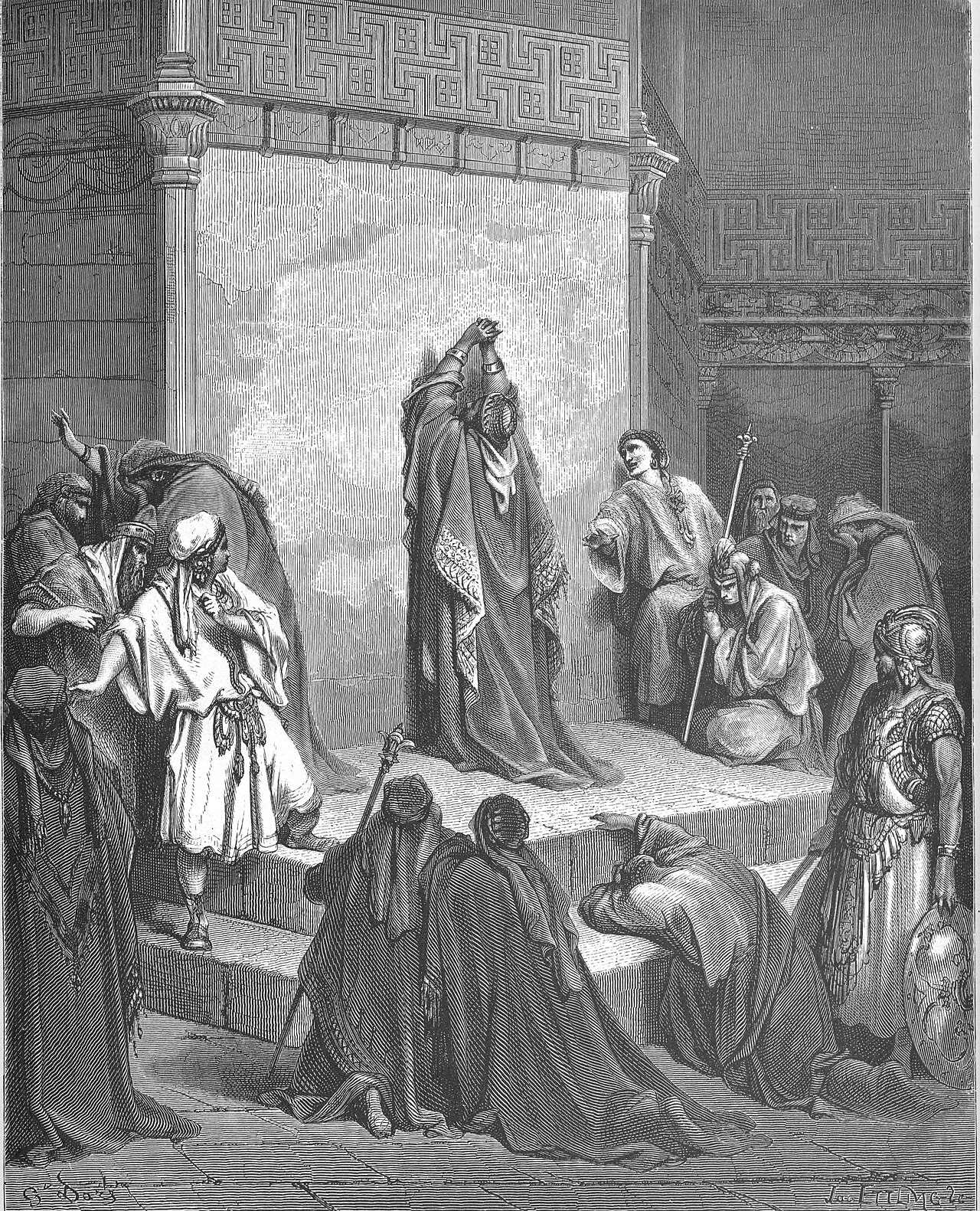
in 2 Samuel 19But the king covered his face and cried out at the top of his voice, “O my son Absalom! O Absalom, my son, my son!”
BSB
The same verse in ASV and KJV ▾
ASV
And the king covered his face, and the king cried with a loud voice, O my son Absalom, O Absalom, my son, my son!
KJV
But the king covered his face, and the king cried with a loud voice, O my son Absalom, O Absalom, my son, my son!
⋯
This verse in 2 Samuel 19
Commentary
3 notes on this verseThe king covered his face - This was the custom of mourners. O my son Absalom - Calmet has properly remarked that the frequent repetition of the name of the defunct, is common in the language of lamentation. Thus Virgil, act. v., ver. 51: - - Daphnin que team tollemus ad astra; Daphnin ad astra feremus: amavit nos quoque Daphnis. “With yours, my song I cheerfully shall join, To raise your Daphnis to the powers Divine.
This site's exposition
O my son Absalom, O Absalom, my son, my son
David covers his face and repeats his son's name, a lament pattern the older commentators call the plainest cry of grief in Scripture. He never speaks Absalom's name without the possessive my son, holding the office of father through the ruin the son made of himself and of the kingdom. Clarke and Henry both weigh the mourning as excessive given what Absalom had done, yet neither dismisses a father's loss as a small thing.
The record, by era
The Puritans and the Awakening1 voice
"My servants have all come home safe, but where is my son? He is dead; and, dying in sin, I fear he is lost for ever. I cannot now say, I shall go to him, for my soul shall not be gathered with such sinners; what shall be done for thee, O Absalom! my son, my son! " 2.
The words behind it
13 Hebrew wordsEvery Hebrew word of this verse in the order it stands, with what it means and the door to its own study. The last column counts the times a word stands in the whole Bible: the rarer the word, the more the places it appears belong together.
| Hebrew | Sound | Meaning | Word study | In the Bible |
|---|---|---|---|---|
| וְהַמֶּ֙לֶךְ֙ | vehamelekh | and the king | H4428 → | 2525 times |
| לָאַ֣ט | laat | he covered | H3813 → | |
| אֶת־ | ʾet- | <obj.> | H853 → | 10935 times |
| פָּנָ֔יו | panav | face his | H6440 → | 2123 times |
| וַיִּזְעַ֥ק | vaiyizak | and he cried out | H2199 → | 73 times |
| הַמֶּ֖לֶךְ | hamelekh | the king | H4428 → | 2525 times |
| ק֣וֹל | kol | a voice | H6963 → | 506 times |
| גָּד֑וֹל | gadol | great | H1419 → | 526 times |
| בְּנִי֙ | beni | O son my | H1121 → | 4930 times |
| אַבְשָׁל֔וֹם | ʾavshalom | Absalom | H53 → | 110 times |
| אַבְשָׁל֖וֹם | ʾavshalom | Absalom | H53 → | 110 times |
| בְּנִ֥י | beni | son my | H1121 → | 4930 times |
| בְנִֽי׃ ס | veni | son my | H1121 → | 4930 times |
וְהַמֶּ֙לֶךְ֙and the king
vehamelekhH4428 →2525 times
לָאַ֣טhe covered
laatH3813 →
אֶת־<obj.>
ʾet-H853 →10935 times
פָּנָ֔יוface his
panavH6440 →2123 times
וַיִּזְעַ֥קand he cried out
vaiyizakH2199 →73 times
הַמֶּ֖לֶךְthe king
hamelekhH4428 →2525 times
ק֣וֹלa voice
kolH6963 →506 times
גָּד֑וֹלgreat
gadolH1419 →526 times
בְּנִי֙O son my
beniH1121 →4930 times
אַבְשָׁל֔וֹםAbsalom
ʾavshalomH53 →110 times
אַבְשָׁל֖וֹםAbsalom
ʾavshalomH53 →110 times
בְּנִ֥יson my
beniH1121 →4930 times
בְנִֽי׃ סson my
veniH1121 →4930 times
A shaded row is a word that stands 400 times or fewer in the Bible.
The walk
8 stopsEach card is a verse this one points to, and under it the verses that one points to in turn. Where several paths arrive at the same place, that place is listed first: the text keeps returning to it.
Through
2 Samuel 15:30But David continued up the Mount of Olives, weeping as he went up. His head was covered, and he was walking barefoot. And all the people with him covered their heads and went up,…
it leads to
- Esther 6:12
Then Mordecai returned to the king’s gate. But Haman rushed home, with his head covered in grief.
- Luke 19:41
As Jesus approached Jerusalem and saw the city, He wept over it
- Luke 22:39
Jesus went out as usual to the Mount of Olives, and the disciples followed Him.
- Zechariah 14:4
On that day His feet will stand on the Mount of Olives, east of Jerusalem, and the Mount of Olives will be split in two from east to west, forming a great valley, with…
- Esther 6:12
Through
2 Samuel 18:33The king was shaken and went up to the gate chamber and wept. And as he walked, he cried out, “O my son Absalom! My son, my son Absalom! If only I had died…
it leads to
- Proverbs 17:25
A foolish son brings grief to his father and bitterness to her who bore him.
- 2 Samuel 12:10–23
Now, therefore, the sword will never depart from your house, because you have despised Me and have taken the wife of Uriah the Hittite to be your own.’
- Proverbs 10:1
The proverbs of Solomon: A wise son brings joy to his father, but a foolish son grief to his mother.
- Psalms 103:13
As a father has compassion on his children, so the LORD has compassion on those who fear Him.
- Proverbs 17:25
About 2 Samuel
This page draws on Adam Clarke, Commentary on the Bible and Matthew Henry, Commentary on the Whole Bible.