
2 Samuel 19:1
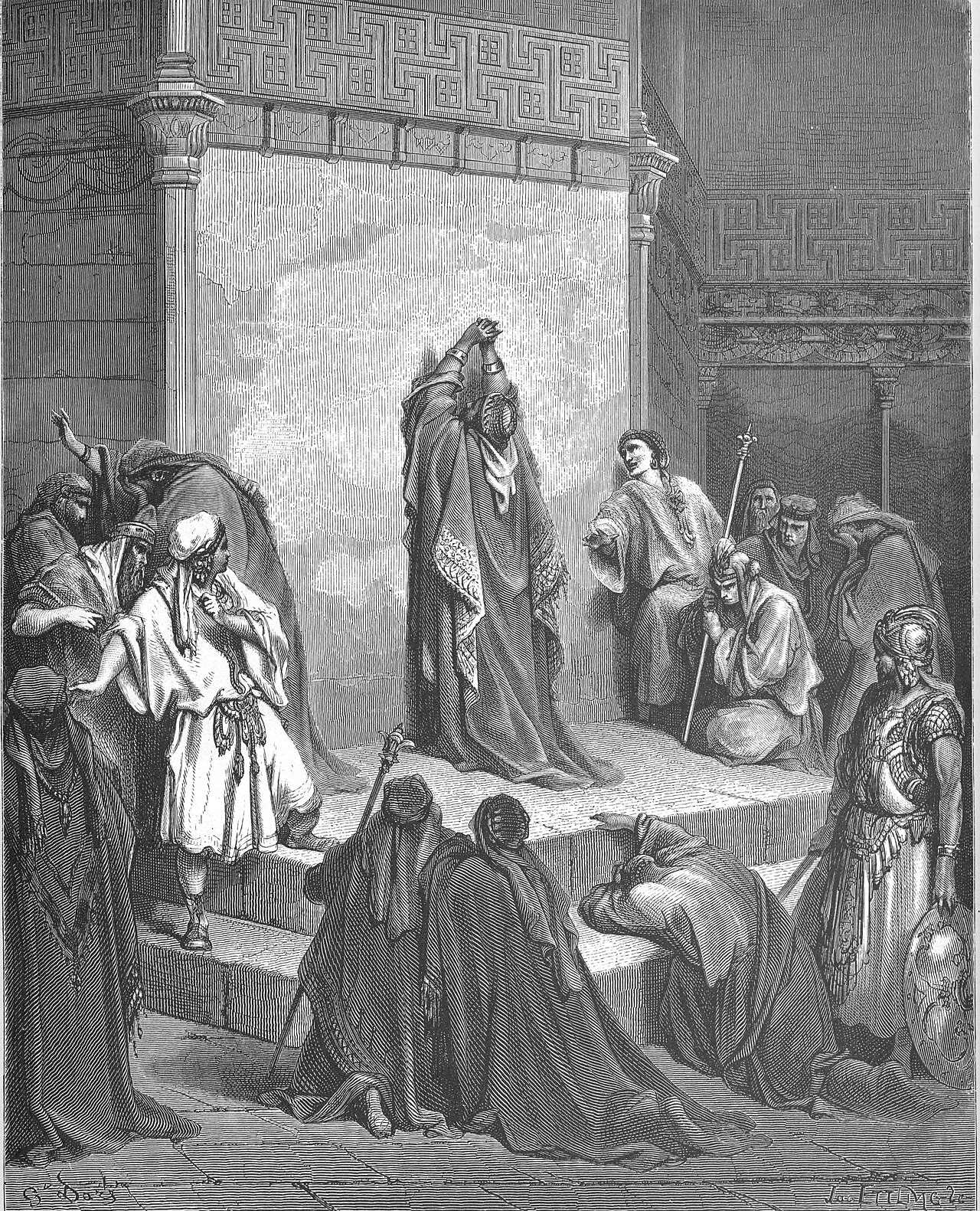
in 2 Samuel 19Then it was reported to Joab, “The king is weeping and mourning over Absalom.”
BSB
The same verse in ASV and KJV ▾
ASV
And it was told Joab, Behold, the king weepeth and mourneth for Absalom.
KJV
And it was told Joab, Behold, the king weepeth and mourneth for Absalom.
⋯
This verse in 2 Samuel 19
Commentary
3 notes on this verseThis site's exposition
the king weepeth and mourneth for Absalom
on 2 Samuel 19:1-3
David's grief turns Israel's victory into mourning, and the army that won the battle returns to the city by stealth, as men ashamed after a rout rather than men who had just put down a rebellion. The people's shame at their own king's grief is the ground Joab stands on in the verses that follow. Henry reads the moment as the greatest danger David faced to the loyalty of the men who had just saved his life.
The record, by era
The Church Fathers1 voice
But when king David had suffered this injury at the hands of his impious and unnatural son, he not only bore with him in his mad passion but mourned over him in his death. He certainly was not caught in the meshes of carnal jealousy, seeing that it was not his own injuries but the sins of his son that moved him. For it was on this account he had given orders that his son should not be slain if he were conquered in battle, that he might have a place of repentance after he was subdued. When he was baffled in this design, he mourned over his son's death, not because of his own loss but because he knew to what punishment so impious an adulterer and parricide had been hurried.
The Puritans and the Awakening1 voice
And it was told Joab,.... When returned to Mahanaim, or on his way to it; perhaps by the messengers he sent; and this report he had before he saw the king: behold, the king weepeth and mourneth for Absalom; for the death of him, instead of rejoicing at the victory obtained, and the deliverance from his enemies.
How the passage was read
What the Jewish commentators add
My son, my son. Eight times. 1 Dovid said the word בְּנִי eight times, five times in this verse and another three times later in verse. Our Rabbis said, 2 Sotah 10b.
1 more on this passage, in their own words ▾
And the king was deeply shocked, and went up to the chamber over the gate, and wept.
This section is reception history: how the passage was read and kept in the Jewish tradition. Where a reading parts from an essential of the Christian faith, the section says so at that point.
Texts and citation data: Sefaria; each excerpt follows its version’s licence. 3 further sources are cited on this chapter that carry no English text this site may quote or only restate the verse.
The words behind it
8 Hebrew wordsEvery Hebrew word of this verse in the order it stands, with what it means and the door to its own study. The last column counts the times a word stands in the whole Bible: the rarer the word, the more the places it appears belong together.
| Hebrew | Sound | Meaning | Word study | In the Bible |
|---|---|---|---|---|
| וַיֻּגַּ֖ד | vaiyugad | and it was told | H5046 → | 370 times |
| לְיוֹאָ֑ב | leyoav | to Joab | H3097 → | 144 times |
| הִנֵּ֨ה | hineh | here! | H2009 → | 843 times |
| הַמֶּ֧לֶךְ | hamelekh | the king | H4428 → | 2525 times |
| בֹּכֶ֛ה | bokheh | [is] weeping | H1058 → | 114 times |
| וַיִּתְאַבֵּ֖ל | vaiyitabel | and he mourned | H56 → | 39 times |
| עַל־ | ʾal- | on | H5921 → | 5755 times |
| אַבְשָׁלֹֽם׃ | ʾavshalom | Absalom | H53 → | 110 times |
וַיֻּגַּ֖דand it was told
vaiyugadH5046 →370 times
לְיוֹאָ֑בto Joab
leyoavH3097 →144 times
הִנֵּ֨הhere!
hinehH2009 →843 times
הַמֶּ֧לֶךְthe king
hamelekhH4428 →2525 times
בֹּכֶ֛ה[is] weeping
bokhehH1058 →114 times
וַיִּתְאַבֵּ֖לand he mourned
vaiyitabelH56 →39 times
עַל־on
ʾal-H5921 →5755 times
אַבְשָׁלֹֽם׃Absalom
ʾavshalomH53 →110 times
A shaded row is a word that stands 400 times or fewer in the Bible.
The walk
8 stopsEach card is a verse this one points to, and under it the verses that one points to in turn. Where several paths arrive at the same place, that place is listed first: the text keeps returning to it.
Through
Proverbs 17:25A foolish son brings grief to his father and bitterness to her who bore him.
it leads to
- Proverbs 10:1
The proverbs of Solomon: A wise son brings joy to his father, but a foolish son grief to his mother.
Reached by 2 separate paths from here.
- Proverbs 19:13
A foolish son is his father’s ruin, and a quarrelsome wife is like a constant dripping.
- Proverbs 15:20
A wise son brings joy to his father, but a foolish man despises his mother.
- Proverbs 10:1
Through
2 Samuel 18:33The king was shaken and went up to the gate chamber and wept. And as he walked, he cried out, “O my son Absalom! My son, my son Absalom! If only I had died…
it leads to
- 2 Samuel 19:4
But the king covered his face and cried out at the top of his voice, “O my son Absalom! O Absalom, my son, my son!”
- Proverbs 17:25
A foolish son brings grief to his father and bitterness to her who bore him.
- 2 Samuel 12:10–23
Now, therefore, the sword will never depart from your house, because you have despised Me and have taken the wife of Uriah the Hittite to be your own.’
- Psalms 103:13
As a father has compassion on his children, so the LORD has compassion on those who fear Him.
- 2 Samuel 19:4
Through
2 Samuel 18:20But Joab replied, “You are not the man to take good news today. You may do it another day, but you must not do so today, because the king’s son is dead.”
it leads to
- 2 Samuel 18:5
Now the king had commanded Joab, Abishai, and Ittai, “Treat the young man Absalom gently for my sake.” And all the people heard the king’s orders to each of the commanders regarding Absalom.
Reached by 2 separate paths from here.
- 2 Samuel 18:5
About 2 Samuel
This page draws on Adam Clarke, Commentary on the Bible; Augustine of Hippo, CHRISTIAN INSTRUCTION 3.21; John Gill, Exposition of the Old Testament (1748-1763) and Matthew Henry, Commentary on the Whole Bible.