
2 Samuel 14:5
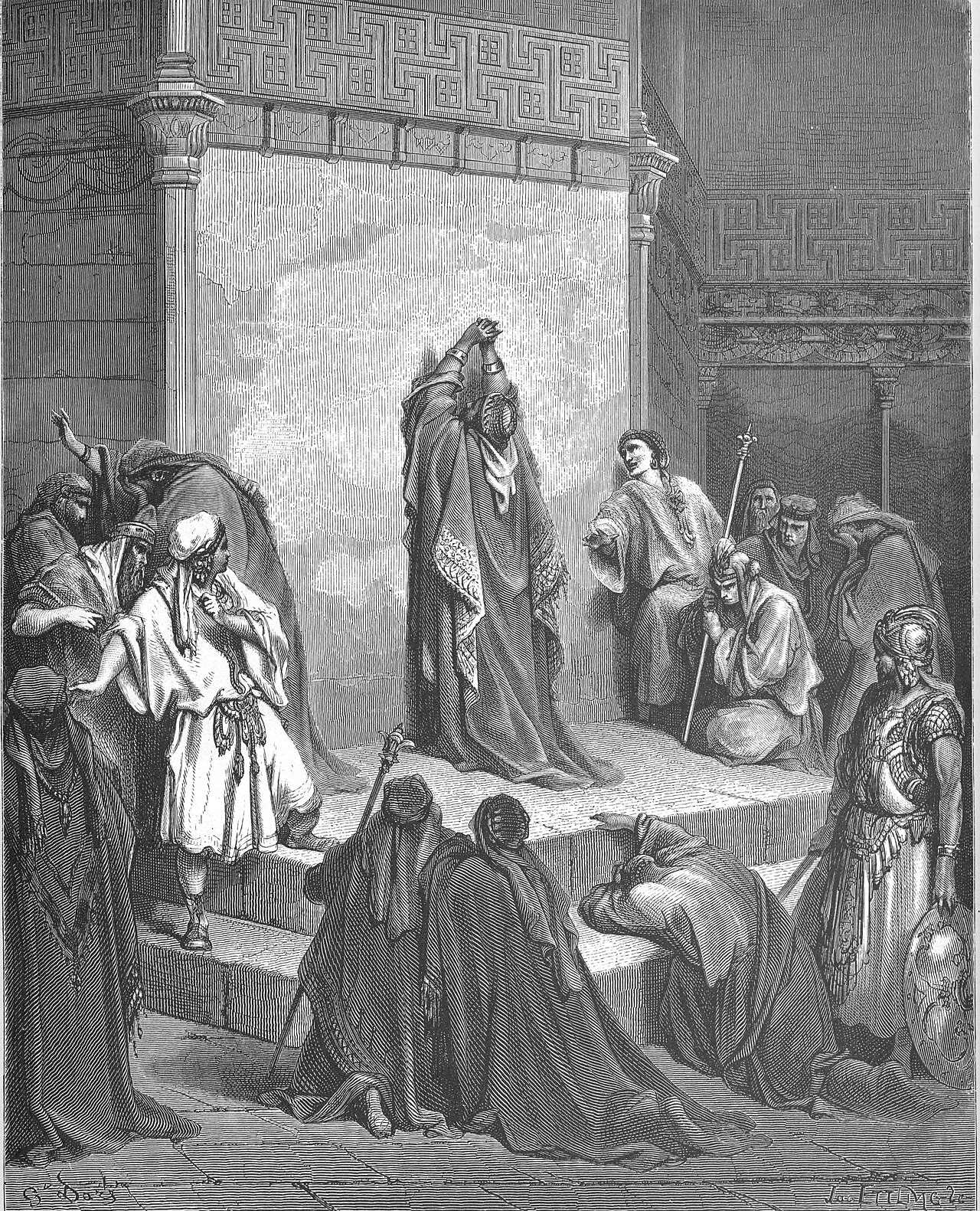
in 2 Samuel 14“What troubles you?” the king asked her. “Indeed,” she said, “I am a widow, for my husband is dead.
BSB
The same verse in ASV and KJV ▾
ASV
And the king said unto her, What aileth thee? And she answered, Of a truth I am a widow, and my husband is dead.
KJV
And the king said unto her, What aileth thee? And she answered, I am indeed a widow woman, and mine husband is dead.
⋯
This verse in 2 Samuel 14
Commentary
6 notes on this verseI am indeed a widow woman - It is very possible that the principal facts mentioned here were real, and that Joab found out a person whose circumstances bore a near resemblance to that which he wished to represent.
This site's exposition
Help, O king
on 2 Samuel 14:4-5
She falls on her face and cries Help, O king, and a claim of a dead husband sets the widow's frame before Joab's real subject is ever spoken. Barnes reads the cry itself as the same word that stands behind Hosanna, a plea for present rescue rather than a formal complaint filed before a court. The king answers plainly, drawing her case out with a single question.
This site's exposition
I am a widow
The woman of Tekoa tells the king she is a widow and her husband is dead. A widow had no husband to plead for her, and the law guards such women at Exodus 22:22. Her two sons were her support.
The record, by era
The Puritans and the Awakening2 voices
),--that she had two sons that were the support and comfort of her widowed state,--that these two (as young men are apt to do) fell out and fought, and one of them unhappily killed the other (
quarantine:debris (2026-07-29) — leading-punctuation
And the king said unto her, what aileth thee?.... Or what is thy case?
The Nineteenth Century1 voice
A commentator
Jamieson, Fausset & Brown1802–1910
Commentary Critical and Explanatory on the Whole Bible (1871)
proposed
And Joab sent to Tekoah, and fetched thence a wise woman--The king was strongly attached to Absalom; and having now got over his sorrow for the violent death of Amnon, he was desirous of again enjoying the society of his favorite son, who had now been three long years absent.
The words behind it
12 Hebrew wordsEvery Hebrew word of this verse in the order it stands, with what it means and the door to its own study. The last column counts the times a word stands in the whole Bible: the rarer the word, the more the places it appears belong together.
| Hebrew | Sound | Meaning | Word study | In the Bible |
|---|---|---|---|---|
| וַיֹּֽאמֶר־ | vaiyomer- | and he said | H559 → | 5305 times |
| לָ֥הּ | lah | to <the> her | ||
| הַמֶּ֖לֶךְ | hamelekh | the king | H4428 → | 2525 times |
| מַה־ | mah- | what? | H4100 → | 752 times |
| לָּ֑ךְ | lakh | [is] to <the> you | ||
| וַתֹּ֗אמֶר | vatomer | and she said | H559 → | 5305 times |
| אֲבָ֛ל | ʾaval | indeed | H61 → | |
| אִשָּֽׁה־ | ʾishah- | [am] a woman | H802 → | 781 times |
| אַלְמָנָ֥ה | ʾalmanah | a widow | H490 → | |
| אָ֖נִי | ʾani | I | H589 → | 874 times |
| וַיָּ֥מָת | vaiyamot | and he has died | H4191 → | 839 times |
| אִישִֽׁי׃ | ʾishi | husband my | H376 → | 1663 times |
וַיֹּֽאמֶר־and he said
vaiyomer-H559 →5305 times
לָ֥הּto <the> her
lah
הַמֶּ֖לֶךְthe king
hamelekhH4428 →2525 times
מַה־what?
mah-H4100 →752 times
לָּ֑ךְ[is] to <the> you
lakh
וַתֹּ֗אמֶרand she said
vatomerH559 →5305 times
אֲבָ֛לindeed
ʾavalH61 →
אִשָּֽׁה־[am] a woman
ʾishah-H802 →781 times
אַלְמָנָ֥הa widow
ʾalmanahH490 →
אָ֖נִיI
ʾaniH589 →874 times
וַיָּ֥מָתand he has died
vaiyamotH4191 →839 times
אִישִֽׁי׃husband my
ʾishiH376 →1663 times
A shaded row is a word that stands 400 times or fewer in the Bible.
About 2 Samuel
This page draws on Adam Clarke, Commentary on the Bible; Albert Barnes, Notes on the Old Testament; Jamieson, Fausset & Brown, Commentary Critical and Explanatory on the Whole Bible; John Gill, Exposition of the Old Testament; John Gill, Exposition of the Old Testament (1748-1763) and Matthew Henry, Commentary on the Whole Bible.