
2 Samuel 14:2
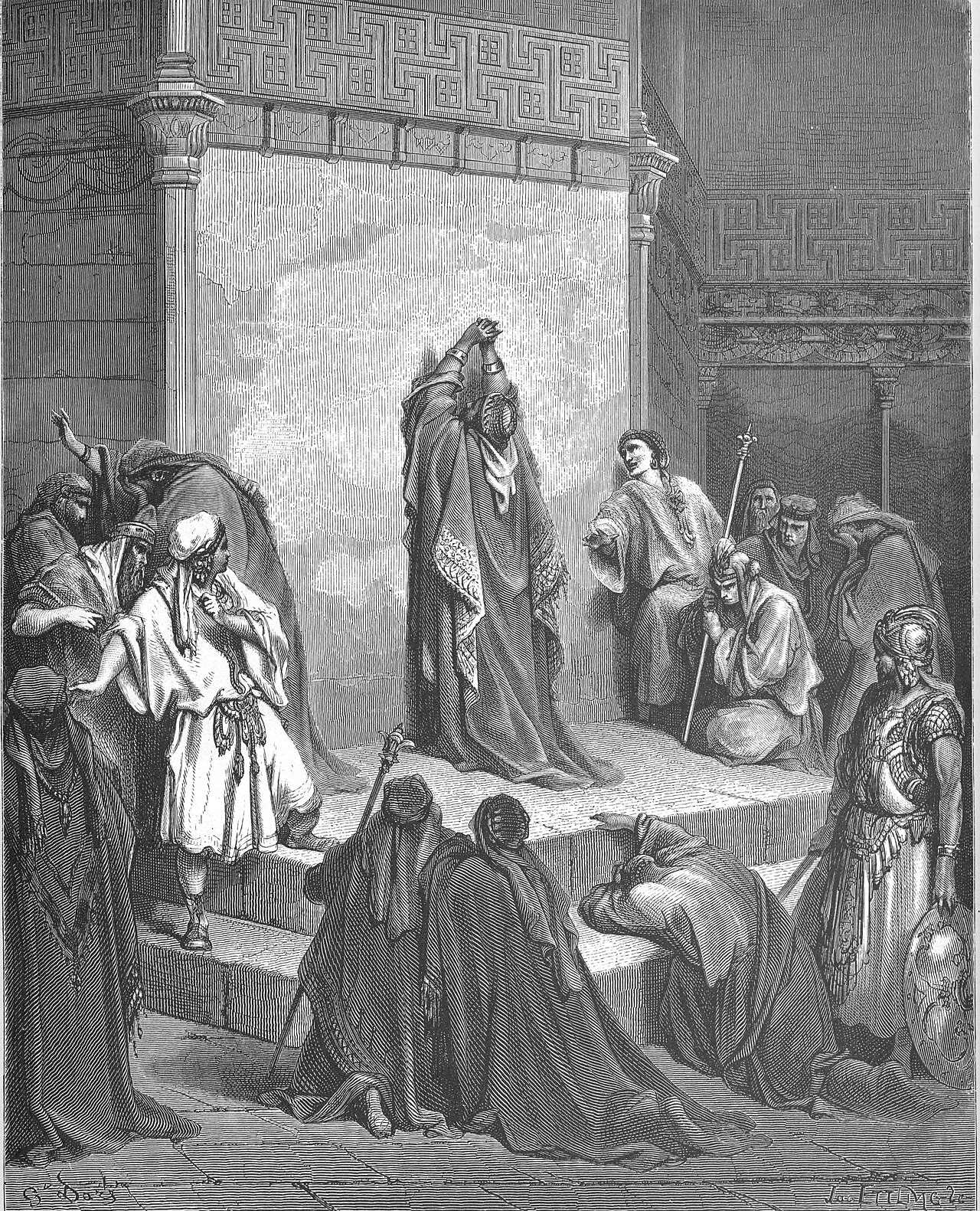
in 2 Samuel 14So Joab sent to Tekoa to bring a wise woman from there. He told her, “Please pretend to be a mourner; put on clothes for mourning and do not anoint yourself with oil. Act like a woman who has mourned for the dead a long time.
BSB
The same verse in ASV and KJV ▾
ASV
And Joab sent to Tekoa, and fetched thence a wise woman, and said unto her, I pray thee, feign thyself to be a mourner, and put on mourning apparel, I pray thee, and anoint not thyself with oil, but be as a woman that hath a long time mourned for the dead:
KJV
And Joab sent to Tekoah, and fetched thence a wise woman, and said unto her, I pray thee, feign thyself to be a mourner, and put on now mourning apparel, and anoint not thyself with oil, but be as a woman that had a long time mourned for the dead:
⋯
This verse in 2 Samuel 14
Commentary
7 notes on this verseAnd Joab sent to Tekoah,.... Which Kimchi says was a city in the tribe of Asher, and others in the tribe of Benjamin, but it seems rather to be in the tribe, of Judah, 2Ch 11:5; according Jerom (s), it was twelve miles from Jerusalem, though in another place (t) he says it was but nine; of this place was Amos, and some think (u) the woman after mentioned was his grandmother.
This site's exposition
feign thyself to be a mourner
on 2 Samuel 14:2-3
Joab sends for a wise woman of Tekoah and writes her a part: mourning clothes, no oil, the manner of a widow of long standing, and he puts the very words in her mouth. The staging is deliberate, built to reach the king through a door his justice might not close, a stranger's grief rather than a general's request. Gill and Clarke both note the woman was likely chosen for some real resemblance to the case she was made to plead, which is what let the deception hold.
The record, by era
The Puritans and the Awakening2 voices
It was a case of compassion which she had to represent to the king, and a case in which she could have no relief but from the chancery in the royal breast, the law (and consequently the judgment of all the inferior courts) being against her.
The truth of the story would be the less suspected when it came, as was supposed, from the person's own mouth. The character she put on was that of a disconsolate widow,
The Nineteenth Century3 voices
Joab sent to Tekoah - Tekoah, according to St. Jerome, was a little city in the tribe of Judah, about twelve miles from Jerusalem. There are several circumstances relative to this woman and her case which deserve to be noticed: - 1. She was a widow, and therefore her condition of life was the better calculated to excite compassion. 2. She lived at some distance from Jerusalem, which rendered the case difficult to be readily inquired into; and consequently there was the less danger of detection.
A commentator
Jamieson, Fausset & Brown1802–1910
Commentary Critical and Explanatory on the Whole Bible (1871)
proposed
And Joab sent to Tekoah, and fetched thence a wise woman--The king was strongly attached to Absalom; and having now got over his sorrow for the violent death of Amnon, he was desirous of again enjoying the society of his favorite son, who had now been three long years absent.
A commentator
Albert Barnes1798–1870
Notes, Explanatory and Practical, on the Old and New Testaments (1832-1869)
proposed
Tekoah - In the south of Judah, six miles from Bethlehem, the modern Tekua. The rough, wild district was well suited for the lawless profession of the wise woman; it abounds in caves, as does the country near Endor.
The words behind it
26 Hebrew wordsEvery Hebrew word of this verse in the order it stands, with what it means and the door to its own study. The last column counts the times a word stands in the whole Bible: the rarer the word, the more the places it appears belong together.
| Hebrew | Sound | Meaning | Word study | In the Bible |
|---|---|---|---|---|
| וַיִּשְׁלַ֤ח | vaiyishlach | and he sent | H7971 → | 845 times |
| יוֹאָב֙ | yoav | Joab | H3097 → | 144 times |
| תְּק֔וֹעָה | tekoah | Tekoa towards | H8620 → | |
| וַיִּקַּ֥ח | vaiyikach | and he took | H3947 → | 966 times |
| מִשָּׁ֖ם | misham | from there | H8033 → | 834 times |
| אִשָּׁ֣ה | ʾishah | a woman | H802 → | 781 times |
| חֲכָמָ֑ה | chakhamah | wise | H2450 → | 138 times |
| וַיֹּ֣אמֶר | vaiyomer | and he said | H559 → | 5305 times |
| אֵ֠לֶיהָ | ʾeleiha | to her | H413 → | 5510 times |
| הִֽתְאַבְּלִי־ | hitabeli- | play [the] mourner | H56 → | 39 times |
| נָ֞א | na' | please | H4994 → | 404 times |
| וְלִבְשִׁי־ | velivshi- | and put on | H3847 → | 110 times |
| נָ֣א | na' | please | H4994 → | 404 times |
| בִגְדֵי־ | vigdei- | garments of | H899 → | 217 times |
| אֵ֗בֶל | ʾevel | mourning | H60 → | 24 times |
| וְאַל־ | veal- | and may not | H408 → | 724 times |
| תָּס֙וּכִי֙ | tasukhi | you anoint yourself | H5480 → | |
| שֶׁ֔מֶן | shemen | oil | H8081 → | |
| וְהָיִ֕ית | vehayit | and you will be | H1961 → | 3559 times |
| כְּאִשָּׁ֗ה | keishah | like a woman | H802 → | 781 times |
| זֶ֚ה | zeh | this | H2088 → | 1180 times |
| יָמִ֣ים | yamim | days | H3117 → | 2304 times |
| רַבִּ֔ים | rabim | many | H7227 → | 454 times |
| מִתְאַבֶּ֖לֶת | mitabelet | [who has been] mourning | H56 → | 39 times |
| עַל־ | ʾal- | on | H5921 → | 5755 times |
| מֵֽת׃ | met | a dead [person] | H4191 → | 839 times |
וַיִּשְׁלַ֤חand he sent
vaiyishlachH7971 →845 times
יוֹאָב֙Joab
yoavH3097 →144 times
תְּק֔וֹעָהTekoa towards
tekoahH8620 →
וַיִּקַּ֥חand he took
vaiyikachH3947 →966 times
מִשָּׁ֖םfrom there
mishamH8033 →834 times
אִשָּׁ֣הa woman
ʾishahH802 →781 times
חֲכָמָ֑הwise
chakhamahH2450 →138 times
וַיֹּ֣אמֶרand he said
vaiyomerH559 →5305 times
אֵ֠לֶיהָto her
ʾeleihaH413 →5510 times
הִֽתְאַבְּלִי־play [the] mourner
hitabeli-H56 →39 times
נָ֞אplease
na'H4994 →404 times
וְלִבְשִׁי־and put on
velivshi-H3847 →110 times
נָ֣אplease
na'H4994 →404 times
בִגְדֵי־garments of
vigdei-H899 →217 times
אֵ֗בֶלmourning
ʾevelH60 →24 times
וְאַל־and may not
veal-H408 →724 times
תָּס֙וּכִי֙you anoint yourself
tasukhiH5480 →
שֶׁ֔מֶןoil
shemenH8081 →
וְהָיִ֕יתand you will be
vehayitH1961 →3559 times
כְּאִשָּׁ֗הlike a woman
keishahH802 →781 times
זֶ֚הthis
zehH2088 →1180 times
יָמִ֣יםdays
yamimH3117 →2304 times
רַבִּ֔יםmany
rabimH7227 →454 times
מִתְאַבֶּ֖לֶת[who has been] mourning
mitabeletH56 →39 times
עַל־on
ʾal-H5921 →5755 times
מֵֽת׃a dead [person]
metH4191 →839 times
A shaded row is a word that stands 400 times or fewer in the Bible.
The walk
8 stopsEach card is a verse this one points to, and under it the verses that one points to in turn. Where several paths arrive at the same place, that place is listed first: the text keeps returning to it.
Through
2 Chronicles 20:20Early in the morning they got up and left for the Wilderness of Tekoa. As they set out, Jehoshaphat stood up and said, “Hear me, O people of Judah and Jerusalem. Believe in the…
it leads to
- Romans 8:31
What then shall we say in response to these things? If God is for us, who can be against us?
- John 11:40
Jesus replied, “Did I not tell you that if you believed, you would see the glory of God?”
- John 14:1
“Do not let your hearts be troubled. You believe in God; believe in Me as well.
- Hebrews 11:6
And without faith it is impossible to please God, because anyone who approaches Him must believe that He exists and that He rewards those who earnestly seek Him.
- Luke 16:31
Then Abraham said to him, ‘If they do not listen to Moses and the prophets, they will not be persuaded even if someone rises from the dead.’”
- Romans 8:31
Through
Amos 1:1These are the words of Amos, who was among the sheepherders of Tekoa—what he saw concerning Israel two years before the earthquake, in the days when Uzziah was king of Judah and Jeroboam son…
it leads to
- Zechariah 14:5
You will flee by My mountain valley, for it will extend to Azal. You will flee as you fled from the earthquake in the days of Uzziah king of Judah. Then the LORD my…
- Zechariah 14:5
Through
Ruth 3:3Therefore wash yourself, put on perfume, and wear your best clothes. Go down to the threshing floor, but do not let the man know you are there until he has finished eating and drinking.
it leads to
- Ecclesiastes 9:8
Let your garments always be white, and never spare the oil for your head.
Reached by 2 separate paths from here.
- Matthew 6:17
But when you fast, anoint your head and wash your face,
Reached by 2 separate paths from here.
- Ecclesiastes 9:8
About 2 Samuel
Who and where
1 name in this verse with a page on the site.
This page draws on Adam Clarke, Commentary on the Bible; Albert Barnes, Notes, Explanatory and Practical, on the Old and New Testaments (1832-1869); Jamieson, Fausset & Brown, Commentary Critical and Explanatory on the Whole Bible; John Gill, Exposition of the Old Testament (1748-1763); John Gill, Exposition of the Old Testament and Matthew Henry, Commentary on the Whole Bible.