
2 Kings 7:9
in 2 Kings 7Finally, they said to one another, “We are not doing what is right. Today is a day of good news. If we are silent and wait until morning light, our sin will overtake us. Now, therefore, let us go and tell the king’s household.”
BSB
The same verse in ASV and KJV ▾
ASV
Then they said one to another, We do not well; this day is a day of good tidings, and we hold our peace: if we tarry till the morning light, punishment will overtake us; now therefore come, let us go and tell the king’s household.
KJV
Then they said one to another, We do not well: this day is a day of good tidings, and we hold our peace: if we tarry till the morning light, some mischief will come upon us: now therefore come, that we may go and tell the king’s household.
⋯
This verse in 2 Kings 7
Commentary
6 notes on this verseThis site's exposition
did eat and drink
on 2 Kings 7:8-9
The lepers work tent to tent, eating, drinking, and hiding silver, gold and clothing before conscience catches up with them. Their own verdict names the fault precisely, this day is a day of good tidings, and we hold our peace, men with nothing left to lose sitting on news that could save a starving city. Spurgeon preached this verse by name as a debt owed once deliverance has been tasted, that a man who has found good news has no right to keep it to himself. The lepers correct themselves before the night is out and go to tell the king's household.
The record, by era
The Puritans and the Awakening2 voices
): " We do not well to conceal these good tidings from the community we are members of, under colour of being avenged upon them for excluding us from their society; it was the law that did it, not they, and therefore let us bring them the news.
quarantine:debris (2026-07-29) — leading-punctuation+unbalanced-parens+odd-straight-quotes
Then they said one to another, we do not well,....
The Nineteenth Century3 voices
You are not surprised to find that, when those four lepers outside the gate of Samaria had made the great discovery that the Syrian camp was deserted, they first satisfied their own hunger and thirst. And quite right, too. Who would do otherwise? It is true that they were bound to go and tell other hungry ones, but they could do that with all the louder voice and they were the more sure of the truth they had to tell when they had first refreshed themselves.
You are not surprised to find that, when those four lepers outside the gate of Samaria had made the great discovery that the Syrian camp was deserted, they first satisfied their own hunger and thirst. And quite right, too. Who would do otherwise? It is true that they were bound to go and tell other hungry ones, but they could do that with all the louder voice and they were the more sure of the truth they had to tell when they had first refreshed themselves. It might have been a delusion—they were prudent to test their discovery before they told it. Having refreshed and enriched themselves, they then thought of going to tell the besieged and starving citizens. I would advise every soul that has found Christ to imitate the lepers in this matter. Make sure that you have found the Savior. Eat and drink of Him; enrich yourself with Him and then go and publish the glad tidings. I shall not object to your going as early as possible, but still, I would prefer that you should not go to assure others until you are quite certain yourself. I would have you go with a personal witness, for this will be your chief power with others. If you run too soon and do not first taste and see that the Lord is good, you may say to others, "There is abundance in the camp," and they may reply, "Why have you not eaten of it, yourself?" Thus your testimony will be weakened, if not destroyed, and you will wish you had held your peace. It is better that you, first of all, delight yourself in fatness before you proclaim the fact of a festival. It is good that your faith should grasp the exceedingly great and precious promises, and then, when you run as a tidings-bearer, you will testify what you have seen.
A commentator
Albert Barnes1798–1870
Notes, Explanatory and Practical, on the Old and New Testaments (1832-1869)
proposed
The lepers began to think that if they kept this important matter secret during the whole night for their own private advantage, when the morning came they would be found out, accused, and punished (see margin).
How the passage was read
What the Jewish commentators add
On the verses either side of this one
As they were. As they were full at the beginning; they did not take out what was in them.
This section is reception history: how the passage was read and kept in the Jewish tradition. Where a reading parts from an essential of the Christian faith, the section says so at that point.
Texts and citation data: Sefaria; each excerpt follows its version’s licence. 5 further sources are cited on this chapter that carry no English text this site may quote or only restate the verse.
The words behind it
27 Hebrew wordsEvery Hebrew word of this verse in the order it stands, with what it means and the door to its own study. The last column counts the times a word stands in the whole Bible: the rarer the word, the more the places it appears belong together.
| Hebrew | Sound | Meaning | Word study | In the Bible |
|---|---|---|---|---|
| וַיֹּאמְרוּ֩ | vaiyomeru | and they said | H559 → | 5305 times |
| אִ֨ישׁ | ʾish | each | H376 → | 1663 times |
| אֶל־ | ʾel- | to | H413 → | 5510 times |
| רֵעֵ֜הוּ | reehu | neighbor his | H7453 → | 188 times |
| לֹֽא־ | lo'- | not | H3808 → | 5168 times |
| כֵ֣ן׀ | khen | right | H3651 → | 771 times |
| אֲנַ֣חְנוּ | ʾanachnu | we | H587 → | 120 times |
| עֹשִׂ֗ים | ʾosim | [are] doing | H6213 → | 2628 times |
| הַיּ֤וֹם | haiyom | the day | H3117 → | 2304 times |
| הַזֶּה֙ | hazeh | <the> this | H2088 → | 1180 times |
| יוֹם־ | yom- | [is] a day of | H3117 → | 2304 times |
| בְּשֹׂרָ֣ה | besorah | good news | H1309 → | |
| ה֔וּא | hu' | it | H1931 → | 1879 times |
| וַאֲנַ֣חְנוּ | vaanachnu | and we | H587 → | 120 times |
| מַחְשִׁ֗ים | machshim | [are] silent | H2814 → | 16 times |
| וְחִכִּ֛ינוּ | vechikinu | and we will delay | H2442 → | |
| עַד־ | ʾad- | until | H5704 → | 1261 times |
| א֥וֹר | ʾor | [the] light of | H216 → | |
| הַבֹּ֖קֶר | haboker | the morning | H1242 → | 214 times |
| וּמְצָאָ֣נוּ | umetzaanu | and it will find us | H4672 → | 455 times |
| עָו֑וֹן | avon | punishment | H5771 → | |
| וְעַתָּה֙ | veatah | and therefore | H6258 → | 433 times |
| לְכ֣וּ | lekhu | come | H1980 → | 1546 times |
| וְנָבֹ֔אָה | venavoah | so let us go | H935 → | 2568 times |
| וְנַגִּ֖ידָה | venagidah | and let us tell | H5046 → | 370 times |
| בֵּ֥ית | beit | [the] household of | H1004 → | 2046 times |
| הַמֶּֽלֶךְ׃ | hamelekh | the king | H4428 → | 2525 times |
וַיֹּאמְרוּ֩and they said
vaiyomeruH559 →5305 times
אִ֨ישׁeach
ʾishH376 →1663 times
אֶל־to
ʾel-H413 →5510 times
רֵעֵ֜הוּneighbor his
reehuH7453 →188 times
לֹֽא־not
lo'-H3808 →5168 times
כֵ֣ן׀right
khenH3651 →771 times
אֲנַ֣חְנוּwe
ʾanachnuH587 →120 times
עֹשִׂ֗ים[are] doing
ʾosimH6213 →2628 times
הַיּ֤וֹםthe day
haiyomH3117 →2304 times
הַזֶּה֙<the> this
hazehH2088 →1180 times
יוֹם־[is] a day of
yom-H3117 →2304 times
בְּשֹׂרָ֣הgood news
besorahH1309 →
ה֔וּאit
hu'H1931 →1879 times
וַאֲנַ֣חְנוּand we
vaanachnuH587 →120 times
מַחְשִׁ֗ים[are] silent
machshimH2814 →16 times
וְחִכִּ֛ינוּand we will delay
vechikinuH2442 →
עַד־until
ʾad-H5704 →1261 times
א֥וֹר[the] light of
ʾorH216 →
הַבֹּ֖קֶרthe morning
habokerH1242 →214 times
וּמְצָאָ֣נוּand it will find us
umetzaanuH4672 →455 times
עָו֑וֹןpunishment
avonH5771 →
וְעַתָּה֙and therefore
veatahH6258 →433 times
לְכ֣וּcome
lekhuH1980 →1546 times
וְנָבֹ֔אָהso let us go
venavoahH935 →2568 times
וְנַגִּ֖ידָהand let us tell
venagidahH5046 →370 times
בֵּ֥ית[the] household of
beitH1004 →2046 times
הַמֶּֽלֶךְ׃the king
hamelekhH4428 →2525 times
A shaded row is a word that stands 400 times or fewer in the Bible.
The walk
8 stopsEach card is a verse this one points to, and under it the verses that one points to in turn. Where several paths arrive at the same place, that place is listed first: the text keeps returning to it.
Through
Philippians 2:4Each of you should look not only to your own interests, but also to the interests of others.
it leads to
- 1 Corinthians 10:24
No one should seek his own good, but the good of others.
- Romans 15:1
We who are strong ought to bear with the shortcomings of the weak and not to please ourselves.
- James 2:8
If you really fulfill the royal law stated in Scripture, “Love your neighbor as yourself,” you are doing well.
- 1 Corinthians 13:4–5
Love is patient, love is kind. It does not envy, it does not boast, it is not proud.
- 1 Corinthians 10:24
Through
Isaiah 52:7How beautiful on the mountains are the feet of those who bring good news, who proclaim peace, who bring good tidings, who proclaim salvation, who say to Zion, “Your God reigns!”
it leads to
- Nahum 1:15
Look to the mountains—the feet of one who brings good news, who proclaims peace! Celebrate your feasts, O Judah; fulfill your vows. For the wicked will never again march through you; they will be…
Reached by 2 separate paths from here.
- Romans 10:12–15
For there is no difference between Jew and Greek: The same Lord is Lord of all, and gives richly to all who call on Him,
- Mark 16:15
And He said to them, “Go into all the world and preach the gospel to every creature.
- Isaiah 61:1–3
The Spirit of the Lord GOD is on Me, because the LORD has anointed Me to preach good news to the poor. He has sent Me to bind up the brokenhearted, to proclaim liberty…
- Nahum 1:15
About 2 Kings
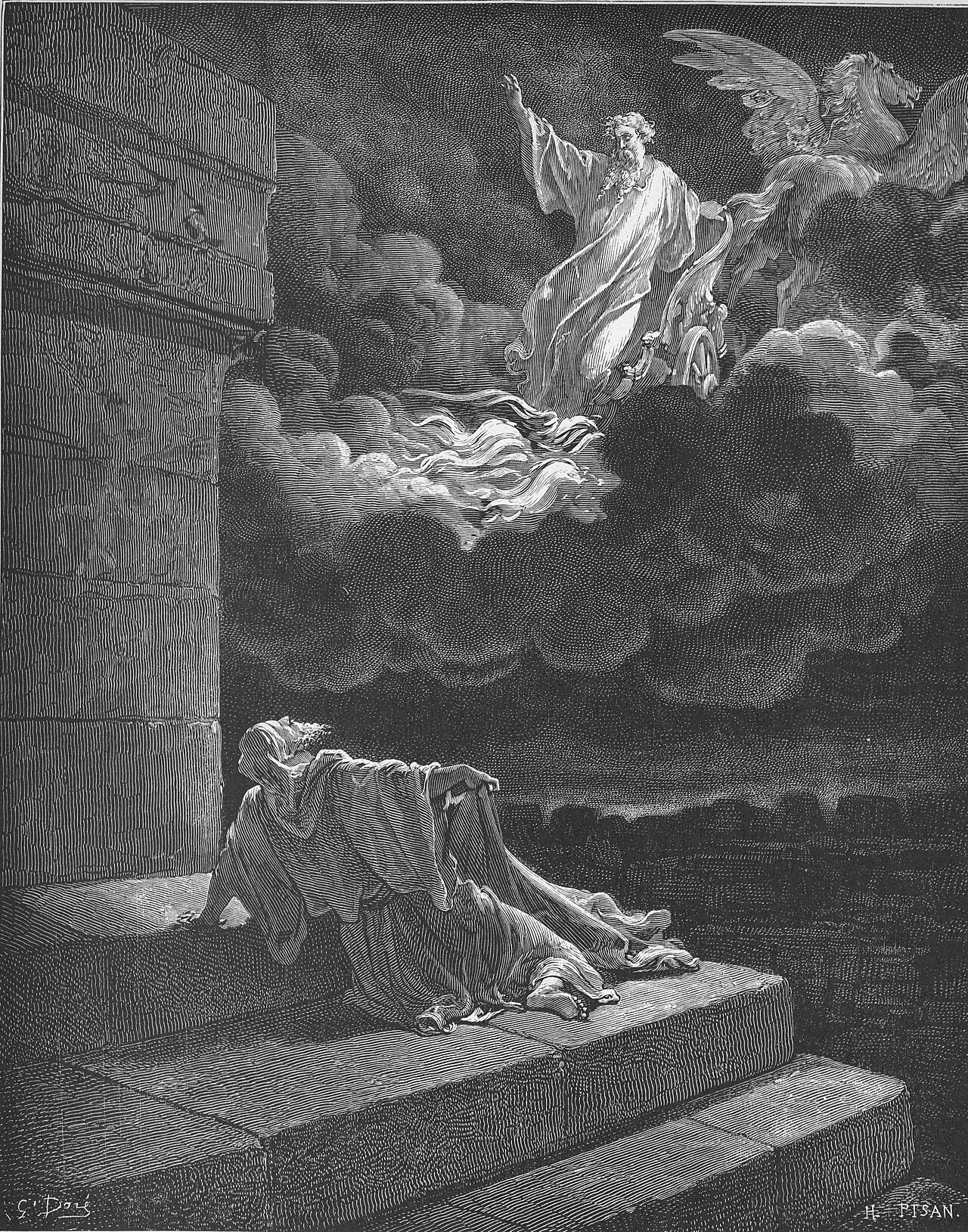
This page draws on Albert Barnes, Notes on the Old Testament; Albert Barnes, Notes, Explanatory and Practical, on the Old and New Testaments (1832-1869); Charles Spurgeon, The Metropolitan Tabernacle Pulpit, Sermon No. 1996, Public Testimony, a Debt to God and Man; Charles Spurgeon, The Metropolitan Tabernacle Pulpit, Sermon No. 1996: “Public Testimony—a Debt To God and Man” (lightly modernized text, CCEL edition); John Gill, Exposition of the Old Testament (1748-1763) and Matthew Henry, Commentary on the Whole Bible.