
2 Kings 7:4
in 2 Kings 7If we say, ‘Let us go into the city,’ we will die there from the famine in the city; but if we sit here, we will also die. So come now, let us go over to the camp of the Arameans. If they let us live, we will live; if they kill us, we will die.”
BSB
The same verse in ASV and KJV ▾
ASV
If we say, We will enter into the city, then the famine is in the city, and we shall die there; and if we sit still here, we die also. Now therefore come, and let us fall unto the host of the Syrians: if they save us alive, we shall live; and if they kill us, we shall but die.
KJV
If we say, We will enter into the city, then the famine is in the city, and we shall die there: and if we sit still here, we die also. Now therefore come, and let us fall unto the host of the Syrians: if they save us alive, we shall live; and if they kill us, we shall but die.
⋯
This verse in 2 Kings 7
Commentary
8 notes on this verseThis site's exposition
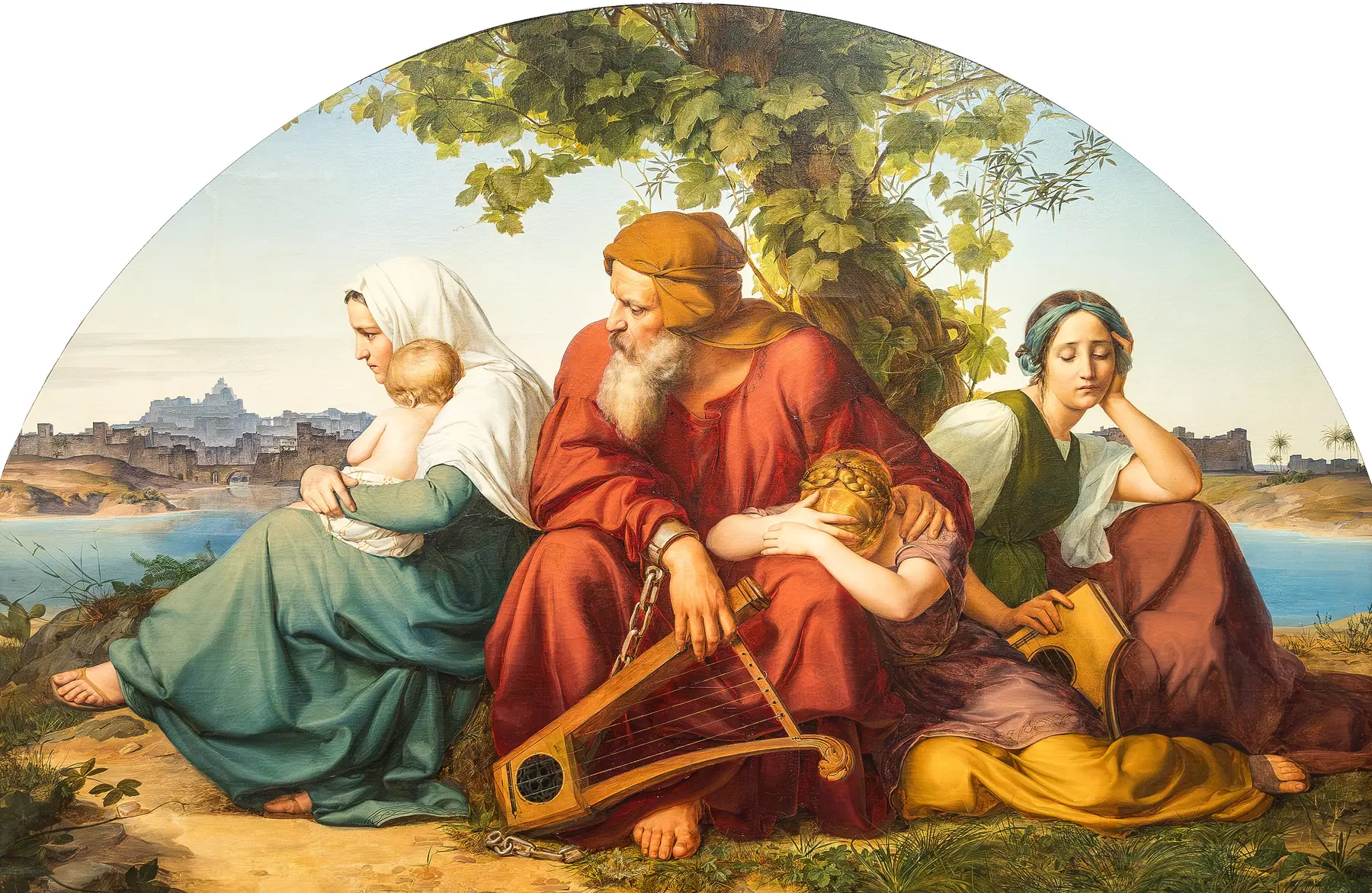
four men with leprosy at the entrance of the city gate
on 2 Kings 7:3-4
Four men with leprosy sit outside the gate, where the Law set such men apart at Leviticus 13:46, and hunger makes them reason aloud. They weigh three roads: stay and die, enter the starving city and die there, or go over to the Aramean camp.
This site's exposition
if we sit here
Albert Barnes notes that the lepers' place outside the gate follows the Law of Moses. Barnes takes it as a sign that the Law was still kept in some measure in the northern kingdom. The famine had reached even the men the Law set apart.
The record, by era
The Puritans and the Awakening2 voices
If we say we will enter into the city,....
They therefore determine to go over to the enemy, and throw themselves upon their mercy: if they killed them, better die by the sword than by famine, one death than a thousand; but perhaps they would save them alive, as objects of compassion.
The Nineteenth Century3 voices
THE story of four leprous men inserted in the Book of the Kings of Israel—is it not amazing? No, it is not amazing for the Bible. If you were to take out of the Scriptures all the stories that have to do with poor afflicted men and women, what a very small book the Bible would become, especially if together with the stories, you removed all the Psalms of the sorrowful, all the promises for the distressed and all the passages which belong to the children of grief! This Book, indeed, for the most part is made up of the annals of the poor and despised! Think for a minute what space is occupied with the life of the man who was separated from his brothers, sold for a slave and put in prison in Egypt! What a large part of the Bible is occupied by the writings of one who was a babe exposed on the Nile and afterwards kept a flock for 40 years in the wilderness! We could not part with the account of the man who lost all his property and children in one day—and sat among the ashes, covered with sore boils. We could not spare the story of the two widows who came together empty-handed from the land of Moab, one of whom went to glean in the fields of Boaz. Nor the history of that woman of a sorrowful spirit and her little boy, around whom the hope of Israel gathered in the dark days of Eli's feeble rule. Page after page of Holy Writ is enriched with the experience of that youth who was taken from tending the flock to become the champion of his country and was afterwards hunted like a partridge upon the mountain by the envious king. We could not give up the history of the Prophet of sorrow, nor of the fugitive who was cast into the sea, nor even the minor incidents of the widow of Sarepta and her barrel of meal—and the Prophet's widow whose creditor was about to seize her children for her husband's debts. Nor do lepers fall behind.
THE story of four leprous men inserted in the Book of the Kings of Israel—is it not amazing? No, it is not amazing for the Bible. If you were to take out of the Scriptures all the stories that have to do with poor afflicted men and women, what a very small book the Bible would become, especially if together with the stories, you removed all the Psalms of the sorrowful, all the promises for the distressed and all the passages which belong to the children of grief!
A commentator
Charles Spurgeon1834–1892
The Metropolitan Tabernacle Pulpit, Sermon No. 2894: “The Sinner's Only Alternative” (lightly modernized text, CCEL edition) · Written before 1892.
proposed
OUTSIDE the gates of Samaria, at the time mentioned in our text, you might have seen four miserable beings, gaunt and thin, with that sharpness of eye and visage which is always the effect of protracted hunger. They were lepers, suffering from a loathsome disease and emaciated by starvation. They held, as it were, a miniature council of war, and the result of their deliberations was that they said to one another, "Why do we stay here to die?
1 more voice on this verse
The Nineteenth Century1 voice
A commentator
Charles Spurgeon1834–1892
The Metropolitan Tabernacle Pulpit, Sermon No. 2894: “The Sinner's Only Alternative” (lightly modernized text, CCEL edition) · Written before 1892.
proposed
OUTSIDE the gates of Samaria, at the time mentioned in our text, you might have seen four miserable beings, gaunt and thin, with that sharpness of eye and visage which is always the effect of protracted hunger. They were lepers, suffering from a loathsome disease and emaciated by starvation. They held, as it were, a miniature council of war, and the result of their deliberations was that they said to one another, "Why do we stay here to die? If we go into the city, even should we be permitted to remain there, famine is so rife that we would soon die. And if we continue to sit here, it is quite certain that we must pine away and perish. Let us go to the camp of the Syrians—here is a little hope in that direction, though it may be a very slender one. The Syrians may put us to death and so end our miseries. Perhaps death by the sword is preferable to death by famine—at any rate, we can but die in any case. Let us choose the desperate alternative— let us take that course which, although it requires the greatest boldness, holds out some slight hope of success." You know the result of their decision. They went to the Syrian camp, found that the host had fled, feasted themselves to the fullest and, possibly, began to appropriate some of the plunder that abounded all around them. Then, suddenly, the thought struck them, "Here we have bread and corn in abundance, yet the people in Samaria are starving. This is a time of common distress so, though they did throw us out of the city, it would be a deed unworthy even of lepers if we left our fellow creatures without news of our discovery.
The words behind it
24 Hebrew wordsEvery Hebrew word of this verse in the order it stands, with what it means and the door to its own study. The last column counts the times a word stands in the whole Bible: the rarer the word, the more the places it appears belong together.
| Hebrew | Sound | Meaning | Word study | In the Bible |
|---|---|---|---|---|
| אִם־ | ʾim- | if | H518 → | 1069 times |
| אָמַרְנוּ֩ | ʾamarnu | we said | H559 → | 5305 times |
| נָב֨וֹא | navo' | we will enter | H935 → | 2568 times |
| הָעִ֜יר | hair | the city | H5892 → | 1090 times |
| וְהָרָעָ֤ב | veharaav | and the famine | H7458 → | 101 times |
| בָּעִיר֙ | bair | [is] in the city | H5892 → | 1090 times |
| וָמַ֣תְנוּ | vamatnu | and we will die | H4191 → | 839 times |
| שָׁ֔ם | sham | there | H8033 → | 834 times |
| וְאִם־ | veim- | and if | H518 → | 1069 times |
| יָשַׁ֥בְנוּ | yashavnu | we sat | H3427 → | 1079 times |
| פֹ֖ה | foh | here | H6311 → | 82 times |
| וָמָ֑תְנוּ | vamatenu | and we will die | H4191 → | 839 times |
| וְעַתָּ֗ה | veatah | and therefore | H6258 → | 433 times |
| לְכוּ֙ | lekhu | come | H1980 → | 1546 times |
| וְנִפְּלָה֙ | venipelah | so let us fall | H5307 → | 435 times |
| אֶל־ | ʾel- | to | H413 → | 5510 times |
| מַחֲנֵ֣ה | machaneh | [the] camp of | H4264 → | 215 times |
| אֲרָ֔ם | ʾaram | Aram | H758 → | 143 times |
| אִם־ | ʾim- | if | H518 → | 1069 times |
| יְחַיֻּ֣נוּ | yechaiyunu | they will let live us | H2421 → | 282 times |
| נִֽחְיֶ֔ה | nichyeh | we will live | H2421 → | 282 times |
| וְאִם־ | veim- | and if | H518 → | 1069 times |
| יְמִיתֻ֖נוּ | yemitunu | they will put to death us | H4191 → | 839 times |
| וָמָֽתְנוּ׃ | vamatenu | and we will die | H4191 → | 839 times |
אִם־if
ʾim-H518 →1069 times
אָמַרְנוּ֩we said
ʾamarnuH559 →5305 times
נָב֨וֹאwe will enter
navo'H935 →2568 times
הָעִ֜ירthe city
hairH5892 →1090 times
וְהָרָעָ֤בand the famine
veharaavH7458 →101 times
בָּעִיר֙[is] in the city
bairH5892 →1090 times
וָמַ֣תְנוּand we will die
vamatnuH4191 →839 times
שָׁ֔םthere
shamH8033 →834 times
וְאִם־and if
veim-H518 →1069 times
יָשַׁ֥בְנוּwe sat
yashavnuH3427 →1079 times
פֹ֖הhere
fohH6311 →82 times
וָמָ֑תְנוּand we will die
vamatenuH4191 →839 times
וְעַתָּ֗הand therefore
veatahH6258 →433 times
לְכוּ֙come
lekhuH1980 →1546 times
וְנִפְּלָה֙so let us fall
venipelahH5307 →435 times
אֶל־to
ʾel-H413 →5510 times
מַחֲנֵ֣ה[the] camp of
machanehH4264 →215 times
אֲרָ֔םAram
ʾaramH758 →143 times
אִם־if
ʾim-H518 →1069 times
יְחַיֻּ֣נוּthey will let live us
yechaiyunuH2421 →282 times
נִֽחְיֶ֔הwe will live
nichyehH2421 →282 times
וְאִם־and if
veim-H518 →1069 times
יְמִיתֻ֖נוּthey will put to death us
yemitunuH4191 →839 times
וָמָֽתְנוּ׃and we will die
vamatenuH4191 →839 times
A shaded row is a word that stands 400 times or fewer in the Bible.
The walk
8 stopsEach card is a verse this one points to, and under it the verses that one points to in turn. Where several paths arrive at the same place, that place is listed first: the text keeps returning to it.
Through
Esther 4:16“Go and assemble all the Jews who can be found in Susa, and fast for me. Do not eat or drink for three days, night or day, and I and my maidens will fast…
it leads to
- Acts 20:24
But I consider my life of no value to me, if only I may finish my course and complete the ministry I have received from the Lord Jesus—the ministry of testifying to the good…
- 2 Chronicles 20:3
Jehoshaphat was alarmed and set his face to seek the LORD. And he proclaimed a fast throughout Judah.
- Joel 2:12–17
“Yet even now,” declares the LORD, “return to Me with all your heart, with fasting, weeping, and mourning.”
- Luke 9:24
For whoever wants to save his life will lose it, but whoever loses his life for My sake will save it.
- Acts 20:24
Through
2 Samuel 14:14For surely we will die and be like water poured out on the ground, which cannot be recovered. Yet God does not take away a life; but He devises ways that the banished one…
it leads to
- Job 30:23
Yes, I know that You will bring me down to death, to the place appointed for all the living.
- Numbers 35:28
because the manslayer must remain in his city of refuge until the death of the high priest. Only after the death of the high priest may he return to the land he owns.
- Hebrews 9:27
Just as man is appointed to die once, and after that to face judgment,
- Numbers 35:25
The assembly is to protect the manslayer from the hand of the avenger of blood. Then the assembly will return him to the city of refuge to which he fled, and he must live…
- Job 30:23
Where this verse is studied
On this page
About 2 Kings
This page draws on Albert Barnes, Notes on the Old Testament; Albert Barnes, Notes, Explanatory and Practical, on the Old and New Testaments; Charles Spurgeon, The Metropolitan Tabernacle Pulpit, Sermon No. 1903: “Who Found It Out?” (lightly modernized text, CCEL edition); Charles Spurgeon, The Metropolitan Tabernacle Pulpit, Sermon No. 2894: “The Sinner's Only Alternative” (lightly modernized text, CCEL edition); John Gill, Exposition of the Old Testament (1748-1763) and Matthew Henry, Commentary on the Whole Bible.