
2 Kings 25:2
in 2 Kings 25And the city was kept under siege until King Zedekiah’s eleventh year.
BSB
The same verse in ASV and KJV ▾
ASV
So the city was besieged unto the eleventh year of king Zedekiah.
KJV
And the city was besieged unto the eleventh year of king Zedekiah.
⋯
This verse in 2 Kings 25
Commentary
4 notes on this verseAnd the city was besieged, etc. - Nebuchadnezzar, having routed the Egyptian army, returned to Jerusalem, and besieged it so closely that, being reduced by famine, and a breach made in the wall, the Chaldeans entered it on the ninth day of the fourth month, (Wednesday, July 27), Zedekiah and many others endeavoring to make their escape by night.
This site's exposition
in the tenth month
on 2 Kings 25:1-3
The siege's date is fixed to the day, matching Jer 52:4 almost word for word, and Ezek 24:1-2 has the prophet in Babylon commanded to write down this same day as a sign: son of man, write thee the name of this day, for the king of Babylon set himself against Jerusalem this same day. Two witnesses in two places mark one date. The famine that follows by the eleventh year's fourth month leaves no bread before the wall itself gives way.
The record, by era
The Church Fathers1 voice
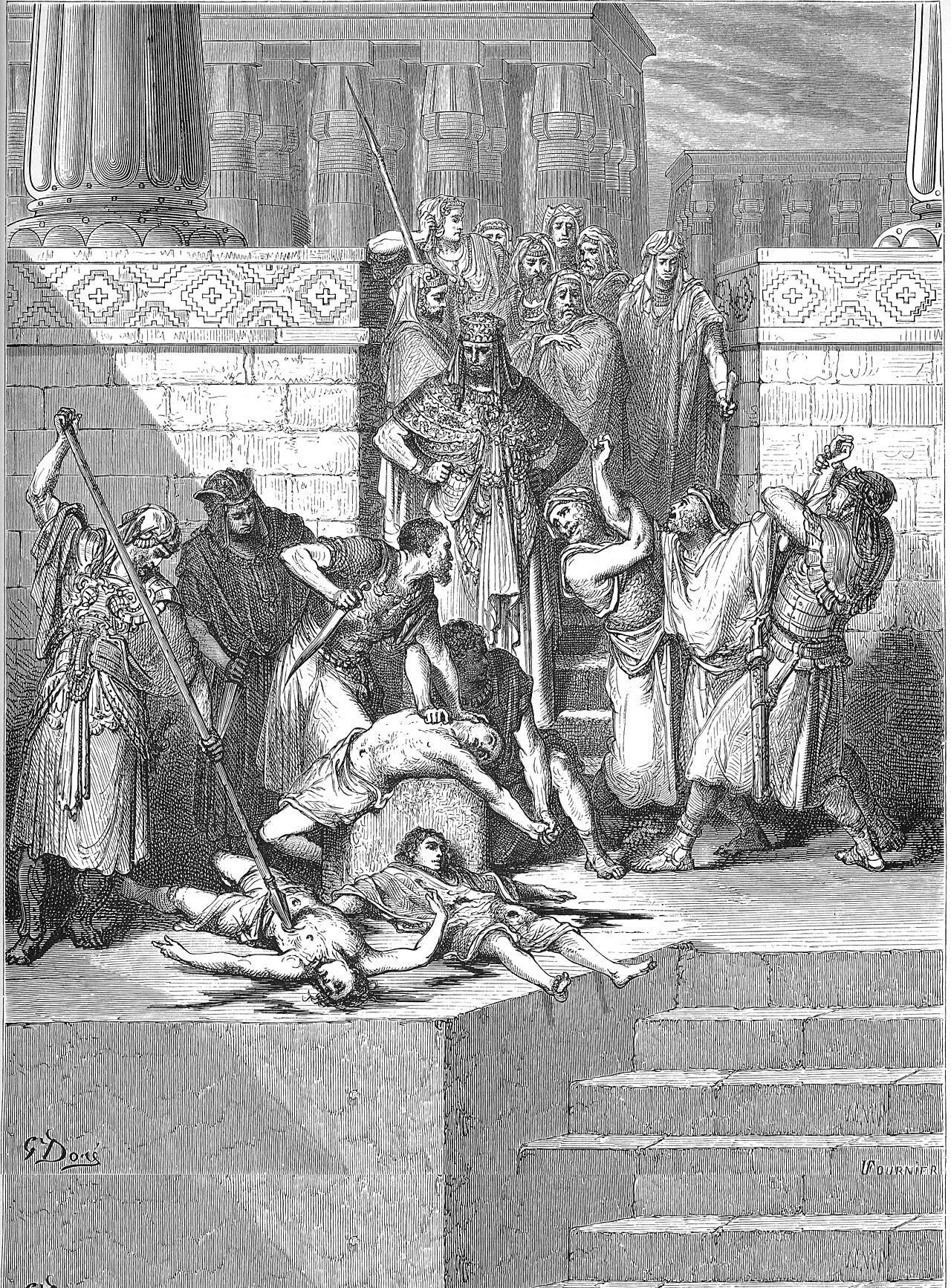
What think you of Nebuchadnezzar? Have you not heard from Scripture that he was bloodthirsty, fierce, with the disposition of a lion? Have you not heard that he disinterred the kings? Have you not heard that he brought the people away into captivity? Have you not heard that he put the king's sons to the sword before Zedekiah's eyes and then blinded him? Have you not heard that he shattered the cherubim?
The Nineteenth Century1 voice
A commentator
Albert Barnes1798–1870
Notes, Explanatory and Practical, on the Old and New Testaments (1832-1869)
proposed
The siege lasted almost exactly a year and a half. Its calamities - famine, pestilence, and intense suffering - are best understood from the Lamentations of Jeremiah, written probably almost immediately after the capture.
How the passage was read
What the Jewish commentators add
On the verses either side of this one
In the ninth year of his reign. Of Tzidkiyohu. 1 Which corresponds to Nevuchadnetzar's seventeenth year.—Radak
This section is reception history: how the passage was read and kept in the Jewish tradition. Where a reading parts from an essential of the Christian faith, the section says so at that point.
Texts and citation data: Sefaria; each excerpt follows its version’s licence. 5 further sources are cited on this chapter that carry no English text this site may quote or only restate the verse.
The words behind it
9 Hebrew wordsEvery Hebrew word of this verse in the order it stands, with what it means and the door to its own study. The last column counts the times a word stands in the whole Bible: the rarer the word, the more the places it appears belong together.
| Hebrew | Sound | Meaning | Word study | In the Bible |
|---|---|---|---|---|
| וַתָּבֹ֥א | vatavo' | and it came | H935 → | 2568 times |
| הָעִ֖יר | hair | the city | H5892 → | 1090 times |
| בַּמָּצ֑וֹר | bamatzor | in <the> state of siege | H4692 → | |
| עַ֚ד | ʾad | until | H5704 → | 1261 times |
| עַשְׁתֵּ֣י | ʾashtei | one [plus] | H6249 → | |
| עֶשְׂרֵ֣ה | ʾesreh | ten | H6240 → | 338 times |
| שָׁנָ֔ה | shanah | year | H8141 → | 877 times |
| לַמֶּ֖לֶךְ | lamelekh | of the king | H4428 → | 2525 times |
| צִדְקִיָּֽהוּ׃ | tzidkiyahu | Zedekiah | H6667 → | 63 times |
וַתָּבֹ֥אand it came
vatavo'H935 →2568 times
הָעִ֖ירthe city
hairH5892 →1090 times
בַּמָּצ֑וֹרin <the> state of siege
bamatzorH4692 →
עַ֚דuntil
ʾadH5704 →1261 times
עַשְׁתֵּ֣יone [plus]
ʾashteiH6249 →
עֶשְׂרֵ֣הten
ʾesrehH6240 →338 times
שָׁנָ֔הyear
shanahH8141 →877 times
לַמֶּ֖לֶךְof the king
lamelekhH4428 →2525 times
צִדְקִיָּֽהוּ׃Zedekiah
tzidkiyahuH6667 →63 times
A shaded row is a word that stands 400 times or fewer in the Bible.
Where this verse is studied
On this page
Studies5
About 2 Kings
This page draws on Adam Clarke, Commentary on the Bible; Albert Barnes, Notes, Explanatory and Practical, on the Old and New Testaments (1832-1869); Cyril of Jerusalem, Catechetical Lecture 2:17-19; John Gill, Exposition of the Old Testament and Matthew Henry, Commentary on the Whole Bible.