
2 Kings 19:3
in 2 Kings 19to tell him, “This is what Hezekiah says: Today is a day of distress, rebuke, and disgrace; for children have come to the point of birth, but there is no strength to deliver them.
BSB
The same verse in ASV and KJV ▾
ASV
And they said unto him, Thus saith Hezekiah, This day is a day of trouble, and of rebuke, and of contumely; for the children are come to the birth, and there is not strength to bring forth.
KJV
And they said unto him, Thus saith Hezekiah, This day is a day of trouble, and of rebuke, and blasphemy: for the children are come to the birth, and there is not strength to bring forth.
⋯
This verse in 2 Kings 19
Commentary
6 notes on this verseA commentator
Albert Barnes1798–1870
Notes, Explanatory and Practical, on the Old and New Testaments (1832-1869)
The “trouble” consisted in rebuke” (rather, “chastisement,”) for sins at the hand of God, and “blasphemy” (rather, “reproach,”) at the hands of man. The children ... - i. e., “we are in a fearful extremity - at the last gasp - and lack the strength that might carry us through the danger.”
This site's exposition
rent his clothes, and covered himself
on 2 Kings 19:1-3
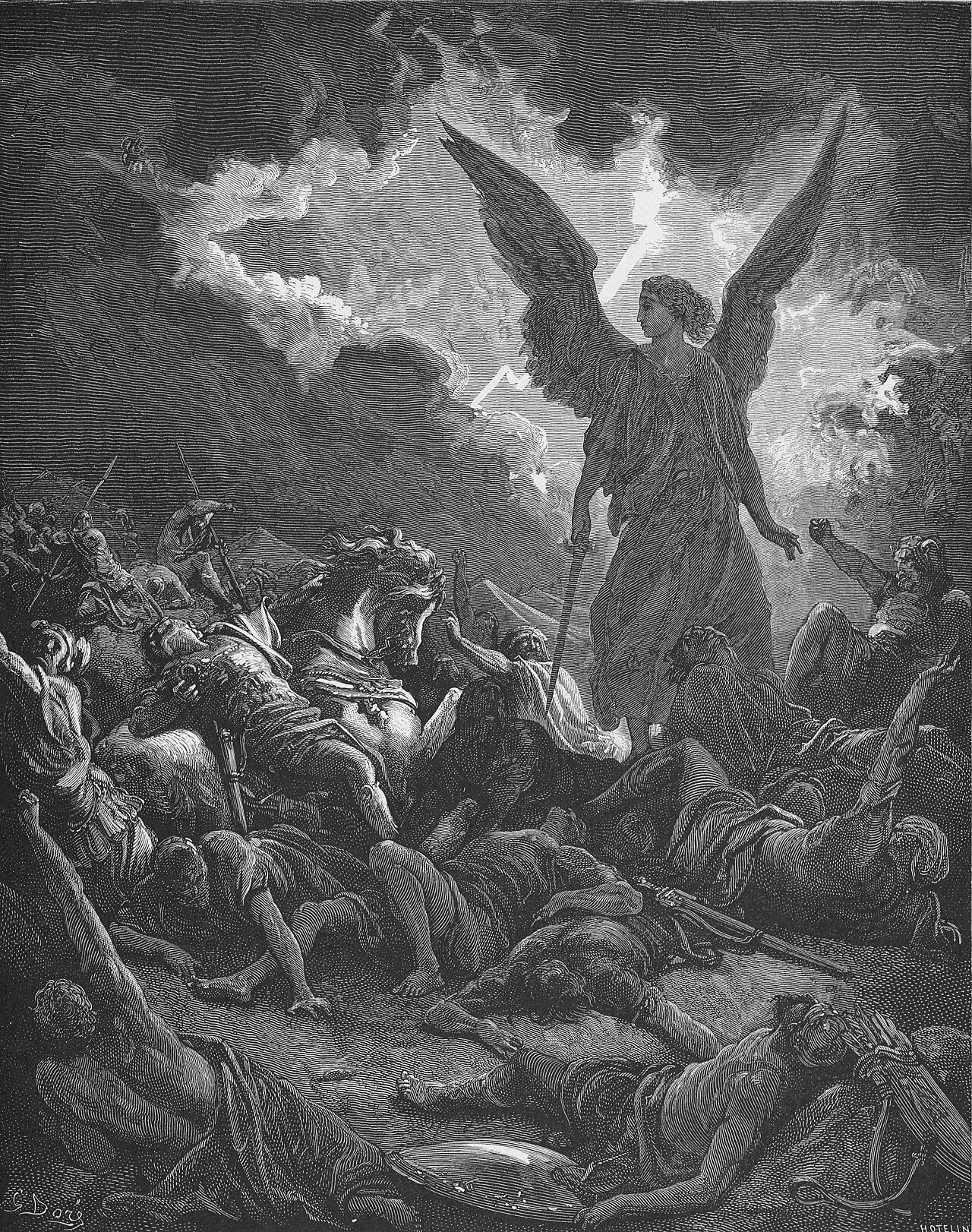
Hezekiah's answer to Rabshakeh's blasphemy is torn clothes, sackcloth, and the house of the Lord rather than a council of war. He sends Eliakim, Shebna and the elders of the priests, themselves covered in sackcloth, to Isaiah instead of answering Sennacherib himself. His message names the crisis in the image of a birth with no strength left to finish it, a king admitting that the nation cannot deliver itself.
The record, by era
The Puritans and the Awakening2 voices
Never were such a king and kingdom so trampled on and abused as we are: our soul is exceedingly filled with the contempt of the proud, and it is a sword in our bones to hear them reproach our confidence in God, and say, Where is now your God? and, which is worst of all, we see not which way we can help ourselves and get clear of the reproach.
The great prophet is the great intercessor. (4.) Those are likely to prevail with God that lift up their prayers, that is, that lift up their hearts in prayer. (5.) When the interests of God's church are brought very low, so that there is but a remnant left, few friends, and those weak and at a loss, then it is time to lift up our prayer for that remnant.
The Nineteenth Century2 voices
A commentator
Jamieson, Fausset & Brown1802–1910
Commentary Critical and Explanatory on the Whole Bible (1871)
proposed
The expression in which the message was conveyed described, by a strong figure, the desperate condition of the kingdom, together with their own inability to help themselves; and it intimated also a hope, that the blasphemous defiance of Jehovah's power by the impious Assyrian might lead to some direct interposition for the vindication of His honor and supremacy to all heathen gods.
The children are come to the birth - The Jewish state is here represented under the emblem of a woman in travail, who has been so long in the pangs of parturition, that her strength is now entirely exhausted, and her deliverance is hopeless, without a miracle. The image is very fine and highly appropriate. A similar image is employed by Homer, when he represents the agonies which Agamemnon suffers from his wound: - Οφρα οἱ αἱμ’ ετι θερμον ανηνοθεν εξ ωτειλης· Λυταρ επει το μεν ἑλκος ετερσετο παυσατο δ’ αἱμα, Οξειαι οδυναι δυνον μενος Ατρειδαο· Ως δ’ ὁταν ωδινουσαν εχῃ βελος οξυ γυναικα, Δριμυ, το τε προΐεισι μογοστοκοι Ειλειθυιαι Ἡρης θυγατερες πικ ρας ωδινας εχουσαι· Ὡς οξει’ οδυναι δυνον μενος Ατρειδαο. Il. xi., ver. 266. This, while yet warm, distill’d the purple flood; But when the wound grew stiff with clotted blood, Then grinding tortures his strong bosom rend. Less keen those darts the fierce Ilythiae send, The powers that cause the teeming matron’s throes, Sad mothers of unutterable woes. Pope Better translated by Macpherson; but in neither well: “So long as from the gaping wound gushed forth, in its warmth, the blood; but when the wound became dry, when ceased the blood to flow amain, sharp pains pervade the strength of Atrides. Racking pangs glide through his frame; as when the Ilythiae, who preside over births, the daughters of white armed Juno, fierce dealers of bitter pains, throw all their darts on hapless women, that travail with child. Such pains pervade the strength of Atrides.”
The words behind it
19 Hebrew wordsEvery Hebrew word of this verse in the order it stands, with what it means and the door to its own study. The last column counts the times a word stands in the whole Bible: the rarer the word, the more the places it appears belong together.
| Hebrew | Sound | Meaning | Word study | In the Bible |
|---|---|---|---|---|
| וַיֹּאמְר֣וּ | vaiyomeru | and they said | H559 → | 5305 times |
| אֵלָ֗יו | ʾelav | to him | H413 → | 5510 times |
| כֹּ֚ה | koh | thus | H3541 → | 577 times |
| אָמַ֣ר | ʾamar | he says | H559 → | 5305 times |
| חִזְקִיָּ֔הוּ | chizkiyahu | Hezekiah | H2396 → | 127 times |
| יוֹם־ | yom- | [is] a day of | H3117 → | 2304 times |
| צָרָ֧ה | tzarah | distress | H6869 → | |
| וְתוֹכֵחָ֛ה | vetokhechah | and rebuke | H8433 → | |
| וּנְאָצָ֖ה | uneatzah | and insult | H5007 → | |
| הַיּ֣וֹם | haiyom | the day | H3117 → | 2304 times |
| הַזֶּ֑ה | hazeh | <the> this | H2088 → | 1180 times |
| כִּ֣י | ki | for | H3588 → | 4482 times |
| בָ֤אוּ | vau | they have come | H935 → | 2568 times |
| בָנִים֙ | vanim | children | H1121 → | 4930 times |
| עַד־ | ʾad- | to | H5704 → | 1261 times |
| מַשְׁבֵּ֔ר | mashber | birth | H4866 → | |
| וְכֹ֥חַ | vekhoach | and [is] strength | H3581 → | |
| אַ֖יִן | ʾayin | there not | H369 → | 789 times |
| לְלֵדָֽה׃ | leledah | for giving birth | H3205 → | 496 times |
וַיֹּאמְר֣וּand they said
vaiyomeruH559 →5305 times
אֵלָ֗יוto him
ʾelavH413 →5510 times
כֹּ֚הthus
kohH3541 →577 times
אָמַ֣רhe says
ʾamarH559 →5305 times
חִזְקִיָּ֔הוּHezekiah
chizkiyahuH2396 →127 times
יוֹם־[is] a day of
yom-H3117 →2304 times
צָרָ֧הdistress
tzarahH6869 →
וְתוֹכֵחָ֛הand rebuke
vetokhechahH8433 →
וּנְאָצָ֖הand insult
uneatzahH5007 →
הַיּ֣וֹםthe day
haiyomH3117 →2304 times
הַזֶּ֑ה<the> this
hazehH2088 →1180 times
כִּ֣יfor
kiH3588 →4482 times
בָ֤אוּthey have come
vauH935 →2568 times
בָנִים֙children
vanimH1121 →4930 times
עַד־to
ʾad-H5704 →1261 times
מַשְׁבֵּ֔רbirth
mashberH4866 →
וְכֹ֥חַand [is] strength
vekhoachH3581 →
אַ֖יִןthere not
ʾayinH369 →789 times
לְלֵדָֽה׃for giving birth
leledahH3205 →496 times
A shaded row is a word that stands 400 times or fewer in the Bible.
The walk
6 stopsEach card is a verse this one points to, and under it the verses that one points to in turn. Where several paths arrive at the same place, that place is listed first: the text keeps returning to it.
Through
Isaiah 66:9Shall I bring a baby to the point of birth and not deliver it?” says the LORD. “Or will I who deliver close the womb?” says your God.
it leads to
- Isaiah 37:3
to tell him, “This is what Hezekiah says: Today is a day of distress, rebuke, and disgrace; for children have come to the point of birth, but there is no strength to deliver them.
Reached by 2 separate paths from here.
- Genesis 18:14
Is anything too difficult for the LORD? At the appointed time I will return to you—in about a year—and Sarah will have a son.”
- Isaiah 37:3
Through
Hosea 13:13Labor pains come upon him, but he is an unwise son. When the time arrives, he fails to present himself at the opening of the womb.
it leads to
- Isaiah 13:8
Terror, pain, and anguish will seize them; they will writhe like a woman in labor. They will look at one another, their faces flushed with fear.
- Isaiah 26:17
As a woman with child about to give birth writhes and cries out in pain, so were we in Your presence, O LORD.
- Psalms 48:6
Trembling seized them there, anguish like a woman in labor.
- Micah 4:9–10
Why do you now cry aloud? Is there no king among you? Has your counselor perished so that anguish grips you like a woman in labor?
- Isaiah 13:8
Where this verse is studied
On this page
Studies1
About 2 Kings
Who and where
1 name in this verse with a page on the site.
This page draws on Adam Clarke, Commentary on the Bible; Albert Barnes, Notes, Explanatory and Practical, on the Old and New Testaments (1832-1869); Jamieson Fausset and Brown, Commentary Critical and Explanatory on the Whole Bible; Jamieson, Fausset & Brown, Commentary Critical and Explanatory on the Whole Bible and Matthew Henry, Commentary on the Whole Bible.