
1 Samuel 9:5
in 1 Samuel 9When they reached the land of Zuph, Saul said to his servant, “Come, let us go back, or my father will stop worrying about the donkeys and start worrying about us.”
BSB
The same verse in ASV and KJV ▾
ASV
When they were come to the land of Zuph, Saul said to his servant that was with him, Come, and let us return, lest my father leave off caring for the asses, and be anxious for us.
KJV
And when they were come to the land of Zuph, Saul said to his servant that was with him, Come, and let us return; lest my father leave caring for the asses, and take thought for us.
⋯
This verse in 1 Samuel 9
Commentary
7 notes on this verseWere come to the land of Zuph - Calmet supposes that Saul and his servant went from Gibeah to Shalisha, in the tribe of Dan; from thence to Shalim, near to Jerusalem; and thence, traversing the tribe of Benjamin, they purposed to return to Gibeah; but passing through the land of Zuph, in which Ramatha, the country of Samuel, was situated, they determined to call on this prophet to gain some directions from him; the whole of this circuit he supposes to have amounted to no more than about twenty-five leagues, or three days’ journey.
This site's exposition
go look for the donkeys
on 1 Samuel 9:3-5
The straying donkeys send Saul through Ephraim, Shalishah, Shaalim and Benjamin, and the search finds nothing until he is ready to go home. The errand is as unplanned as David's trip with food to his brothers' camp at 17:17-20, and in both an ordinary errand brings a future king into the story. Saul's words, “Come, let us go back”, make the servant's suggestion the hinge of the chapter.
This site's exposition
When they reached the land of Zuph
The land of Zuph carries the name of Samuel's forebear at 1:1, and Adam Clarke places Samuel's home within it. Calmet, as Clarke reports him, reckons the whole search at about three days, and verse 20 speaks of donkeys lost three days ago. Saul thinks first of his father.
The record, by era
The Medieval Church2 voices
A commentator
Gregory the DialogistCommentary on 1 Kings, Book 4, Chapter 4 · Written before 604.
proposed
But while holy men cannot convert others through their preaching, they begin to fear intensely for themselves—lest they displease Almighty God in the very thing by which they thought they were greatly pleasing Him. And it often happens that the hearts of new preachers are so frightened that they now resolve to abandon the office of preaching itself and to devote themselves to God through silence. He deliberates about returning to his father who, having set aside the intention of preaching, desires to be free for God in the secret of silence.
But when they came to the land of Zuph, Saul said to his servant, etc. From the fifth place of failed inquiry, Saul intends, as it were, to return. And the Lord seemed, due to the enormity of human transgression, as if he wished to …
The Puritans and the Awakening2 voices
Children should take care that they do nothing to grieve or frighten their parents, but be tender of their tenderness. His servant proposed (for, it should seem, he had more religion in him than his master) that, since they were now at Ramah, they should call on Samuel, and take his advice in this important affair.
And when they were come to the land of Zuph,....
The words behind it
18 Hebrew wordsEvery Hebrew word of this verse in the order it stands, with what it means and the door to its own study. The last column counts the times a word stands in the whole Bible: the rarer the word, the more the places it appears belong together.
| Hebrew | Sound | Meaning | Word study | In the Bible |
|---|---|---|---|---|
| הֵ֗מָּה | hemah | they | H1992 → | 553 times |
| בָּ֚אוּ | bau | they came | H935 → | 2568 times |
| בְּאֶ֣רֶץ | beeretz | in [the] land of | H776 → | 2504 times |
| צ֔וּף | tzuf | Zuph | H6689 → | |
| וְשָׁא֥וּל | veshaul | and Saul | H7586 → | 402 times |
| אָמַ֛ר | ʾamar | he said | H559 → | 5305 times |
| לְנַעֲר֥וֹ | lenaaro | to servant his | H5288 → | 239 times |
| אֲשֶׁר־ | ʾasher- | who | H834 → | 5497 times |
| עִמּ֖וֹ | imo | [was] with him | H5973 → | 1050 times |
| לְכָ֣ה | lekhah | come ! | H1980 → | 1546 times |
| וְנָשׁ֑וּבָה | venashuvah | so let us turn back | H7725 → | 1056 times |
| פֶּן־ | pen- | lest | H6435 → | 133 times |
| יֶחְדַּ֥ל | yechdal | he should cease | H2308 → | 58 times |
| אָבִ֛י | ʾavi | father my | H1 → | 1212 times |
| מִן־ | min- | from | H4480 → | 1188 times |
| הָאֲתֹנ֖וֹת | haatonot | the she-asses | H860 → | 34 times |
| וְדָ֥אַג | vedaag | and he will be anxious | H1672 → | |
| לָֽנוּ׃ | lanu | to <the> us |
הֵ֗מָּהthey
hemahH1992 →553 times
בָּ֚אוּthey came
bauH935 →2568 times
בְּאֶ֣רֶץin [the] land of
beeretzH776 →2504 times
צ֔וּףZuph
tzufH6689 →
וְשָׁא֥וּלand Saul
veshaulH7586 →402 times
אָמַ֛רhe said
ʾamarH559 →5305 times
לְנַעֲר֥וֹto servant his
lenaaroH5288 →239 times
אֲשֶׁר־who
ʾasher-H834 →5497 times
עִמּ֖וֹ[was] with him
imoH5973 →1050 times
לְכָ֣הcome !
lekhahH1980 →1546 times
וְנָשׁ֑וּבָהso let us turn back
venashuvahH7725 →1056 times
פֶּן־lest
pen-H6435 →133 times
יֶחְדַּ֥לhe should cease
yechdalH2308 →58 times
אָבִ֛יfather my
ʾaviH1 →1212 times
מִן־from
min-H4480 →1188 times
הָאֲתֹנ֖וֹתthe she-asses
haatonotH860 →34 times
וְדָ֥אַגand he will be anxious
vedaagH1672 →
לָֽנוּ׃to <the> us
lanu
A shaded row is a word that stands 400 times or fewer in the Bible.
The walk
8 stopsEach card is a verse this one points to, and under it the verses that one points to in turn. Where several paths arrive at the same place, that place is listed first: the text keeps returning to it.
Through
Matthew 6:25Therefore I tell you, do not worry about your life, what you will eat or drink; or about your body, what you will wear. Is not life more than food, and the body more…
it leads to
- Philippians 4:6
Be anxious for nothing, but in everything, by prayer and petition, with thanksgiving, present your requests to God.
Reached by 2 separate paths from here.
- 1 Peter 5:7
Cast all your anxiety on Him, because He cares for you.
- Romans 8:32
He who did not spare His own Son but gave Him up for us all, how will He not also, along with Him, freely give us all things?
- Psalms 55:22
Cast your burden upon the LORD and He will sustain you; He will never let the righteous be shaken.
- Luke 12:22–31
Then Jesus said to His disciples, “Therefore I tell you, do not worry about your life, what you will eat, or about your body, what you will wear.
- Philippians 4:6
Through
Matthew 6:28And why do you worry about clothes? Consider how the lilies of the field grow: They do not labor or spin.
it leads to
- Matthew 6:25
Therefore I tell you, do not worry about your life, what you will eat or drink; or about your body, what you will wear. Is not life more than food, and the body more…
- Luke 12:27
Consider how the lilies grow: They do not labor or spin. Yet I tell you, not even Solomon in all his glory was adorned like one of these.
- Matthew 6:25
Through
Luke 12:11When you are brought before synagogues, rulers, and authorities, do not worry about how to defend yourselves or what to say.
it leads to
- Matthew 10:17–20
But beware of men; for they will hand you over to their councils and flog you in their synagogues.
- Matthew 10:17–20
Where this verse is studied
On this page
Studies1
About 1 Samuel
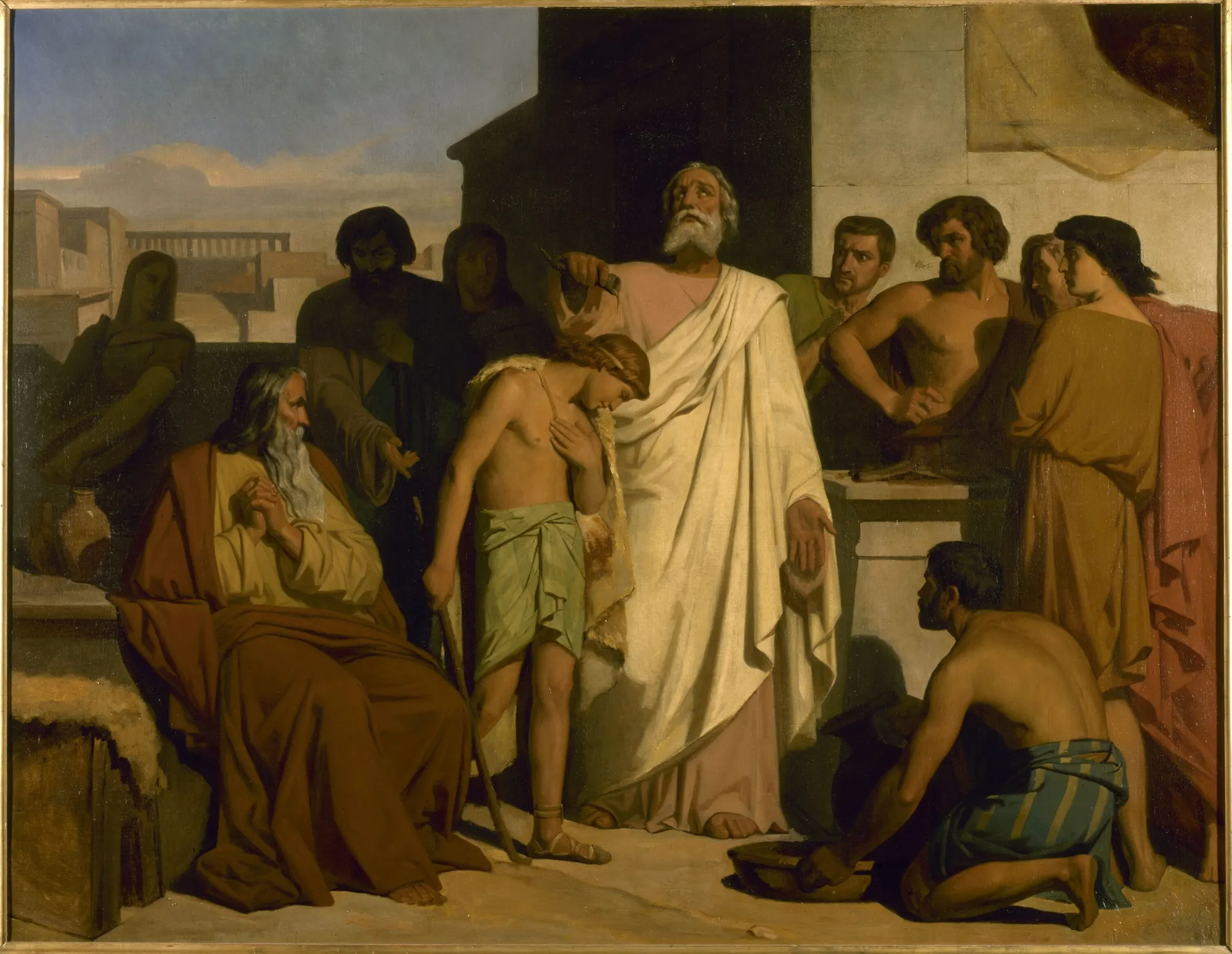
Who and where
1 name in this verse with a page on the site.
This page draws on Adam Clarke, Commentary on the Bible; Bede, Commentary on Samuel; Gregory the Dialogist, Commentary on 1 Kings, Book 4, Chapter 4; John Gill, Exposition of the Old Testament (1748-1763); Matthew Henry, Commentary on the Whole Bible and W. G. Blaikie, The First Book of Samuel (Expositor's Bible).