
1 Samuel 20:42
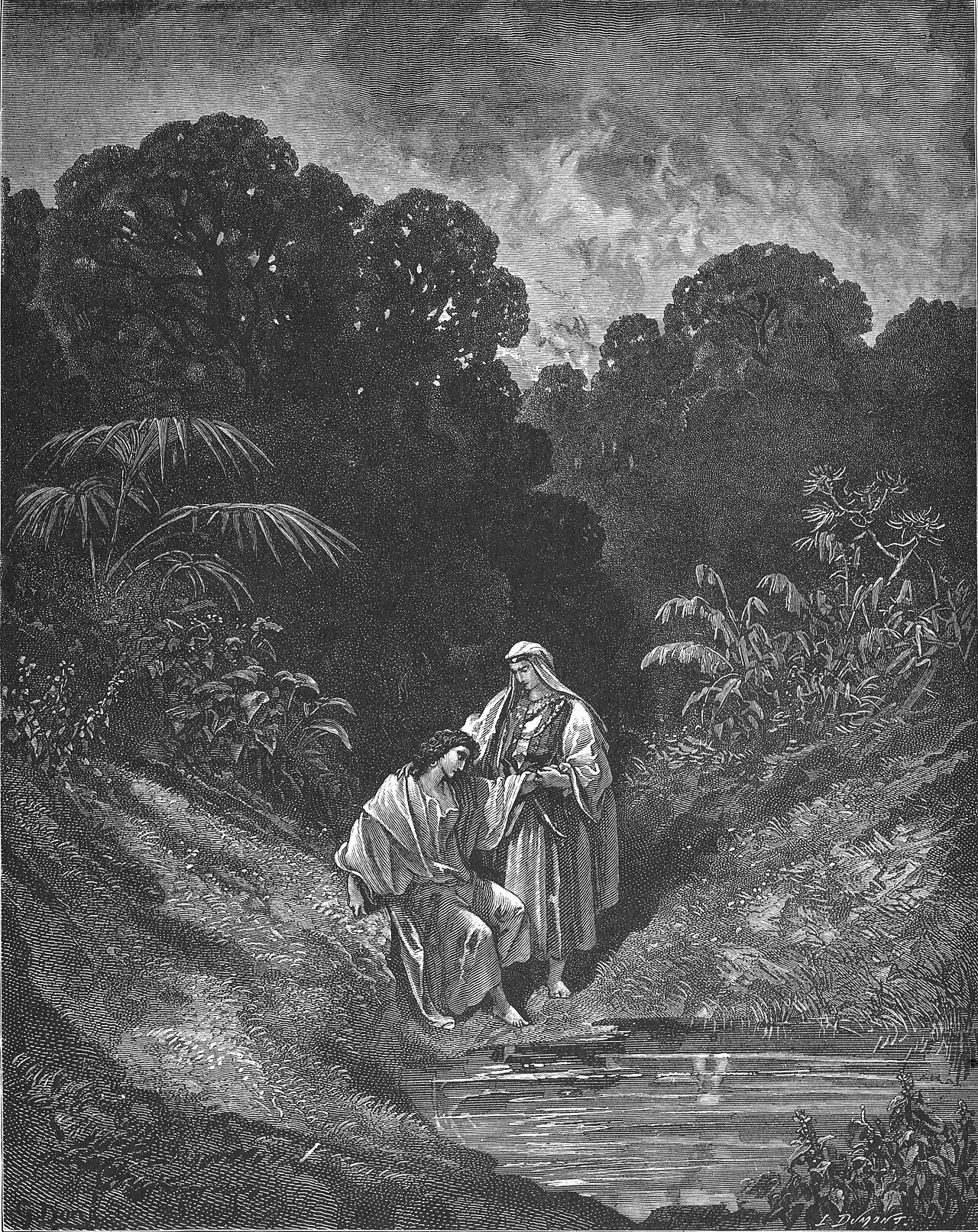
in 1 Samuel 20And Jonathan said to David, “Go in peace, for the two of us have sworn in the name of the LORD, saying, ‘May the LORD be a witness between you and me, and between your descendants and mine forever.’” Then David got up and departed, and Jonathan went back into the city.
BSB
The same verse in ASV and KJV ▾
ASV
And Jonathan said to David, Go in peace, forasmuch as we have sworn both of us in the name of Jehovah, saying, Jehovah shall be between me and thee, and between my seed and thy seed, for ever. And he arose and departed: and Jonathan went into the city.
KJV
And Jonathan said to David, Go in peace, forasmuch as we have sworn both of us in the name of the Lord, saying, The Lord be between me and thee, and between my seed and thy seed for ever. And he arose and departed: and Jonathan went into the city.
⋯
This verse in 1 Samuel 20
Commentary
6 notes on this verseA commentator
Albert Barnes1798–1870
Notes, Explanatory and Practical, on the Old and New Testaments (1832-1869)
Jonathan went into the city - From which one may infer, what the after history also indicates, that Jonathan’s filial duty and patriotism prevented a complete rupture with his father. Jonathan’s conduct in this, as in everything, was most admirable.
The record, by era
The Medieval Church2 voices
Then Jonathan said to David: Go in peace, etc. However, the Lord rose from the midst of the unbelieving Synagogue, saying: Jerusalem, Jerusalem, you who kill the prophets and stone those who are sent to you, how often I have wanted to gather your children …
And when the boy had gone, David arose from his place, etc. When the disciples, obeying the command of their elders, went to compile the events of their times according to the writings of their predecessors, the grace of Christ appeared more abundantly, shining forth …
The Puritans and the Awakening2 voices
6 If thy father at all miss me, then say, David earnestly asked leave of me that he might run to Bethlehem his city: for there is a yearly sacrifice there for all the family. 7 If he say thus, It is well; thy servant shall have peace: but if he be very wroth, then be sure that evil is determined by him.
quarantine:scripture (2026-07-29) — scripture-overlap:98%@v6-7
And Jonathan said to David, go in peace,....
The Nineteenth Century1 voice
A commentator
Jamieson, Fausset & Brown1802–1910
Commentary Critical and Explanatory on the Whole Bible (1871)
proposed
Jonathan said to David, Go in peace--The interview being a stolen one, and every moment precious, it was kindness in Jonathan to hasten his friend's departure.
The words behind it
22 Hebrew wordsEvery Hebrew word of this verse in the order it stands, with what it means and the door to its own study. The last column counts the times a word stands in the whole Bible: the rarer the word, the more the places it appears belong together.
| Hebrew | Sound | Meaning | Word study | In the Bible |
|---|---|---|---|---|
| וַיָּ֖קָם | vaiyakom | and he arose | H6965 → | 628 times |
| וַיֵּלַ֑ךְ | vaiyelakh | and he went | H1980 → | 1546 times |
| וִיהוֹנָתָ֖ן | vihonatan | and Jonathan | H3083 → | 81 times |
| בָּ֥א | ba' | he went | H935 → | 2568 times |
| הָעִֽיר׃ | hair | the city | H5892 → | 1090 times |
| אֲשֶׁר֩ | ʾasher | that | H834 → | 5497 times |
| נִשְׁבַּ֨עְנוּ | nishba'nu | we have sworn an oath | H7650 → | 186 times |
| שְׁנֵ֜ינוּ | sheneinu | [the] two of us | H8147 → | 768 times |
| אֲנַ֗חְנוּ | ʾanachnu | we | H587 → | 120 times |
| בְּשֵׁ֤ם | beshem | by [the] name of | H8034 → | 864 times |
| יְהוָה֙ | yahweh | Yahweh | H3068 → | 6520 times |
| לֵאמֹ֔ר | lemor | <to> saying | H559 → | 5305 times |
| יְהוָ֞ה | yahweh | Yahweh | H3068 → | 6520 times |
| יִֽהְיֶ֣ה׀ | yihyeh | he will be | H1961 → | 3559 times |
| בֵּינִ֣י | beini | between me | H996 → | 407 times |
| וּבֵינֶ֗ךָ | uveinekha | and between you | H996 → | 407 times |
| וּבֵ֥ין | uvein | and between | H996 → | 407 times |
| זַרְעִ֛י | zari | offspring my | H2233 → | 229 times |
| וּבֵ֥ין | uvein | and between | H996 → | 407 times |
| זַרְעֲךָ֖ | zarakha | offspring your | H2233 → | 229 times |
| עַד־ | ʾad- | until | H5704 → | 1261 times |
| עוֹלָֽם׃ פ | olam | perpetuity | H5769 → | 438 times |
וַיָּ֖קָםand he arose
vaiyakomH6965 →628 times
וַיֵּלַ֑ךְand he went
vaiyelakhH1980 →1546 times
וִיהוֹנָתָ֖ןand Jonathan
vihonatanH3083 →81 times
בָּ֥אhe went
ba'H935 →2568 times
הָעִֽיר׃the city
hairH5892 →1090 times
אֲשֶׁר֩that
ʾasherH834 →5497 times
נִשְׁבַּ֨עְנוּwe have sworn an oath
nishba'nuH7650 →186 times
שְׁנֵ֜ינוּ[the] two of us
sheneinuH8147 →768 times
אֲנַ֗חְנוּwe
ʾanachnuH587 →120 times
בְּשֵׁ֤םby [the] name of
beshemH8034 →864 times
יְהוָה֙Yahweh
yahwehH3068 →6520 times
לֵאמֹ֔ר<to> saying
lemorH559 →5305 times
יְהוָ֞הYahweh
yahwehH3068 →6520 times
יִֽהְיֶ֣ה׀he will be
yihyehH1961 →3559 times
בֵּינִ֣יbetween me
beiniH996 →407 times
וּבֵינֶ֗ךָand between you
uveinekhaH996 →407 times
וּבֵ֥יןand between
uveinH996 →407 times
זַרְעִ֛יoffspring my
zariH2233 →229 times
וּבֵ֥יןand between
uveinH996 →407 times
זַרְעֲךָ֖offspring your
zarakhaH2233 →229 times
עַד־until
ʾad-H5704 →1261 times
עוֹלָֽם׃ פperpetuity
olamH5769 →438 times
A shaded row is a word that stands 400 times or fewer in the Bible.
The walk
8 stopsEach card is a verse this one points to, and under it the verses that one points to in turn. Where several paths arrive at the same place, that place is listed first: the text keeps returning to it.
Through
Luke 7:50And Jesus told the woman, “Your faith has saved you; go in peace.”
it leads to
- Mark 5:34
“Daughter,” said Jesus, “your faith has healed you. Go in peace and be free of your affliction.”
Reached by 3 separate paths from here.
- Luke 8:48
“Daughter,” said Jesus, “your faith has healed you. Go in peace.”
- Luke 18:42
“Receive your sight!” Jesus replied. “Your faith has healed you.”
- Matthew 9:22
Jesus turned and saw her. “Take courage, daughter,” He said, “your faith has healed you.” And the woman was cured from that very hour.
- Mark 10:52
“Go,” said Jesus, “your faith has healed you.” And immediately he received his sight and followed Jesus along the road.
- Mark 5:34
Through
1 Samuel 1:17“Go in peace,” Eli replied, “and may the God of Israel grant the petition you have asked of Him.”
it leads to
- 1 Samuel 25:35
Then David accepted from her hand what she had brought him, and he said to her, “Go home in peace. See, I have heeded your voice and granted your request.”
Reached by 2 separate paths from here.
- Judges 18:6
And the priest told them, “Go in peace. The LORD is watching over your journey.”
- Psalms 20:3–5
May He remember all your gifts and look favorably on your burnt offerings. Selah
- 1 Samuel 25:35
Where this verse is studied
On this page
About 1 Samuel
Who and where
2 names in this verse with a page on the site.
- PersonUnited MonarchyDavidSecond king of united Israel, shepherd-turned-monarch, ancestor of the Messiah, and traditional author of many Psalms.
- PersonEarly monarchyJonathanSon of King Saul who climbed a cliff to rout a garrison on the conviction that nothing restrains Jehovah; cut a covenant of steadf…
This page draws on Albert Barnes, Notes, Explanatory and Practical, on the Old and New Testaments (1832-1869); Bede, Commentary on Samuel; Jamieson, Fausset & Brown, Commentary Critical and Explanatory on the Whole Bible; John Gill, Exposition of the Old Testament (1748-1763) and Matthew Henry, Commentary on the Whole Bible.