
1 Samuel 20:32
in 1 Samuel 20“Why must he be put to death?” Jonathan replied. “What has he done?”
BSB
The same verse in ASV and KJV ▾
ASV
And Jonathan answered Saul his father, and said unto him, Wherefore should he be put to death? what hath he done?
KJV
And Jonathan answered Saul his father, and said unto him, Wherefore shall he be slain? what hath he done?
⋯
This verse in 1 Samuel 20
Commentary
7 notes on this verseThis site's exposition
What has he done
on 1 Samuel 20:32-34
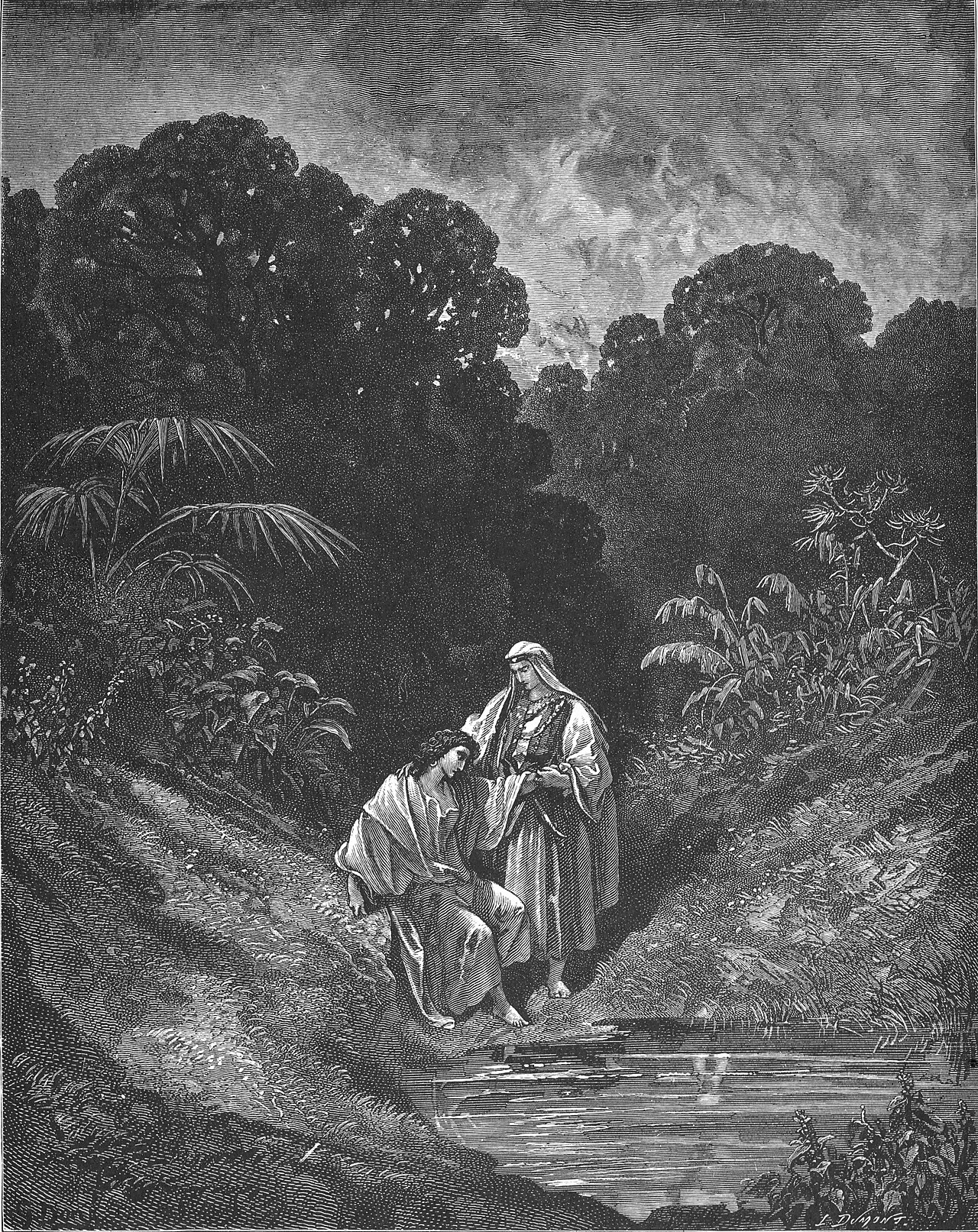
Jonathan asks what David has done and gets no answer in words. Saul hurls his spear at his own son, the weapon thrown at David at 18:11 and 19:10. Jonathan leaves the table "in fierce anger," and the text says he was "grieved by his father’s shameful treatment of David."
The record, by era
The Church Fathers3 voices
Who would not have loved him [David], when they saw how dear he was to his friends? For as he truly loved his friends, so he thought that he was loved as much in return by his own friends. No, parents put him even before their own children, and children loved him more than their parents. Therefore Saul was very angry and strove to strike Jonathan his son with a spear because he thought that David's friendship held a higher place in his esteem than either filial piety or a father's authority.
For love "doth nothing unseemly," but as it were with certain golden wings covereth up all the offences of the beloved. Jonathan loved David; and hearing his father say, "Thou son of damsels that have run away from their homes, thou womanly bred," he was not ashamed, though the words be full of great reproach. For what he means is this: "Thou son of mean harlots who are mad after men, who run after the passers-by, thou unnerved and effeminate wretch, who hast nothing of a man, but livest to the shame of thyself and the mother who bare thee." What then? Did he grieve at these things, and hide his face, and turn away from his beloved? Nay, quite the contrary; he displayed his fondness as an ornament. And yet the one was at that time a king, and a king's son, even Jonathan; the other a fugitive and a wanderer, I mean, David. But not even thus was he ashamed of his friendship. "For love doth not behave itself unseemly." Yea, this is its wonderful quality that not only it suffers not the injured to grieve and feel galled, but even disposes him to rejoice. Accordingly, he too, of whom we are speaking, after all these things, just as though he had a crown put on him, went away and fell on David's neck. For love knows not what sort of thing shame may be. Therefore it glories in those things for which another hides his face. Since the shame is, not to know how to love; not, when thou lovest, to incur danger and endure all for the beloved.
For that commendable friendship which maintains virtue is to be preferred most certainly to wealth or honors or power. It is not apt to be preferred to virtue indeed, but to follow after it. So it was with Jonathan, who for his affection's sake avoided neither his father's displeasure nor the danger to his own safety.
The Medieval Church1 voice
But Jonathan answering his father Saul, said, etc. The assembly of the faithful in Christ, answering the unbelievers, said: Why does the Christian religion perish? Why is Christ Himself torn apart by you with a rapid bite, whom the governor himself, who gave Him over …
The Puritans and the Awakening1 voice
), Wherefore shall he be slain? Generous spirits can much more easily bear to be abused themselves than to hear their friends abused. Saul was now so outrageous that he threw his javelin at Jonathan,
quarantine:debris (2026-07-29) — leading-punctuation+unbalanced-parens
1 more voice on this verse
The Puritans and the Awakening1 voice
And Jonathan answered Saul his, father, and said unto him,....
The words behind it
11 Hebrew wordsEvery Hebrew word of this verse in the order it stands, with what it means and the door to its own study. The last column counts the times a word stands in the whole Bible: the rarer the word, the more the places it appears belong together.
| Hebrew | Sound | Meaning | Word study | In the Bible |
|---|---|---|---|---|
| וַיַּ֙עַן֙ | vaiyaan | and he answered | H6030 → | 331 times |
| יְה֣וֹנָתָ֔ן | yehonatan | Jonathan | H3083 → | 81 times |
| אֶת־ | ʾet- | <obj.> | H853 → | 10935 times |
| שָׁא֖וּל | shaul | Saul | H7586 → | 402 times |
| אָבִ֑יו | ʾaviv | father his | H1 → | 1212 times |
| וַיֹּ֧אמֶר | vaiyomer | and he said | H559 → | 5305 times |
| אֵלָ֛יו | ʾelav | to him | H413 → | 5510 times |
| לָ֥מָּה | lamah | <to> why? | H4100 → | 752 times |
| יוּמַ֖ת | yumat | will he be put to death | H4191 → | 839 times |
| מֶ֥ה | meh | what? | H4100 → | 752 times |
| עָשָֽׂה׃ | ʾasah | has he done | H6213 → | 2628 times |
וַיַּ֙עַן֙and he answered
vaiyaanH6030 →331 times
יְה֣וֹנָתָ֔ןJonathan
yehonatanH3083 →81 times
אֶת־<obj.>
ʾet-H853 →10935 times
שָׁא֖וּלSaul
shaulH7586 →402 times
אָבִ֑יוfather his
ʾavivH1 →1212 times
וַיֹּ֧אמֶרand he said
vaiyomerH559 →5305 times
אֵלָ֛יוto him
ʾelavH413 →5510 times
לָ֥מָּה<to> why?
lamahH4100 →752 times
יוּמַ֖תwill he be put to death
yumatH4191 →839 times
מֶ֥הwhat?
mehH4100 →752 times
עָשָֽׂה׃has he done
ʾasahH6213 →2628 times
A shaded row is a word that stands 400 times or fewer in the Bible.
The walk
8 stopsEach card is a verse this one points to, and under it the verses that one points to in turn. Where several paths arrive at the same place, that place is listed first: the text keeps returning to it.
Through
Proverbs 22:24Do not make friends with an angry man, and do not associate with a hot-tempered man,
it leads to
- Proverbs 29:22
An angry man stirs up dissension, and a hot-tempered man abounds in transgression.
- 2 Corinthians 6:14–17
Do not be unequally yoked with unbelievers. For what partnership can righteousness have with wickedness? Or what fellowship does light have with darkness?
- Proverbs 21:24
Mocker is the name of the proud and arrogant man—of him who acts with excessive pride.
- Proverbs 29:22
Through
1 Samuel 19:5He took his life in his hands when he struck down the Philistine, and the LORD worked a great salvation for all Israel. You saw it and rejoiced, so why would you sin against…
it leads to
- 1 Samuel 11:13
But Saul ordered, “No one shall be put to death this day, for today the LORD has worked salvation in Israel.”
- 1 Chronicles 11:14
But Eleazar and David stationed themselves in the middle of the field and defended it. They struck down the Philistines, and the LORD brought about a great victory.
- Judges 9:17
for my father fought for you and risked his life to deliver you from the hand of Midian,
- Matthew 27:4
“I have sinned by betraying innocent blood,” he said. “What is that to us?” they replied. “You bear the responsibility.”
- Acts 20:24
But I consider my life of no value to me, if only I may finish my course and complete the ministry I have received from the Lord Jesus—the ministry of testifying to the good…
- 1 Samuel 11:13
Where this verse is studied
About 1 Samuel
Who and where
1 name in this verse with a page on the site.
This page draws on Adam Clarke, Commentary on the Bible; Ambrose of Milan, On the Duties of the Clergy 2.7.36; Ambrose of Milan, On the Duties of the Clergy 3.21.124; Bede, Commentary on Samuel; John Chrysostom, HOMILIES ON 1 CORINTHIANS 33.2; John Gill, Exposition of the Old Testament; John Gill, Exposition of the Old Testament (1748-1763) and Matthew Henry, Commentary on the Whole Bible.