
1 Samuel 20:4
in 1 Samuel 20Then Jonathan said to David, “Whatever you desire, I will do for you.”
BSB
The same verse in ASV and KJV ▾
ASV
Then said Jonathan unto David, Whatsoever thy soul desireth, I will even do it for thee.
KJV
Then said Jonathan unto David, Whatsoever thy soul desireth, I will even do it for thee.
⋯
This verse in 1 Samuel 20
Commentary
6 notes on this verseThis site's exposition
Whatever you desire, I will do for you
on 1 Samuel 20:4-6
Jonathan's open promise, "Whatever you desire, I will do for you," becomes the shape of David's test. The New Moon meal the king kept publicly will show whether Saul still means to kill him. David's excuse, if missed, is "an annual sacrifice for his whole clan" at Bethlehem.
The record, by era
The Church Fathers1 voice
Here some make the charge that the apostle has divided the human being into two parts, and that he states that a human's combined essence conflicts with itself, and that the body has a contest with the soul. But this is clearly not so, for by "the flesh" he does not mean the body; if he did, what would be the sense of the clause immediately following, "for it lusts," he says, "against the Spirit"? Yet the body does not move but is moved, is not an agent but is acted upon. How then does it lust, for lust belongs to the soul not to the body, for in another place it is said, "My soul longs," and, "Whatever your soul desires, I will even do it for you" … and "So my soul pants." Therefore when Paul says, "the flesh lusts against the Spirit," he means that the flesh is not the human body but the depraved will, as where he says, "But you are not in the flesh, but in the Spirit," and again, "Those who are in the flesh cannot please God."
The Puritans and the Awakening4 voices
Jonathan promises to give him intelligence, and confirms his friendship, ver. 9-23. He finds his father implacable, ver. 24-34. He gives David notice of it, in the manner they had agreed on, ver.
quarantine:anchor (2026-07-29) — cites-ver-9/24-anchored-1-5
Then said Jonathan unto David,.... Now giving credit to what he had said, and in order to comfort and support him under the apprehensions he had of danger: whatsoever thy soul desireth, I will even do it for thee; for the preservation of his life, by speaking to his father on his behalf, endeavouring to dissuade him from his evil intentions, or by hiding and concealing him in some obscure place, that he might not execute his evil designs upon him, or by any method he could point out to him.
Jonathan faithfully promises to get and give him intelligence how his father stood affected to him, and renews the covenant of friendship with him,
The method of trial he proposed was very natural, and would certainly discover how Saul stood affected to him. The two next days Saul was to dine publicly, upon occasion of the solemnities of the new moon, when extraordinary sacrifices were offered and feasts made upon the sacrifices.
The words behind it
9 Hebrew wordsEvery Hebrew word of this verse in the order it stands, with what it means and the door to its own study. The last column counts the times a word stands in the whole Bible: the rarer the word, the more the places it appears belong together.
| Hebrew | Sound | Meaning | Word study | In the Bible |
|---|---|---|---|---|
| וַיֹּ֥אמֶר | vaiyomer | and he said | H559 → | 5305 times |
| יְהוֹנָתָ֖ן | yehonatan | Jonathan | H3083 → | 81 times |
| אֶל־ | ʾel- | to | H413 → | 5510 times |
| דָּוִ֑ד | david | David | H1732 → | 999 times |
| מַה־ | mah- | whatever | H4100 → | 752 times |
| תֹּאמַ֥ר | tomar | it will say | H559 → | 5305 times |
| נַפְשְׁךָ֖ | nafshekha | self your | H5315 → | 754 times |
| וְאֶֽעֱשֶׂה־ | veeeseh- | so I may do | H6213 → | 2628 times |
| לָּֽךְ׃ פ | lakh | for <the> you |
וַיֹּ֥אמֶרand he said
vaiyomerH559 →5305 times
יְהוֹנָתָ֖ןJonathan
yehonatanH3083 →81 times
אֶל־to
ʾel-H413 →5510 times
דָּוִ֑דDavid
davidH1732 →999 times
מַה־whatever
mah-H4100 →752 times
תֹּאמַ֥רit will say
tomarH559 →5305 times
נַפְשְׁךָ֖self your
nafshekhaH5315 →754 times
וְאֶֽעֱשֶׂה־so I may do
veeeseh-H6213 →2628 times
לָּֽךְ׃ פfor <the> you
lakh
A shaded row is a word that stands 400 times or fewer in the Bible.
Where this verse is studied
About 1 Samuel
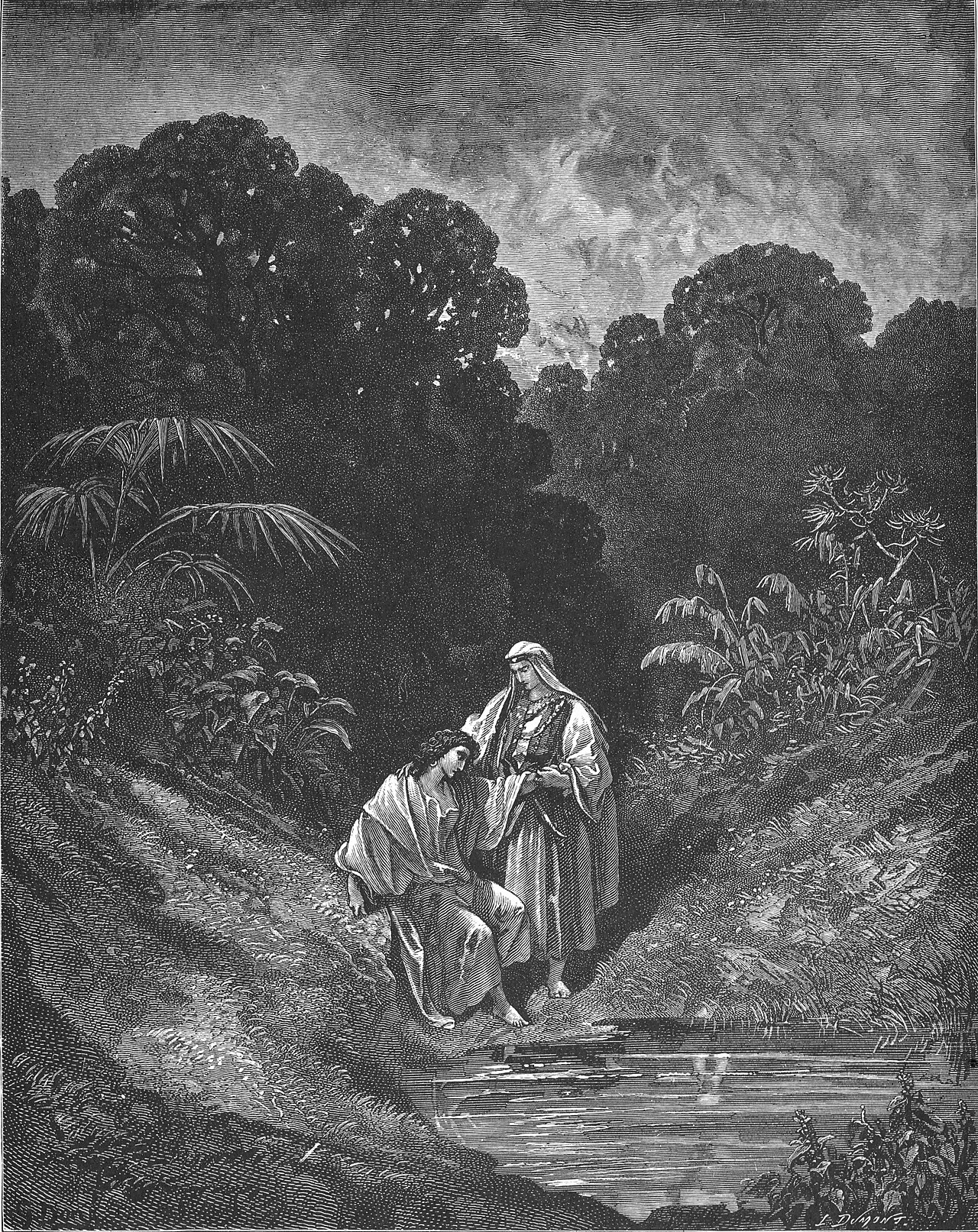
Who and where
2 names in this verse with a page on the site.
- PersonUnited MonarchyDavidSecond king of united Israel, shepherd-turned-monarch, ancestor of the Messiah, and traditional author of many Psalms.
- PersonEarly monarchyJonathanSon of King Saul who climbed a cliff to rout a garrison on the conviction that nothing restrains Jehovah; cut a covenant of steadf…
This page draws on Jamieson, Fausset & Brown, Commentary Critical and Explanatory on the Whole Bible; John Chrysostom, COMMENTARY ON GALATIANS 5; John Gill, Exposition of the Old Testament; John Gill, Exposition of the Old Testament (1748-1763); John Wesley, Explanatory Notes upon the Old Testament and Matthew Henry, Commentary on the Whole Bible.