
1 Samuel 2:11
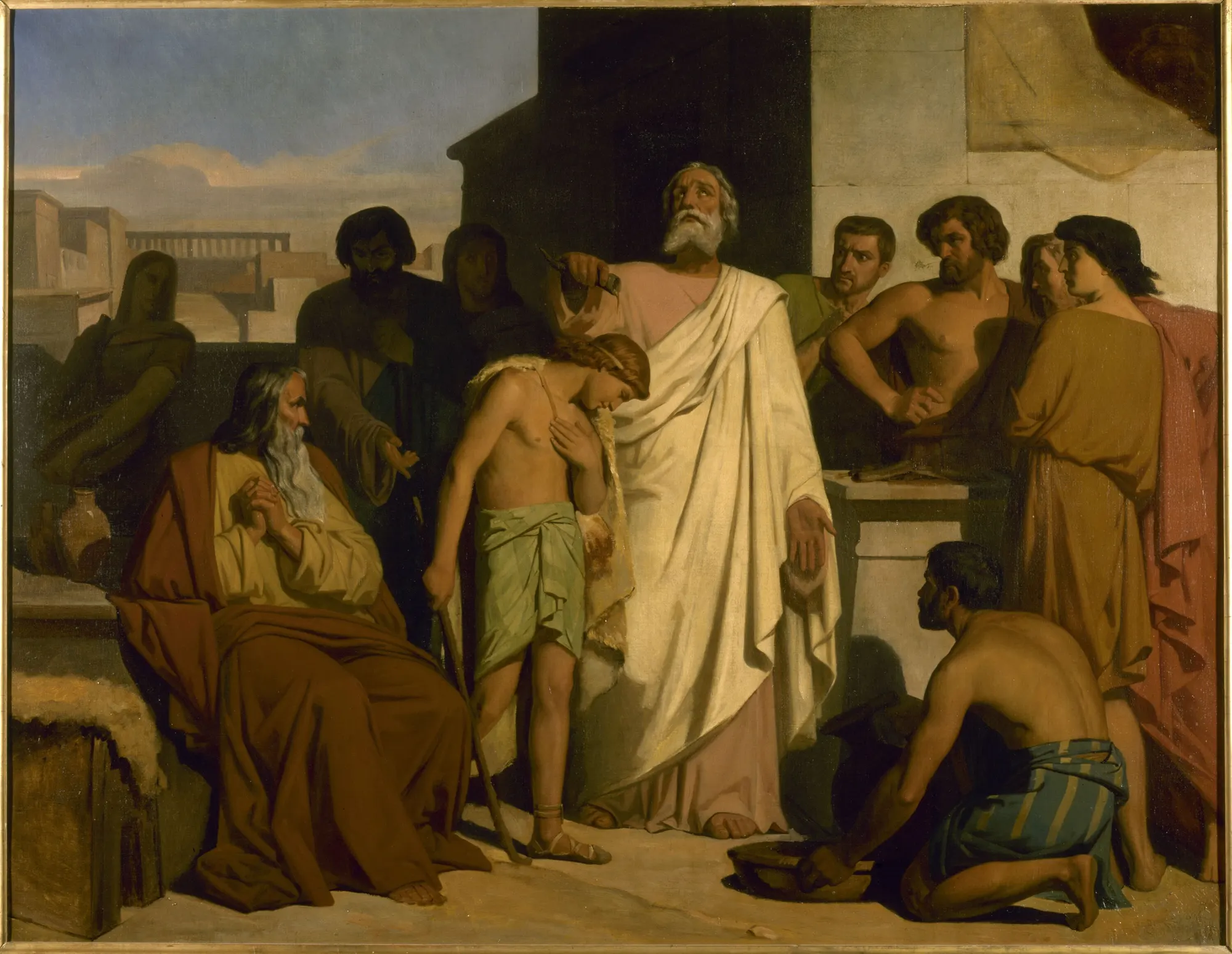
in 1 Samuel 2Then Elkanah went home to Ramah, but the boy began ministering to the LORD before Eli the priest.
BSB
The same verse in ASV and KJV ▾
ASV
And Elkanah went to Ramah to his house. And the child did minister unto Jehovah before Eli the priest.
KJV
And Elkanah went to Ramah to his house. And the child did minister unto the Lord before Eli the priest.
⋯
This verse in 1 Samuel 2
Commentary
8 notes on this verseA commentator
Albert Barnes1798–1870
Notes, Explanatory and Practical, on the Old and New Testaments (1832-1869)
The word “minister” is used in three senses in Scripture: (1) of the service or ministration of both priests and Levites rendered unto the Lord Exo 28:35, Exo 28:43: (2) of the ministrations of the Levites as rendered to the priests, to aid them in divine Service Num 3:6: (3) of any service or ministration, especially one rendered to a man of God, as that of Joshua to Moses Num 11:28. The application of it to Samuel as ministering to the Lord before Eli the priest accords “most exactly” with Samuel’s condition as a Levite.
This site's exposition
the boy began ministering to the LORD before Eli the priest
Elkanah goes home to Ramah while the child stays. The sentence did minister unto the Lord before Eli the priest sets him against the sons who open the next verse. The verse is a hinge the narrator built on purpose, moving from Hannah's song straight into Eli's house.
The record, by era
The Medieval Church3 voices
Thus Elkanah went to Ramah, to his house, etc. The Church of the Gentiles, recently called to faith, which we said signified the birth of the blessed Samuel, God's possession, which is His co-eternal wisdom, Christ, went to enlighten, as always, the lofty hearts of …
A commentator
Gregory the DialogistCommentary on 1 Kings, Book 2, Chapter 3 · Written before 604.
proposed
We have run through these matters from sacred history by way of typological explanation, so that we might seek out something of moral understanding in the same words of sacred history. And so the boy Samuel is declared a minister in the sight of the Lord; yet this ministry is recorded as being rendered to the Lord not absolutely, but before the face of Eli. By these words, therefore, what is shown is not the perfection of ministry, but of humility. For the face of Eli represents the judgment of each one's instructor. For he ministers to the Lord before the face of his teacher who does not follow the reasoning of his own judgment in the performance of his ministry, who walks along that path of work which is foreseen for him by the knowledge of his master. For all perfect men, and those taught by God (John 6:45; Isaiah 54:13), are indeed ministers in the sight of the Lord, but are not His ministers before the face of man, because the divinity itself teaches them inwardly how they should be ordered outwardly also in life, conduct, and teaching; whence also it is promised to the forerunner of the Redeemer with the praise of a paternal oracle: "And you, child, will be called the prophet of the Most High; for you will go before the face of the Lord to prepare His ways" (Luke 1:76). He is described as going before the face of the Lord who in his ministry was not going to follow the judgment of a superior man, but the inspiration of the divinity. Therefore Samuel is said to minister to the Lord before the face of Eli, so that all who are subject may be taught by his example, that they should strive to please their Creator in their ministry in such a way that they do not presume to do anything contrary to the judgment of their superiors. […]
A commentator
Gregory the DialogistCommentary on 1 Kings, Book 2, Chapter 2 · Written before 604.
proposed
1. We have shown that this man indeed designates the Redeemer of the human race; Anna his wife, His Church; the boy Samuel, the people of believers from the nations; and Ramatha the city, the heavenly homeland. What then does it mean that after his wife's canticle Elkanah is said to have gone away to Ramatha his city, since Anna sang her canticle to God after the boy was born, and the Redeemer ascended to heaven before the holy Church had begotten the gentile people in faith?
The Puritans and the Awakening2 voices
) according as his capacity was. He learned his catechism and was constant to his devotions, soon learned to read, and took a pleasure in the book of the law, and thus he ministered to the Lord. He ministered before Eli, that is, under his inspection, and as he ordered him, not before Eli's sons; all parties were agreed that they were unfit to be his tutors.
quarantine:debris (2026-07-29) — leading-punctuation+unbalanced-parens
And Elkanah went to Ramah to his house,.... Of which see 1Sa 1:
1 more voice on this verse
The Nineteenth Century1 voice
And Elkanah went to Ramah - Immediately after the 10th verse, the Septuagint add, Και κατελιπεν αυτον εκει ενωπιον Κυριου· και απηλθεν εις Αραματαια, And she left him there before the Lord, and went unto Arimathea. Thus the Septuagint suppose that the song of Hannah was composed when she brought Samuel to present him to the Lord; and as soon as she had completed this fine ode, she delivered him into the hands of Eli the high priest, and the child entered immediately on his ministration, under the direction and instructions of Eli.
How the passage was read
What the Jewish commentators add
Served Adonoy in the presence of Eili the kohein. From here [our Sages conclude] that "whoever serves before a Torah scholar is considered as though he had served before the Divine Presence." 8 Talmud Yerushalmi Eruvin:1.
2 more on this passage, in their own words ▾
Let Him thunder against them from heaven. The spelling is עָלוּ "they have ascended" meaning that even if they have ascended to the heavens, He thunders upon them and casts them down.
The LORD will shatter the enemies who rise up to harm his people. Against them He will thunder from heaven with a loud voice.
This section is reception history: how the passage was read and kept in the Jewish tradition. Where a reading parts from an essential of the Christian faith, the section says so at that point.
Texts and citation data: Sefaria; each excerpt follows its version’s licence. 3 further sources are cited on this chapter that carry no English text this site may quote or only restate the verse.
The words behind it
14 Hebrew wordsEvery Hebrew word of this verse in the order it stands, with what it means and the door to its own study. The last column counts the times a word stands in the whole Bible: the rarer the word, the more the places it appears belong together.
| Hebrew | Sound | Meaning | Word study | In the Bible |
|---|---|---|---|---|
| וַיֵּ֧לֶךְ | vaiyelekh | and he went | H1980 → | 1546 times |
| אֶלְקָנָ֛ה | ʾelkanah | Elkanah | H511 → | 21 times |
| הָרָמָ֖תָה | haramatah | <the> Ramah towards | H7414 → | 36 times |
| עַל־ | ʾal- | on | H5921 → | 5755 times |
| בֵּית֑וֹ | beito | house his | H1004 → | 2046 times |
| וְהַנַּ֗עַר | vehanaar | and the lad | H5288 → | 239 times |
| הָיָ֤ה | hayah | he was | H1961 → | 3559 times |
| מְשָׁרֵת֙ | mesharet | serving | H8334 → | 97 times |
| אֶת־ | ʾet- | <obj.> | H853 → | 10935 times |
| יְהוָ֔ה | yahweh | Yahweh | H3068 → | 6520 times |
| אֶת־ | ʾet- | with | H854 → | 929 times |
| פְּנֵ֖י | penei | [the] presence of | H6440 → | 2123 times |
| עֵלִ֥י | ʾeli | Eli | H5941 → | 33 times |
| הַכֹּהֵֽן׃ | hakohen | the priest | H3548 → | 750 times |
וַיֵּ֧לֶךְand he went
vaiyelekhH1980 →1546 times
אֶלְקָנָ֛הElkanah
ʾelkanahH511 →21 times
הָרָמָ֖תָה<the> Ramah towards
haramatahH7414 →36 times
עַל־on
ʾal-H5921 →5755 times
בֵּית֑וֹhouse his
beitoH1004 →2046 times
וְהַנַּ֗עַרand the lad
vehanaarH5288 →239 times
הָיָ֤הhe was
hayahH1961 →3559 times
מְשָׁרֵת֙serving
mesharetH8334 →97 times
אֶת־<obj.>
ʾet-H853 →10935 times
יְהוָ֔הYahweh
yahwehH3068 →6520 times
אֶת־with
ʾet-H854 →929 times
פְּנֵ֖י[the] presence of
peneiH6440 →2123 times
עֵלִ֥יEli
ʾeliH5941 →33 times
הַכֹּהֵֽן׃the priest
hakohenH3548 →750 times
A shaded row is a word that stands 400 times or fewer in the Bible.
The walk
8 stopsEach card is a verse this one points to, and under it the verses that one points to in turn. Where several paths arrive at the same place, that place is listed first: the text keeps returning to it.
Through
1 Samuel 1:19The next morning Elkanah and Hannah got up early to bow in worship before the LORD, and then returned home to Ramah. And Elkanah had relations with his wife Hannah, and the LORD remembered…
it leads to
- 1 Samuel 1:11
And she made a vow, pleading, “O LORD of Hosts, if only You will look upon the affliction of Your maidservant and remember me, not forgetting Your maidservant but giving her a son, then…
Reached by 2 separate paths from here.
- Genesis 21:1
Now the LORD attended to Sarah as He had said, and the LORD did for Sarah what He had promised.
- Genesis 30:22
Then God remembered Rachel. He listened to her and opened her womb,
- Genesis 4:1
And Adam had relations with his wife Eve, and she conceived and gave birth to Cain. “With the help of the LORD I have brought forth a man,” she said.
- 1 Samuel 1:11
Through
1 Samuel 3:1And the boy Samuel ministered to the LORD before Eli. Now in those days the word of the LORD was rare and visions were scarce.
it leads to
- Amos 8:11–12
Behold, the days are coming, declares the Lord GOD, when I will send a famine on the land—not a famine of bread or a thirst for water, but a famine of hearing the words…
- Psalms 74:9
There are no signs for us to see. There is no longer any prophet. And none of us knows how long this will last.
- 1 Samuel 3:21
And the LORD continued to appear at Shiloh, because there He revealed Himself to Samuel by His word.
- Amos 8:11–12
Through
1 Samuel 1:28I now dedicate the boy to the LORD. For as long as he lives, he is dedicated to the LORD.” So they worshiped the LORD there.
it leads to
- Genesis 24:26
Then the man bowed down and worshiped the LORD,
- Genesis 24:26
Where this verse is studied
On this page
About 1 Samuel
Who and where
2 names in this verse with a page on the site.
This page draws on Adam Clarke, Commentary on the Bible; Albert Barnes, Notes, Explanatory and Practical, on the Old and New Testaments (1832-1869); Bede, Commentary on Samuel; Gregory the Dialogist, Commentary on 1 Kings, Book 2, Chapter 3; Gregory the Dialogist, Commentary on 1 Kings, Book 2, Chapter 2; John Gill, Exposition of the Old Testament; John Gill, Exposition of the Old Testament (1748-1763) and Matthew Henry, Commentary on the Whole Bible.