
1 Kings 19:10
in 1 Kings 19“I have been very zealous for the LORD, the God of Hosts,” he replied, “but the Israelites have forsaken Your covenant, torn down Your altars, and killed Your prophets with the sword. I am the only one left, and they are seeking my life as well.”
BSB
The same verse in ASV and KJV ▾
ASV
And he said, I have been very jealous for Jehovah, the God of hosts; for the children of Israel have forsaken thy covenant, thrown down thine altars, and slain thy prophets with the sword: and I, even I only, am left; and they seek my life, to take it away.
KJV
And he said, I have been very jealous for the Lord God of hosts: for the children of Israel have forsaken thy covenant, thrown down thine altars, and slain thy prophets with the sword; and I, even I only, am left; and they seek my life, to take it away.
⋯
This verse in 1 Kings 19
Commentary
8 notes on this verseI only - Of all thy prophets, who boldly and publickly plead thy cause: for the rest of thy prophets who are not slain, hide themselves, and dare not appear to do thee any service. They seek my life - I despair of doing them any good: for instead of receiving my testimony, they hunt for my life. It does by no means appear, that he was at all to blame, for fleeing from Jezebel.
This site's exposition
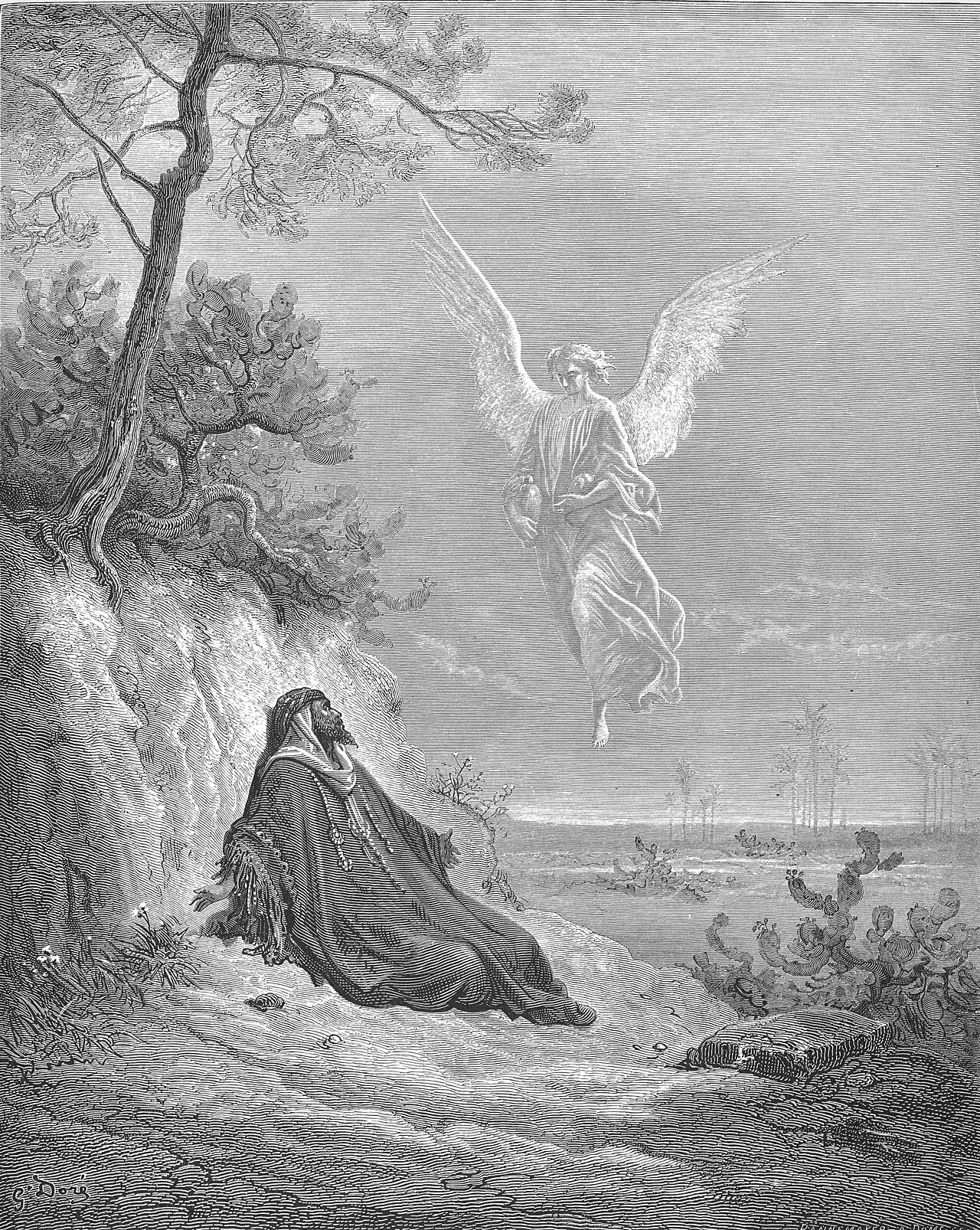
What doest thou here, Elijah
on 1 Kings 19:9-10
The question that opens Horeb is repeated word for word at verse thirteen after the whole demonstration of wind, earthquake and fire, and Elijah gives it the identical answer both times. His complaint runs four counts, jealousy for the Lord, Israel's forsaken covenant, thrown down altars, slain prophets, and his own claim, I even I only am left, though the caves Obadiah stocked in the previous chapter already say the count is off before the Lord answers it. The question is not an accusation but an invitation to name what has driven him this far.
This site's exposition
I am the only one left
John Wesley reads the words of Elijah as meaning the only prophet still pleading for the LORD in public, while the other prophets hid from the sword. Wesley finds no fault in the flight from Jezebel. The LORD answers the count at verse 18.
The record, by era
The Church Fathers1 voice
Then the word of the Lord came to him, saying, "What are you doing here, Elijah?" After reaching Horeb, the mountain of God, Elijah spent the night in a cave, and on the next day, when he heard the noise of God coming to him, …
The Puritans and the Awakening1 voice
And he said, I have been jealous for the Lord God of hosts,....
The Nineteenth Century3 voices
A commentator
Jamieson, Fausset & Brown1802–1910
Commentary Critical and Explanatory on the Whole Bible (1871)
proposed
In the solitude of Sinai, God appeared to instruct him. "What doest thou here, Elijah?" was a searching question addressed to one who had been called to so arduous and urgent a mission as his.
I have been very jealous for the Lord - The picture which he draws here of apostate Israel is very affecting: - 1. They have forsaken thy covenant - They have now cleaved to and worshipped other gods. 2. Thrown down thine altars - Endeavoured, as much as they possibly could, to abolish thy worship, and destroy its remembrance from the land. 3. And slain thy prophets - That there might be none to reprove their iniquity, or teach the truth; so that the restoration of the true worship might be impossible.
A commentator
Albert Barnes1798–1870
Notes, Explanatory and Practical, on the Old and New Testaments (1832-1869)
proposed
I, even I only, am left - The same statement as in 1Ki 18:22, but the sense is different. There Elijah merely said that he alone remained to execute the prophet’s office, which was true; here he implies that he is the only prophet left alive, whereas a hundred had been saved by Obadiah 1Ki 18:4.
How the passage was read
What the Jewish commentators add
They have demolished Your Altars. [I.e.,] the private altars that were built in the Name of Heaven, 5 See above:30 and Rashi there. for the altar of the Beis [Hamikdosh] was in Yerusholayim. 6 Eliyahu intimated that God should take vengeance against the Bnei Yisroel.—Ralbag
1 more on this passage, in their own words ▾
And a great wind. [Targum Yonoson rendered,] “a camp of angels of the wind.”
This section is reception history: how the passage was read and kept in the Jewish tradition. Where a reading parts from an essential of the Christian faith, the section says so at that point.
Texts and citation data: Sefaria; each excerpt follows its version’s licence. 3 further sources are cited on this chapter that carry no English text this site may quote or only restate the verse.
The words behind it
25 Hebrew wordsEvery Hebrew word of this verse in the order it stands, with what it means and the door to its own study. The last column counts the times a word stands in the whole Bible: the rarer the word, the more the places it appears belong together.
| Hebrew | Sound | Meaning | Word study | In the Bible |
|---|---|---|---|---|
| וַיֹּאמֶר֩ | vaiyomer | and he said | H559 → | 5305 times |
| קַנֹּ֨א | kano' | certainly <to be zealous> | H7065 → | 34 times |
| קִנֵּ֜אתִי | kineti | I have been zealous | H7065 → | 34 times |
| לַיהוָ֣ה׀ | layahweh | for Yahweh | H3068 → | 6520 times |
| אֱלֹהֵ֣י | ʾelohei | [the] God of | H430 → | 2601 times |
| צְבָא֗וֹת | tzevaot | hosts | H6635 → | 485 times |
| כִּֽי־ | ki- | for | H3588 → | 4482 times |
| עָזְב֤וּ | ʾazevu | they have forsaken | H5800 → | 215 times |
| בְרִֽיתְךָ֙ | veritekha | covenant your | H1285 → | 284 times |
| בְּנֵ֣י | benei | [the] people of | H1121 → | 4930 times |
| יִשְׂרָאֵ֔ל | yisrael | Israel | H3478 → | 2507 times |
| אֶת־ | ʾet- | <obj.> | H853 → | 10935 times |
| מִזְבְּחֹתֶ֣יךָ | mizbechoteikha | altars your | H4196 → | 401 times |
| הָרָ֔סוּ | harasu | they have torn down | H2040 → | 43 times |
| וְאֶת־ | veet | and <obj.> | H853 → | 10935 times |
| נְבִיאֶ֖יךָ | nevieikha | prophets your | H5030 → | 314 times |
| הָרְג֣וּ | haregu | they have killed | H2026 → | 167 times |
| בֶחָ֑רֶב | vecharev | with the sword | H2719 → | 413 times |
| וָֽאִוָּתֵ֤ר | vaivater | and I am left | H3498 → | 106 times |
| אֲנִי֙ | ʾani | I | H589 → | 874 times |
| לְבַדִּ֔י | levadi | to alone me | H905 → | 200 times |
| וַיְבַקְשׁ֥וּ | vayvakshu | and they have sought | H1245 → | 225 times |
| אֶת־ | ʾet- | <obj.> | H853 → | 10935 times |
| נַפְשִׁ֖י | nafshi | life my | H5315 → | 754 times |
| לְקַחְתָּֽהּ׃ | lekachtah | to take away it | H3947 → | 966 times |
וַיֹּאמֶר֩and he said
vaiyomerH559 →5305 times
קַנֹּ֨אcertainly <to be zealous>
kano'H7065 →34 times
קִנֵּ֜אתִיI have been zealous
kinetiH7065 →34 times
לַיהוָ֣ה׀for Yahweh
layahwehH3068 →6520 times
אֱלֹהֵ֣י[the] God of
ʾeloheiH430 →2601 times
צְבָא֗וֹתhosts
tzevaotH6635 →485 times
כִּֽי־for
ki-H3588 →4482 times
עָזְב֤וּthey have forsaken
ʾazevuH5800 →215 times
בְרִֽיתְךָ֙covenant your
veritekhaH1285 →284 times
בְּנֵ֣י[the] people of
beneiH1121 →4930 times
יִשְׂרָאֵ֔לIsrael
yisraelH3478 →2507 times
אֶת־<obj.>
ʾet-H853 →10935 times
מִזְבְּחֹתֶ֣יךָaltars your
mizbechoteikhaH4196 →401 times
הָרָ֔סוּthey have torn down
harasuH2040 →43 times
וְאֶת־and <obj.>
veetH853 →10935 times
נְבִיאֶ֖יךָprophets your
nevieikhaH5030 →314 times
הָרְג֣וּthey have killed
hareguH2026 →167 times
בֶחָ֑רֶבwith the sword
vecharevH2719 →413 times
וָֽאִוָּתֵ֤רand I am left
vaivaterH3498 →106 times
אֲנִי֙I
ʾaniH589 →874 times
לְבַדִּ֔יto alone me
levadiH905 →200 times
וַיְבַקְשׁ֥וּand they have sought
vayvakshuH1245 →225 times
אֶת־<obj.>
ʾet-H853 →10935 times
נַפְשִׁ֖יlife my
nafshiH5315 →754 times
לְקַחְתָּֽהּ׃to take away it
lekachtahH3947 →966 times
A shaded row is a word that stands 400 times or fewer in the Bible.
The walk
8 stopsEach card is a verse this one points to, and under it the verses that one points to in turn. Where several paths arrive at the same place, that place is listed first: the text keeps returning to it.
Through
Exodus 20:5You shall not bow down to them or worship them; for I, the LORD your God, am a jealous God, visiting the iniquity of the fathers on their children to the third and fourth…
it leads to
- Deuteronomy 5:9
You shall not bow down to them or worship them; for I, the LORD your God, am a jealous God, visiting the iniquity of the fathers on their children to the third and fourth…
- Numbers 14:18
‘The LORD is slow to anger and abounding in loving devotion, forgiving iniquity and transgression. Yet He will by no means leave the guilty unpunished; He will visit the iniquity of the fathers upon…
- Deuteronomy 4:24
For the LORD your God is a consuming fire, a jealous God.
Reached by 2 separate paths from here.
- Exodus 34:14
For you must not worship any other god, for the LORD, whose name is Jealous, is a jealous God.
- Joshua 24:19
But Joshua said to the people, “You are not able to serve the LORD, for He is a holy God; He is a jealous God; He will not forgive your rebellion or your sins.
- Deuteronomy 5:9
Through
1 Kings 18:30Then Elijah said to all the people, “Come near to me.” So all the people approached him, and he repaired the altar of the LORD that had been torn down.
it leads to
- 1 Kings 19:14
“I have been very zealous for the LORD, the God of Hosts,” he replied, “but the Israelites have forsaken Your covenant, torn down Your altars, and killed Your prophets with the sword. I am…
Reached by 2 separate paths from here.
- 2 Chronicles 33:16
Then he restored the altar of the LORD and sacrificed peace offerings and thank offerings on it, and he told Judah to serve the LORD, the God of Israel.
- 1 Kings 19:14
Through
Exodus 34:14For you must not worship any other god, for the LORD, whose name is Jealous, is a jealous God.
it leads to
- Deuteronomy 32:21
They have provoked My jealousy by that which is not God; they have enraged Me with their worthless idols. So I will make them jealous by those who are not a people; I will…
- Deuteronomy 32:21
Where this verse is studied
On this page
Studies4
About 1 Kings
This page draws on Adam Clarke, Commentary on the Bible; Albert Barnes, Notes, Explanatory and Practical, on the Old and New Testaments (1832-1869); Ephrem the Syrian, ON THE FIRST BOOK OF KINGS 19:9; Jamieson, Fausset & Brown, Commentary Critical and Explanatory on the Whole Bible; John Gill, Exposition of the Old Testament (1748-1763) and John Wesley, Explanatory Notes upon the Old Testament.