
Subject
The judges
The spiral years: everyone did what was right in his own eyes.
Part of Where in the story
On this page, 7 sections
The one drawing
Across the canon
10 passages
Where Scripture speaks
The passages this subject stands on, in canon order.
Then the LORD raised up judges, who saved them from the hands of those who plundered them.But when the judge died, the Israelites became even more corrupt than their fathers, going after other gods to serve them and bow down to them. They would not give up their evil practices and stubborn ways.Now Deborah, a prophetess, the wife of Lappidoth, was judging Israel at that time.And the angel of the LORD appeared to Gideon and said, “The LORD is with you, O mighty man of valor.”Then the LORD said to Gideon, “You have too many people for Me to deliver Midian into their hands, lest Israel glorify themselves over Me, saying, ‘My own hand has saved me.’For behold, you will conceive and give birth to a son. And no razor shall come over his head, because the boy will be a Nazirite to God from the womb, and he will begin the deliverance of Israel from the hand of the Philistines.”Samson said, “Let me die with the Philistines.” Then he pushed with all his might, and the temple fell on the lords and all the people in it. So in his death he killed more than he had killed in his life.In those days there was no king in Israel; everyone did what was right in his own eyes.In those days there was no king in Israel; everyone did what was right in his own eyes.In the days when the judges ruled, there was a famine in the land. And a certain man from Bethlehem in Judah, with his wife and two sons, went to reside in the land of Moab.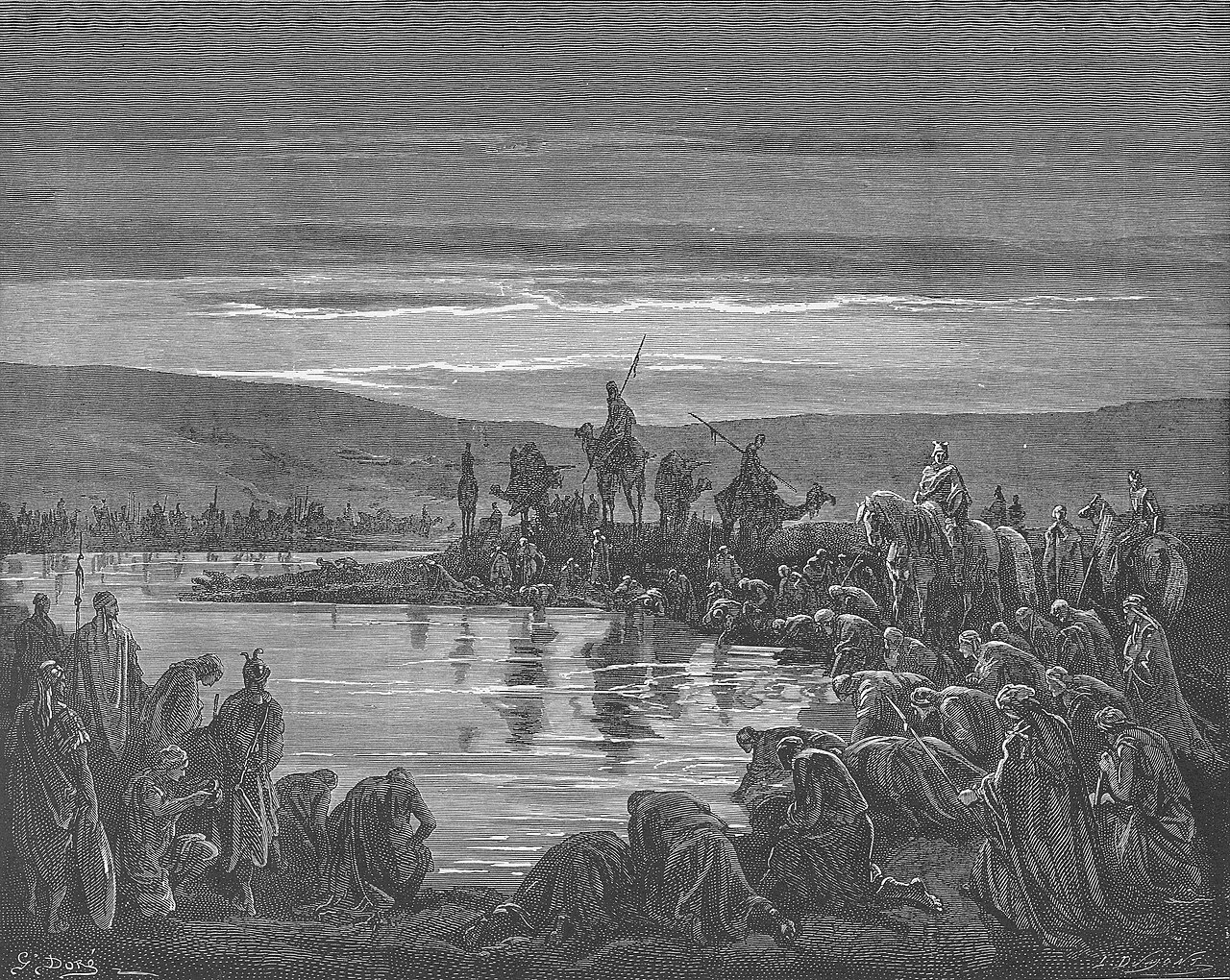
The judges in Scripture, in full
The book of Judges covers roughly three hundred years of Israel's history, and it tells that history with a pattern so consistent that readers can predict what happens next almost every time. Israel forgets God and worships the gods of the nations around them. An enemy oppresses them. Israel cries out. God raises up a deliverer (a judge) who rescues them. Peace lasts for a while. Then the cycle starts over, usually worse than before.
The book states its own explanation for this pattern early on: the LORD raised up judges, which delivered them out of the hand of those that spoiled them (Judges 2:16). But the very next verses admit the cycle did not fix anything permanently; each generation 'corrupted themselves more than their fathers' (Judges 2:19). The deliverances were real, but they were temporary. Judges were not kings who could build lasting institutions; they were emergency rescuers raised up for a single crisis.
The judges themselves are a strikingly mixed group. Deborah, a prophetess, judged Israel and led armies into battle at a time when no man had stepped up to lead (Judges 4:4). Gideon was called from hiding in a winepress and told, 'The LORD is with thee, thou mighty man of valour' (Judges 6:12), though he barely believed it himself.
God then deliberately shrank Gideon's army from thousands down to three hundred men, so that when the victory came, Israel could not say their own strength had saved them (Judges 7:2). Samson, set apart as a Nazirite before he was even born (Judges 13:5), became the most gifted and most flawed of them all: a man of enormous strength and enormous weakness, whose final act killed more of Israel's enemies in his death than in his entire life (Judges 16:30).
None of these people were perfect leaders, and the book never pretends otherwise. It is refreshingly honest about their failures alongside their victories. What holds the whole book together is not the quality of the judges but the patience of God, who kept answering a people who kept forgetting Him.
The book's own verdict on the era comes twice, once early and once at the very end: 'In those days there was no king in Israel, but every man did that which was right in his own eyes' (Judges 17:6; 21:25). That repeated line explains both the chaos of the period and what the book is quietly waiting for: not simply better judges, but a king who would not fail the way every judge eventually did.
The book of Ruth is set 'in the days when the judges ruled' (Ruth 1:1), and it tells a very different kind of story from the same era: quiet faithfulness instead of national crisis, ending in a genealogy that leads to King David, and eventually to Jesus. Even inside the spiral years, grace was already writing toward something better: a King who would not need replacing, whose kingdom would not need rescuing every few decades, because He would never let His people go the way Israel kept letting Him go.
3 voices
What teachers have said
He gave them judges, men qualified for public service, and, by an immediate impulse upon their spirits, called to it, pro re nata--as the occasion required. Though they were a provoking people, and were never in servitude but their sin brought them to it, yet upon their petition a deliverer was raised up.
Matthew Henry · Commentary on the Whole Bible, 1710
But all these calamities were designed only as chastisements--a course of correctional discipline by which God brought His people to see and repent of their errors; for as they returned to faith and allegiance, He "raised up judges" (Jud 2:16).
Jamieson, Fausset & Brown · Commentary Critical and Explanatory on the Whole Bible, 1871
The whole book of Judges is a history of God’s mercies, and their rebellions.
Adam Clarke · Commentary on the Bible
Written before 1832.
Where it leads
Everything the site holds on the judges
On this page
Studies1
The words underneath
Each card is one Hebrew or Greek word behind the judges. It gives the sense, the count across the canon, and the number in Strong's 1890 concordance.
soter: savior
Greek · G4990Strong's entry: a deliverer, i.e. God or Christ
each judge God raised up was a soter for Israel.
24 times in the New Testament · soter, in full →
lytrotes: redeemer
Greek · G3086Strong's entry: a redeemer (figuratively)
the judges foreshadowed the ultimate Deliverer, Jesus Christ.
1 times in the New Testament · lytrotes, in full →
Where in the story
The subjects beside it
On this page