
Subject
Between the Testaments
The four hundred years your Bible skips: empires, Maccabees, sects.
Part of Where in the story
On this page, 5 sections
The one drawing
Across the canon
Old Testament
New Testament
The other 61 books of the canon carry none.
9 passages
Where Scripture speaks
The passages this subject stands on, in canon order.
“Behold, I will send My messenger, who will prepare the way before Me. Then the Lord whom you seek will suddenly come to His temple—the Messenger of the covenant, in whom you delight—see, He is coming,” says the LORD of Hosts.Behold, I will send you Elijah the prophet before the coming of the great and awesome Day of the LORD.In all, then, there were fourteen generations from Abraham to David, fourteen from David to the exile to Babylon, and fourteen from the exile to the Christ.After Jesus was born in Bethlehem in Judea, during the time of King Herod, Magi from the east arrived in Jerusalem,In the time of Herod king of Judea there was a priest named Zechariah, who belonged to the priestly division of Abijah, and whose wife Elizabeth was a daughter of Aaron.Now there was a man in Jerusalem named Simeon, who was righteous and devout. He was waiting for the consolation of Israel, and the Holy Spirit was upon him.There was also a prophetess named Anna, the daughter of Phanuel, of the tribe of Asher, who was well along in years. She had been married for seven years,But when the time had fully come, God sent His Son, born of a woman, born under the law,On many past occasions and in many different ways, God spoke to our fathers through the prophets.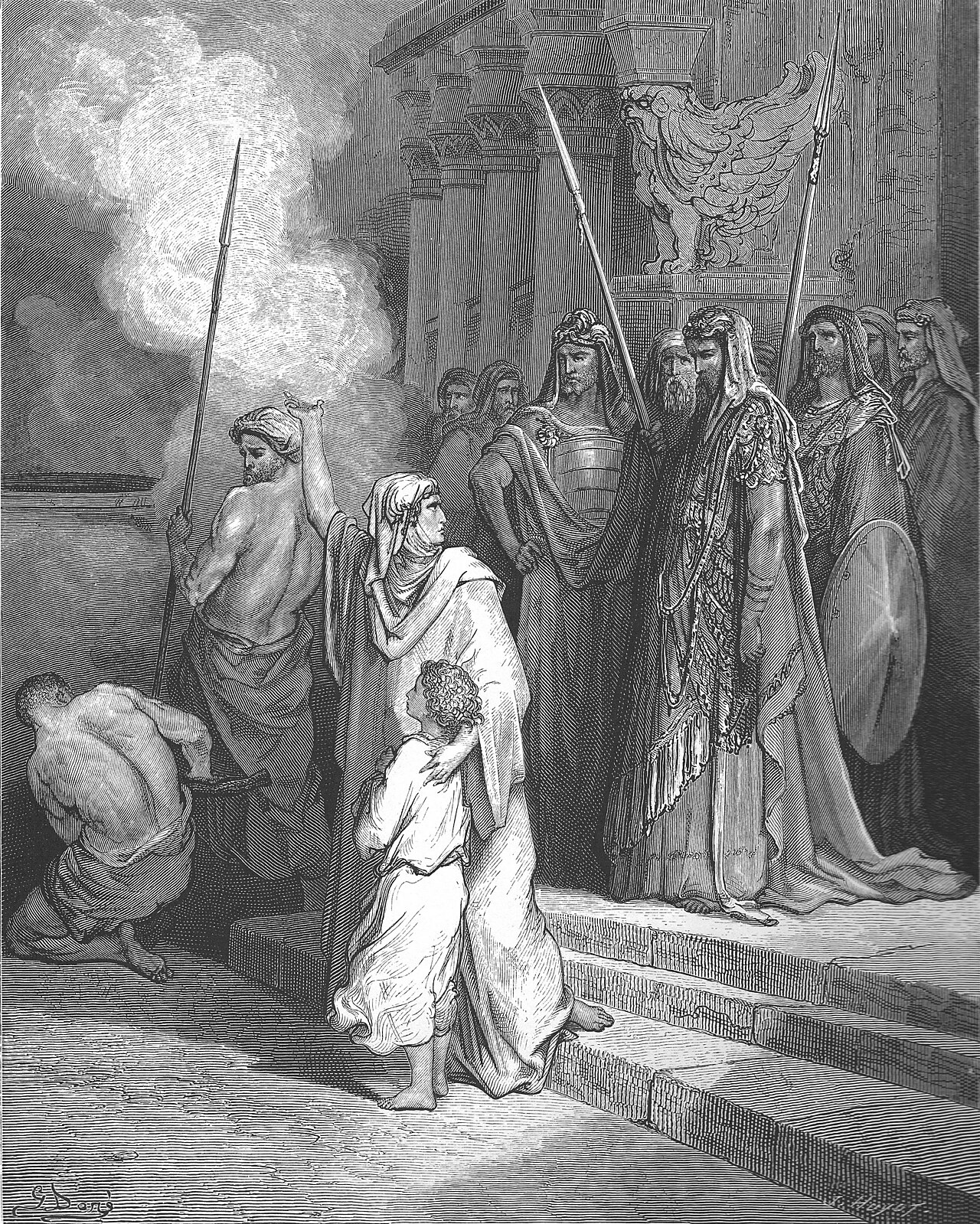
Between the Testaments in Scripture, in full
Between the last verse of Malachi and the first chapter of Matthew lies roughly four hundred years where the Bible falls silent. No new prophet stands up. No new scripture is written and later received into the canon. Readers sometimes skip straight from the Old Testament to the New without noticing the gap, but the years between the testaments shaped the very world Jesus was born into.
When Malachi's final words were spoken, Judah lived under Persian rule. By the time the angel appeared to Zechariah in the temple (Luke 1:5), everything had changed. Alexander the Great swept through the region, spreading Greek language and culture. After his early death his empire split among his generals, and Judea became a prize fought over by the Ptolemies of Egypt and the Seleucids of Syria.
The turning point came under the Seleucid king Antiochus IV, who tried to stamp out Jewish worship by force: banning the Sabbath, outlawing circumcision, and setting up pagan sacrifice in the Jerusalem temple. A priestly family known as the Maccabees led a revolt against him. Against staggering odds they won, and for about a century Judea governed itself again under their descendants, the Hasmonean dynasty. That victory is still remembered every year at Hanukkah, the feast Jesus Himself attended (John 10:22).
Independence did not last. Roman armies arrived in 63 BC, and by the time Jesus was born the land answered to Rome and to Rome's chosen client king, Herod (Matthew 2:1). It is this Roman and Herodian world (census registers, occupying soldiers, a puppet throne) that the Gospels open into.
The silent centuries also produced the religious groups the Gospels take for granted. Pharisees emerged as teachers devoted to careful obedience of the law. Sadducees, drawn from priestly and aristocratic families, controlled the temple and denied a bodily resurrection. Zealots dreamed of armed revolt against Rome. None of these groups existed in the Old Testament; all of them appear fully formed the moment the New Testament begins, because they were shaped in the years between.
Why the silence? Scripture never explains it directly, but the shape of the story suggests an answer. The last word God had spoken through a prophet was a warning of curse (Malachi 4:6). The next word He would speak was a Person. Hebrews opens by naming exactly this contrast: in past times God spoke through the prophets, but now He has spoken through His Son (Hebrews 1:1-2). Paul describes the timing the same way; Christ came when the fullness of time was come (Galatians 4:4), not a moment early or late.
So the quiet years were not empty. Empires rose and fell to set the political stage. A struggle for Jewish survival preserved the very people into whom Messiah would be born. Language, roads, and religious expectation were all prepared, unnoticed, until the day Gabriel stood in a small-town home and told a young woman she would carry the Son of God. The wait that felt endless from the ground had, from heaven's side, always been on schedule.
2 voices
What teachers have said
It is deeply suggestive that the last utterance from heaven for four hundred years before Messiah was the awful word "curse." Messiah's first word on the mount was "Blessed" (Mt 5:3). The law speaks wrath; the Gospel, blessing.
Jamieson, Fausset & Brown · Commentary Critical and Explanatory on the Whole Bible, 1871
Answer me, O Jews. You were in Babylon: there you had prophets, Daniel, Ezekiel: and indeed you were idolaters. For seventy years you were in captivity, and afterward you came back into your own land. Behold, now it is four hundred years: why has no prophet been sent to you?
Jerome · Homily 35, on Psalm 108
Written before 420.
Where in the story
The subjects beside it
On this page