
Matthewchapter 13
58 verses · Matthew, by tradition · AD 50 to 65 · The Gospels
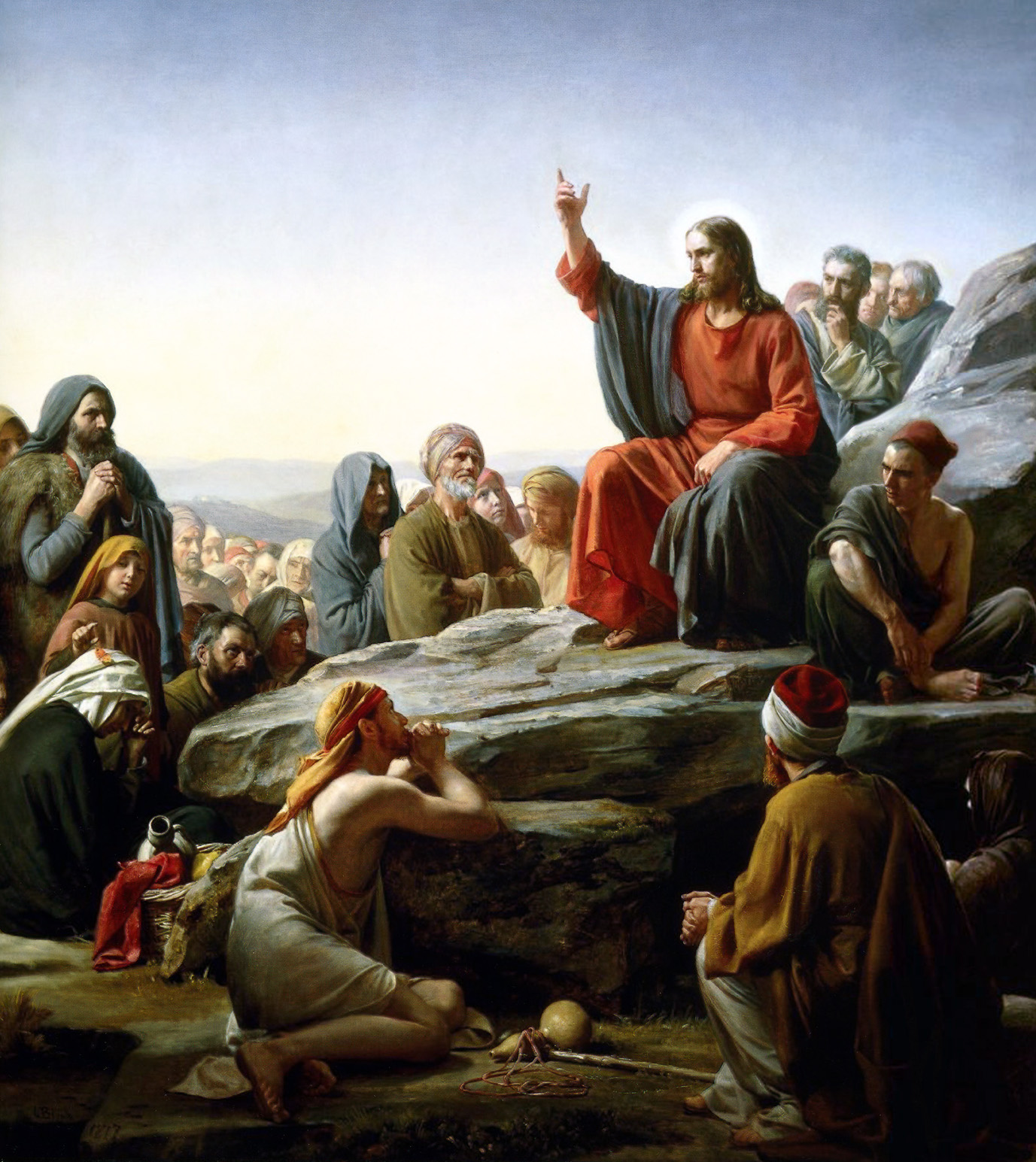
That same day Jesus went out of the house and sat by the sea.
Introduction
Matthew, by tradition, The Gospels, Matthew Overview.
This chapter holds the third of the five long teaching sections in Matthew's Gospel, and it comes after the leaders have turned against Jesus. He now teaches the crowds in stories drawn from fields, kitchens and fishing boats, all familiar to working people in Galilee. Only the disciples receive the explanations. Listen for how many of the stories begin with the same words about the kingdom. Listen also for what the stories say about timing, growth and the end of the age. Read it as teaching on how God's rule comes into a world that resists it.
Context
- Who
- Jewish readers who farmed, fished, baked, and traded for a living
- What
- The parables of the kingdom, from the sower to the net, with Jesus' reason for speaking in parables and His rejection in His hometown.
- Where
- Beside the Sea of Galilee, teaching from a boat to crowds on the shore, then in a house, and last in the synagogue of His hometown, Nazareth.
- When
- The Galilean ministry of Jesus, about AD 28 to 29 on the common dating, on the same day as the dispute of chapter 12 by Matthew's own link.
- Why
- To show how the kingdom comes, small and hidden at first and mixed with evil until the judgment, and why many who hear it fail to understand.
Historical context
Galilean sowing worked in the order the parable describes. The farmer broadcast seed by hand across the whole field and ploughed it in afterwards, so seed genuinely did land on the beaten footpaths that crossed every field, on the thin skin of soil over limestone shelf where roots could not go deep, and among the thorn roots left in the ground from last year.
Show the rest of the historical context, 3 more paragraphs
The weed in the second parable is a specific plant. Darnel looks almost exactly like wheat until the heads form, and its roots tangle with the wheat's, so pulling it early tears up the crop. Sowing it in an enemy's field was a real act of sabotage, serious enough that Roman law addressed it.
The baking picture is bigger than it sounds. Three measures of flour is around forty or fifty pounds, a batch for a village, not a family, and leaven works invisibly through the whole of it.
The last three parables turn on property and trade. Finding valuables buried in a field was common enough in a land repeatedly overrun by armies, and the legal question of who owned such treasure was actively debated, which is why the man buys the field. Pearls were among the most valuable goods in the Roman world, above gold. And the dragnet was the lake's largest net, hauled to shore full of everything, edible and not, to be sorted on the beach.
Significance
Matthew's readers were a small movement being told that if this were really God's kingdom it would look bigger. These parables answer exactly that: it starts like the smallest seed in the garden, it grows quietly like leaven, and the sorting comes at the end, not now.
Show the rest of the significance, 1 more paragraph
The rejection at Nazareth that closes the chapter made the same point painfully. If his own town, where they knew his mother and his brothers by name, took offence at him, then a Jewish believer's family trouble was not a sign that he had backed the wrong man.
The heads below are this chapter's scenes. The numbered points under each are its verses.
The Sower and the Four Soils
Matthew 13:1-2
went out of the house: “That same day” ties this teaching to the family scene that closes chapter 12. Jesus teaches from a boat “while all the people stood on the shore,” the slope of the lake carrying his voice. For the first time in Matthew he teaches the crowd only in parables.
Matthew 13:1
“On that day Jesus went out of the house and sat by the sea. And great crowds gathered around him, so that he got into a boat and sat down. And the whole crowd stood on the beach. The people couldn't enter Jesus' house or be where the apostles were hearing the mysteries. Therefore, the compassionate and merciful Lord goes out of his house and sits by the sea of this world, so that great crowds gather around him and hear on the beach what they do not deserve to hear inside.”
Jerome · written before 420 · Commentary on Matthewpatristic
1 more voice on this verseWhat preachers and commentators have said about this verse, in their own words.
Matthew 13:1
“The sea-side - This was the Sea of Tiberias. The multitude stood on the shore near to him, so that he could be easily heard. He went into a ship - that is, a boat; and sat down to address them. Few spectacles could be more interesting than a vast crowd on the hanks of a smooth and tranquil sea - an emblem of his instructions - and the Son of God addressing them on the great interests of eternity.”
He got into a boat and sat down: Hilary of Poitiers notes that Jesus sat in the boat as he was about to speak in parables. The crowds stood outside like simple followers. Thomas Aquinas adds that open teaching lets many hear and profit.
Matthew 13:2
“Into a ship - Το πλοιον, The vessel or boat. Mr. Wakefield supposes (which is very likely) that a particular vessel is uniformly specified, which seems to have been kept on the lake for the use of Christ and his apostles: it probably belonged to some of the fishermen, (see Mat 4:22), who, he thinks, occasionally, at least, followed their former occupation. See Joh 21:3. The thought of pious Quesnel on this verse should not be neglected. We see here a representation of the Church, which consists of the people united to their pastors.”
Adam Clarke · Commentary on the Bible (1810-1826)evangelical
Matthew 13:3-9
“A farmer went out to sow his seed” pictures the farming of the day, when seed was scattered before plowing. The path, the rocky ground with little soil and the thorns each claim part of the seed. The last soil alone yields “a hundredfold, sixtyfold, or thirtyfold” after three losses.
Matthew 13:3
“And he spake many things unto them in parables, saying, &c.--These parables are SEVEN in number; and it is not a little remarkable that while this is the sacred number, the first FOUR of them were spoken to the mixed multitude, while the remaining THREE were spoken to the Twelve in private--these divisions, four and three, being themselves notable in the symbolical arithmetic of Scripture.”
Jamieson, Fausset & Brown · Commentary Critical and Explanatory on the Whole Bible (1871)reformed
2 more voices on this verse
Matthew 13:3
“And it is to be noted, that He spake not all things to them in parables, but many things, for had He spoken all things in parables, the people would have departed without benefit. He mingles things plain with things dark, that by those things which they understand they may be incited to get knowledge of the things they understand not. The multitude also is not of one opinion, but of divers wills in divers matters, whence He speaks to them in many parables, that each according to their several dispositions may receive some portion of His teaching.”
Jerome · written before 420 · Catena Aurea by Aquinaspatristic
Matthew 13:3
“In parables - The word “parable” is derived from a Greek word signifying “to compare together,” and denotes a similitude taken from a natural object to illustrate a spiritual or moral subject. It is a narrative of some fictitious or real event, in order to illustrate more clearly some truth that the speaker wished to communicate. In early ages it was much used. Pagan writers, as Aesop, often employed it. In the time of Christ it was in common use. The prophets had used it, and Christ employed it often in teaching his disciples.”
some seed fell along the path: Theophylact describes the path as a mind trodden hard and never tilled, where the word lies on the surface until it is snatched away. John Wesley notes that the hindrances come in the order they occur in life. Verse 19 names the birds as the evil one.
Matthew 13:4
“And while he sowed, some seeds fell by the highway side, and the birds came and devoured them - It is observable, that our Lord points out the grand hindrances of our bearing fruit, in the same order as they occur. The first danger is, that the birds will devour the seed. If it escape this, there is then another danger, namely, lest it be scorched, and wither away.”
John Wesley · Explanatory Notes upon the New Testament (1755)evangelical
1 more voice on this verse
Matthew 13:4
“The place where Christ's hearers now stood represented the characters of most of them, the sand on the sea-shore, which was to the seed like the highway ground. Observe First, What kind of hearers are compared to the highway ground; such as hear the word and understand it not; and it is their own fault that they do not.”
Matthew Henry · Commentary on the Whole Bible (1707-1721)puritan
rocky ground: Adam Clarke describes it as thin earth over rock. Matthew Henry notes that a storm of persecution follows a fair gale of opportunity, and it tries who received the word sincerely. Cyril of Alexandria applies the rock to people who take little care of the faith they have.
Matthew 13:5
“ON another occasion I hope to preach from the words, "because they had no root," but, at this time, my subject is, "They sprang up, because they had no deepness of earth." Every farmer knows the wonderful effect of heat below the soil, how quickly it makes things grow. I do not gather that this was a stony piece of ground, but that it had a mass of stone not far from the surface.”
Charles Spurgeon · written before 1892 · The Metropolitan Tabernacle Pulpit, Sermon No. 2844: “The Seed Upon a Rock” (lightly modernized text, CCEL edition)Particular Baptist
1 more voice on this verse
Matthew 13:5
“Some fell upon stony places,.... Such a place as the Jews call חולסית, a barren, stony place, a place from whence, they say, they take stones, and בית סלע, and which אינו ראוי לזריעה, "is not fit for sowing" (d); and such were those places and spots of ground, that some of these seeds fell upon; and design such hearers, in whom the natural hardness of their hearts continues, and who remain unbroken by the word, and are without any true sense of sin, and repentance for it.”
they had no root: Matthew Henry observes that the same sun that warms a rooted plant burns up one without root. Theophylact takes the rising sun as temptations, which show people as they truly are. Thomas Aquinas says trouble reveals what a person loves most.
fell among thorns: Adam Clarke pictures ploughed ground with the brambles left standing. Matthew Henry names the thorns as the cares of this world, which came in with sin. Gregory the Dialogist adds riches, which delight at first and then tear the mind with anxious care.
Matthew 13:7
“For who would ever have believed me if I had wished to interpret thorns as riches, especially since the former prick while the latter delight? And yet they are thorns, because they tear the mind with the prickings of their thoughts, and when they drag it all the way to sin, they cause it to bleed as if by an inflicted wound. These, in this passage, as another evangelist attests, the Lord calls not simply riches, but deceitful riches, and rightly so.”
Gregory the Dialogist · written before 604 · Forty Gospel Homilies, Homily 15patristic
Theophylact counts three parts of the seed lost and one saved, and says the parable ends on the good ground to give hope of repentance. Adam Clarke describes that ground as deep earth, well ploughed and cleared of weeds. John Gill sees honest hearers made so by the Spirit.
He who has ears: Gregory the Dialogist observes that everyone present had bodily ears, so the call looks for the ears of the heart. Remigius of Rheims adds that such ears understand and do what is commanded. The disciples' question follows in verse 10.
Matthew 13:9
“Who hath ears to hear, let him hear. Not externally only, but internally; he that has ears given him to hear, so as to understand, let him make use of them, and seriously consider of, and diligently attend to the use and importance of this parable. It is a way of speaking used by Christ, when anything of moment was delivered, and not so easy to be understood, on purpose to quicken the attention of his auditors, and stir up in them a desire of understanding what was said; which effect this had upon his disciples; see Mar 4:10.”
Matthew 13:10-13
Jesus answers that the knowledge of the mysteries “has been given to you, but not to them”. The crowd had refused the plain teaching, so parables now hide from them what the disciples who ask receive. The words “Whoever has will be given more” state the principle in small.
Matthew 13:10
“Christ, in these verses, gives a “reason” why he used this manner of instruction. See also Mar 4:10-12; Luk 8:9-10. Mat 13:11 The mysteries of the kingdom - The word “mystery,” in the Bible, properly means a thing that is “concealed,” or that “has been concealed.” It does not mean that the thing was “incomprehensible,” or even difficult to be understood. The thing might be “plain” enough if revealed, but it means simply that it “had” not been before made known.”
mysteries of the kingdom of heaven: Jamieson, Fausset and Brown define the mysteries as the gospel truths that only the more advanced disciples could grasp, and they only in part. Matthew Henry lists among them the incarnation, justification and sanctification. Remigius of Rheims identifies them as those outside who refused to believe.
Matthew 13:11
“To you, who have, it is given to know the mysteries of the kingdom of heaven - The deep things which flesh and blood cannot reveal, pertaining to the inward, present kingdom of heaven. But to them who have not, it is not given - Therefore speak I in parables, that ye may understand, while they do not understand.”
John Wesley · Explanatory Notes upon the New Testament (1755)evangelical
2 more voices on this verse
Matthew 13:11
“What man, then, of sound mind can possibly suppose that they were ignorant of anything, whom the Lord ordained to be masters (or teachers), keeping them, as He did, inseparable (from Himself) in their attendance, in their discipleship, in their society, to whom, "when they were alone, He used to expound" all things which were obscure, telling them that "to them it was given to know those mysteries," which it was not permitted the people to understand?”
Tertullian · written before 220 · The Prescription Against Hereticspatristic
Matthew 13:11
“It is given unto you to know the mysteries, etc. - By mysteries, here, we may understand not only things concerning the scheme of salvation, which had not yet been revealed; but also the prophetic declarations concerning the future state of the Christian Church, expressed in the ensuing parables.”
Adam Clarke · Commentary on the Bible (1810-1826)evangelical
Whoever has will be given more: John Wesley reads whoever has as the one who puts the grace to use, and receives more in proportion. Theophylact reads it of zeal: the eager learner gains knowledge, and the careless one loses even what he imagines he has. Remigius of Rheims applies it to the desire to read.
Matthew 13:12
“Whosoever hath, to him shall be given - This is an allusion to a common custom in all countries: he who possesses much or is rich, to such a person, presents are ordinarily given. Whosoever hath not, from him shall be taken away even that he hath - That is, the poor man: he that has little may be easily made a prey of, and so lose his little. This is a proper sense of the word εχειν in sacred and profane writers.”
Adam Clarke · Commentary on the Bible (1810-1826)evangelical
2 more voices on this verse
Matthew 13:12
“Whosoever hath - That is, improves what he hath, uses the grace given according to the design of the giver; to him shall be given - More and more, in proportion to that improvement. But whosoever hath not - Improves it not, from him shall be taken even what he hath - Here is the grand rule of God's dealing with the children of men: a rule fixed as the pillars of heaven.”
John Wesley · Explanatory Notes upon the New Testament (1755)evangelical
Matthew 13:12
“Two great general principles are conspicuous in the Gospel. The first is that God gives of His Grace to the empty— "He has filled the hungry with good things, and the rich He has sent away empty." The second principle is that where God has given a measure of Grace He is known to give more—"He gives more Grace." There is no stint with the Lord of Love and no limit to the abundance of Divine Grace which those who come to Him may receive.”
Jamieson, Fausset and Brown note that Mark and Luke state as God's purpose what Matthew states as a human fact. John Chrysostom answers that their blindness came by choice, since natural blindness would call for their eyes to be opened. Theodore of Mopsuestia says parables make unseen things seen.
Matthew 13:13
“Therefore speak I to them in parables - On this account, viz. to lead them into a proper knowledge of God. I speak to them in parables, natural representations of spiritual truths, that they may be allured to inquire, and to find out the spirit, which is hidden under the letter; because, seeing the miracles which I have wrought, they see not, i.e. the end for which I have wrought them; and hearing my doctrines, they hear not, so as to profit by what is spoken; neither do they understand, ουδε συνιουσι, they do not lay their hearts to it.”
Adam Clarke · Commentary on the Bible (1810-1826)evangelical
1 more voice on this verse
Matthew 13:13
“Note, [1.] There are many that see the gospel light, and hear the gospel sound, but it never reaches their hearts, nor has it any place in them. [2.] It is just with God to take away the light from those who shut their eyes against it; that such as will be ignorant, may be so; and God's dealing thus with them magnifies his distinguishing grace to his disciples.”
Matthew Henry · Commentary on the Whole Bible (1707-1721)puritan
Matthew 13:14-15
the prophecy of Isaiah is fulfilled: “In them the prophecy of Isaiah is fulfilled” introduces Isaiah 6:9-10, quoted nearly word for word from the prophet’s call. Matthew uses it to describe his own generation, which repeats the hardened response Isaiah met. The words “this people’s heart has grown callous” name a dullness the people chose.
Matthew 13:14
“In them is fulfilled - Αναπληρουται, Is Again fulfilled: this proper meaning of the Greek word has been generally overlooked. The evangelist means, that as these words were fulfilled in the Jews, in the time of the Prophet Isaiah, so they are now again fulfilled in these their posterity, who exactly copy their fathers example. These awful words may be again fulfilled in us, if we take not warning by the things which these disobedient people have suffered.”
Adam Clarke · Commentary on the Bible (1810-1826)evangelical
2 more voices on this verse
Matthew 13:14
“It is quoted from Isa. vi. The evangelical prophet that spoke most plainly of gospel grace, foretold the contempt of it, and the consequences of that contempt. It is referred to no less than six times in the New Testament, which intimates, that in gospel times spiritual judgments would be most common, which make least noise, but are most dreadful.”
Matthew Henry · Commentary on the Whole Bible (1707-1721)puritan
Matthew 13:14
“And in them is fulfilled--rather, "is fulfilling," or "is receiving its fulfilment." the prophecy of Esaias, which saith-- (Isa 6:9, 10 --here quoted according to the Septuagint).”
Jamieson, Fausset & Brown · Commentary Critical and Explanatory on the Whole Bible (1871)reformed
Cross references
Matthew 13:14
- QuotingIsaiah 6:9“And He replied: “Go and tell this people, ‘Be ever hearing, but never understanding; be ever seeing, but never perceiving.’”
'By hearing ye shall hear, and shall not understand' (parables rationale; most-quoted OT text in NT)
heart has grown callous: John Gill explains the callous heart as a heart grown fat and dull, unable to take in what the eyes saw. Jerome reads the closed eyes as their own wilful act, so the dullness came by choice. Matthew quotes Isaiah 6:10 here.
Matthew 13:15
“Heart is waxed gross - Επαχυνθη, is become fat - inattentive stupid, insensible. They hear heavily with their ears - are half asleep while the salvation of God is preached unto them. Their eyes they have closed - Totally and obstinately resisted the truth of God, and shut their eyes against the light. Lest - they should see, etc. - Lest they should see their lost estate, and be obliged to turn unto God, and seek his salvation. His state is truly deplorable who is sick unto death, and yet is afraid of being cured.”
Adam Clarke · Commentary on the Bible (1810-1826)evangelical
Matthew 13:16-17
blessed are your eyes because they see: “But blessed are your eyes because they see” turns to the disciples’ privilege. The “many prophets and righteous men” include Abraham, Isaiah and every servant who waited for the Messiah’s day. What patriarchs and prophets foresaw by faith, the disciples now watch happen in front of them.
Matthew 13:16
“Now this Christ speaks of, [1.] As a blessing; " Blessed are your eyes for they see, and your ears for they hear; it is your happiness, and it is a happiness for which you are indebted to the peculiar favour and blessing of God." It is a promised blessing, that in the days of the Messiah the eyes of them that see shall not be dim, Isa. xxxii.”
Matthew Henry · Commentary on the Whole Bible (1707-1721)puritan
many prophets and righteous men longed to see: Matthew Henry says the prophets longed to see the Consolation of Israel, and the fulness of time had yet to come. Jamieson, Fausset and Brown note that Luke 10:24 has prophets and kings in the same saying. Hilary of Poitiers calls this the blessedness of the apostolic times.
Matthew 13:17
“Many prophets and righteous men - These lived by and died in the faith of the promised Messiah: the fullness of the time was not then come for his manifestation in the flesh. See also on Mat 13:11 (note).”
Adam Clarke · Commentary on the Bible (1810-1826)evangelical
1 more voice on this verse
Matthew 13:17
“In Lu 10:23, 24, where the same saying is repeated on the return of the Seventy--the words, instead of "many prophets and righteous men," are "many prophets and kings"; for several of the Old Testament saints were kings.”
Jamieson, Fausset & Brown · Commentary Critical and Explanatory on the Whole Bible (1871)reformed
Matthew 13:18-19
Consider, then, the parable of the sower: “Consider, then, the parable of the sower” begins the longest interpretation Jesus gives any parable in this Gospel. The seed is the same good word each time, and the whole weight of the parable falls on the four soils that meet it.
Matthew 13:18
Hear ye therefore the parable of the sower. That is, the interpretation of the parable; for they had heard the parable before, and had desired an explanation of it; which, though not mentioned by Matthew, is, by the other evangelists, Mar 4:10, Luk 8:9 and since it was given to them to know the mysteries of the kingdom of heaven, therefore Christ calls upon them to attend unto, and hear, so as to understand the spiritual meaning of this parable. Mark relates, that he moreover said to his disciples at this time, "know ye not this parable?"
1 more voice on this verse
Matthew 13:18
“See also Mar 4:13-20; Luk 8:11-15. “Hear ye, therefore, the parable of the sower.” That is, hear the “explanation” or the “spiritual meaning” of the narrative given before. Mark adds Mar 4:13, “Know ye not this parable? And how, then, shall ye know all parables?” By which it seems that the Saviour regarded this as one of the simplest and plainest of the parables, and gave an explanation of it that they might understand the general principles of interpreting others.”
the evil one comes and snatches away: Remigius of Rheims explains the seed as the word of the kingdom, the gospel teaching, which some receive with no devotion of heart. Gregory the Dialogist warns that the evil spirit takes the word from memory. Jerome hears a call to listen more attentively.
Matthew 13:19
“When anyone heareth the word of the kingdom,.... Hence it appears, that by the "seed" in the parable is meant the Gospel, called the "word of the kingdom": because it treats of the king Messiah, of his person, office, and grace; and of his kingdom, and the administration of it by him, under the present dispensation; of the kingdom of grace saints enjoy now, and of the kingdom of heaven they shall enter into hereafter, through the grace and righteousness of Christ.”
1 more voice on this verse
Matthew 13:19
“When any one heareth the word of the kingdom - Viz. the preaching of the Gospel of Christ. And understandeth it not - Μη συνιεντος, perhaps more properly, regardeth it not, does not lay his heart to it. The wicked one - Ο πονηρος, from πονος, labor, toil, he who distresses and torments the soul. Mark, Mar 4:15, calls him ὁ σατανας, the adversary or opposer, because he resists men in all their purposes of amendment, and, to the utmost of his power opposes, in order to frustrate, the influences of Divine grace upon the heart.”
Adam Clarke · Commentary on the Bible (1810-1826)evangelical
Matthew 13:20-21
at once receives it with joy: The seed on rocky ground is the hearer who “at once receives it with joy,” a genuine and glad response. The failure lies in the root. In the early going this hearer looks like the good soil, until testing rises like the sun of verse 6.
Matthew 13:20
“Note, It is possible we may be a great deal better than some others, and yet not be so good as we should be; may go beyond our neighbours, and yet come short of heaven. Now observe, concerning these hearers that are represented by the stony ground, First, How far they went.”
Matthew Henry · Commentary on the Whole Bible (1707-1721)puritan
he quickly falls away: Thomas Aquinas names the missing root as charity, citing Ephesians 3:17. Jerome distinguishes the man driven to deny Christ by many torments from the one who stumbles at the first persecution. This hearer falls at the first test.
Matthew 13:21
“Note that which is said, is straightway offended. There is then some difference between him who, by many tribulations and torments, is driven to deny Christ, and him who at the first persecution is offended, and falls away...”
Jerome · written before 420 · Catena Aurea by Aquinaspatristic
1 more voice on this verse
Matthew 13:21
“Yet hath he not root in himself - His soul is not deeply convinced of its guilt and depravity; the fallow ground is not properly ploughed up, nor the rock broken. When persecution, etc., ariseth, which he did not expect, he is soon stumbled - seeks some pretext to abandon both the doctrine and followers of Christ.”
Adam Clarke · Commentary on the Bible (1810-1826)evangelical
the worries of this life and the deceitfulness of wealth: In the hearer among the thorns, “the worries of this life and the deceitfulness of wealth choke the word”. The two are opposite dangers with one effect, anxious want and comfortable plenty crowding out fruit. The Greek for choke is sumpnigo, a slow strangling that crowds faith out by degrees.
Matthew 13:22
“He also that received seed among the thorns - In land ploughed, but not properly cleared and seeded. Is he - represents that person who heareth the word, but the cares, rather the anxiety, η μεριμνα, the whole system of anxious carking cares. Lexicographers derive the word μεριμνα from μεριζειν τον νουν, dividing, or distracting the mind. Thus a poet, Tot me impediunt curae quae meum animum diverse trahunt. “So many cares hinder me which draw my mind different ways.” Terence. The deceitfulness of riches - Which promise peace and pleasure, but can never give them.”
Adam Clarke · Commentary on the Bible (1810-1826)evangelical
hears the word and understands it: The good soil is the one who “hears the word and understands it,” and understanding is the mark this soil alone carries. The yield of “a hundredfold, sixtyfold, or thirtyfold” is the ordinary variation, and none is shut out of the good soil for bearing less.
Matthew 13:23
“Thirdly, Not all alike fruitful; some a hundred-fold, some sixty, some thirty. Note, Among fruitful Christians, some are more fruitful than others: where there is true grace, yet there are degrees of it; some are of greater attainments in knowledge and holiness than others; all Christ's scholars are not in the same form.”
Matthew Henry · Commentary on the Whole Bible (1707-1721)puritan
Wheat and Tares Growing Together
Matthew 13:24-26
a man who sowed good seed in his field: The second parable opens with “a man who sowed good seed in his field,” and “while everyone was asleep” names the enemy’s opportunity. The weeds, likely darnel, look like wheat until the ear forms. So the trouble shows when “the wheat sprouted and bore grain,” too late for earlier watching.
Matthew 13:24
“The kingdom of heaven - God’s method of managing the affairs of the world, and the concerns of his Church. Is likened unto a man which sowed good seed in his field - In general, the world may be termed the field of God; and in particular, those who profess to believe in God through Christ are his field or farm; among whom God sows nothing but the pure unadulterated word of his truth.”
Adam Clarke · Commentary on the Bible (1810-1826)evangelical
2 more voices on this verse
Matthew 13:24
“Another parable put he forth unto them, saying,.... Somewhat like the former, but with a different view: for whereas the design of the former was to show the different sorts of hearers that attend upon the ministry of the word, three parts in four being bad; this is to show the difference of members in churches, some being comparable to good seed, and others to tares.”
Matthew 13:24
“The parable of the wheat and tares, which occupies the chief part of these verses, is one of peculiar importance in the present day. It is eminently calculated to correct the extravagant expectations in which many Christians indulge as to the effect of missions abroad, and of preaching the Gospel at home. May we give it the attention which it deserves! In the first place, this parable teaches us that good and evil will always be found together in the professing church, until the end of the world.”
J.C. Ryle · Expository Thoughts on the Gospels: Matthew (1856)Reformed Evangelical
his enemy came and sowed weeds: Jerome and Augustine read the sleepers as the leaders of the churches, and Augustine dates the sowing to the time after the apostles died. Origen applies the sleep to anyone who stops watching and praying. Verse 39 names the enemy as the devil.
Matthew 13:25
“But while men slept - When the professors were lukewarm, and the pastors indolent, his enemy came and sowed tares, ζιζανια degenerate, or bastard wheat. The righteous and the wicked are often mingled in the visible Church. Every Christian society, how pure soever its principles may be, has its bastard wheat - those who bear a resemblance to the good, but whose hearts are not right with God.”
Adam Clarke · Commentary on the Bible (1810-1826)evangelical
1 more voice on this verse
Matthew 13:25
“The Devil is called a man that is an enemy because he has ceased to be God; and in the ninth Psalm it is written of him, Up, Lord, and let not man have the upper hand. (ver. 19) Wherefore let not him sleep that is set over the Church, lest through his carelessness the enemy should sow therein tares, that is, the dogmas of the heretics.”
Jerome · written before 420 · Catena Aurea by Aquinaspatristic
then the weeds also appeared: Jamieson, Fausset and Brown note that the growth of wheat and weeds runs side by side, as opposing principles do. Chromatius of Aquileia names the sower of the weeds as the devil, who sows malice to choke the seed of God. Aquinas sees good and evil made manifest together.
Matthew 13:26
“When the blade was sprung up - then appeared the tares also - Satan has a shoot of iniquity for every shoot of grace; and, when God revives his work, Satan revives his also. No marvel, therefore, if we find scandals arising suddenly to discredit a work of grace, where God has begun to pour out his Spirit.”
Adam Clarke · Commentary on the Bible (1810-1826)evangelical
1 more voice on this verse
Matthew 13:26
“When the blade was sprung up, then appeared the darnel - It was not discerned before: it seldom appears, as soon as the good seed is sown: all at first appears to be peace, and love, and joy.”
John Wesley · Explanatory Notes upon the New Testament (1755)evangelical
Matthew 13:27-30
The owner’s servants came to him: The answer “An enemy did this” places the fault outside the sower and his seed. The command “Let both grow together until the harvest” forbids their own remedy, since “you might uproot the wheat with them”. The separation waits for harvesters who will tell one plant from the other.
Matthew 13:27
“So the servants of the householder came--that is, Christ's ministers. and said unto him, Sir, didst not thou sow good seed in thy field? from whence then hath it tares?--This well expresses the surprise, disappointment, and anxiety of Christ's faithful servants and people at the discovery of "false brethren" among the members of the Church.”
Jamieson, Fausset & Brown · Commentary Critical and Explanatory on the Whole Bible (1871)reformed
2 more voices on this verse
Matthew 13:27
Didst not thou sow good seed in thy field? Whence then hath it darnel? - Not from the parent of good. Even the heathen could say, "No evil can from thee proceed: 'Tis only suffer'd, not decreed: As darkness is not from the sun, Nor mount the shades, till he is gone."
John Wesley · Explanatory Notes upon the New Testament (1755)evangelical
Matthew 13:27
“So the servants of the householder came,.... Christ is the "householder"; the house of which he is master is the church, called the household of God, the household of faith, the family in heaven, and in earth; in which house he bears and sustains many relations, as those of a son, a priest, a master, or governor.”
John Gill notes that the Greek reads an enemy man. Jamieson, Fausset and Brown hear kind words from the householder that clear his servants of blame. Thomas Aquinas traces the weeds to the devil and Wisdom 2:24, where death entered the world through his envy.
Matthew 13:28
“Therefore, as I have said above, we must apply our faith to what has been explained by the Lord. And those things which have been left unspoken and neglected by our understanding must be briefly touched upon. Understand that the men who are asleep are the leaders of the Churches. Do not welcome servants of the household of the father except for the angels, who daily see the Father's face (Matt. XVIII). But the devil is called the enemy of man because he stopped being God.”
Jerome · written before 420 · Commentary on Matthewpatristic
3 more voices on this verse
Matthew 13:28
“He said unto them, an enemy has done this,.... This is the answer of the householder to the question of his servants. In the Greek text it is, "an enemy man"; and is so rendered in the several versions; meaning, not that the enemy was a man; for he was the devil, as in Mat 13:39 but it is an Hebraism; such as in Est 7:6, איש צר ואויב, "the man adversary and enemy" is this wicked Haman; and signifies a certain enemy, and one indeed that is an implacable enemy to man.”
Matthew 13:28
“An enemy hath done this - It is the interest of Satan to introduce hypocrites and wicked persons into religious societies, in order to discredit the work of God, and to favor his own designs. Wilt thou then that we go and gather them up? - A zeal which is rash and precipitate is as much to be feared as the total lack of strict discipline.”
Adam Clarke · Commentary on the Bible (1810-1826)evangelical
Matthew 13:28
“Darnel, in the Church, is properly outside Christians, such as have the form of godliness, without the power. Open sinners, such as have neither the form nor the power, are not so properly darnel, as thistles and brambles: these ought to be rooted up without delay, and not suffered in the Christian community.”
John Wesley · Explanatory Notes upon the New Testament (1755)evangelical
you might uproot the wheat with them: Jerome draws a warning from the answer: a brother gripped by error today may grow wiser tomorrow and defend the truth. Room for repentance is left. Adam Clarke adds that God knows how far his patience toward the wicked should reach; judgment waits for the harvest.
Matthew 13:29
“But what is said, 'Lest while you gather up the tares, you root up also the wheat together with them,' gives place to repentance, and we are warned not to cut off our brother immediately, because it may happen that he who is corrupt in his understanding today, may tomorrow begin to be sound and to defend the truth.”
Jerome · written before 420 · Commentary on Matthewpatristic
2 more voices on this verse
Matthew 13:29
“But he said, Nay - God judges quite otherwise than men of this mixture of good and evil in the world; he knows the good which he intends to produce from it, and how far his patience towards the wicked should extend, in order to their conversion, or the farther sanctification of the righteous.”
Adam Clarke · Commentary on the Bible (1810-1826)evangelical
Matthew 13:29
“It will be observed that the tares are burned before the wheat is housed; in the exposition of the parable (Mt 13:41, 43) the same order is observed: and the same in Mt 25:46 --as if, in some literal sense, "with thine eyes shalt thou behold and see the reward of the wicked" (Ps 91:8).”
Jamieson, Fausset & Brown · Commentary Critical and Explanatory on the Whole Bible (1871)reformed
Let both grow together until the harvest: Remigius of Rheims takes the harvest as the day of judgment. Jamieson, Fausset and Brown observe that the weeds are burned before the wheat is gathered, and the explanation keeps the same order. Augustine asks why the weeds go into many bundles and suggests the variety of heresies.
Matthew 13:30
“Let both grow together until the harvest,.... By "the harvest", is meant "the end of the world", Mat 13:39 either of the Jewish world, the dissolution of their church and state, which was near; or of a man's life, which is the end of the world to him; or rather of this present world, the system of the universe, of the material world, as to its present form and use, and of the inhabitants of it, and of time in it.”
2 more voices on this verse
Matthew 13:30
In gathering in the wheat, good angels will be employed—"the angels are the reapers." This casts special scorn upon the great evil angel. He sows the tares and tries to destroy the harvest and, therefore, the good angels are brought in to celebrate his defeat and to rejoice together with their Lord in the success of the Divine Husbandry. Satan will make a poor profit out of his meddling—he shall be defeated in all his efforts and so the threat shall be fulfilled, "Upon your belly shall you go, and dust shall you eat."
Charles Spurgeon · written before 1892 · The Metropolitan Tabernacle Pulpit, Sermon No. 3393: “Wheat in the Barn” (lightly modernized text, CCEL edition)Particular Baptist
Matthew 13:30
“Let both grow together - Though every minister of God should separate from the Church of Christ every incorrigible sinner, yet he should proceed no farther: the man is not to be persecuted in his body or goods, because he is not sound in the faith - God tolerates him; so should men. False doctrines are against God - he alone is the judge and punisher of them - man has no right to interfere in this matter.”
Adam Clarke · Commentary on the Bible (1810-1826)evangelical
Mustard Seed and Hidden Leaven
Matthew 13:31-32
like a mustard seed: “The kingdom of heaven is like a mustard seed” uses Matthew’s phrase, which he writes thirty-two times against a few instances of kingdom of God. The seed is “the smallest of all seeds,” a small start that grows into shelter for outsiders.
Matthew 13:31
“See also Mar 4:30-32. The kingdom of heavens See the notes at Mat 3:2. It means here either piety in a renewed heart or the church. In either case the commencement is small. In the heart it is at first feeble, easily injured, and much exposed. In the church there were few at first, ignorant, unknown, and unhonored; yet soon it was to spread through the world. Grain of mustard-seed - The plant here described was very different from that which is known among us. It was several years before it bore fruit and became properly a tree.”
1 more voice on this verse
Matthew 13:31
“He proposed to them another parable - The former parables relate chiefly to unfruitful hearers; these that follow, to those who bear good fruit. The kingdom of heaven - Both the Gospel dispensation, and the inward kingdom.”
John Wesley · Explanatory Notes upon the New Testament (1755)evangelical
the smallest of all seeds: John Wesley explains smallest as one of the least, a common Jewish way of speaking, and notes that in that region the plant grows large. Adam Clarke limits the comparison to seeds that grow into woody plants. Hilary of Poitiers sees the apostles as its branches.
Matthew 13:32
“Which indeed is the least of all seeds - That is, of all those seeds which produce plants, whose stems and branches, according to the saying of the botanists, are apt δενδριζειν, arborescere, to grow into a ligneous or woody substance. Becometh a tree - That is, it is not only the largest of plants which are produced from such small seeds, but partakes, in its substance, the close woody texture, especially in warm climates, where we are informed it grows to an almost incredible size. The Jerusalem Talmud, tract Peah. fol.”
Adam Clarke · Commentary on the Bible (1810-1826)evangelical
1 more voice on this verse
Matthew 13:32
“Which indeed is the least of all seeds,.... So mustard with the Jews (u), is called מין זרעים, "a kind of seeds"; and being very small, hence כחרדל, "as a grain of mustard", is often used, proverbially (w), for the least thing, as it is by Christ, Mat 17:20. Not but there are seeds lesser than this; but the meaning is, that this is one of the least of all seeds; or was the least of seeds, which were commonly known in Judea; or the very least which grew to the size this sometimes did, and as here related.”
like leaven that a woman took: The “leaven that a woman took and mixed into three measures of flour” works far beyond its size. Three measures fed about a hundred people. Leaven elsewhere pictures corruption, so some read corruption spreading here, and others read the hidden working “until all of it was leavened” as the point.
Matthew 13:33
“The kingdom of heaven - The meaning here is the same as in the last parable; perhaps, however, intending to denote more properly the secret and hidden nature of piety in the soul. The other parable declared the “fact” that the gospel would greatly spread, and that piety in the heart would greatly increase. This states the “way” or “mode” in which it would be done.”
1 more voice on this verse
Matthew 13:33
“Three measures - This was the quantity which they usually baked at once: till the whole was leavened - Thus will the Gospel leaven the world and grace the Christian.”
John Wesley · Explanatory Notes upon the New Testament (1755)evangelical
Matthew 13:34-35
Jesus spoke all these things to the crowds in parables: The fulfilment he cites comes from Psalm 78:2, a psalm of Asaph, credited here to what was “spoken through the prophet” as inspired speech. The words “things hidden since the foundation of the world” name the kingdom’s mysteries as held back until the appointed time.
Matthew 13:34
“Yet He spoke not in parables to the disciples, but to the multitude; and even to this day the multitude hears in parables; and therefore it is said, And without a parable spake he not unto them. This passage is taken from the seventy-seventh Psalm. I have seen copies which read, 'by Esaias the Prophet,' instead of what we have adopted, and what the common text has by the Prophet. But because the text was not found in Isaiah, his name was, I suppose, therefore erased by such as had observed that.”
Jerome · written before 420 · Catena Aurea by Aquinaspatristic
1 more voice on this verse
Matthew 13:34
“There are eight parables recorded in this chapter, which are designed to represent the kingdom of heaven, the method of planting the gospel kingdom in the world, and of its growth and success. The great truths and laws of that kingdom are in other scriptures laid down plainly, and without parables: but some circumstances of its beginning and progress are here laid open in parables.”
Matthew Henry · Commentary on the Whole Bible (1707-1721)puritan
The quotation comes from Psalm 78:2, close to the Septuagint wording, as Jamieson, Fausset and Brown note. John Gill and Adam Clarke name Asaph as the prophet, since Scripture calls him a seer and a prophet. Gill adds that some copies in Jerome's day read Isaiah.
Matthew 13:35
“By the prophet - As the quotation is taken from Psa 78:2, which is attributed to Asaph, he must be the prophet who is meant in the text; and, indeed, he is expressly called a prophet, 1Ch 25:2. Several MSS. have Ησαιου, Isaiah; but this is a manifest error. Jerome supposes that Asaph was first in the text, and that some ignorant transcriber, not knowing who this Asaph was, inserted the word Isaiah; and thus, by attempting to remove an imaginary error, made a real one.”
Adam Clarke · Commentary on the Bible (1810-1826)evangelical
Cross references
Matthew 13:35
- QuotingPsalms 78:2“I will open my mouth in parables; I will utter things hidden from the beginning,”
'I will open my mouth in parables', fulfillment formula
ConnectionsPsalms 78:2
The Tares Explained: the Harvest at the End
Matthew 13:36-37
Then Jesus dismissed the crowds and went into the house: Jesus “dismissed the crowds and went into the house”, where the disciples ask in private. His answer, “The One who sows the good seed is the Son of Man”, settles the sower’s identity first. The title used at 8:20 now carries the authority of the parable.
Matthew 13:36
“The exposition Christ gave of the parable, in answer to their request; so ready is Christ to answer such desires of his disciples. Now the drift of the parable is, to represent to us the present and future state of the kingdom of heaven, the gospel church: Christ's care of it, the devil's enmity against it, the mixture that there is in it of good and bad in the other world.”
Matthew Henry · Commentary on the Whole Bible (1707-1721)puritan
Remigius of Rheims calls Son of Man a title of humility. He adds that it answers heretics who would later deny that Jesus was truly man. Jamieson, Fausset and Brown set this parable beside the Sower, where the seed is the word; in verse 38 the good seed is people.
Matthew 13:37
“Note, The number of fruitless hearers is very great, even of those who heard Christ himself. Who has believed our report? It is a melancholy prospect which this parable gives us of the congregations of those who hear the gospel preached, that scarcely one in four brings forth fruit to perfection.”
Matthew Henry · Commentary on the Whole Bible (1707-1721)puritan
Matthew 13:38-39
The field is the world: “The field is the world” sets the parable’s scope wider than the visible church. The weeds come from an enemy: “the enemy who sows them is the devil”. With “the harvesters are angels,” the separation belongs to “the end of the age,” and chapter 18 treats the church’s present discipline.
Matthew 13:38
“The tares are the children of the wicked one--As this sowing could only be "while men slept," no blame seems intended, and certainly none is charged upon "the servants"; it is probably just the dress of the parable.”
Jamieson, Fausset & Brown · Commentary Critical and Explanatory on the Whole Bible (1871)reformed
The harvest is the end of the age: Jamieson, Fausset and Brown note that the enemy's dark work was soon done but took time to show its true character. They set the harvest at Christ's second coming. John Chrysostom adds that the devil's wiles always mix truth with error.
Matthew 13:39
“The enemy, after sowing his "tares," "went his way"--his dark work soon done, but taking time to develop its true character. The harvest is the end of the world--the period of Christ's second coming, and of the judicial separation of the righteous and the wicked. Till then, no attempt is to be made to effect such separation.”
Jamieson, Fausset & Brown · Commentary Critical and Explanatory on the Whole Bible (1871)reformed
1 more voice on this verse
Matthew 13:39
“By the harvest is denoted the day of judgment, in which the good are to be separated from the evil; which will be done by the ministry of Angels, as it is said below, that the Son of Man shall come to judgment with His Angels. As then the tares are gathered and burned in the fire, so shall it be in the end of this world. The Son of man shall send forth his Angels, and they shall gather out of his kingdom all offences, and them which do iniquity.”
Remigius of Rheims · written before 533 · Catena Aurea by Aquinaspatristic
Matthew 13:40-42
As the weeds are collected and burned in the fire: Then “The Son of Man will send out His angels” to remove “every cause of sin and all who practice lawlessness”. The “weeping and gnashing of teeth” repeats the refrain first heard at 8:12, always on Jesus’ own lips and always of the same final exclusion.
Matthew 13:40
“As therefore the tares are gathered,.... As it is represented in the parable, that in the time of harvest, the tares shall be gathered out from the wheat first; and being bound in bundles, shall burnt in the fire, prepared for that purpose, so shall it be in the end of this world; hypocritical and heretical men, and all formal professors, shall be gathered out from among the saints, and the several churches, among whom they have been; and shall be together cast into everlasting burnings, prepared for the devil and his angels, whose children they are.”
every cause of sin: Aquinas reads the causes of sin as scandals against a neighbour. Augustine and Gregory the Dialogist take His kingdom here as the present Church, since the angels gather offences out of it. John Wesley extends the phrase to whatever hindered the good seed from taking root.
Matthew 13:41
“They usurped their place and name and outward privileges; but "the ungodly shall not stand in the judgment, nor sinners [abide] in the congregation of the righteous" (Ps 1:5). all things that offend--all those who have proved a stumbling-block to others and them which do iniquity--The former class, as the worst, are mentioned first.”
Jamieson, Fausset & Brown · Commentary Critical and Explanatory on the Whole Bible (1871)reformed
1 more voice on this verse
Matthew 13:41
“They shall gather all things that offend - Whatever had hindered or grieved the children of God; whatever things or persons had hindered the good seed which Christ had sown from taking root or bearing fruit. The Greek word is, All scandals.”
John Wesley · Explanatory Notes upon the New Testament (1755)evangelical
the fiery furnace: Jamieson, Fausset and Brown read the furnace as the fierceness of the torment, the weeping as its anguish, and the gnashing of teeth as despair. Remigius of Rheims finds in the verse the reality of the bodily resurrection. The same sentence closes the net parable at verse 50.
Matthew 13:42
“He affirms, lastly, that "the very hairs of our head are all numbered," and in the affirmation He of course includes the promise of their safety; for if they were to be lost, where would be the use of having taken such a numerical care of them? Surely the only use lies (in this truth): "That of all which the Father hath given to me, I should lose none," -not even a hair, as also not an eye nor a tooth.”
Tertullian · written before 220 · On the Resurrection of the Fleshpatristic
1 more voice on this verse
Matthew 13:42
“In these words is shown the reality of the resurrection of the body; and further, the twofold pains of hell, extreme heat, and extreme cold.”
Remigius of Rheims · written before 533 · Catena Aurea by Aquinaspatristic
the righteous will shine like the sun: “Then the righteous will shine like the sun in the kingdom of their Father” answers the promise of Daniel 12:3 to the wise. The call “He who has ears, let him hear” repeats the words that closed the parable of the sower.
Matthew 13:43
“The subject of this last pair, as of the two former, is the same, but also under a slight diversity of aspect: namely-- THE PRICELESS VALUE OF THE BLESSINGS OF THE KINGDOM. And while the one parable represents the Kingdom as "found without seeking," the other holds forth the Kingdom as "sought and found." The Hidden Treasure (Mt 13:44).”
Jamieson, Fausset & Brown · Commentary Critical and Explanatory on the Whole Bible (1871)reformed
Treasure, Pearl, and Dragnet
like treasure hidden in a field: The kingdom is “like treasure hidden in a field,” a picture of the common ancient practice of burying valuables in unsettled times. The parable pictures the worth of the kingdom once it is truly seen. From the far side of that discovery whatever it costs is gladly paid.
Matthew 13:44
“The kingdom of heaven is like unto treasure hid in a field - Θησαυρω κεκρυμμενω, to a hidden treasure. We are not to imagine that the treasure here mentioned, and to which the Gospel salvation is likened, means a pot or chest of money hidden in the field, but rather a gold or silver mine, which he who found out could not get at, or work, without turning up the field, and for this purpose he bought it.”
Adam Clarke · Commentary on the Bible (1810-1826)evangelical
2 more voices on this verse
Matthew 13:44
“The parables of the “treasure hidden in a field” and the “merchant man seeking goodly pearls,” appear intended to convey one the same lesson. They vary, no doubt, in one striking particular: the “treasure” was found of one who does not seem to have sought it; the “pearl” was found of one who was actually seeking pearls. But the conduct of the finders, in both cases, was precisely alike: both “sold all” to make the thing found their own property; and it is exactly at this point that the instruction of both parables agrees.”
J.C. Ryle · Expository Thoughts on the Gospels: Matthew (1856)Reformed Evangelical
Matthew 13:44
“Again, the kingdom of heaven is like unto treasure hid in a field--no uncommon thing in unsettled and half-civilized countries, even now as well as in ancient times, when there was no other way of securing it from the rapacity of neighbors or marauders.”
Jamieson, Fausset & Brown · Commentary Critical and Explanatory on the Whole Bible (1871)reformed
Matthew 13:45-46
a merchant in search of fine pearls: The kingdom is like “a merchant in search of fine pearls,” who differs from the finder of the treasure in one detail: he is searching. The pair covers the one who finds the kingdom without looking and the one who has searched for it, and both pay everything they own.
Matthew 13:45
“The kingdom of heaven is like unto a merchantman - The meaning is, that the proper seeking for salvation, or the proper conduct in reference to religion, is like the conduct of a “merchantman.” In his searches he found one pearl of great value, and sold all his possessions to obtain it. So, says the Saviour, people seeking for happiness and finding the gospel - the pearl of great price - should be willing to sacrifice all other things for this. Pearls are precious stones found in the shells of oysters, chiefly in the East Indies.”
2 more voices on this verse
Matthew 13:45
“The kingdom of heaven - That is, one who earnestly seeks for it: in verse 47 it means, the Gospel preached, which is like a net gathering of every kind: just so the Gospel, wherever it is preached, gathers at first both good and bad, who are for a season full of approbation and warm with good desires.”
John Wesley · Explanatory Notes upon the New Testament (1755)evangelical
Matthew 13:45
“A MERCHANT endeavors to trade so as to make a profit. Whether he deals in pearls or in grain, he does not hope to obtain riches by labor. He leaves that to those who eat their bread in the sweat of their face. He tries to get his by the sweat of his brain. He is dependent not so much upon labor as upon knowledge, upon skill, upon the advantage which superior acquaintance with the article which he deals in gives him. Now, this merchant is, at the very commencement, in some measure, a picture of the seeker after Christ.”
one very precious pearl: Augustine reads the pearl as Christ Jesus, the one man found without sin by a merchant seeking good company. Theophylact sets it against the philosophers' many opinions. Jamieson, Fausset and Brown note that here, as with the hidden treasure, everything is parted with for it.
Matthew 13:46
“But in both cases the surpassing value of the treasure is alike recognized, and in both all is parted with for it. The Good and Bad Fish (Mt 13:47-50). The object of this brief parable is the same as that of the Tares and Wheat.”
Jamieson, Fausset & Brown · Commentary Critical and Explanatory on the Whole Bible (1871)reformed
Matthew 13:47-48
a net that was cast into the sea: The kingdom is like “a net that was cast into the sea and caught all kinds of fish”. This is the dragnet common on Galilee, weighted to sweep the lake bottom. The men “sorted the good fish into containers, but threw the bad away” once the catch was ashore.
Matthew 13:47
“Again, the kingdom of heaven is like unto a net, that was cast into the sea, and gathered of every kind--The word here rendered "net" signifies a large drag-net, which draws everything after it, suffering nothing to escape, as distinguished from a casting-net (Mr 1:16, 18). The far-reaching efficacy of the Gospel is thus denoted.”
Jamieson, Fausset & Brown · Commentary Critical and Explanatory on the Whole Bible (1871)reformed
2 more voices on this verse
Matthew 13:47
“In fulfilment of that prophecy of Hieremias, who said, I will send unto you many fishers, (Jer. 6:16.) when Peter and Andrew, James and John, heard the words, Follow me, I will make you fishers of men, they put together a net for themselves formed of the Old and New Testaments, and cast it into the sea of this world, and that remains spread until this day, taking up out of the salt and bitter and whirlpools whatever falls into it, that is good men and bad; and this is that He adds, And gathered of every kind.”
Jerome · written before 420 · Catena Aurea by Aquinaspatristic
Matthew 13:47
“The kingdom of heaven is like unto a net ... - This parable does not differ in meaning from that of the tares. The gospel is compared to a net dragging along on the bottom of a lake, and collecting all - good and bad. The gospel may be expected to do the same; but in the end of the world, when the net “is drawn in,” the bad will be separated from the good; the one will be cast away, and the other saved.”
sorted the good fish into containers: Gregory the Dialogist reads the shore as the end of the world, where the sorting happens, just as the sea stands for the world. Thomas Aquinas says the net is full when the number of the elect is complete. Theophylact warns that believers found corrupt are thrown out.
Matthew 13:48
“For when the end of the world shall be come, then shall be shown the true test of separating the fishes, and as in a sheltered harbour the good shall be sent into the vessels of heavenly abodes, but the flame of hell shall seize the wicked to be dried up and withered.”
Jerome · written before 420 · Catena Aurea by Aquinaspatristic
Matthew 13:49-50
So will it be at the end of the age: “So will it be at the end of the age” gives the meaning of the net. The fiery furnace and the “weeping and gnashing of teeth” repeat the words of verse 42. The mixed state of the kingdom now is real, and its final sorting is certain.
Matthew 13:49
“Both are important truths--that the Gospel draws within its pale, and into the communion of the visible Church, multitudes who are Christians only in name; and that the injury thus done to the Church on earth is to be traced to the wicked one.”
Jamieson, Fausset & Brown · Commentary Critical and Explanatory on the Whole Bible (1871)reformed
1 more voice on this verse
Matthew 13:49
“The calling that is through Christ is to be extended throughout the whole world. The net of gospel preaching seeks to gather together people out of every nation. People who are expert in catching fish and are mariners by trade let down their net making no discrimination, but whatever has been caught up in the meshes, wholly and entirely, is hauled by them to shore. So likewise the power of preaching and the marvelous and intricate teaching of the sacred doctrines, which the apostles, as good fishermen, wove together, draw people from every nation and gather them together for God.”
Cyril of Alexandria · written before 444 · FRAGMENT 171patristic
weeping and gnashing of teeth: Thomas Aquinas notes the repetition of the sentence given at verse 42. Theophylact speaks of the soul having spiritual teeth, which the corrupted soul grinds together in its helplessness. Gregory the Dialogist warns against vain joy that ends in weeping.
Matthew 13:50
“And those who attended to the net that was cast into the sea are Jesus Christ, the master of the net, and "the angels who came and ministered to him." It is not until the net is filled full that they will draw it up from the sea and carry it to the shore beyond the sea—namely, to things beyond this life—but not until the "fullness of the Gentiles" has been drawn into it. But when that fullness has come, then they draw it up from things here below and carry it to what is figuratively called the shore.”
Origen of Alexandria · written before 253 · Commentary on Matthew 10.12patristic
Matthew 13:51-52
“Have you understood all these things?” draws the disciples’ “Yes,” and the parable that follows gives that understanding a role. He brings out “new treasures as well as old,” the Scriptures of the old covenant together with the new teaching, each held with the other.
Matthew 13:51
“Jesus saith unto them,.... This is left out in the Vulgate Latin, and Ethiopic versions, and in Munster's Hebrew Gospel, and in some Greek exemplars; though it is necessary to the connection and sense of the words: have ye understood all these things?”
2 more voices on this verse
Matthew 13:51
THIS is a question which might often be asked of us when we have been reading the Scriptures, when we have been attending upon the public means of Grace, or when we have been partaking of the Lord's Supper—"Have you understood all these things?" It were well for someone to run up to us, as Philip did to the eunuch, who on his return from Jerusalem was reading in his chariot, and say to us as Philip did to him, "Do you understand what you are reading?"
Charles Spurgeon · written before 1892 · The Metropolitan Tabernacle Pulpit, Sermon No. 3305: “A Clear Understanding” (lightly modernized text, CCEL edition)Particular Baptist
Matthew 13:51
“Jesus saith unto them--that is, to the Twelve. He had spoken the first four in the hearing of the mixed multitude: the last three He reserved till, on the dismissal of the mixed audience, He and the Twelve were alone (Mt 13:36, &c.).”
Jamieson, Fausset & Brown · Commentary Critical and Explanatory on the Whole Bible (1871)reformed
Adam Clarke reads the scribe as a minister of Christ taught of God, and the storeroom as a granary. Origen describes such a householder as wealthy in every word of the Old Testament and in all knowledge. Jerome sees the apostles as such scribes.
Matthew 13:52
“Every scribe - Minister of Christ: who is instructed - taught of God; in the kingdom of heaven - in the mysteries of the Gospel of Christ: out of his treasury - his granary or store-house; things new and old - a Jewish phrase for great plenty. A small degree of knowledge is not sufficient for a preacher of the Gospel. The sacred writings should be his treasure, and he should properly understand them.”
Adam Clarke · Commentary on the Bible (1810-1826)evangelical
1 more voice on this verse
Matthew 13:52
“Every scribe instructed unto the kingdom of heaven - That is, every duly prepared preacher of the Gospel has a treasure of Divine knowledge, out of which he is able to bring forth all sorts of instructions. The word treasure signifies any collection of things whatsoever, and the places where such collections are kept.”
John Wesley · Explanatory Notes upon the New Testament (1755)evangelical
No Honor in His Own Country
When Jesus had finished these parables: “When Jesus had finished these parables” closes the third of the five discourses with the formula that ends those at 7:28, 11:1, 19:1 and 26:1. An old and widely held tradition reads the five discourses as answering the five books of Moses. Matthew himself leaves that parallel unstated.
Matthew 13:53
“And it came to pass that, when Jesus had finished these parables,.... Which he spoke both to the multitude from the ship, and to his disciples in the house, he departed thence; from the house in which he was, and the city of Capernaum, where he had some time been.”
1 more voice on this verse
Matthew 13:53
“Note, Sometimes there is most of the power of religion where there is least of the pomp of it: the poor receive the gospel. When Christ went to the sea-side, multitudes were presently gathered together to him. Where the king is, there is the court; where Christ is, there is the church, though it be by the sea-side.”
Matthew Henry · Commentary on the Whole Bible (1707-1721)puritan
Matthew 13:54-56
Coming to His hometown: “Coming to His hometown” brings Jesus to Nazareth, where the people know his family too well to accept his teaching. Their question names Joseph’s trade, tekton, a builder in wood or stone. The naming of Mary, four brothers and the sisters gives the fullest family list the Gospels record.
Matthew 13:54
“As the case stood, however, it was actually the ordinary condition of His terrene flesh which made all things else about Him wonderful, as when they said, "Whence hath this man this wisdom and these mighty works? " Thus spake even they who despised His outward form.”
Tertullian · written before 220 · On the Flesh of Christpatristic
2 more voices on this verse
Matthew 13:54
“And when he was come into his own country - Probably Nazareth, where his parents lived, and where he had continued till his thirtieth year, though it appears he had a lodging in Peter’s house at Capernaum. They were astonished - It appears, hence, that our blessed Lord had lived in obscurity all the time above specified; for his countrymen appear not to have heard his doctrines, nor seen his miracles, until now.”
Adam Clarke · Commentary on the Bible (1810-1826)evangelical
Matthew 13:54
“And when he was come into his own country--that is, Nazareth; as is plain from Mr 6:1. See on Joh 4:43, where also the same phrase occurs. This, according to the majority of Harmonists, was the second of two visits which our Lord paid to Nazareth during His public ministry; but in our view it was His first and only visit to it.”
Jamieson, Fausset & Brown · Commentary Critical and Explanatory on the Whole Bible (1871)reformed
the carpenter’s son?: John Gill notes that the Greek word covers any craftsman, and the Syriac word means both carpenter and smith. He thinks Joseph had died by then. Mark 6:3 calls Jesus himself the carpenter, as Jamieson, Fausset and Brown observe.
Matthew 13:55
“Is not this the carpenter's son?.... Meaning Joseph, who was by trade a carpenter, and whose son Jesus was supposed to be; and who very probably was now dead, which may be the reason he is not mentioned by name. The Greek word here used, signifies any mechanic, or artificer. The Syriac expresses it by a word, which signifies both a carpenter and a blacksmith; and Munster's Hebrew Gospel renders it, בן נפחא, "the blacksmith's son".”
2 more voices on this verse
Matthew 13:55
“Is not this the carpenter’s son? - Mark says, “Is not this the carpenter, the son of Mary?” Both these expressions would probably be used in the course of the conversation, and Matthew has recorded one and Mark the other. The expression recorded by Mark is a strong, perhaps decisive proof that he had himself worked at the business until he was 30 years of age. The people in the neighborhood would understand well the nature of his early employments. It is therefore almost certain that this had been his manner of life. A useful employment is always honorable.”
Matthew 13:55
“The carpenter's son - The Greek, word means, one that works either in wood, iron, or stone. His brethren -- our kinsmen. They were the sons of Mary, sister to the virgin, and wife of Cleophas or Alpheus.”
John Wesley · Explanatory Notes upon the New Testament (1755)evangelical
all His sisters with us: The brothers and sisters are read three ways. Theophylact takes them as Joseph's children by an earlier wife, John Gill as children of Alphaeus or Cleophas. Thomas Aquinas rejects the view of Helvidius that Mary bore them to Joseph.
Matthew 13:56
“This question also is one of considerable difficulty, and not without importance; since the James who occupies so prominent a place in the Church of Jerusalem, in the latter part of the Acts, was apparently the apostle, but is by many regarded as "the Lord's brother," while others think their identity best suits all the statements.”
Jamieson, Fausset & Brown · Commentary Critical and Explanatory on the Whole Bible (1871)reformed
Matthew 13:57-58
And they took offense at Him: Jesus answers with a proverb: “Only in his hometown and in his own household is a prophet without honor”. Familiarity bred a contempt no stranger would have felt. “He did not do many miracles there, because of their unbelief”, the soil the parable of the sower already named as unfit.
Matthew 13:57
“And they were offended in him - That is, they took offence at his humble birth, and at the indigent circumstances of his family. They were too proud to be taught by one who, in family connections, they took to be their equal or inferior. People always look with envy on those of their own rank who advance pretensions to uncommon wisdom or superior power. A prophet is not without honour ... - This seems to be a proverbial expression. Jesus advances it as a general truth. There might be some exceptions to it, but He was not an exception.”
because of their unbelief: Thomas Aquinas explains that Jesus worked miracles so that people might believe in him, and unbelief removed that purpose. Jerome adds that many miracles would only have deepened their condemnation. John Chrysostom says he looked to what would profit others.
Matthew 13:58
“And he did not many mighty works there because of their unbelief - Δυναμεις, miracles. So the word is used, Mat 7:22; Mat 11:20; Act 19:11; 1Co 12:28; Gal 3:5; Heb 2:4. The Septuagint translates נפלאות אל niphleoth el, the miraculous works of God, by δυναμιν κυριε. Unbelief and contempt drive Christ out of the heart, as they did out of his own country. Faith seems to put the almighty power of God into the hands of men; whereas unbelief appears to tie up even the hands of the Almighty.”
Adam Clarke · Commentary on the Bible (1810-1826)evangelical
2 more voices on this verse
Matthew 13:58
“He wrought not many mighty works, because of their unbelief - And the reason why many mighty works are not wrought now, is not, that the faith is not everywhere planted; but, that unbelief every where prevails.”
John Wesley · Explanatory Notes upon the New Testament (1755)evangelical
Matthew 13:58
“Or we may understand it otherwise, that Jesus is despised in His own house and country, signifies in the Jewish people; and therefore He did among them few miracles, that they might not be altogether without excuse; but among the Gentiles He does daily greater miracles by His Apostles, not so much in healing their bodies, as in saving their souls.”
Jerome · written before 420 · Catena Aurea by Aquinaspatristic
How this psalm is built
The form: The third of the five teaching discourses of Matthew, a collection of kingdom parables closed by the formula When Jesus had finished, as Bacon classes it.
The patterns in this chapter
| Device | What it does | Where to see it |
|---|---|---|
| The kingdom of heaven is like | Six of the parables open with the same words, the kingdom of heaven is like, at verses 24, 31, 33, 44, 45 and 47, and the saying about the scribe at verse 52 uses the same comparison. The sower at verse 3 opens the set without the formula and is the one parable Jesus explains in full before the others begin.This lane's count of the Berean text in the store, Matthew 13, Berean Standard Bible. | Matthew 13:3, Matthew 13:24, Matthew 13:31, Matthew 13:33, Matthew 13:44, Matthew 13:45, Matthew 13:47, Matthew 13:52 |
| The closing formula of a discourse | Verse 53 closes the chapter with When Jesus had finished these parables. The same formula closes each of the five discourses of the Gospel, at 7:28, 11:1, 13:53, 19:1 and 26:1, and Bacon took it as the mark of a book built in five parts.Benjamin W. Bacon, Studies in Matthew, 1930. | Matthew 7:28, Matthew 11:1, Matthew 13:53, Matthew 19:1, Matthew 26:1 |
How this chapter is built
1 more paragraph on the patterns
The chapter is the third of the five discourses of Matthew, each closed by the formula When Jesus had finished, here at verse 53 (Benjamin W. Bacon, Studies in Matthew, 1930). It opens with the sower and its explanation, then gives Jesus' reason for speaking in parables from Isaiah 6. Three parables follow for the crowds, the weeds, the mustard seed and the leaven, and verses 34 and 35 close that half with the words of Psalm 78. In the house the disciples hear the weeds explained and three more parables, the treasure, the pearl and the net. Six parables open with the words the kingdom of heaven is like, by this lane's count of the Berean text.
Keep studying
Studies10
Words12
Subjects1
Sources for this chapter
The summary
Jamieson, Fausset & Brown, Commentary Critical and Explanatory; John Calvin, Commentaries; John Wesley, Explanatory Notes Upon the New Testament and Matthew Henry, Complete Commentary.
The form and classifications
Benjamin W. Bacon, Studies in Matthew, 1930.
The exposition
Adam Clarke, Commentary on the Bible; Albert Barnes, Notes, Explanatory and Practical, on the Gospels; Augustine of Hippo, Catena Aurea by Aquinas; Carl Friedrich Keil; Chromatius of Aquileia, TRACTATE ON MATTHEW 51.1.1-2; Cyril of Alexandria, FRAGMENT 168; Gregory the Dialogist; Hilary of Poitiers; Jamieson, Fausset & Brown, Commentary Critical and Explanatory on the Whole Bible; Jerome; John Calvin, Commentary on a Harmony of the Evangelists; John Chrysostom; John Gill; John Lightfoot, Horae Hebraicae et Talmudicae on Matthew; John Wesley, Explanatory Notes upon the New Testament; Matthew Henry, Commentary on the Whole Bible; Origen of Alexandria; Remigius of Rheims, Catena Aurea by Aquinas; Theodore of Mopsuestia, FRAGMENT 73.13; Theophylact of Ohrid, Commentary on Matthew and Thomas Aquinas.