
Danielchapter 5
31 verses · BSBDaniel book hub →
Speaks with:Daniel 5×14Daniel 4×9Daniel 2×8Daniel 6×5Daniel 3×3Jeremiah 51×3
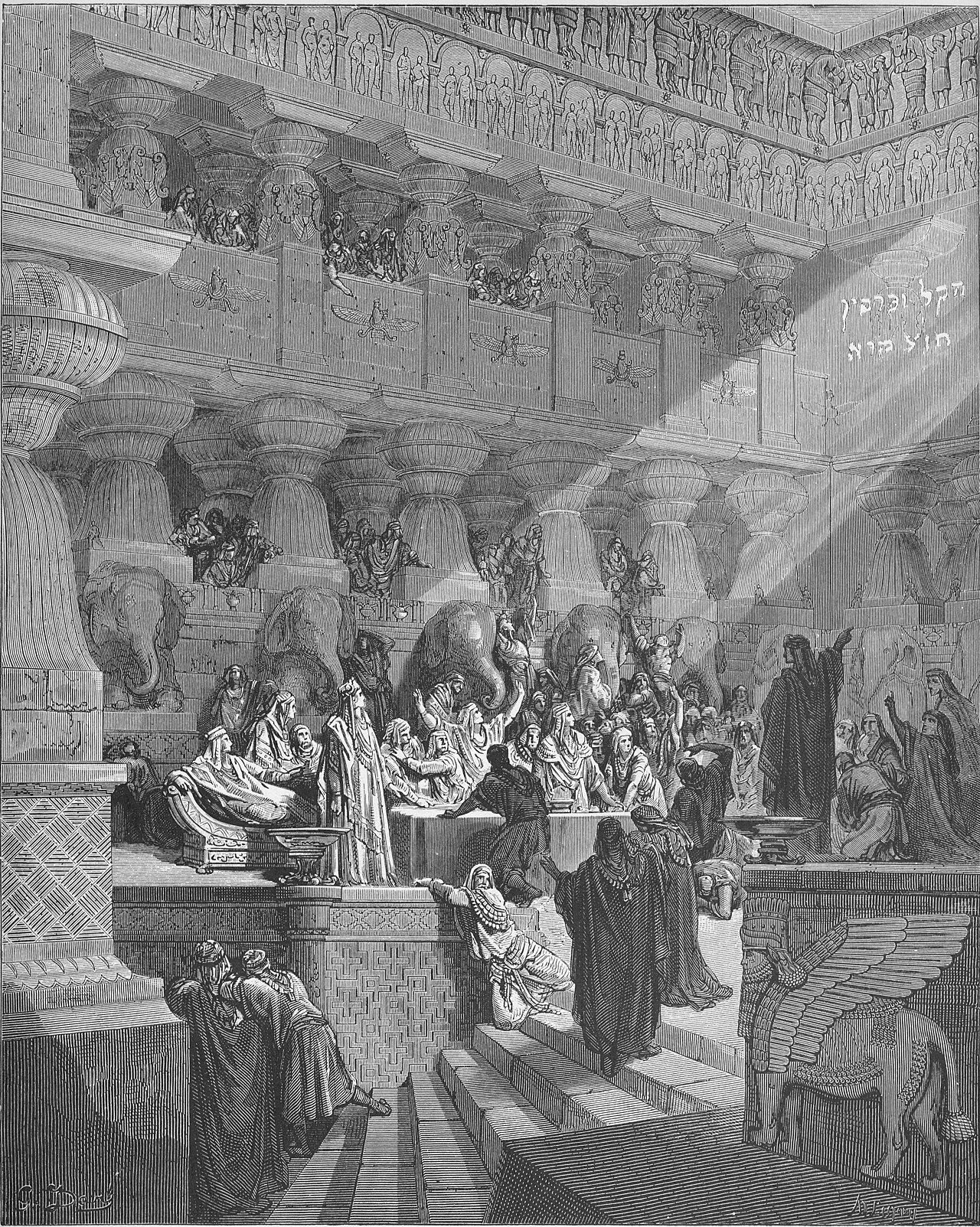
Daniel Interprets the Writing on the Wall — Gustave Doré, Doré's English Bible (1866), public domain
A.Belshazzar drinks from the temple vesselsvv. 1–4
1Later, King Belshazzar held a great feast for a thousand of his nobles, and he drank wine with them.
B.Fingers writing on the plaster of the wallvv. 5–9
5At that moment the fingers of a human hand appeared and wrote on the plaster of the wall, near the lampstand in the royal palace. As the king watched the hand that was writing,
7The king called out for the enchanters, astrologers, and diviners to be brought in, and he said to these wise men of Babylon, “Whoever reads this inscription and tells me its interpretation will be clothed in purple and have a gold chain placed around his neck, and he will be made the third highest ruler in the kingdom.”
C.The queen remembers a man with the spirit of the holy godsvv. 10–16
10Hearing the outcry of the king and his nobles, the queen entered the banquet hall. “O king, may you live forever!” she said. “Do not let your thoughts terrify you, or your face grow pale.
11There is a man in your kingdom who has the spirit of the holy gods in him. In the days of your father he was found to have insight, intelligence, and wisdom like that of the gods. Your father, King Nebuchadnezzar, appointed him chief of the magicians, enchanters, astrologers, and diviners. Your own father, the king,
13So Daniel was brought before the king, who asked him, “Are you Daniel, one of the exiles my father the king brought from Judah?
16But I have heard about you, that you are able to give interpretations and solve difficult problems. Therefore, if you can read this inscription and give me its interpretation, you will be clothed in purple and have a gold chain placed around your neck, and you will be made the third highest ruler in the kingdom.”
D.You knew all this and did not humble your heartvv. 17–24
17In response, Daniel said to the king, “You may keep your gifts for yourself and give your rewards to someone else. Nevertheless, I will read the inscription for the king and interpret it for him.
18As for you, O king, the Most High God gave your father Nebuchadnezzar sovereignty and greatness, glory and honor.
23Instead, you have exalted yourself against the Lord of heaven. The vessels from His house were brought to you, and as you drank wine from them with your nobles, wives, and concubines, you praised your gods of silver and gold, bronze and iron, wood and stone, which cannot see or hear or understand. But you have failed to glorify the God who holds in His hand your very breath and all your ways.
E.Numbered, weighed, divided — and the city falls that nightvv. 25–31
26And this is the interpretation of the message: MENE means that God has numbered the days of your reign and brought it to an end.
The exposition on this chapter draws on Adam Clarke, Commentary on the Bible; Albert Barnes, Notes on the Book of Daniel; Carl Friedrich Keil, Biblical Commentary on the Book of Daniel; Jamieson, Fausset, and Brown, Commentary Critical and Explanatory on the Whole Bible; John Gill, Exposition of the Old Testament; John Wesley, Explanatory Notes upon the Old Testament and Matthew Henry, Commentary on the Whole Bible.
Words in this chapter
Counted by lemma: every form of one word counts as one use. The article, the object marker, the negatives and the common prepositions are left out.
- fromH4481×10 uses
מִן־min- · וּמִן־umin- · מִנֵּֽהּ׃mineh
- give!H3052×4 uses
הַ֑בhav · יְהַ֖בyehav · יְהַב־yehav- · וִיהִיבַ֖תvihivat
- meneH4484×3 uses
מְנֵ֥אmene' · מְנֵ֖אmene' · מְנֵ֕אmene'
- teqelH8625×3 uses
תְּקֵ֥לtekel · תְּקֵ֑לtekel · תְּקִ֥ילְתָּהtekiletah
- ifH2006×1 use
הֵן֩hen
- whichH1768×39 uses
דִּ֤יdi · דִּ֣יdi · דִּֽי־di- · דִּ֥יdi · דִֽי־di- · דִּ֠יdi · דִּ֛יdi · וְדִֽי־vedi- · וּכְדִי֙ukhedi
- king theH4430×23 uses
מַלְכָּ֗אmalka' · מַלְכָּא֙malka' · מַלְכָּ֑אmalka' · וּמַלְכָּ֣אumalka' · מַלְכָּ֜אmalka' · לְמַלְכָּֽא׃lemalka' · מַלְכָּ֤אmalka' · וּמַלְכָּ֤אumalka' · מַלְכָּֽא׃malka' · מַלְכָּ֥אmalka' · מַלְכָּ֔אmalka' · לְמַלְכָּ֔אlemalka'
- let them beH1934×11 uses
לֶֽהֶוְיָ֔ןlehevyan · הֲו֛וֹhavo · הֲוָ֨הhavah · הֲוָ֣אhava' · הֲוָ֤הhavah · הֲוָ֣הhavah · הֲוָ֥הhavah · לֶהֱוֵ֥אleheve'
- <the> GodH426×10 uses
אֱלָהָ֖אʾelaha' · לֵֽאלָהֵ֞יlelahei · אֱלָהִ֣יןʾelahin · אֱלָהִ֖יןʾelahin · אֱלָהָא֙ʾelaha' · אֱלָהָ֤אʾelaha' · וְלֵֽאלָהֵ֣יvelelahei · וְלֵֽאלָהָ֞אvelelaha' · אֱלָהָ֥אʾelaha'
- onH5922×10 uses
עַל־ʾal- · עַֽל־ʾal- · עֲל֑וֹהִיalohi · עֲלָ֔ךְalayikh · עֲלַֽהּ׃alayeh · וְעַ֣לveal · עֲל֔וֹהִיalohi
- in kingdom theH4437×10 uses
בְמַלְכוּתָ֖אvemalkhuta' · בְּמַלְכוּתָ֗ךְbemalkhutakh · מַלְכוּתָ֤אmalkhuta' · מַלְכוּתֵ֔הּmalkhuteh · בְּמַלְכ֣וּתbemalkhut · מַלְכוּתָ֖ךְmalkhutakh · מַלְכוּתָ֔ךְmalkhutakh · בְּמַלְכוּתָֽא׃bemalkhuta' · מַלְכוּתָ֑אmalkhuta'
- and interpretation itsH6591×9 uses
וּפִשְׁרֵהּ֙ufishreh · וּפִשְׁרֵ֖הּufishrah · וּפִשְׁרָ֥הufishrah' · פְּשַֽׁר־peshar- · פִּשְׁרִ֛יןpishrin · וּפִשְׁרָ֖אufishra'
- <in> thenH116×8 uses
בֵּאדַ֗יִןbedayin · אֱדַ֤יִןʾedayin · אֱדַ֙יִן֙ʾedayin · אֱ֠דַיִןʾedayin · בֵּאדַ֙יִן֙bedayin · בֵּאדַ֜יִןbedayin · בֵּאדַ֣יִן׀bedayin
- <the> goldH1722×7 uses
דַּהֲבָ֣אdahava' · דַהֲבָ֔אdahava' · דַּהֲבָ֧אdahava' · דַהֲבָא֙dahava' · וְ֠דַהֲבָאvedahava' · דַהֲבָ֖אdahava'
- [was] callingH7123×7 uses
קָרֵ֤אkare' · יִקְרֵ֞הyikreh · לְמִקְרֵ֔אlemikre' · יִתְקְרֵ֖יyitkerei · יִקְר֔וֹןyikron · לְמִקְרֵ֗אlemikre' · אֶקְרֵ֣אʾekre'
- writing theH3792×7 uses
כְּתָבָ֣הketavah' · כְּתָבָא֙ketava' · כְתָבָ֤הkhetavah' · כְּתָבָ֜אketava' · וּכְתָבָ֥אukhetava' · כְתָבָ֖אkhetava'
- to make knownH3046×7 uses
לְהוֹדָעָ֥הlehodaah · לְהוֹדָעֻתַ֑נִיlehodautani · לְהוֹדָ֣עֻתַ֔נִיlehodautani · אֲהוֹדְעִנֵּֽהּ׃ʾahodineh · יְדַ֗עyeda' · יְדַֽעְתָּ׃yeda'ta · יָדְעִ֖יןyadein
- in DanielH1841×7 uses
בְּדָ֣נִיֵּ֔אלbedaniyel · דָּנִיֵּ֥אלdaniyel · דָּֽנִיֵּ֔אלdaniyel · לְדָנִיֵּ֗אלledaniyel · דָנִיֵּאל֙daniyel · דָנִיֵּ֗אלdaniyel · לְדָֽנִיֵּאל֙ledaniyel
- BelshazzarH1113×6 uses
בֵּלְשַׁאצַּ֣רbeleshatzar · בֵּלְשַׁאצַּ֞רbeleshatzar · בֵלְשַׁאצַּר֙veleshatzar · בֵּלְשַׁאצַּ֔רbeleshatzar · בֵּלְשַׁאצַּ֗רbeleshatzar · בֵּלְאשַׁצַּ֖רbeleshatzar
- for nobles hisH7261×6 uses
לְרַבְרְבָנ֖וֹהִיleravrevanohi · וְרַבְרְבָנ֔וֹהִיveravrevanohi · וְרַבְרְבָנ֖וֹהִיveravrevanohi · וְרַבְרְבָנָ֜ךְveravrevanayikh
- he saidH560×6 uses
אֲמַ֣ר׀ʾamar · וְאָמַ֣ר׀veamar · וַאֲמֶ֗רֶתvaameret · וְאָמַ֣רveamar · וְאָמַר֙veamar · אֲמַ֣רʾamar
- father hisH2×6 uses
אֲב֔וּהִיʾavuhi · אֲב֗וּךְʾavukh · אֲב֔וּךְʾavukh · אֲב֥וּךְʾavukh · אַ֖בִיʾavi · אֲבֽוּךְ׃ʾavukh
- thisH1836×6 uses
דְנָ֗הdenah · דְנָה֙denah · דְּנָ֖הdenah · דְנָ֖הdenah · וּדְנָ֥הudenah
- beforeH6925×6 uses
קֳדָ֣םkodam · קָֽדָמַ֗יkadamai · קֳדָמ֑וֹהִיkodamohi · קָֽדָמָ֗ךְkadamayikh · קֳדָמ֔וֹהִיkodamohi