
Daniel 3:6
in Daniel 3And whoever does not fall down and worship will immediately be thrown into the blazing fiery furnace.”
BSB
The same verse in ASV and KJV ▾
ASV
and whoso falleth not down and worshippeth shall the same hour be cast into the midst of a burning fiery furnace.
KJV
And whoso falleth not down and worshippeth shall the same hour be cast into the midst of a burning fiery furnace.
⋯
This verse in Daniel 3
Commentary
7 notes on this verseAnd whoso falleth not down and worshippeth,.... Who refuses to worship it, or wilfully neglects it; which would be interpreted a contempt of it, and of the king's command: shall in the same hour be cast into the midst of a burning fiery furnace; such as were used to burn stones in for lime, as Jarchi observes: the music was to draw, the furnace was to drive, men to this idolatrous worship; the one was to please and sooth the minds of men, and so allure them to such stupid service; the other to frighten them into obedience.
This site's exposition
a golden statue sixty cubits high
on Daniel 3:1-7
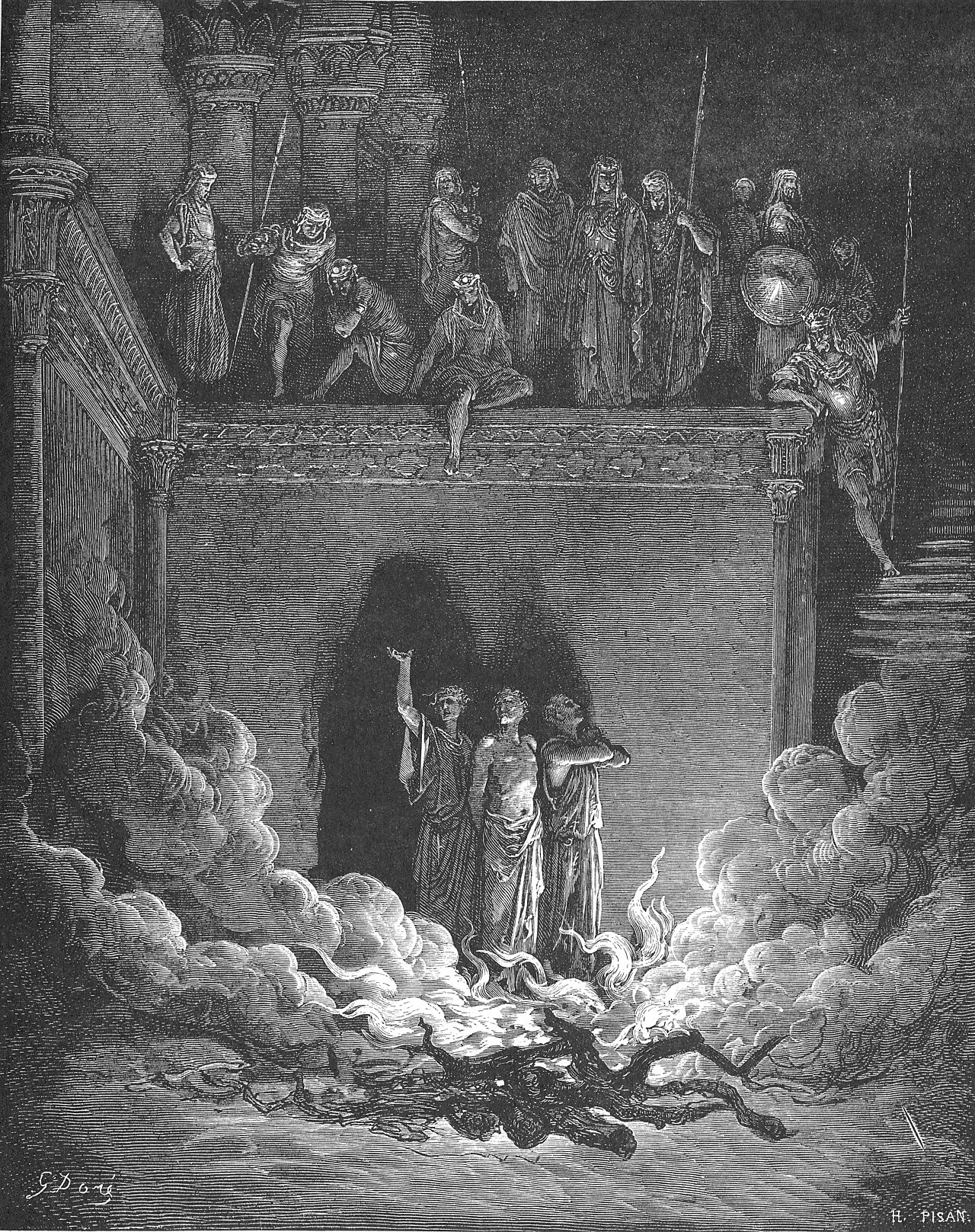
The “golden statue sixty cubits high and six cubits wide” stands on “the plain of Dura,” gold from head to foot. Worship is ordered at the music on pain of “the blazing fiery furnace”. The people fell down, and the chapter turns on those who did not.
This site's exposition
will immediately be thrown
Behind the word immediately stands the phrase the same hour, which Adam Clarke calls the first division of time into hours in the Old Testament. Albert Barnes calls the command tyrannical and typical of that age. The decree forced all the peoples to worship alike.
The record, by era
The Puritans and the Awakening1 voice
Note, That way that sense directs the most will go; there is nothing so bad which the careless world will not be drawn to by a concert of music, or driven to by a fiery furnace. And by such methods as these false worship has been set up and maintained. The Hebrew Princes Accused;
The Nineteenth Century3 voices
Shall the same hour - This is the first place in the Old Testament where we find the division of time into hours. The Greeks say that Anaximander was the inventor. He had it probably from the Chaldeans, among whom this division was in use long before Anaximander was born. Be cast into the midst of a burning fiery furnace - This was an ancient mode of punishment among the Chaldeans, if we may credit the tradition that Abram was cast into such a fire by this idolatrous people because he would not worship their idols.
A commentator
Jamieson, Fausset & Brown1802–1910
Commentary Critical and Explanatory on the Whole Bible (1871)
The literal image of Nebuchadnezzar is a typical prophecy of "the image of the beast," connected with mystical Babylon, in Re 13:14. The second mystical beast there causeth the earth, and them that dwell therein, to worship the first beast, and that as many as would not, should be killed (Re 13:12, 15). furnace--a common mode of punishment in Babylon (Jer 29:22).
A commentator
Albert Barnes1798–1870
Notes, Explanatory and Practical, on the Old and New Testaments (1832-1869)
proposed
And whoso falleth not down and worshippeth - The order in this verse seems to be tyrannical, and it is contrary to all our notions of freedom of religious opinion and worship. But it was much in the spirit of that age, and indeed of almost every age. It was an act to enforce uniformity in religion by the authority of the civil magistrate, and to secure it by threatened penalties. It should be observed, however, that the command at that time would not be regarded as harsh and oppressive by “pagan” worshippers, and might be complied with consistently with their views, without infringing on their notions of religious liberty. The homage rendered to one god did not, according to their views, conflict with any honor that was due to another, and though they were required to worship this divinity, that would not be a prohibition against worshipping any other. It was also in accordance with all the views of paganism that all proper honor should be rendered to the particular god or gods which any people adored. The nations assembled here would regard it as no dishonor shown to the particular deity whom they worshipped to render homage to the god worshipped by Nebuchadnezzar, as this command implied no prohibition against worshipping any other god. It was only in respect to those who held that there is but one God, and that all homage rendered to any other is morally wrong, that this command would be oppressive. Accordingly, the contemplated vengeance fell only on the Jews - all, of every other nation, who were assembled, complying with the command without hesitation. […]
The words behind it
12 Hebrew wordsEvery Hebrew word of this verse in the order it stands, with what it means and the door to its own study. The last column counts the times a word stands in the whole Bible: the rarer the word, the more the places it appears belong together.
| Hebrew | Sound | Meaning | Word study | In the Bible |
|---|---|---|---|---|
| וּמַן־ | uman- | and whoever | H4479 → | 10 times |
| דִּי־ | di- | that | H1768 → | 345 times |
| לָ֥א | la' | not | H3809 → | 82 times |
| יִפֵּ֖ל | yipel | he will fall down | H5308 → | 11 times |
| וְיִסְגֻּ֑ד | veyisgud | so he may pay homage | H5457 → | 12 times |
| בַּהּ־ | bah- | at it | ||
| שַׁעֲתָ֣א | shaata' | moment the | H8160 → | 5 times |
| יִתְרְמֵ֔א | yitreme' | he will be thrown | H7412 → | 12 times |
| לְגֽוֹא־ | legoy'- | to [the] midst of | H1459 → | 13 times |
| אַתּ֥וּן | ʾatun | [the] furnace of | H861 → | 10 times |
| נוּרָ֖א | nura' | fire the | H5135 → | 17 times |
| יָקִֽדְתָּֽא׃ | yakidta' | <the> burning | H3345 → | 8 times |
וּמַן־and whoever
uman-H4479 →10 times
דִּי־that
di-H1768 →345 times
לָ֥אnot
la'H3809 →82 times
יִפֵּ֖לhe will fall down
yipelH5308 →11 times
וְיִסְגֻּ֑דso he may pay homage
veyisgudH5457 →12 times
בַּהּ־at it
bah-
שַׁעֲתָ֣אmoment the
shaata'H8160 →5 times
יִתְרְמֵ֔אhe will be thrown
yitreme'H7412 →12 times
לְגֽוֹא־to [the] midst of
legoy'-H1459 →13 times
אַתּ֥וּן[the] furnace of
ʾatunH861 →10 times
נוּרָ֖אfire the
nura'H5135 →17 times
יָקִֽדְתָּֽא׃<the> burning
yakidta'H3345 →8 times
A shaded row is a word that stands 400 times or fewer in the Bible.
The walk
8 stopsEach card is a verse this one points to, and under it the verses that one points to in turn. Where several paths arrive at the same place, that place is listed first: the text keeps returning to it.
Through
Matthew 13:42And they will throw them into the fiery furnace, where there will be weeping and gnashing of teeth.
it leads to
- Matthew 8:12
But the sons of the kingdom will be thrown into the outer darkness, where there will be weeping and gnashing of teeth.”
Reached by 2 separate paths from here.
- Matthew 13:50
and throw them into the fiery furnace, where there will be weeping and gnashing of teeth.
- Luke 16:23–24
In Hades, where he was in torment, he looked up and saw Abraham from afar, with Lazarus by his side.
- Revelation 20:14–15
Then Death and Hades were thrown into the lake of fire. This is the second death—the lake of fire.
- Revelation 20:10
And the devil who had deceived them was thrown into the lake of fire and sulfur, into which the beast and the false prophet had already been thrown. There they will be tormented day…
- Matthew 8:12
Through
Daniel 3:15Now, if you are ready, as soon as you hear the sound of the horn, flute, zither, lyre, harp, pipes, and all kinds of music, you must fall down and worship the statue I…
it leads to
- Acts 5:29
But Peter and the other apostles replied, “We must obey God rather than men.
- 2 Chronicles 32:15–17
So now, do not let Hezekiah deceive you, and do not let him mislead you like this. Do not believe him, for no god of any nation or kingdom has been able to deliver…
- Acts 5:29
Through
Jeremiah 29:22Because of them, all the exiles of Judah who are in Babylon will use this curse: ‘May the LORD make you like Zedekiah and Ahab, whom the king of Babylon roasted in the fire!’
it leads to
- Isaiah 65:15
You will leave behind your name as a curse for My chosen ones, and the Lord GOD will slay you; but to His servants He will give another name.
- Isaiah 65:15
Where this verse is studied
On this page
About Daniel
This page draws on Adam Clarke, Commentary on the Bible; Albert Barnes, Notes, Explanatory and Practical, on the Old and New Testaments (1832-1869); Carl Friedrich Keil, Biblical Commentary on the Book of Daniel; Jamieson, Fausset & Brown, Commentary Critical and Explanatory on the Whole Bible; John Gill, Exposition of the Old Testament (1748-1763) and Matthew Henry, Commentary on the Whole Bible.