
Daniel 5:23
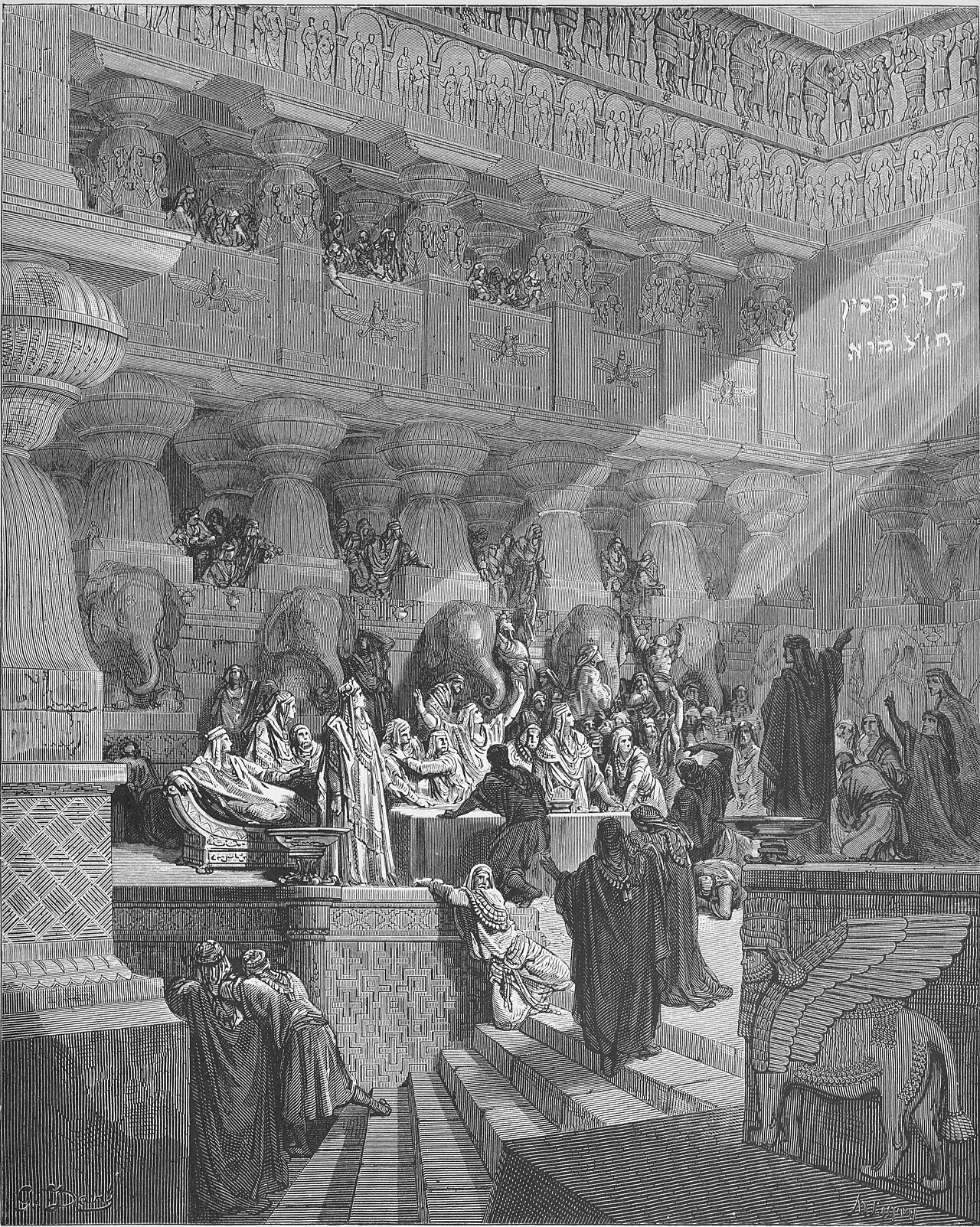
in Daniel 5Instead, you have exalted yourself against the Lord of heaven. The vessels from His house were brought to you, and as you drank wine from them with your nobles, wives, and concubines, you praised your gods of silver and gold, bronze and iron, wood and stone, which cannot see or hear or understand. But you have failed to glorify the God who holds in His hand your very breath and all your ways.
BSB
The same verse in ASV and KJV ▾
ASV
but hast lifted up thyself against the Lord of heaven; and they have brought the vessels of his house before thee, and thou and thy lords, thy wives and thy concubines, have drunk wine from them; and thou hast praised the gods of silver and gold, of brass, iron, wood, and stone, which see not, nor hear, nor know; and the God in whose hand thy breath is, and whose are all thy ways, hast thou not glorified.
KJV
But hast lifted up thyself against the Lord of heaven; and they have brought the vessels of his house before thee, and thou, and thy lords, thy wives, and thy concubines, have drunk wine in them; and thou hast praised the gods of silver, and gold, of brass, iron, wood, and stone, which see not, nor hear, nor know: and the God in whose hand thy breath is, and whose are all thy ways, hast thou not glorified:
⋯
This verse in Daniel 5
Commentary
11 notes on this verse"You have exalted yourself against God." … Certainly, he says, you were brought to such madness that you placed yourself above God and overcame your father in arrogance and luxury. Indeed, [Nebuchadnezzar] thought that nobody among humankind was equal to him, but you believed that …
This site's exposition
have not humbled your heart
on Daniel 5:22-23
Daniel turns to Belshazzar's guilt: “you his son, O Belshazzar, have not humbled your heart, even though you knew all this”. The charge follows in full, “you have exalted yourself against the Lord of heaven,” with the temple vessels in his hand and praise for gods.
This site's exposition
your very breath
Daniel sets the gods that cannot see, hear or understand beside the God who holds the king's breath in His hand. Theodoret of Cyrus read this as teaching the whole hall to glorify the unseen Creator. Matthew Henry held that the charge stands against every man.
The record, by era
The Church Fathers4 voices
And after saying these things he added the following, at once rebuking the king and not receiving his face so that having heard this the king would be afraid and so that he who committed trespasses might immediately recognize them. And so it says, "And you his son, Belshazzar, you have not humbled your heart before God; do you not know all these things? And you have been exalted against the Lord God of heaven and have brought the vessels of his house before you and you and your magistrates and your mistresses and your concubines drank wine from them, and you have praised golden and silver and bronze and iron and wooden and stone gods, which do not see and which do not hear and which do not understand, and God, of whom your breath is in his hand and all your ways are as well, you have not glorified him. On account of this the fingers of a hand have been sent from his face and he ordered this writing: 'Mane, Thekel, Fares.' This is the interpretation of the phrase: 'Mane,' God has measured your kingdom and ended it, 'Thekel,' it has been weighed in the balance and been found wanting, 'Fares,' your kingdom is divided and has been given to the Medes and Persians." [Daniel 5:22-28]
He did well to instruct those present to worship not visible things but their Creator and Lord. At the same time he also convicts the king of conceit and teaches him that the highest heaven has for its creator the unseen God. You, he is …
Now, [Daniel] did well and showed much wisdom in putting in parallel the idols and the God of all with a view to the benefit felt by the hearers; after emphasizing that the former neither see nor hear, instead of proceeding to say in regard …
Verses 22, 23. "'Thou too, his son, O Belshazzar, hast not humbled thine heart, even though thou knewest all these things, but hast lifted thyself up against the ruler of heaven...'" Because thy great-grandfather, he says, lifted up his heart and hardened his spirit in pride, he therefore was put down from his royal throne and his glory was taken away, and so on (Jer. 4).
The Puritans and the Awakening1 voice
But hast lifted up thyself against the Lord of heaven,....
3 more voices on this verse
The Puritans and the Awakening1 voice
(3.) That he had not answered the end of his creation and maintenance: The God in whose hand thy breath is, and whose are all thy ways, hast thou not glorified. This is a general charge, which stands good against us all; let us consider how we shall answer it.
The Nineteenth Century2 voices
But hast lifted up thyself against the Lord - And the highest evidence of this rebellion was, the profaning the sacred vessels of the Lord’s house.
A commentator
Albert Barnes1798–1870
Notes, Explanatory and Practical, on the Old and New Testaments (1832-1869)
proposed
But hast lifted up thyself against the Lord of heaven - The God who had so signally rebuked and humbled Nebuchadnezzar. The monarch had done this, it would seem, during the whole of his reign, and now by a crowning act of impiety he had evinced special disregard of him, and contempt for him, by profaning the sacred vessels of his temple. And they have brought the vessels of his house before thee ... - See the note at Dan 5:
The words behind it
40 Hebrew wordsEvery Hebrew word of this verse in the order it stands, with what it means and the door to its own study. The last column counts the times a word stands in the whole Bible: the rarer the word, the more the places it appears belong together.
| Hebrew | Sound | Meaning | Word study | In the Bible |
|---|---|---|---|---|
| וְעַ֣ל | veal | and against | H5922 → | 104 times |
| מָרֵֽא־ | mare'- | [the] lord of | H4756 → | 4 times |
| שְׁמַיָּ֣א׀ | shemaiya' | heavens the | H8065 → | 38 times |
| הִתְרוֹמַ֡מְתָּ | hitromamta | you have lifted yourself up | H7313 → | 4 times |
| וּלְמָֽאנַיָּ֨א | ulemanaiya' | and <obj.> vessels the | H3984 → | 7 times |
| דִֽי־ | di- | of | H1768 → | 345 times |
| בַיְתֵ֜הּ | vayteh | house his | H1005 → | 44 times |
| הַיְתִ֣יו | haytiv | they have brought | H858 → | 16 times |
| קָֽדָמָ֗ךְ | kadamayikh | before you | H6925 → | 42 times |
| וְאַ֨נְתְּ | veantah | and you | H607 → | 15 times |
| וְרַבְרְבָנָ֜ךְ | veravrevanayikh | and nobles your | H7261 → | 8 times |
| שֵֽׁגְלָתָ֣ךְ | shegelatakh | wives your | H7695 → | 3 times |
| וּלְחֵנָתָךְ֮ | ulechenatokh | and concubines your | H3904 → | 3 times |
| חַמְרָא֮ | chamra' | <the> wine | H2562 → | 6 times |
| שָׁתַ֣יִן | shatayin | [are] drinking | H8355 → | 5 times |
| בְּהוֹן֒ | behon | with them | ||
| וְלֵֽאלָהֵ֣י | velelahei | and <obj.> [the] gods of | H426 → | 95 times |
| כַסְפָּֽא־ | khaspa-ʾ | <the> silver | H3702 → | 13 times |
| וְ֠דַהֲבָא | vedahava' | and <the> gold | H1722 → | 23 times |
| נְחָשָׁ֨א | nechasha' | <the> bronze | H5174 → | 9 times |
| פַרְזְלָ֜א | farzela' | <the> iron | H6523 → | 20 times |
| אָעָ֣א | ʾaa' | <the> wood | H636 → | |
| וְאַבְנָ֗א | veavna' | and <the> stone | H69 → | 8 times |
| דִּ֠י | di | who | H1768 → | 345 times |
| לָֽא־ | la'- | not | H3809 → | 82 times |
| חָזַ֧יִן | chazayin | [are] seeing | H2370 → | 31 times |
| וְלָא־ | vela'- | and not | H3809 → | 82 times |
| שָׁמְעִ֛ין | shamein | [are] hearing | H8086 → | 9 times |
| וְלָ֥א | vela' | and not | H3809 → | 82 times |
| יָדְעִ֖ין | yadein | [are] knowing | H3046 → | 47 times |
| שַׁבַּ֑חְתָּ | shabachta | you have praised | H7624 → | 5 times |
| וְלֵֽאלָהָ֞א | velelaha' | and <obj.> God the | H426 → | 95 times |
| דִּֽי־ | di- | who | H1768 → | 345 times |
| נִשְׁמְתָ֥ךְ | nishmetakh | breath your | H5396 → | |
| בִּידֵ֛הּ | bideh | [is] in hand his | H3028 → | 17 times |
| וְכָל־ | vekhol | and all | H3606 → | 82 times |
| אֹרְחָתָ֥ךְ | ʾorechatakh | ways your | H735 → | |
| לֵ֖הּ | leh | [are] to him | ||
| לָ֥א | la' | not | H3809 → | 82 times |
| הַדַּֽרְתָּ׃ | hadarta | you have glorified | H1922 → |
וְעַ֣לand against
vealH5922 →104 times
מָרֵֽא־[the] lord of
mare'-H4756 →4 times
שְׁמַיָּ֣א׀heavens the
shemaiya'H8065 →38 times
הִתְרוֹמַ֡מְתָּyou have lifted yourself up
hitromamtaH7313 →4 times
וּלְמָֽאנַיָּ֨אand <obj.> vessels the
ulemanaiya'H3984 →7 times
דִֽי־of
di-H1768 →345 times
בַיְתֵ֜הּhouse his
vaytehH1005 →44 times
הַיְתִ֣יוthey have brought
haytivH858 →16 times
קָֽדָמָ֗ךְbefore you
kadamayikhH6925 →42 times
וְאַ֨נְתְּand you
veantahH607 →15 times
וְרַבְרְבָנָ֜ךְand nobles your
veravrevanayikhH7261 →8 times
שֵֽׁגְלָתָ֣ךְwives your
shegelatakhH7695 →3 times
וּלְחֵנָתָךְ֮and concubines your
ulechenatokhH3904 →3 times
חַמְרָא֮<the> wine
chamra'H2562 →6 times
שָׁתַ֣יִן[are] drinking
shatayinH8355 →5 times
בְּהוֹן֒with them
behon
וְלֵֽאלָהֵ֣יand <obj.> [the] gods of
velelaheiH426 →95 times
כַסְפָּֽא־<the> silver
khaspa-ʾH3702 →13 times
וְ֠דַהֲבָאand <the> gold
vedahava'H1722 →23 times
נְחָשָׁ֨א<the> bronze
nechasha'H5174 →9 times
פַרְזְלָ֜א<the> iron
farzela'H6523 →20 times
אָעָ֣א<the> wood
ʾaa'H636 →
וְאַבְנָ֗אand <the> stone
veavna'H69 →8 times
דִּ֠יwho
diH1768 →345 times
לָֽא־not
la'-H3809 →82 times
חָזַ֧יִן[are] seeing
chazayinH2370 →31 times
וְלָא־and not
vela'-H3809 →82 times
שָׁמְעִ֛ין[are] hearing
shameinH8086 →9 times
וְלָ֥אand not
vela'H3809 →82 times
יָדְעִ֖ין[are] knowing
yadeinH3046 →47 times
שַׁבַּ֑חְתָּyou have praised
shabachtaH7624 →5 times
וְלֵֽאלָהָ֞אand <obj.> God the
velelaha'H426 →95 times
דִּֽי־who
di-H1768 →345 times
נִשְׁמְתָ֥ךְbreath your
nishmetakhH5396 →
בִּידֵ֛הּ[is] in hand his
bidehH3028 →17 times
וְכָל־and all
vekholH3606 →82 times
אֹרְחָתָ֥ךְways your
ʾorechatakhH735 →
לֵ֖הּ[are] to him
leh
לָ֥אnot
la'H3809 →82 times
הַדַּֽרְתָּ׃you have glorified
hadartaH1922 →
A shaded row is a word that stands 400 times or fewer in the Bible.
The walk
8 stopsEach card is a verse this one points to, and under it the verses that one points to in turn. Where several paths arrive at the same place, that place is listed first: the text keeps returning to it.
Through
Jeremiah 10:23I know, O LORD, that a man’s way is not his own; no one who walks directs his own steps.
it leads to
- Proverbs 20:24
A man’s steps are from the LORD, so how can anyone understand his own way?
- Proverbs 16:1
The plans of the heart belong to man, but the reply of the tongue is from the LORD.
- Psalms 37:23
The steps of a man are ordered by the LORD who takes delight in his journey.
- Psalms 119:116–117
Sustain me as You promised, that I may live; let me not be ashamed of my hope.
- Psalms 17:5
My steps have held to Your paths; my feet have not slipped.
- Proverbs 20:24
Through
Job 12:10The life of every living thing is in His hand, as well as the breath of all mankind.
it leads to
- Acts 17:28
‘For in Him we live and move and have our being.’ As some of your own poets have said, ‘We are His offspring.’
- Job 33:4
The Spirit of God has made me, and the breath of the Almighty gives me life.
- Acts 17:28
Through
Daniel 4:37Now I, Nebuchadnezzar, praise and exalt and glorify the King of heaven, for all His works are true and all His ways are just. And He is able to humble those who walk in…
it leads to
- James 4:6–7
But He gives us more grace. This is why it says: “God opposes the proud, but gives grace to the humble.”
- James 4:6–7
Where this verse is studied
On this page
About Daniel
This page draws on 10 works. Open the list of works
This page draws on Adam Clarke, Commentary on the Bible; Albert Barnes, Notes, Explanatory and Practical, on the Old and New Testaments (1832-1869); Ephrem the Syrian, COMMENTARY ON DANIEL 5:16; Hippolytus of Rome, Commentary on Daniel 3.17.5-6; Jamieson, Fausset, and Brown, Commentary Critical and Explanatory on the Whole Bible; Jerome, St. Jerome, Commentary on Daniel, CHAPTER FIVE; John Gill, Exposition of the Old Testament (1748-1763); John Wesley, Explanatory Notes upon the Old Testament; Matthew Henry, Commentary on the Whole Bible and Theodoret of Cyrus, COMMENTARY ON DANIEL 5:23.