
Nehemiah 3:27
in Nehemiah 3And next to them, the Tekoites repaired another section, from a point opposite the great tower that juts out to the wall of Ophel.
BSB
The same verse in ASV and KJV ▾
ASV
After him the Tekoites repaired another portion, over against the great tower that standeth out, and unto the wall of Ophel.
KJV
After them the Tekoites repaired another piece, over against the great tower that lieth out, even unto the wall of Ophel.
⋯
This verse in Nehemiah 3
Commentary
8 notes on this verseAfter them the Tekoites repaired another piece,.... Having finished what they undertook in another part of the wall, Neh 3:5, they engage in this part of it; which shows their great zeal and diligence, when their nobles were so backward to it, and withdrew from it: over against the great tower that lieth out; the same as in the preceding verse: even unto the wall of Ophel; from right against the great tower unto the wall the Tekoites repaired.
This site's exposition
Nehemiah son of Azbuk
on Nehemiah 3:16-27
The roll passes David's tombs and a guard-house in one clause. Through this stretch men repair opposite their own houses, the Levites, priests and temple servants each by their dwelling. The Tekoites appear a second time at verse 27, the commoners doubling the portion their nobles refused.
This site's exposition
the Tekoites repaired another section
Gill reads the second section as zeal. The Tekoites had finished their first stretch at verse 5, and now they work from the great tower to the wall of Ophel.
The record, by era
The Medieval Church1 voice
After them, the Tekoites repaired another section, etc. Indeed, the wall of the temple is the body of the Lord Savior, about which He Himself said to the Jews: "Destroy this temple, and in three days I will raise it up" (John 2): which, of …
The Puritans and the Awakening4 voices
They did not think their callings excused them, nor plead that they could not leave their shops to attend the public business, knowing that what they lost would certainly be made up to them by the blessing of God upon their callings. Some ladies are spoken of as helping forward this work-- Shallum and his daughters (
quarantine:debris (2026-07-29) — unbalanced-parens
), which is the more remarkable because their nobles set them a bad example by withdrawing from the service, which, instead of serving them for an excuse to sit still, perhaps made them the more forward to do double work, that by their zeal they might either shame or atone for the covetousness and carelessness of their nobles.
quarantine:debris (2026-07-29) — leading-punctuation+unbalanced-parens
), and so they brought their work quite round the city. The Rebuilding of the Wall. 1 Then Eliashib the high priest rose up with his brethren the priests, and they builded the sheep gate; they sanctified it, and set up the doors of it; even unto the tower of Meah they sanctified it, unto the tower of Hananeel.
quarantine:debris,scripture (2026-07-29) — leading-punctuation+unbalanced-parens; scripture-overlap:82%@v1-3
And this their double diligence is noted both for the greater shame of their nobles, who would not do any part of it, and for their own honour, who were so far from being corrupted by that bad example, that they were quickened to greater zeal and industry in this pious work.
The words behind it
12 Hebrew wordsEvery Hebrew word of this verse in the order it stands, with what it means and the door to its own study. The last column counts the times a word stands in the whole Bible: the rarer the word, the more the places it appears belong together.
| Hebrew | Sound | Meaning | Word study | In the Bible |
|---|---|---|---|---|
| אַחֲרָ֛יו | ʾacharav | after him | H310 → | 715 times |
| הֶחֱזִ֥יקוּ | hecheziku | they repaired | H2388 → | 291 times |
| הַתְּקֹעִ֖ים | hatekoim | the Tekoites | H8621 → | |
| מִדָּ֣ה | midah | a measured portion | H4060 → | 55 times |
| שֵׁנִ֑ית | shenit | second | H8145 → | 156 times |
| מִנֶּ֜גֶד | mineged | from before | H5048 → | 151 times |
| הַמִּגְדָּ֤ל | hamigdal | the tower | H4026 → | 48 times |
| הַגָּדוֹל֙ | hagadol | <the> great | H1419 → | 526 times |
| הַיּוֹצֵ֔א | haiyotze' | <the> projecting | H3318 → | 1067 times |
| וְעַ֖ד | vead | and to | H5704 → | 1261 times |
| חוֹמַ֥ת | chomat | [the] wall of | H2346 → | 133 times |
| הָעֹֽפֶל׃ | haofel | <the> Ophel | H6077 → | 5 times |
אַחֲרָ֛יוafter him
ʾacharavH310 →715 times
הֶחֱזִ֥יקוּthey repaired
hechezikuH2388 →291 times
הַתְּקֹעִ֖יםthe Tekoites
hatekoimH8621 →
מִדָּ֣הa measured portion
midahH4060 →55 times
שֵׁנִ֑יתsecond
shenitH8145 →156 times
מִנֶּ֜גֶדfrom before
minegedH5048 →151 times
הַמִּגְדָּ֤לthe tower
hamigdalH4026 →48 times
הַגָּדוֹל֙<the> great
hagadolH1419 →526 times
הַיּוֹצֵ֔א<the> projecting
haiyotze'H3318 →1067 times
וְעַ֖דand to
veadH5704 →1261 times
חוֹמַ֥ת[the] wall of
chomatH2346 →133 times
הָעֹֽפֶל׃<the> Ophel
haofelH6077 →5 times
A shaded row is a word that stands 400 times or fewer in the Bible.
The walk
5 stopsEach card is a verse this one points to, and under it the verses that one points to in turn. Where several paths arrive at the same place, that place is listed first: the text keeps returning to it.
Through
Nehemiah 3:5Next to him, the Tekoites made repairs, but their nobles did not put their shoulders to the work under their supervisors.
it leads to
- 2 Samuel 14:2
So Joab sent to Tekoa to bring a wise woman from there. He told her, “Please pretend to be a mourner; put on clothes for mourning and do not anoint yourself with oil. Act…
- Jeremiah 27:2
This is what the LORD said to me: “Make for yourself a yoke out of leather straps and put it on your neck.
- 1 Corinthians 1:26
Brothers, consider the time of your calling: Not many of you were wise by human standards; not many were powerful; not many were of noble birth.
- Jeremiah 5:4–5
Then I said, “They are only the poor; they have played the fool, for they do not know the way of the LORD, the justice of their God.
- Jeremiah 27:12
And to Zedekiah king of Judah I spoke the same message: “Put your necks under the yoke of the king of Babylon; serve him and his people, and live!
- 2 Samuel 14:2
Where this verse is studied
On this page
Studies2
On this verse
On this chapter
About Nehemiah
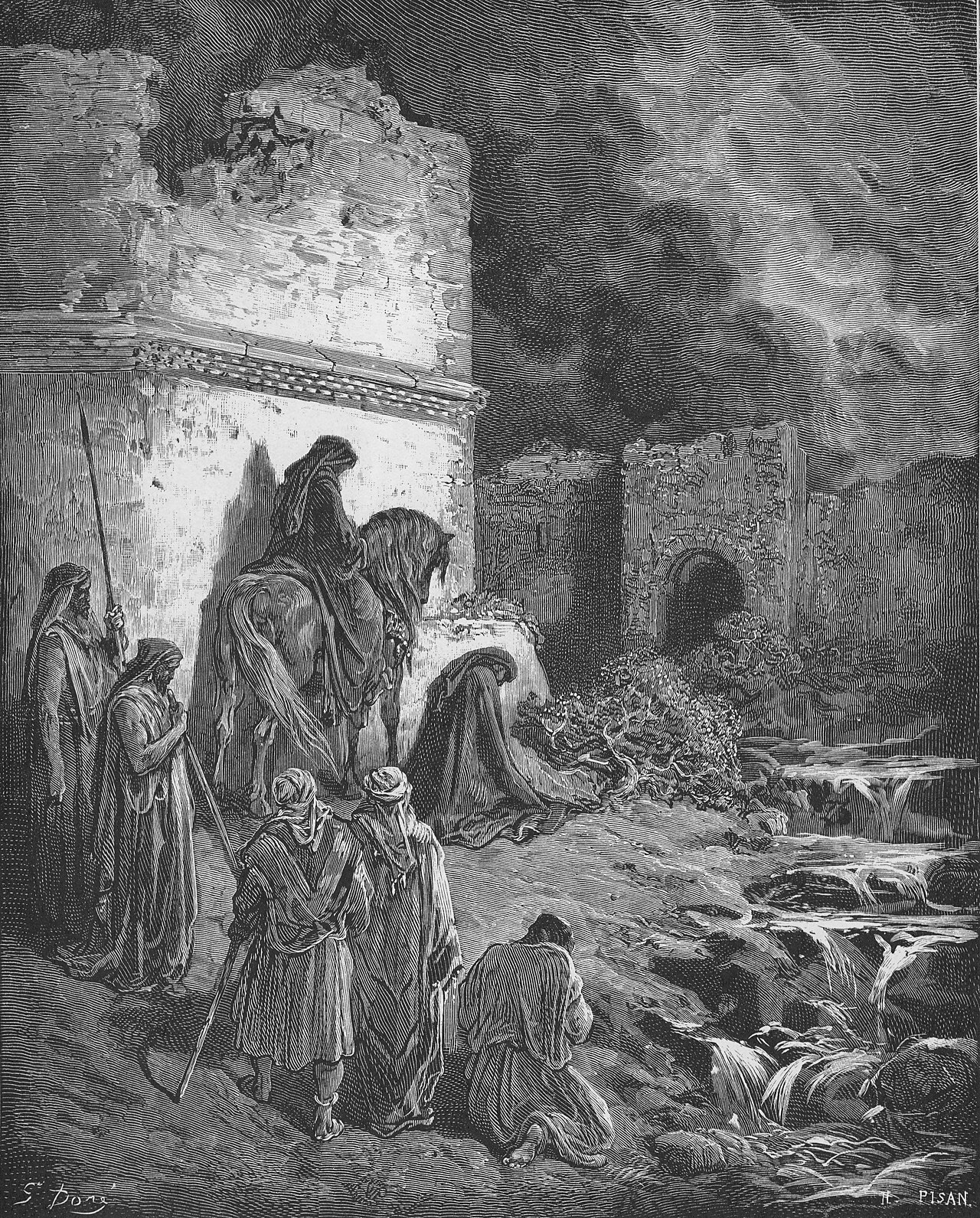
This page draws on Bede, Commentary on Ezra and Nehemiah; John Gill, Exposition of the Old Testament (1748-1763); John Gill, Exposition of the Old Testament; John Wesley, Explanatory Notes upon the Old Testament; Matthew Henry, Commentary on the Whole Bible and W. F. Adeney, Ezra, Nehemiah and Esther (Expositor's Bible).