
1 Peter 3 · Value 39 of 41 · Featured Study
Modesty and Simplicity
Modesty and simplicity order dress, bearing and goods toward God.
Peter told the church, “clothe yourselves with humility” (1 Peter 5:5).
But seek first the kingdom of God and His righteousness, and all these things will be added unto you.
- Anchor text
- 1 Peter 3:3 to 4 “Your beauty should not come from…”
- Its opposite
- Display and the pride of life
- Hold in memory
- Matthew 6:33, 1 Samuel 16:7
Summary
The LORD looks on the heart, so the beauty He prizes is inward and lasting. Modesty carries that inward beauty into how a person appears before others, and it seeks no praise for itself. Simplicity is the undivided heart Jesus taught, which seeks the kingdom of God first, holds goods loosely and does good without an audience. Scripture sets both against display that takes for itself the glory owed to God.
- In 1 Timothy 2:9 to 10 and 1 Peter 3:3 to 4 the apostles set good deeds and a gentle and quiet spirit above gold, pearls and costly dress.
- Scripture asks modesty of men as well as women, for Paul requires the same seemly bearing of every overseer that he asks of women in their dress.
- Readers have long divided over whether those two texts forbid jewellery and fine clothing or rank them below the heart.
What Modesty and Simplicity Are
One Hebrew verb and three Greek words name humble bearing, seemly order, reverent shame and the single eye.
This study asks what modesty and simplicity mean in Scripture, why God weighs the inward person above the outward, and how far the apostles' words on dress reach in every age. It answers from the Hebrew and Greek words, the key texts, the God who clothed Adam and Eve, and the life and teaching of Christ. It then gives the people and stories of the Bible, the accounts of the church, the voices of the centuries, and three questions on which readers disagree, each with the readers who hold it.
Tsânaʻ, to walk humbly
The Hebrew verb tsânaʻ (H6800) stands twice in the Old Testament, once in Micah's summary of what the LORD requires, “to walk humbly with your God.” The tagged text renders it “to be modest.”
Kósmios, orderly and seemly
The Greek adjective kósmios (G2887) stands twice, of what is orderly and seemly, and the Berean renders it “respectable” both times.
Aidṓs, reverent shame
The Greek noun aidṓs (G127) stands once, where the Berean renders it “with modesty” in 1 Timothy 2:9 and Paul sets it beside sōphrosýnē, self-control. Its entry gives a sense of modesty toward people and awe toward God.
Haploûs, single and sound
The Greek adjective haploûs (G573) stands twice, each time of the good eye in the Gospels: “When your eyes are good, your whole body also is full of light.”
Tsânaʻ, to walk humbly, Kósmios, orderly and seemly, Aidṓs, reverent shame, Haploûs, single and sound, The Words Kosmios and Haplous, the study in brief
The Key Texts of Modesty
The Proverbs, the prophet Isaiah and Paul weigh outward beauty against the fear of the LORD and the clothing God gives.
Wisdom
When pride comes, disgrace follows, but with humility comes wisdom.
The proverb joins wisdom to the modest, using the same Hebrew word Micah uses for walking humbly with God.
Wisdom
Like a gold ring in a pig’s snout is a beautiful woman who lacks discretion.
The proverb measures a beautiful face by the discretion behind it, so ornament without good sense is worth nothing.
Wisdom
Charm is deceptive and beauty is fleeting, but a woman who fears the LORD is to be praised.
The last chapter of Proverbs praises the woman who fears the LORD above every passing charm.
Prophets
I will rejoice greatly in the LORD, my soul will exult in my God; for He has clothed me with garments of salvation and wrapped me in a robe of righteousness, as a bridegroom wears a priestly headdress, as a bride adorns herself with her jewels.
Isaiah names the clothing God Himself gives, salvation and righteousness, as the adornment that brings joy.
Isaiah 61:10BSB
Epistles
Therefore, as the elect of God, holy and beloved, clothe yourselves with hearts of compassion, kindness, humility, gentleness, and patience.
Paul tells the church to put on the virtues of the heart as a garment, which is the clothing Peter and Paul ask for in the dress texts.
Proverbs 11:22, Proverbs 31:30, Isaiah 61:10, Colossians 3:12
Modesty Rests on the God Who Sees the Heart
Passages in 1 Samuel and Genesis lie beneath every later word on modesty.
When Samuel came to Jesse's house to anoint a king, he saw Eliab and said, “Surely here before the LORD is His anointed” (1 Samuel 16:6).
But the LORD said to Samuel, “Do not consider his appearance or height, for I have rejected him; the LORD does not see as man does. For man sees the outward appearance, but the LORD sees the heart.”The LORD's answer to Samuel is the reason Peter and Paul look past the clothes to the person who wears them.
After the fall “the LORD God made garments of skin for Adam and his wife, and He clothed them” (Genesis 3:21).
Dress in the Bible and the Church, the study in brief
Christ and Modesty
Jesus showed simplicity in His way of life, in two of His teachings and in His death.
He kept nothing for HimselfMatthew 8
Paul wrote that Christ “emptied Himself, taking the form of a servant, being made in human likeness” (Philippians 2:7).
Jesus replied, “Foxes have dens and birds of the air have nests, but the Son of Man has no place to lay His head.”
Matthew 8:20BSB Jesus' answer to a man who offered to follow Him shows how little He kept for His own comfort.
Read the page on Jesus 33 sections, 35 verses set out
He taught the single eyeMatthew 6
“Be careful not to perform your righteous acts before men to be seen by them. If you do, you will have no reward from your Father in heaven.
Matthew 6:1BSB Jesus opens His teaching on giving, prayer and fasting by forbidding righteousness done to be seen, which the single eye refuses.
Read the study of The Simple Eye 8 sections, 6 verses set out
He pointed to the lilies of the fieldMatthew 6
He told His hearers, “Consider how the lilies of the field grow: They do not labor or spin. Yet I tell you that not even Solomon in all his glory was adorned like one of these” (Matthew 6:28 to 29).
If that is how God clothes the grass of the field, which is here today and tomorrow is thrown into the furnace, will He not much more clothe you, O you of little faith?
Matthew 6:30BSB Jesus draws from the flowers of the field the promise that God will clothe those who trust Him.
He was stripped at the crossMatthew 27
Before they led Him out, the soldiers “stripped Him and put a scarlet robe on Him” (Matthew 27:28).
When the soldiers had crucified Jesus, they divided His garments into four parts, one for each soldier, with the tunic remaining. It was seamless, woven in one piece from top to bottom.
John 19:23BSB At His death the clothes He wore were all He had, and the soldiers took even those.
Read the story of the Crucifixion 12 sections, 12 verses set out
He taught the single eye (Matthew 6), He pointed to the lilies of the field (Matthew 6), He was stripped at the cross (Matthew 27)
Matthew 6:30, John 19:23
Who Showed Modesty
Three women of the Bible showed modesty in reverence, in bearing and in good deeds.
Peter makes her the mother of the women who follow her: “you are her children if you do what is right and refuse to give way to fear.”
1 Peter 3:6When she saw Isaac coming to meet her in the field, “she took her veil and covered herself.”
Genesis 24:65Dorcas
After her death the widows showed Peter “the tunics and other clothing that Dorcas had made while she was still with them.”
Acts 9:39
The Practice of Modesty and Simplicity
Scripture names six practices, each in the words of the verse that gives it.
- 1Refuse the world's pattern“Do not be conformed to this world, but be transformed by the renewing of your mind.”Romans 12:2
- 2Cover what is less honoured“And our unpresentable parts are treated with special modesty.”1 Corinthians 12:23
- 3Store treasure elsewhere“Do not store up for yourselves treasures on earth, where moth and rust destroy.”Matthew 6:19
- 4Guard against greed“Watch out! Guard yourselves against every form of greed, for one’s life does not consist in the abundance of his possessions.”Luke 12:15
- 5Be content with enough“But if we have food and clothing, we will be content with these.”1 Timothy 6:8
- 6Share what you have“Instruct them to do good, to be rich in good works, and to be generous and ready to share.”1 Timothy 6:18
Cover what is less honoured, Store treasure elsewhere, Guard against greed, Be content with enough, Share what you have
What Stands Against Modesty
Isaiah, John and James name the pride that dresses to be admired and the church that honours fine clothes.
Isaiah saw the daughters of Zion “walking with heads held high and wanton eyes, prancing and skipping as they go, jingling the bracelets on their ankles” (Isaiah 3:16). He foretold the end of their finery: “instead of fine clothing, sackcloth; instead of beauty, shame” (Isaiah 3:24).
For all that is in the world—the desires of the flesh, the desires of the eyes, and the pride of life—is not from the Father but from the world.John names the pride of life as the desire of a world that passes away, and display is its outward form.
Suppose a man comes into your meeting wearing a gold ring and fine clothes, and a poor man in shabby clothes also comes in. If you lavish attention on the man in fine clothes and say, “Here is a seat of honor,” but say to the poor man, “You must stand” or “Sit at my feet,”James shows the same pride at work in a congregation that judges a man by his ring and his coat.
Modesty and Display in the Stories of the Bible
Two stories of the Old Testament show restraint, and one in Acts shows display judged.
Shem and Japheth cover NoahGenesis 9
After the flood Noah “became drunk and uncovered himself inside his tent” (Genesis 9:21), and his son Ham told his two brothers what he had seen (Genesis 9:22).
Then Shem and Japheth took a garment and placed it across their shoulders, and walking backward, they covered their father’s nakedness. Their faces were turned away so that they did not see their father’s nakedness.
Genesis 9:23BSB The two brothers protect their father's honour at the cost of seeing nothing themselves.
Esther goes in to the kingEsther 2
Each woman could take whatever she asked for to the king (Esther 2:13).
Now Esther was the daughter of Abihail, the uncle from whom Mordecai had adopted her as his own daughter. And when it was her turn to go to the king, she did not ask for anything except what Hegai, the king’s trusted official in charge of the harem, had advised. And Esther found favor in the eyes of everyone who saw her.
Esther 2:15BSB The narrator gives one detail of Esther's own going in, her restraint.
Herod in his royal robesActs 12
On the appointed day “Herod donned his royal robes, sat on his throne, and addressed the people” (Acts 12:21). The crowd began to shout that it was “the voice of a god, not a man” (Acts 12:22).
Immediately, because Herod did not give glory to God, an angel of the Lord struck him down, and he was eaten by worms and died.
Acts 12:23BSB Luke gives the reason for the king's death in the glory he accepted and did not give to God.
Esther goes in to the king (Esther 2), Herod in his royal robes (Acts 12)
Modesty and Simplicity in the Church's History
Three accounts tell of Cyprian, Antony and Augustine.
Cyprian on the dress of virgins3rd century
Cyprian addressed a treatise to the virgins of the church. Applying Isaiah's rebuke of the daughters of Zion to them, he wrote, “Having put on silk and purple, they cannot put on Christ; adorned with gold, and pearls, and necklaces, they have lost the ornaments of the heart and spirit” (On the Dress of Virgins 13).
For all of you who were baptized into Christ have clothed yourselves with Christ.
Galatians 3:27BSB Cyprian's words on putting on Christ take up Paul's picture of the baptized as clothed with Christ.
Antony gives away his inheritance4th century
Athanasius tells that Antony, a young man of about eighteen or twenty, heard the Gospel read in church, then gave his land to the villagers and sold the rest for the poor (Life of Antony 2).
Jesus told him, “If you want to be perfect, go, sell your possessions and give to the poor, and you will have treasure in heaven. Then come, follow Me.”
Matthew 19:21BSB Antony heard this word read and took it as spoken to himself.
Augustine's counsel to Possidius5th century
Possidius asked Augustine whether to forbid gold ornaments and costly dress. Augustine advised against “a precipitate decision in the way of forbidding their use” except for the unmarried, and he placed the true adorning of Christian men and women in “a blameless life” (Letter 245).
I want you to be free from concern. The unmarried man is concerned about the work of the Lord, how he can please the Lord.
1 Corinthians 7:32BSB Augustine kept the forbidding for those who, as Paul says here, care only how to please the Lord.
Antony gives away his inheritance (4th century), Augustine's counsel to Possidius (5th century)
Voices on Modesty, by Century
Five quotations from the third century to the eighteenth, each under the line it teaches.
died 215 · Clement of Alexandria
The Instructor Book 2
A teacher of the third century held up John the Baptist's coat of camel's hair to Christians who love fine clothes.
The quotation1 quotation
Read the page on Clement of Alexandria
“The blessed John, despising the locks of sheep as savouring of luxury, chose ‘camel's hair,’ and was clad in it, making himself an example of frugality and simplicity of life. For he also ‘ate locusts and wild honey,’ sweet and spiritual fare; preparing, as he was, the lowly and chaste ways of the Lord. For how possibly could he have worn a purple robe, who turned away from the pomp of cities, and retired to the solitude of the desert, to live in calmness with God, far from all frivolous pursuits-from all false show of good-from all meanness?”
Clement of Alexandria · The Instructor Book 2 · on Mark 1:6Patristic
died 397 · Ambrose of Milan
On the Duties of the Clergy 1.18.70
A bishop of the fourth century held modesty to be the first grace of a Christian at prayer.
The quotation1 quotation
Read the page on Ambrose of Milan
“In our prayers, too, modesty is most pleasing and gains us much grace from our God.… A noble thing, then, is modesty, which, though giving up its rights, seizing on nothing for itself, laying claim to nothing and in some ways somewhat retiring within the sphere of its own powers, yet is rich in the sight of God, in whose sight no one is rich. Richness is modesty, for it is the portion of God. Paul bids that prayer be offered up with modesty and sobriety. He desires that this should be first, and, as it were, lead the way of prayers to come, so that the sinner's prayer may not be boastful but veiled, as it were, with the blush of shame. Indeed, it may merit a far greater degree of grace, in giving way to modesty at the remembrance of its fault.”
Ambrose of Milan · On the Duties of the Clergy 1.18.70 · on 1 Timothy 2:9Patristic
died 407 · John Chrysostom
Homily on the Gospel of Matthew 22
A preacher of the fourth century drew from Christ's words that the grass of the field outshines the costliest clothes.
The quotation1 quotation
Read the page on John Chrysostom
“But if Solomon was surpassed by their beauty, and that not once nor twice, but throughout all his reign;-for neither can one say, that at one time He was clothed with such apparel, but after that He was so no more; rather not so much as on one day did He array Himself so beautifully: for this Christ declared by saying, ‘in all his reign:’ and if it was not that He was surpassed by this flower, but vied with that, but He gave place to all alike (wherefore He also said, ‘as one of these:’ for such as between the truth and the counterfeit, so great is the interval between those robes and these flowers):-if then he acknowledged his inferiority, who was more glorious than all kings that ever were: when wilt thou be able to surpass, or rather to approach even faintly to such perfection of form? After this He instructs us, not to aim at all at such ornament. See at least the end thereof; after its triumph ‘it is cast into the oven:’ and if of things mean, and worthless, and of no great use, God hath displayed so great care, how shall He give up thee, of all living creatures the most important? Hereby He teaches us not only to take no thought, but not even to be dazzled at the costliness of men's apparel. Why, such comeliness is of grass, such beauty of the green herb: or rather, the grass is even more precious than such apparelling. Why then pride thyself on things, whereof the prize rests with the mere plant, with a great balance in its favor?”
John Chrysostom · Homily on the Gospel of Matthew 22 · on Matthew 6:29Patristic
1662 to 1714 · Matthew Henry
Commentary on the Whole Bible
An eighteenth-century commentator drew a rule for worship from the linen undergarments of the priests.
The quotation1 quotation
Read the page on Matthew Henry
“This teaches us modesty and decency of garb and gesture at all times, especially in public worship, in which a veil is becoming, 1 Cor. xi. It also intimates what need our souls have of a covering, when we come before God, that the shame of their nakedness may not appear.”
Matthew Henry · Commentary on the Whole Bible · on Exodus 28:42Puritan
1703 to 1791 · John Wesley
Explanatory Notes upon the New Testament
An eighteenth-century evangelist warned that dress worn to be admired wastes what the Lord entrusted.
The quotation1 quotation
“‘I do not regard these things,’ is often said by those whose hearts are wrapped up in them: but offer to take them away, and you touch the very idol of their soul. Some, indeed only dress elegantly that they may be looked on; that is, they squander away their Lord's talent to gain applause: thus making sin to beget sin, and then plead one in excuse of the other.”
John Wesley · Explanatory Notes upon the New Testament · on 1 Peter 3:4Evangelical
John Chrysostom, Matthew Henry, John Wesley
How Modesty Has Been Taught
Basil of Caesarea and Thomas Aquinas taught the measure of dress in the fourth century and the thirteenth.
Basil of Caesarea taught that clothing is for covering and that need sets its measure.1 paragraph
In a letter to Gregory, Basil set this rule for dress, “The one end of dress is that it should be a sufficient covering alike in winter and summer” (Letter 2.6). He likened bright colours in dress to a woman colouring her cheeks and hair. He closed the matter in these words, “In a word, what one has to regard in dress is the necessary.”
Thomas Aquinas taught that modesty orders outward show and that the fault lies in immoderate use.1 paragraph
In the Summa Theologiae Aquinas counted four matters that modesty moderates, and the fourth “regards outward show, for instance in dress and the like” (II-II, question 160, article 2). In question 169 he placed the fault in the user, “It is not in the outward things themselves which man uses, that there is vice, but on the part of man who uses them immoderately.”
The Studies of Modesty
Each study takes one part of modesty and simplicity into more depth.
The texts
3 studies
- Passages and psalms · 9 verses set outThe Hidden Person of the Heart
1 Peter 3:1 to 6 and 1 Timothy 2:9 to 10 are the New Testament's two charges on how Christian women adorn themselves.
- Passages and psalms · 6 verses set outThe Simple Eye
Jesus' saying of the eye as the lamp of the body stands in Matthew 6:22 to 23 and again in Luke 11:33 to 36.
- Symbols and words · 8 verses set outThe Garment and the Robe
A symbol study of sixteen garments in canon order, the high priest's dress of Exodus 28, and the Greek verb for putting on Christ.
- Passages and psalms · 9 verses set outThe Hidden Person of the Heart
The stories
1 study
- Doctrines · 4 verses set outDress in the Bible and the Church
Christian teachers have written rules of dress from Clement of Alexandria in the second century to John Wesley in the eighteenth.
- Doctrines · 4 verses set outDress in the Bible and the Church
The words
1 study
- Symbols and words · 4 verses set outThe Words Kosmios and Haplous
Kosmios and haplous are the two Greek adjectives behind the outward and the inward sides of modesty in the New Testament.
- Symbols and words · 4 verses set outThe Words Kosmios and Haplous
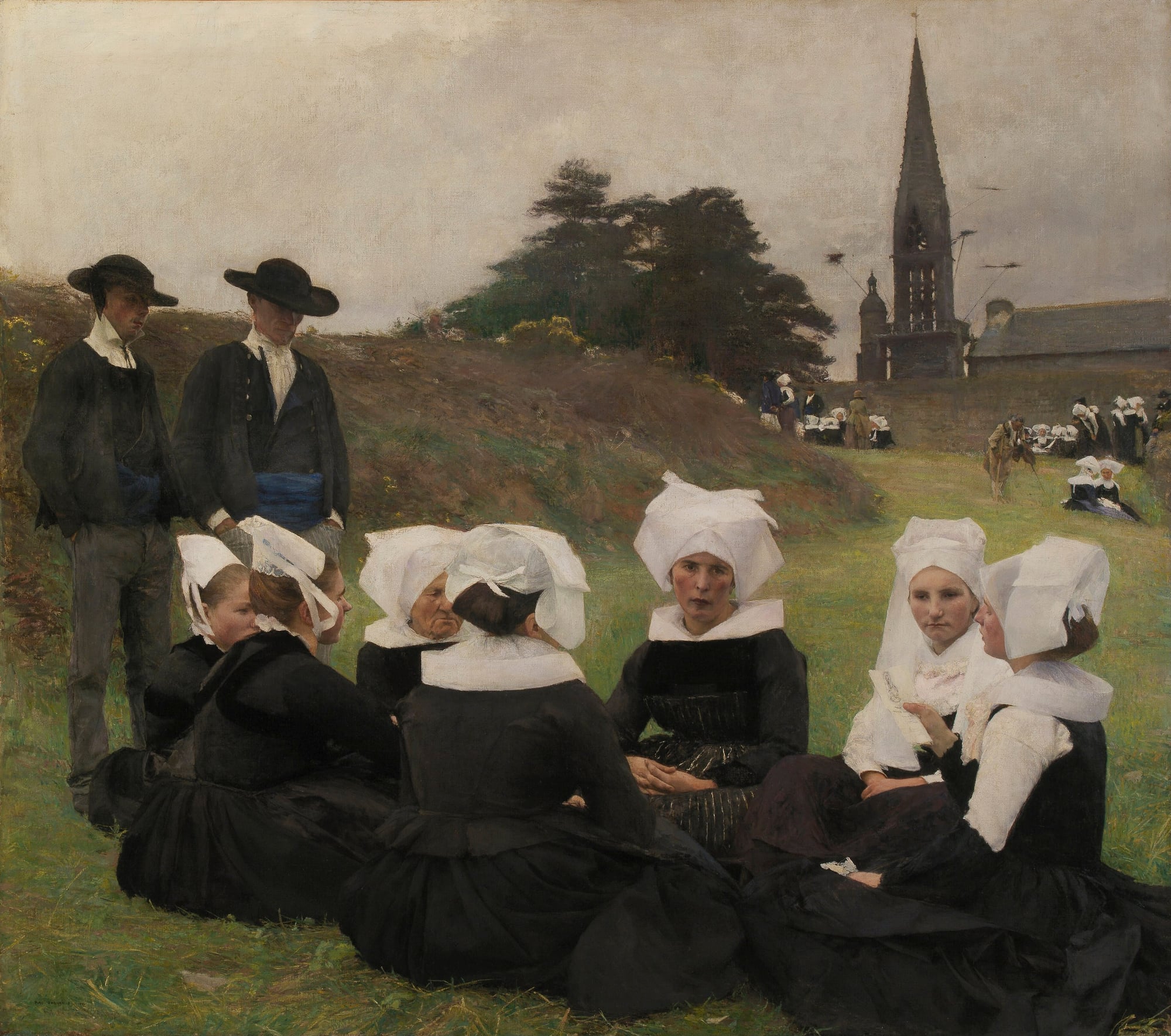
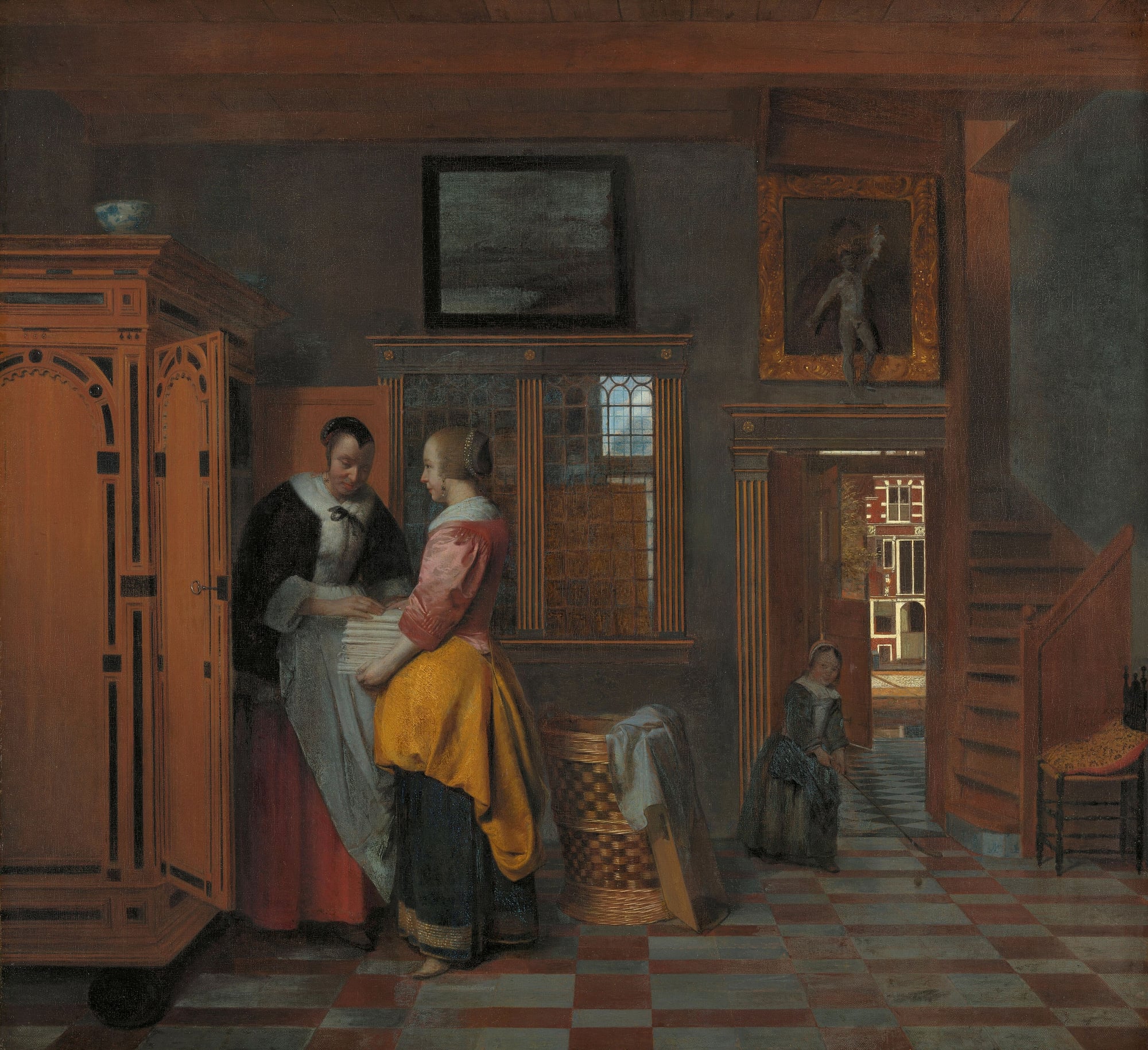
The Simple Eye, The Garment and the Robe, Dress in the Bible and the Church, The Words Kosmios and Haplous
Where Readers Disagree
Six readings answer three questions, each with its holders, the work that argues it and the objection raised against it.
Whether the dress texts forbid gold and costly clothes
Read the study of The Hidden Person of the Heart 8 sections, 9 verses set out
| Reading | Held by | Work | Objection |
|---|---|---|---|
| They forbid them outright | John Wesley; Cyprian (Methodist commentary; the North African fathers) | John Wesley, Explanatory Notes upon the New Testament (1755), on 1 Peter 3:3; Cyprian, On the Dress of Virgins 13 (Ante-Nicene Fathers, volume 5) | Albert Barnes held that the desire to appear well before others, “when properly regulated is not wrong” (Notes on 1 Peter 3:3). |
| They rank the body's adorning below the heart's | Augustine of Hippo; Jamieson, Fausset and Brown (The Latin fathers; Scottish Presbyterian commentary) | Augustine, Letter 245 (Nicene and Post-Nicene Fathers, first series, volume 1); Jamieson, Fausset and Brown, Commentary Critical and Explanatory (1871), on 1 Peter 3:4 | Wesley read 1 Peter 3:3 as a plain prohibition: “Three things are here expressly forbidden.” |
What simplicity asks of possessions
Read the study of Do Not Worry
| Reading | Held by | Work | Objection |
|---|---|---|---|
| To give them up for Christ | Antony, as Athanasius tells his life (Early Egyptian monasticism) | Athanasius, Life of Antony 2 (Nicene and Post-Nicene Fathers, second series, volume 4) | Paul tells Timothy to charge the rich “not to put their hope in the uncertainty of wealth, but in God” (1 Timothy 6:17), which leaves their goods in their hands. |
| To hold them as an instrument for good | Clement of Alexandria (The Alexandrian fathers) | Clement of Alexandria, Who Is the Rich Man That Shall Be Saved? 14 (Ante-Nicene Fathers, volume 2) | Jesus said, “any one of you who does not give up everything he has cannot be My disciple” (Luke 14:33). |
What the single eye of Matthew 6:22 means
Read the study of The Simple Eye 8 sections, 6 verses set out
| Reading | Held by | Work | Objection |
|---|---|---|---|
| Singleness of purpose toward God | Jamieson, Fausset and Brown; Albert Barnes (Scottish and American Presbyterian commentary) | Jamieson, Fausset and Brown, Commentary Critical and Explanatory (1871), on Matthew 6:22; Albert Barnes, Notes on Matthew 6:22 | The saying stands between two teachings on money, which suggests the eye concerns what a person does with goods. |
| Love without pretence | Gregory Thaumaturgus (The Greek fathers) | Gregory Thaumaturgus, On Matthew 6:22 to 23 (Ante-Nicene Fathers, volume 6) | Jamieson, Fausset and Brown read the word as “singleness of purpose, looking right at its object.” |
Sources
Scripture is the Berean Standard Bible.
- STEP Bible, Translators Brief lexicon of Extended Strongs for Hebrew and for Greek (Tyndale House, Cambridge), CC BY 4.0, with the Greek brief lexicon based on Abbott-Smith (1922)
- STEP Bible, Translators Amalgamated Hebrew Old Testament and Greek New Testament, the tagged texts (Tyndale House, Cambridge), CC BY 4.0.
- Cyprian, On the Dress of Virgins, chapters 3 and 13, translated by Robert Ernest Wallis, Ante-Nicene Fathers, volume 5 (1886)
- Athanasius, Life of Antony, chapter 2, translated by H. Ellershaw, volume 4 of the second series of Nicene and Post-Nicene Fathers (1892)
- Augustine of Hippo, Letter 245, to Possidius, translated by J. G. Cunningham, Nicene and Post-Nicene Fathers, first series, volume 1 (1887)
- Basil of Caesarea, Letter 2, to Gregory, section 6, translated by Blomfield Jackson, Nicene and Post-Nicene Fathers (1895), second series, volume 8.
- Thomas Aquinas, Summa Theologiae II-II, question 160, article 2, and question 169, article 1, English Dominican translation, second edition (1920)
- Clement of Alexandria, Who Is the Rich Man That Shall Be Saved?, chapter 14, and The Instructor, book 2, chapter 11, translated by William Wilson, Ante-Nicene Fathers, volume 2 (1885)
- Ambrose of Milan, On the Duties of the Clergy, book 1, chapter 18, section 70, translated by H. de Romestin, E. de Romestin and H. T. F. Duckworth, Nicene and Post-Nicene Fathers, second series, volume 10 (1896)
- John Chrysostom, Homilies on the Gospel of Matthew, homily 22, on Matthew 6:29, translated by George Prevost and revised by M. B. Riddle, Nicene and Post-Nicene Fathers (1888), first series, volume 10.
- Matthew Henry, Commentary on the Whole Bible (1710), on Exodus 28:42.
- John Wesley, Explanatory Notes upon the New Testament (1755), on 1 Peter 3:3 to 4.
- Robert Jamieson, A. R. Fausset and David Brown, Commentary Critical and Explanatory on the Whole Bible (1871), on 1 Peter 3:4 and Matthew 6:22.
- Albert Barnes, Notes, Explanatory and Practical, on Matthew 6:22 and 1 Peter 3:3.
- Gregory Thaumaturgus, On Matthew 6:22 to 23, translated by S. D. F. Salmond, Ante-Nicene Fathers, volume 6 (1886)
Keep Studying
In this value5
People and groups24
Show the next 6 titles
Doctrines1