
Ruth 2:3
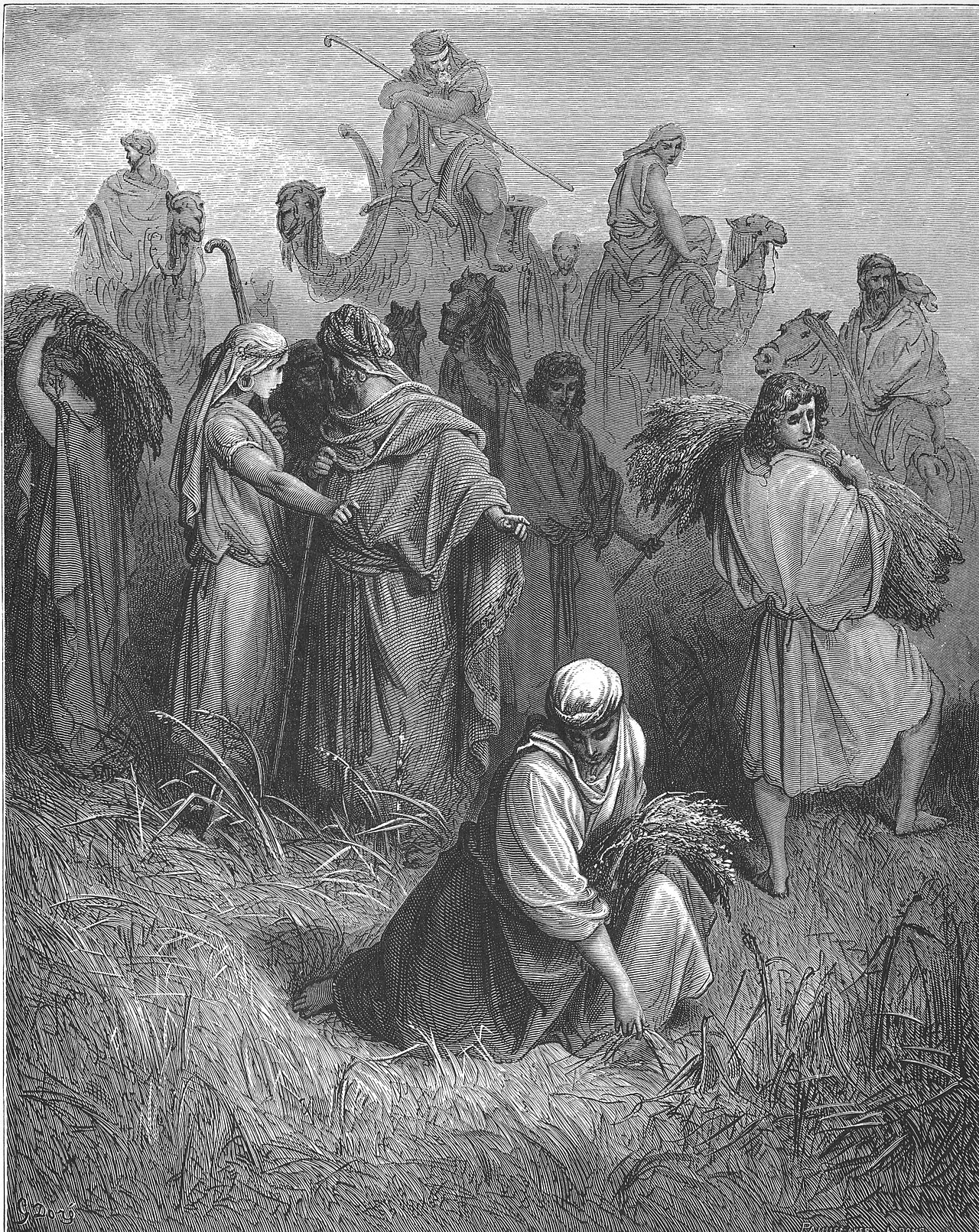
in Ruth 2So Ruth departed and went out into the field and gleaned after the harvesters. And she happened to come to the part of the field belonging to Boaz, who was from the clan of Elimelech.
BSB
The same verse in ASV and KJV ▾
ASV
And she went, and came and gleaned in the field after the reapers: and her hap was to light on the portion of the field belonging unto Boaz, who was of the family of Elimelech.
KJV
And she went, and came, and gleaned in the field after the reapers: and her hap was to light on a part of the field belonging unto Boaz, who was of the kindred of Elimelech.
⋯
This verse in Ruth 2
Commentary
6 notes on this verseShe knew not whose field it was, nor had she any reason for going to that more than any other, and therefore it is said to be her hap; but Providence directed her steps to this field. Note, God wisely orders small events; and those that seem altogether contingent serve his own glory and the good of his people.
This site's exposition
So Ruth departed and went out into the field
on Ruth 2:3-4
The narrator's phrase, "she happened to come to the part of the field belonging to Boaz", is the flattest Hebrew way of saying chance. Matthew Henry and later writers read it as understatement, since verse 1 has named the field's owner. Boaz greets his harvesters with "The LORD be with you" and they answer "The LORD bless you", an exchange between master and workers found nowhere else in Scripture.
The record, by era
The Puritans and the Awakening2 voices
Her hap - It was a chance in reference to second causes, but ordered by God's providence. God wisely orders small events, even those that seem altogether contingent. Many a great affair is brought about by a little turn, fortuitous as to men, but designed by God.
And she went, and came,....
The Nineteenth Century2 voices
A commentator
Jamieson, Fausset & Brown1802–1910
Commentary Critical and Explanatory on the Whole Bible (1871)
proposed
her hap was to light on a part of the field belonging unto Boaz--Fields in Palestine being unenclosed, the phrase signifies that portion of the open ground which lay within the landmarks of Boaz.
quarantine:debris (2026-07-29) — starts-lowercase
And her hap was - So she was accidentally or providentially led to that part of the cultivated country which belonged to Boaz.
The words behind it
14 Hebrew wordsEvery Hebrew word of this verse in the order it stands, with what it means and the door to its own study. The last column counts the times a word stands in the whole Bible: the rarer the word, the more the places it appears belong together.
| Hebrew | Sound | Meaning | Word study | In the Bible |
|---|---|---|---|---|
| וַתֵּ֤לֶךְ | vatelekh | and she went | H1980 → | 1546 times |
| וַתָּבוֹא֙ | vatavo' | and she came | H935 → | 2568 times |
| וַתְּלַקֵּ֣ט | vatelaket | and she gleaned | H3950 → | 37 times |
| בַּשָּׂדֶ֔ה | basadeh | in the field | H7704 → | 334 times |
| אַחֲרֵ֖י | ʾacharei | behind | H310 → | 715 times |
| הַקֹּצְרִ֑ים | hakotzerim | the harvesters | H7114 → | 49 times |
| וַיִּ֣קֶר | vaiyiker | and it chanced on | H7136 → | |
| מִקְרֶ֔הָ | mikreha | chance her | H4745 → | |
| חֶלְקַ֤ת | chelkat | [the] portion of | H2513 → | |
| הַשָּׂדֶה֙ | hasadeh | the field | H7704 → | 334 times |
| לְבֹ֔עַז | levoaz | of Boaz | H1162 → | 24 times |
| אֲשֶׁ֖ר | ʾasher | who | H834 → | 5497 times |
| מִמִּשְׁפַּ֥חַת | mimishpachat | [was] from [the] clan of | H4940 → | |
| אֱלִימֶֽלֶךְ׃ | ʾelimelekh | Elimelech | H458 → | 6 times |
וַתֵּ֤לֶךְand she went
vatelekhH1980 →1546 times
וַתָּבוֹא֙and she came
vatavo'H935 →2568 times
וַתְּלַקֵּ֣טand she gleaned
vatelaketH3950 →37 times
בַּשָּׂדֶ֔הin the field
basadehH7704 →334 times
אַחֲרֵ֖יbehind
ʾachareiH310 →715 times
הַקֹּצְרִ֑יםthe harvesters
hakotzerimH7114 →49 times
וַיִּ֣קֶרand it chanced on
vaiyikerH7136 →
מִקְרֶ֔הָchance her
mikrehaH4745 →
חֶלְקַ֤ת[the] portion of
chelkatH2513 →
הַשָּׂדֶה֙the field
hasadehH7704 →334 times
לְבֹ֔עַזof Boaz
levoazH1162 →24 times
אֲשֶׁ֖רwho
ʾasherH834 →5497 times
מִמִּשְׁפַּ֥חַת[was] from [the] clan of
mimishpachatH4940 →
אֱלִימֶֽלֶךְ׃Elimelech
ʾelimelekhH458 →6 times
A shaded row is a word that stands 400 times or fewer in the Bible.
The walk
8 stopsEach card is a verse this one points to, and under it the verses that one points to in turn. Where several paths arrive at the same place, that place is listed first: the text keeps returning to it.
Through
Matthew 10:29Are not two sparrows sold for a penny? Yet not one of them will fall to the ground apart from the will of your Father.
it leads to
- Luke 12:6–7
Are not five sparrows sold for two pennies? Yet not one of them is forgotten by God.
- Psalms 104:27–30
All creatures look to You to give them their food in due season.
- Luke 12:6–7
Through
2 Thessalonians 3:12We command and urge such people by our Lord Jesus Christ to begin working quietly to earn their own living.
it leads to
- Ephesians 4:28
He who has been stealing must steal no longer, but must work, doing good with his own hands, that he may have something to share with the one in need.
- 1 Thessalonians 4:11
and to aspire to live quietly, to attend to your own matters, and to work with your own hands, as we instructed you.
- 2 Thessalonians 3:8
nor did we eat anyone’s food without paying for it. Instead, in labor and toil, we worked night and day so that we would not be a burden to any of you.
- Luke 11:3
Give us each day our daily bread.
- Proverbs 17:1
Better a dry morsel in quietness than a house full of feasting with strife.
- Ephesians 4:28
Through
2 Kings 8:5And Gehazi was telling the king how Elisha had brought the dead back to life. Just then the woman whose son Elisha had revived came to appeal to the king for her house and…
it leads to
- 2 Kings 4:35
Elisha turned away and paced back and forth across the room. Then he got on the bed and stretched himself out over the boy again, and the boy sneezed seven times and opened his…
- 2 Kings 4:35
Where this verse is studied
On this page
About Ruth
Who and where
2 names in this verse with a page on the site.
This page draws on Adam Clarke, Commentary on the Bible; Jamieson, Fausset & Brown, Commentary Critical and Explanatory on the Whole Bible; John Gill, Exposition of the Old Testament (1748-1763); John Wesley, Explanatory Notes upon the Old Testament; Keil and Delitzsch, Biblical Commentary on the Old Testament: Joshua, Judges, Ruth and Matthew Henry, Commentary on the Whole Bible.