
Ruth 1:5
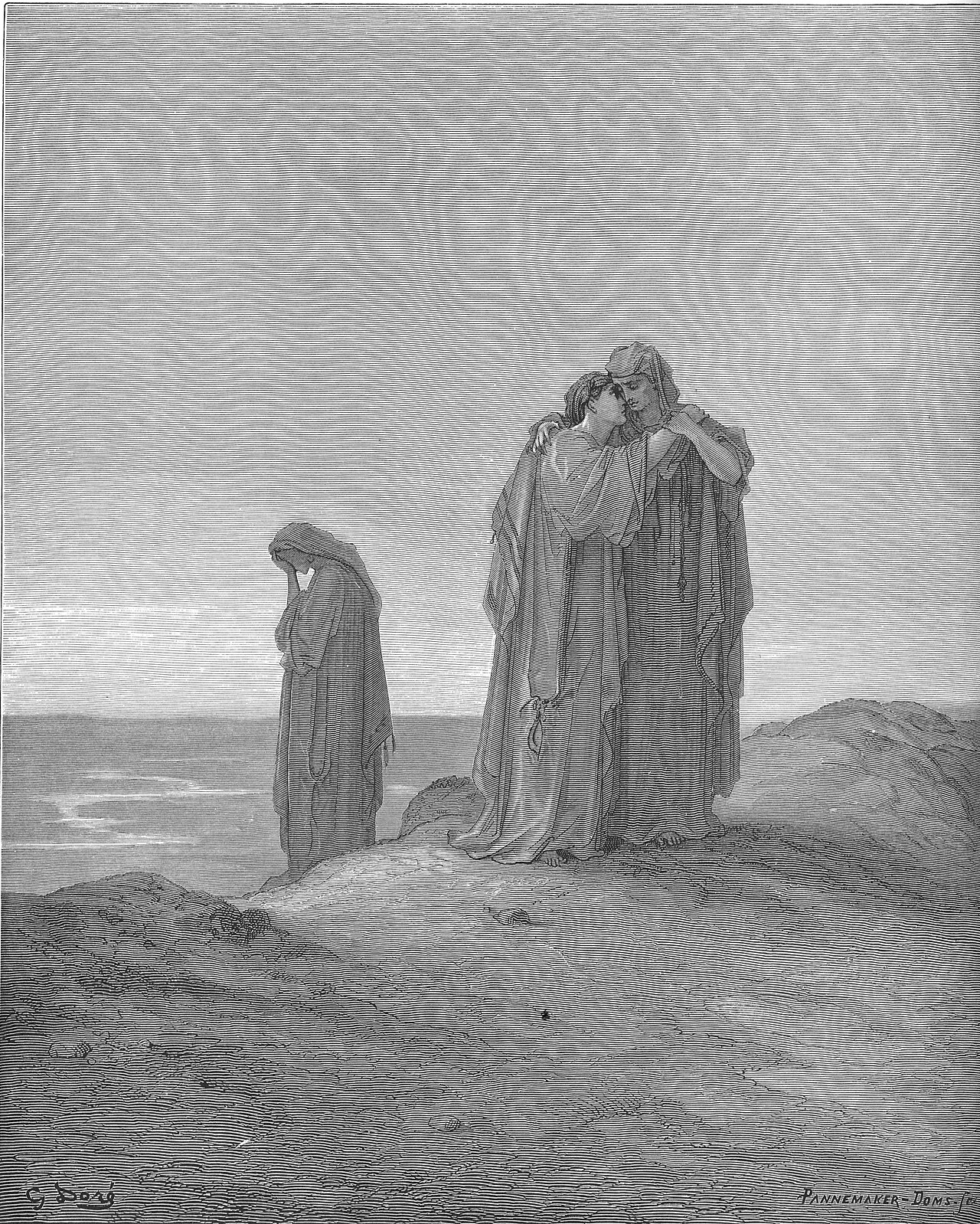
in Ruth 1both Mahlon and Chilion also died, and Naomi was left without her two sons and without her husband.
BSB
The same verse in ASV and KJV ▾
ASV
And Mahlon and Chilion died both of them; and the woman was left of her two children and of her husband.
KJV
And Mahlon and Chilion died also both of them; and the woman was left of her two sons and her husband.
⋯
This verse in Ruth 1
Commentary
6 notes on this verseAnd Mahlon and Chilion died also both of them,.... As well as their father, in the land of Moab, after they had lived with their wives in it about ten years; the Targum is,"because they transgressed the decree of the Word of the Lord, and joined in affinity with strange people, their days were cut off;''or shortened: and the woman was left of her two sons and her husband; deprived both of her husband and her sons, which was a great affliction, aggravated by her being in a strange country; many are the afflictions of the righteous.
This site's exposition
Elimelech Naomi's husband died
on Ruth 1:3-5
Three men die in three verses and the text gives no cause for any of them. The sons marry Moabite women, which the law discouraged and did not forbid outright in the way Deuteronomy 7:3 forbids the seven nations. Verse 5 leaves the sentence standing on the woman rather than the men, the woman was left of her two sons and her husband, which is the position the rest of the book answers.
The record, by era
The Church Fathers1 voice
You call to mind Blaesilla's companionship, her conversation and her endearing ways; and you cannot endure the thought that you have lost them all. I pardon you the tears of a mother, but I ask you to restrain your grief. When I think of the parent, I cannot blame you for weeping, but when I think of the Christian and the recluse, the mother disappears from my view. Your wound is still fresh, and any touch of mine, however gentle, is more likely to inflame than to heal it.
The Puritans and the Awakening2 voices
Was left of her two sons, and her husband - Loss of children and widowhood are both come upon her. By whom shall she be comforted? It is God alone that is able to comfort those who are thus cast down.
He that will save his life by any indirect course shall lose it. That death, when it comes into a family, often makes breach upon breach. One is taken away to prepare another to follow soon after; one is taken away, and that affliction is not duly improved, and therefore God sends another of the same kind.
The Nineteenth Century1 voice
And Mahlon and Chilion died - The Targum adds, And because they transgressed the decree of the word of the Lord, and joined affinity with strange people, therefore their days were cut off. It is very likely that there is more here than conjecture.
The words behind it
10 Hebrew wordsEvery Hebrew word of this verse in the order it stands, with what it means and the door to its own study. The last column counts the times a word stands in the whole Bible: the rarer the word, the more the places it appears belong together.
| Hebrew | Sound | Meaning | Word study | In the Bible |
|---|---|---|---|---|
| וַיָּמ֥וּתוּ | vaiyamutu | and they died | H4191 → | 839 times |
| גַם־ | gam- | also | H1571 → | 769 times |
| שְׁנֵיהֶ֖ם | sheneihem | both of them | H8147 → | 768 times |
| מַחְל֣וֹן | machlon | Mahlon | H4248 → | 4 times |
| וְכִלְי֑וֹן | vekhilyon | and Kilion | H3630 → | 3 times |
| וַתִּשָּׁאֵר֙ | vatishaer | and she was left | H7604 → | |
| הָֽאִשָּׁ֔ה | haishah | the woman | H802 → | 781 times |
| מִשְּׁנֵ֥י | mishenei | from both | H8147 → | 768 times |
| יְלָדֶ֖יהָ | yeladeiha | children her | H3206 → | |
| וּמֵאִישָֽׁהּ׃ | umeishah | and from husband her | H376 → | 1663 times |
וַיָּמ֥וּתוּand they died
vaiyamutuH4191 →839 times
גַם־also
gam-H1571 →769 times
שְׁנֵיהֶ֖םboth of them
sheneihemH8147 →768 times
מַחְל֣וֹןMahlon
machlonH4248 →4 times
וְכִלְי֑וֹןand Kilion
vekhilyonH3630 →3 times
וַתִּשָּׁאֵר֙and she was left
vatishaerH7604 →
הָֽאִשָּׁ֔הthe woman
haishahH802 →781 times
מִשְּׁנֵ֥יfrom both
misheneiH8147 →768 times
יְלָדֶ֖יהָchildren her
yeladeihaH3206 →
וּמֵאִישָֽׁהּ׃and from husband her
umeishahH376 →1663 times
A shaded row is a word that stands 400 times or fewer in the Bible.
The walk
8 stopsEach card is a verse this one points to, and under it the verses that one points to in turn. Where several paths arrive at the same place, that place is listed first: the text keeps returning to it.
Through
Deuteronomy 32:39See now that I am He; there is no God besides Me. I bring death and I give life; I wound and I heal, and there is no one who can deliver from My…
it leads to
- 1 Samuel 2:6
The LORD brings death and gives life; He brings down to Sheol and raises up.
- Hosea 6:1
Come, let us return to the LORD. For He has torn us to pieces, but He will heal us; He has wounded us, but He will bind up our wounds.
- Job 5:18
For He wounds, but He also binds; He strikes, but His hands also heal.
- Isaiah 45:5
I am the LORD, and there is no other; there is no God but Me. I will equip you for battle, though you have not known Me,
- Isaiah 45:22
Turn to Me and be saved, all the ends of the earth; for I am God, and there is no other.
- 1 Samuel 2:6
Through
Jeremiah 2:19Your own evil will discipline you; your own apostasies will reprimand you. Consider and realize how evil and bitter it is for you to forsake the LORD your God and to have no fear…
it leads to
- Isaiah 3:9
The expression on their faces testifies against them, and like Sodom they flaunt their sin; they do not conceal it. Woe to them, for they have brought disaster upon themselves.
- Jeremiah 2:17
Have you not brought this on yourself by forsaking the LORD your God when He led you in the way?
- Psalms 36:1
An oracle is in my heart regarding the transgression of the wicked man: There is no fear of God before his eyes.
- Isaiah 3:9
Where this verse is studied
On this page
Studies3
On this verse
On this chapter
About Ruth
Who and where
1 name in this verse with a page on the site.
This page draws on Adam Clarke, Commentary on the Bible; Jerome, LETTER 39.5; John Gill, Exposition of the Old Testament (1748-1763); John Gill, Exposition of the Old Testament; John Wesley, Explanatory Notes upon the Old Testament; Keil and Delitzsch, Biblical Commentary on the Old Testament: Joshua, Judges, Ruth and Matthew Henry, Commentary on the Whole Bible.