
Ruth 1:4
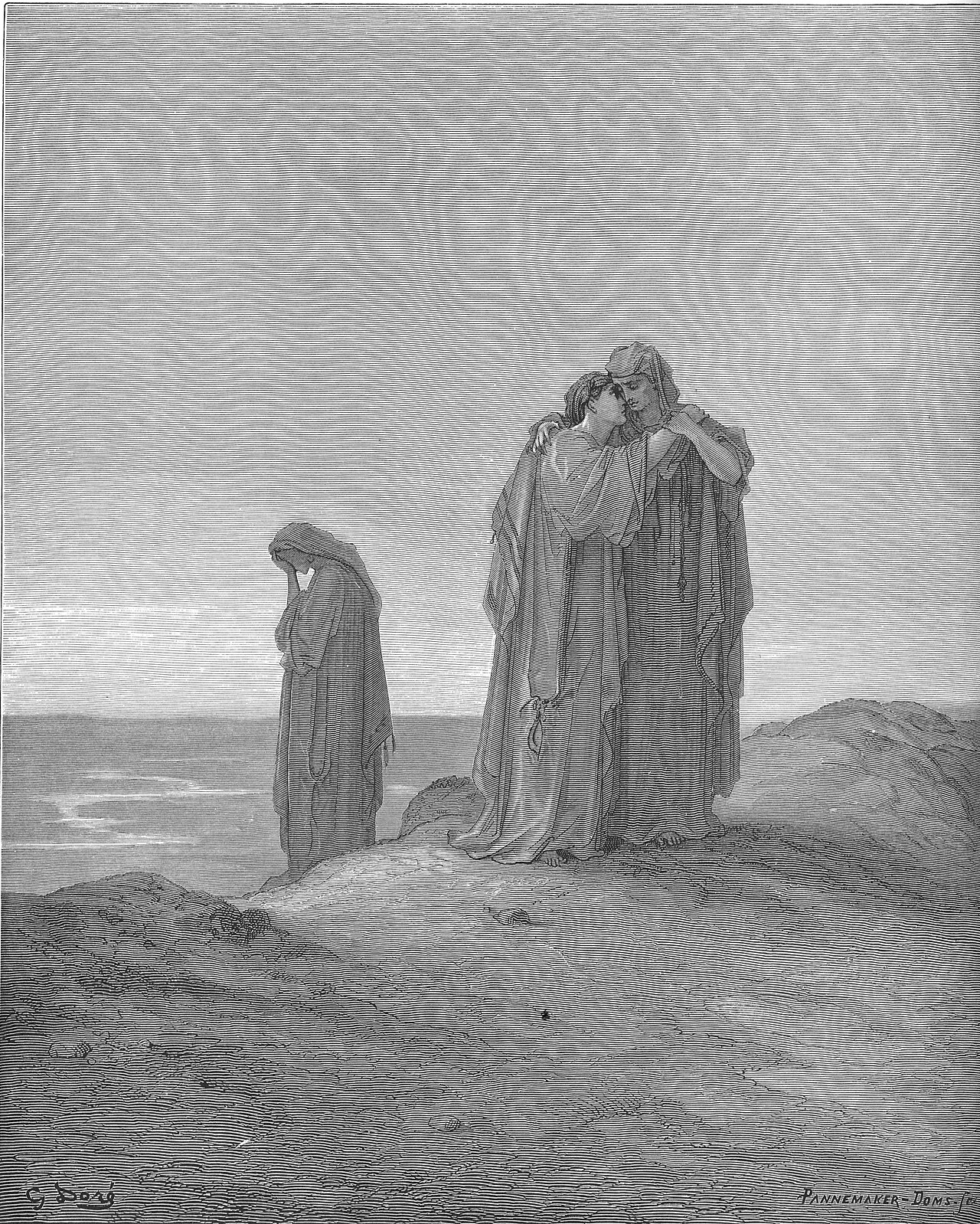
in Ruth 1who took Moabite women as their wives, one named Orpah and the other named Ruth. And after they had lived in Moab about ten years,
BSB
The same verse in ASV and KJV ▾
ASV
And they took them wives of the women of Moab; the name of the one was Orpah, and the name of the other Ruth: and they dwelt there about ten years.
KJV
And they took them wives of the women of Moab; the name of the one was Orpah, and the name of the other Ruth: and they dwelled there about ten years.
⋯
This verse in Ruth 1
Commentary
8 notes on this verseAll agree that this was ill done. The Chaldee says, They transgressed the decree of the word of the Lord in taking strange wives. If they would not stay unmarried till their return to the land of Israel, they were not so far off but that they might have fetched themselves wives thence.
This site's exposition
Elimelech Naomi's husband died
on Ruth 1:3-5
Three men die in three verses and the text gives no cause for any of them. The sons marry Moabite women, which the law discouraged and did not forbid outright in the way Deuteronomy 7:3 forbids the seven nations. Verse 5 leaves the sentence standing on the woman rather than the men, the woman was left of her two sons and her husband, which is the position the rest of the book answers.
The record, by era
The Church Fathers2 voices
Therefore, if we acknowledge that Thamar is described in the genealogies on account of a mystery in the Lord's generations, we must also certainly not consider Ruth to be overlooked for the same reason: about whom the holy Apostle seems to have had an understanding, when he foresaw through the Spirit that the calling of the Gentiles was to be celebrated by the Gospel, saying that the Law is not made for the just, but for the unjust (1 Timothy 1:9). For how did Ruth, being a foreigner, marry a Jew? And by what reasoning did the evangelist think that the mention of a union should be made in the birth of Christ, which was forbidden by the series of laws? Therefore, did the Savior not originate from a legitimate generation (Deut. XXIII, 3)? It seems to be contrary unless we adhere to the apostolic belief, for the law was not established for the righteous, but for the unrighteous. And since she is a foreigner and a Moabite (especially since the law of Moses prohibited these marriages, and the Moabites were excluded from the Church; for it is written: Moabites shall not enter the Church of the Lord even to the third and fourth generation, and forever), how then did she enter into the Church if not because she was holy and blameless in her conduct, above the law? For if the Law was given to the impious and sinners, certainly Ruth, who surpassed the definition of the Law, and entered into the Church, and became an Israelite, and deserved to be counted among the greater ones of the Lord's family, because of the choice of her mind and not her body, is a great example for us, because in her the figure of our entrance into the Church of the Lord, who are gathered from the nations, preceded. […]
You call to mind Blaesilla's companionship, her conversation and her endearing ways; and you cannot endure the thought that you have lost them all. I pardon you the tears of a mother, but I ask you to restrain your grief. When I think of the parent, I cannot blame you for weeping, but when I think of the Christian and the recluse, the mother disappears from my view. Your wound is still fresh, and any touch of mine, however gentle, is more likely to inflame than to heal it.
The Puritans and the Awakening2 voices
Took wives - Either these were Proselytes when they married them, or they sinned in marrying them, and therefore were punished with short life, and want of issue.
And they took them wives of the women of Moab,....
The Nineteenth Century1 voice
And they took them wives - The Targum very properly observes, that they transgressed the decree of the word of the Lord, and took to themselves strange women.
1 more voice on this verse
The Nineteenth Century1 voice
A commentator
Albert Barnes1798–1870
Notes, Explanatory and Practical, on the Old and New Testaments (1832-1869)
proposed
Marriages of Israelites with women of Ammon or Moab are nowhere in the Law expressly forbidden, as were marriages with the women of Canaan Deu 7:1-3. In the days of Nehemiah the special law Deu 23:3-6 was interpreted as forbidding them, and as excluding the children of such marriages from the congregation of Israel Neh 13:1-3. Probably the marriages of Mahlon and Chilion would be justified by necessity, living as they were in a foreign land. Ruth was the wife of the older brother, Mahlon Rth 4:10.
The words behind it
14 Hebrew wordsEvery Hebrew word of this verse in the order it stands, with what it means and the door to its own study. The last column counts the times a word stands in the whole Bible: the rarer the word, the more the places it appears belong together.
| Hebrew | Sound | Meaning | Word study | In the Bible |
|---|---|---|---|---|
| וַיִּשְׂא֣וּ | vaiyisu | and they took | H5375 → | 656 times |
| לָהֶ֗ם | lahem | for <the> themselves | ||
| נָשִׁים֙ | nashim | wives | H802 → | 781 times |
| מֹֽאֲבִיּ֔וֹת | moaviyot | Moabite | H4125 → | 16 times |
| שֵׁ֤ם | shem | [the] name of | H8034 → | 864 times |
| הָֽאַחַת֙ | haachat | the one | H259 → | |
| עָרְפָּ֔ה | ʾarepah | [was] Orpah | H6204 → | |
| וְשֵׁ֥ם | veshem | and [the] name of | H8034 → | 864 times |
| הַשֵּׁנִ֖ית | hashenit | the second | H8145 → | |
| ר֑וּת | rut | [was] Ruth | H7327 → | 12 times |
| וַיֵּ֥שְׁבוּ | vaiyeshevu | and they dwelt | H3427 → | 1079 times |
| שָׁ֖ם | sham | there | H8033 → | 834 times |
| כְּעֶ֥שֶׂר | keeser | about ten | H6235 → | |
| שָׁנִֽים׃ | shanim | years | H8141 → |
וַיִּשְׂא֣וּand they took
vaiyisuH5375 →656 times
לָהֶ֗םfor <the> themselves
lahem
נָשִׁים֙wives
nashimH802 →781 times
מֹֽאֲבִיּ֔וֹתMoabite
moaviyotH4125 →16 times
שֵׁ֤ם[the] name of
shemH8034 →864 times
הָֽאַחַת֙the one
haachatH259 →
עָרְפָּ֔ה[was] Orpah
ʾarepahH6204 →
וְשֵׁ֥םand [the] name of
veshemH8034 →864 times
הַשֵּׁנִ֖יתthe second
hashenitH8145 →
ר֑וּת[was] Ruth
rutH7327 →12 times
וַיֵּ֥שְׁבוּand they dwelt
vaiyeshevuH3427 →1079 times
שָׁ֖םthere
shamH8033 →834 times
כְּעֶ֥שֶׂרabout ten
keeserH6235 →
שָׁנִֽים׃years
shanimH8141 →
A shaded row is a word that stands 400 times or fewer in the Bible.
The walk
8 stopsEach card is a verse this one points to, and under it the verses that one points to in turn. Where several paths arrive at the same place, that place is listed first: the text keeps returning to it.
Through
Deuteronomy 7:3Do not intermarry with them. Do not give your daughters to their sons or take their daughters for your sons,
it leads to
- 1 Kings 11:2
These women were from the nations about which the LORD had told the Israelites, “You must not intermarry with them, for surely they will turn your hearts after their gods.” Yet Solomon clung to…
- Joshua 23:12–13
For if you turn away and cling to the rest of these nations that remain among you, and if you intermarry and associate with them,
- Exodus 34:15–16
Do not make a covenant with the inhabitants of the land, for when they prostitute themselves to their gods and sacrifice to them, they will invite you, and you will eat their sacrifices.
- 2 Corinthians 6:14–17
Do not be unequally yoked with unbelievers. For what partnership can righteousness have with wickedness? Or what fellowship does light have with darkness?
- Judges 3:6–7
And they took the daughters of these people in marriage, gave their own daughters to their sons, and served their gods.
- 1 Kings 11:2
Through
Matthew 1:5Salmon was the father of Boaz by Rahab, Boaz the father of Obed by Ruth, Obed the father of Jesse,
it leads to
- Ruth 1:16–17
But Ruth replied: “Do not urge me to leave you or to turn from following you. For wherever you go, I will go, and wherever you live, I will live; your people will be…
- Hebrews 11:31
By faith the prostitute Rahab, because she welcomed the spies in peace, did not perish with those who were disobedient.
- Ruth 1:16–17
Through
Deuteronomy 23:3No Ammonite or Moabite or any of their descendants may enter the assembly of the LORD, even to the tenth generation.
it leads to
- Nehemiah 13:1–2
At that time the Book of Moses was read aloud in the hearing of the people, and in it they found the passage stating that no Ammonite or Moabite should ever enter the assembly…
- Nehemiah 13:1–2
Where this verse is studied
On this page
Studies3
On this verse
On this chapter
About Ruth
Who and where
2 names in this verse with a page on the site.
This page draws on 9 works. Open the list of works
This page draws on Adam Clarke, Commentary on the Bible; Albert Barnes, Notes, Explanatory and Practical, on the Old and New Testaments (1832-1869); Ambrose of Milan, Commentary on Luke; Jerome, LETTER 39.5; John Gill, Exposition of the Old Testament; John Gill, Exposition of the Old Testament (1748-1763); John Wesley, Explanatory Notes upon the Old Testament; Keil and Delitzsch, Biblical Commentary on the Old Testament: Joshua, Judges, Ruth and Matthew Henry, Commentary on the Whole Bible.