
Numbers 21:7
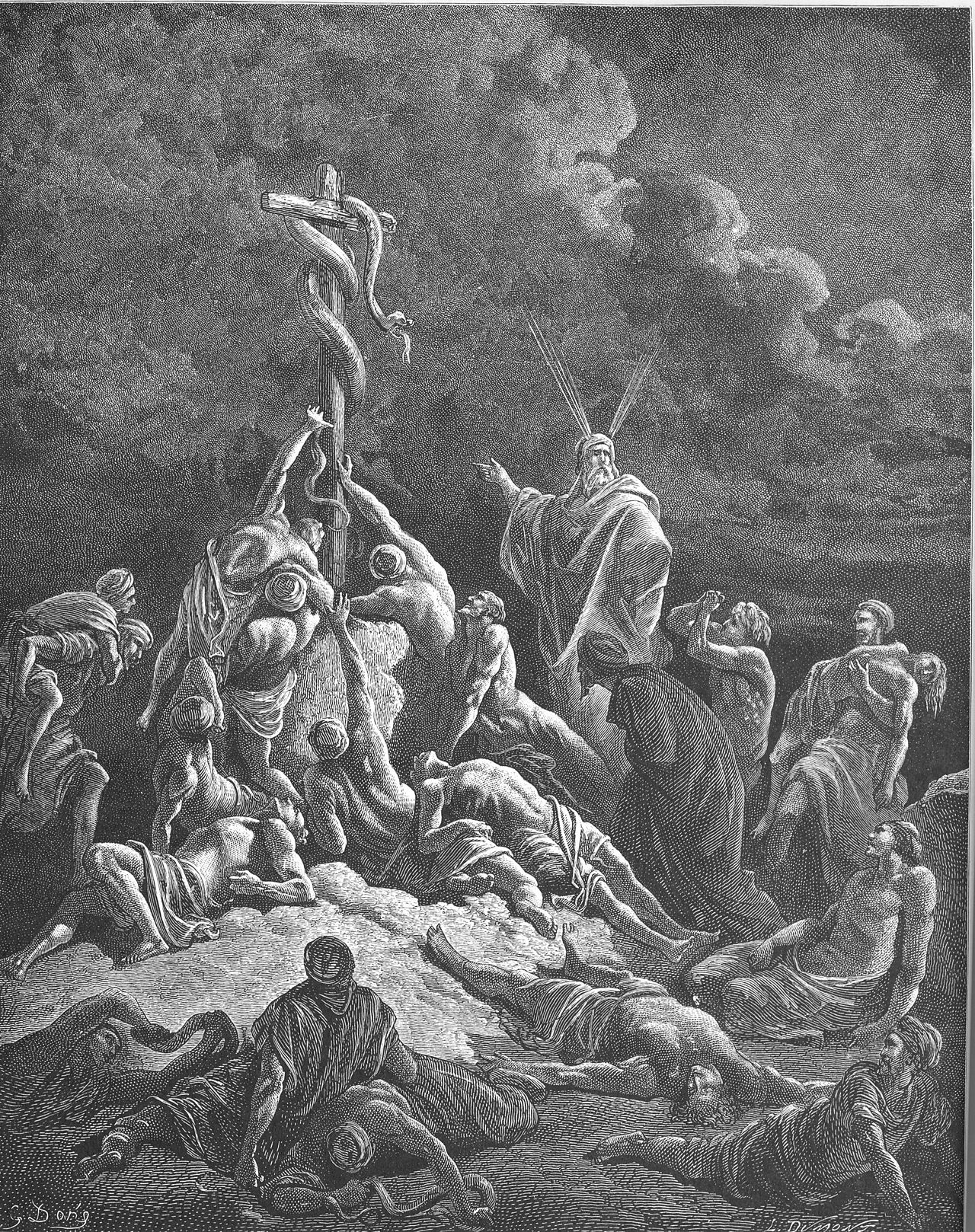
in Numbers 21Then the people came to Moses and said, “We have sinned by speaking against the LORD and against you. Intercede with the LORD so He will take the snakes away from us.” So Moses interceded for the people.
BSB
The same verse in ASV and KJV ▾
ASV
And the people came to Moses, and said, We have sinned, because we have spoken against Jehovah, and against thee; pray unto Jehovah, that he take away the serpents from us. And Moses prayed for the people.
KJV
Therefore the people came to Moses, and said, We have sinned, for we have spoken against the Lord, and against thee; pray unto the Lord, that he take away the serpents from us. And Moses prayed for the people.
⋯
This verse in Numbers 21
Commentary
7 notes on this verseA commentator
Jamieson, Fausset & Brown1802–1910
Commentary Critical and Explanatory on the Whole Bible (1871)
This peculiar method of cure was designed, in the first instance, to show that it was the efficacy of God's power and grace, not the effect of nature or art, and also that it might be a type of the power of faith in Christ to heal all who look to Him because of their sins (Joh 3:14, 15; see also on 2Ki 18:4).
This site's exposition
the Lord sent fiery serpents among the people
on Numbers 21:6-7
The word rendered fiery is saraph, the burning one, the same word behind the seraphim of Isaiah 6:2 and the fiery flying serpent of Isaiah 14:29. The confession repeats verse 5 back exactly, that they had spoken against the Lord and against Moses, so the sin is named in full before the remedy is asked for. Moses prays for people who had just spoken against him, as he did at 11:2 and at 14:13, and 1 Corinthians 10:9 names this episode by name among the things written for the church.
The record, by era
The Puritans and the Awakening3 voices
Therefore the people came to Moses, and said, we have sinned,....
(1.) It was God himself that devised and prescribed this antidote against the fiery serpents; so our salvation by Christ was the contrivance of Infinite Wisdom; God himself has found the ransom. (2.) It was a very unlikely method of cure; so our salvation by the death of Christ is to the Jews a stumbling-block and to the Greeks foolishness.
They confess their fault: We have sinned. They are particular in their confession: We have spoken against the Lord, and against thee. It is to be feared that they would not have owned the sin if they had not felt the smart; but they relent under the rod; when he slew them, then they sought him.
The Nineteenth Century2 voices
I HAVE frequently expounded to you the type of the bronze serpent as our Lord interprets it in the third of John. I thought it meet, tonight, to take that type in its connection and look at the original circumstances which led to the setting of it up—for while the general doctrine of looking for salvation to Christ as the bronze serpent is always to be preached and is most usefully set forth in the midst of the unconverted—yet I take it that its original institution teaches us much which ought not to be overlooked.
I HAVE frequently expounded to you the type of the bronze serpent as our Lord interprets it in the third of John. I thought it meet, tonight, to take that type in its connection and look at the original circumstances which led to the setting of it up—for while the general doctrine of looking for salvation to Christ as the bronze serpent is always to be preached and is most usefully set forth in the midst of the unconverted—yet I take it that its original institution teaches us much which ought not to be overlooked. It is very clear that this type has its first voice to the people of God, for it was among Israel—among the nominal people of God—that this bronze serpent was first needed and first set up. And while the instruction which it gives is wide as the universe, for whoever looks shall live, nevertheless it has an inner circle to which it, first of all, addresses itself—the professed members of the Church of God. The Book of Numbers might be called, without any impropriety, "Moses' Pilgrim's Progress." It contains a full account of the progress of the pilgrims through the wilderness until they came to the promised land. And, like Bunyan's "Pilgrim's Progress," it is not only a history of any one person or nation, but it is the picture of the life of all God's people. Probably no one among us will pass through all the troubles of the Israelites, so as to become in one person an epitome of all wilderness experience, and yet even this may be, for so it was with David, and so it has been with others by whom the Lord would instruct His Church. This, however, is exceptional. But, take the whole of us together as the Church of God, and you will find that our lives are mirrored, pictured and foreseen in the travels of God's chosen people from the land of Egypt to Canaan. I am afraid that many of us can see ourselves even in the passage before us.
The words behind it
21 Hebrew wordsEvery Hebrew word of this verse in the order it stands, with what it means and the door to its own study. The last column counts the times a word stands in the whole Bible: the rarer the word, the more the places it appears belong together.
| Hebrew | Sound | Meaning | Word study | In the Bible |
|---|---|---|---|---|
| וַיָּבֹא֩ | vaiyavo' | and it came | H935 → | 2568 times |
| הָעָ֨ם | haam | the people | H5971 → | 1873 times |
| אֶל־ | ʾel- | to | H413 → | 5510 times |
| מֹשֶׁ֜ה | mosheh | Moses | H4872 → | 765 times |
| וַיֹּאמְר֣וּ | vaiyomeru | and they said | H559 → | 5305 times |
| חָטָ֗אנוּ | chatanu | we have sinned | H2398 → | 238 times |
| כִּֽי־ | ki- | for | H3588 → | 4482 times |
| דִבַּ֤רְנוּ | dibarnu | we have spoken | H1696 → | 1141 times |
| בַֽיהוָה֙ | bayahweh | against Yahweh | H3068 → | 6520 times |
| וָבָ֔ךְ | vavakh | and against <the> you | ||
| הִתְפַּלֵּל֙ | hitpalel | pray | H6419 → | 84 times |
| אֶל־ | ʾel- | to | H413 → | 5510 times |
| יְהוָ֔ה | yahweh | Yahweh | H3068 → | 6520 times |
| וְיָסֵ֥ר | veyaser | so may he remove | H5493 → | 299 times |
| מֵעָלֵ֖ינוּ | mealeinu | from on <the> us | H5921 → | 5755 times |
| אֶת־ | ʾet- | <obj.> | H853 → | 10935 times |
| הַנָּחָ֑שׁ | hanachash | the snake[s] | H5175 → | 31 times |
| וַיִּתְפַּלֵּ֥ל | vaiyitpalel | and he prayed | H6419 → | 84 times |
| מֹשֶׁ֖ה | mosheh | Moses | H4872 → | 765 times |
| בְּעַ֥ד | bead | for | H1157 → | |
| הָעָֽם׃ | haam | the people | H5971 → | 1873 times |
וַיָּבֹא֩and it came
vaiyavo'H935 →2568 times
הָעָ֨םthe people
haamH5971 →1873 times
אֶל־to
ʾel-H413 →5510 times
מֹשֶׁ֜הMoses
moshehH4872 →765 times
וַיֹּאמְר֣וּand they said
vaiyomeruH559 →5305 times
חָטָ֗אנוּwe have sinned
chatanuH2398 →238 times
כִּֽי־for
ki-H3588 →4482 times
דִבַּ֤רְנוּwe have spoken
dibarnuH1696 →1141 times
בַֽיהוָה֙against Yahweh
bayahwehH3068 →6520 times
וָבָ֔ךְand against <the> you
vavakh
הִתְפַּלֵּל֙pray
hitpalelH6419 →84 times
אֶל־to
ʾel-H413 →5510 times
יְהוָ֔הYahweh
yahwehH3068 →6520 times
וְיָסֵ֥רso may he remove
veyaserH5493 →299 times
מֵעָלֵ֖ינוּfrom on <the> us
mealeinuH5921 →5755 times
אֶת־<obj.>
ʾet-H853 →10935 times
הַנָּחָ֑שׁthe snake[s]
hanachashH5175 →31 times
וַיִּתְפַּלֵּ֥לand he prayed
vaiyitpalelH6419 →84 times
מֹשֶׁ֖הMoses
moshehH4872 →765 times
בְּעַ֥דfor
beadH1157 →
הָעָֽם׃the people
haamH5971 →1873 times
A shaded row is a word that stands 400 times or fewer in the Bible.
The walk
8 stopsEach card is a verse this one points to, and under it the verses that one points to in turn. Where several paths arrive at the same place, that place is listed first: the text keeps returning to it.
Through
1 Kings 13:6Then the king responded to the man of God, “Intercede with the LORD your God and pray that my hand may be restored.” So the man of God interceded with the LORD, and the…
it leads to
- Exodus 10:17
Now please forgive my sin once more and appeal to the LORD your God, that He may remove this death from me.”
Reached by 3 separate paths from here.
- Exodus 9:28
Pray to the LORD, for there has been enough of God’s thunder and hail. I will let you go; you do not need to stay any longer.”
Reached by 2 separate paths from here.
- Exodus 8:8
Pharaoh summoned Moses and Aaron and said, “Pray to the LORD to take the frogs away from me and my people. Then I will let your people go, that they may sacrifice to the…
Reached by 2 separate paths from here.
- Acts 8:24
Then Simon answered, “Pray to the Lord for me, so that nothing you have said may happen to me.”
- Luke 6:27–28
But to those of you who will listen, I say: Love your enemies, do good to those who hate you,
- Exodus 10:17
Through
Psalms 78:34When He slew them, they would seek Him; they repented and searched for God.
it leads to
- Hosea 5:15
Then I will return to My place until they admit their guilt and seek My face; in their affliction they will earnestly seek Me.”
- Hosea 5:15
Through
Exodus 8:8Pharaoh summoned Moses and Aaron and said, “Pray to the LORD to take the frogs away from me and my people. Then I will let your people go, that they may sacrifice to the…
it leads to
- Exodus 8:25–28
Then Pharaoh summoned Moses and Aaron and said, “Go, sacrifice to your God within this land.”
- Exodus 8:25–28
Through
Numbers 11:2And the people cried out to Moses, and he prayed to the LORD, and the fire died down.
it leads to
- James 5:16
Therefore confess your sins to each other and pray for each other so that you may be healed. The prayer of a righteous man has great power to prevail.
- James 5:16
Where this verse is studied
On this page
Studies3
On this verse
On this chapter
About Numbers
Who and where
1 name in this verse with a page on the site.
This page draws on Adam Clarke, Commentary on the Bible; Charles Spurgeon, The Metropolitan Tabernacle Pulpit, Sermon No. 1722: “The First Setting Up of the Bronze Serpent” (lightly modernized text, CCEL edition); Jamieson, Fausset & Brown, Commentary Critical and Explanatory on the Whole Bible; John Gill, Exposition of the Old Testament; John Gill, Exposition of the Old Testament (1748-1763) and Matthew Henry, Commentary on the Whole Bible.