
Nehemiah 8:1
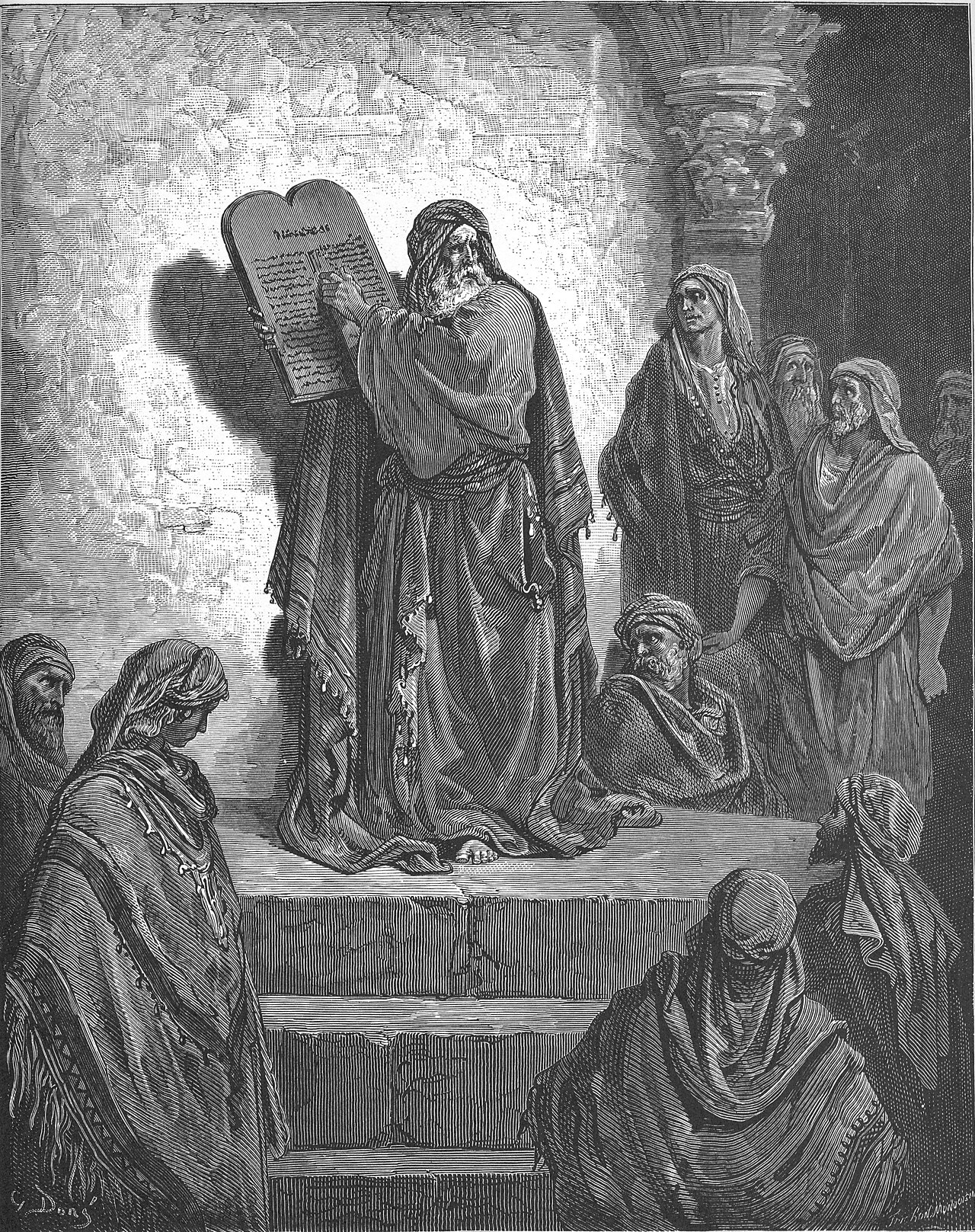
in Nehemiah 8At that time all the people gathered together in the square before the Water Gate, and they asked Ezra the scribe to bring out the Book of the Law of Moses, which the LORD had commanded for Israel.
BSB
The same verse in ASV and KJV ▾
ASV
And all the people gathered themselves together as one man into the broad place that was before the water gate; and they spake unto Ezra the scribe to bring the book of the law of Moses, which Jehovah had commanded to Israel.
KJV
And all the people gathered themselves together as one man into the street that was before the water gate; and they spake unto Ezra the scribe to bring the book of the law of Moses, which the Lord had commanded to Israel.
⋯
This verse in Nehemiah 8
Commentary
2 notes on this verseA commentator
Albert Barnes1798–1870
Notes, Explanatory and Practical, on the Old and New Testaments (1832-1869)
The street - Rather, “the square” or “court.” So in Neh 8:16 (compare Ezr 10:9). The court seems to have been one between the eastern gate of the temple and the watergate in the city-wall. It would thus lie within the modern Haram area. Ezra the scribe - This is the first mention of Ezra in the present book, and the first proof we have had that he was contemporary with Nehemiah.
This site's exposition
to bring the book of the law of Moses
on Nehemiah 8:1-3
The demand comes from below: the people gather as one man and ask Ezra to bring the book, and he reads from morning until midday to men, women and all that could hear with understanding, and the ears of all the people were attentive. The date is the first day of the seventh month, the feast of trumpets of Lev 23:24, so the reading itself is the day's trumpet. The wall was finished six days earlier at 6:15; the first public act inside it is Scripture read aloud.
How the passage was read
On Nehemiah 8:1-18On Nehemiah 8:1-18
The seventh month, rediscovered
Everything in this chapter happens on the calendar of Leviticus 23. Ezra reads the Law on “the first day of the seventh month”: that is the Day of Trumpets, kept today as Rosh Hashanah, the Jewish new year, announced by the ram's-horn trumpet (shofar). Then the people find the command about booths and keep Tabernacles (Sukkot) for the first time “since the days of Joshua”: seven days living in leafy shelters, remembering the wilderness. Jewish families still build these booths every autumn: a hut in the yard or on the balcony, roofed with branches you can see the stars through, where meals are eaten all week.
The chapter also gives the day its enduring tone: “the joy of the LORD is your strength” was said on Rosh Hashanah, to a congregation weeping under the words of the Law and told instead to feast.
This section is reception history: how the passage was read and kept in the Jewish tradition. Where a reading parts from an essential of the Christian faith, the section says so at that point.
Sources: Leviticus 23:23–43 (the seventh month's appointments) · Mishnah Sukkah 1:1 (the booth's rules)
The words behind it
24 Hebrew wordsEvery Hebrew word of this verse in the order it stands, with what it means and the door to its own study. The last column counts the times a word stands in the whole Bible: the rarer the word, the more the places it appears belong together.
| Hebrew | Sound | Meaning | Word study | In the Bible |
|---|---|---|---|---|
| וַיֵּאָסְפ֤וּ | vaiyeasefu | and they gathered | H622 → | 200 times |
| כָל־ | khol- | all | H3605 → | 5413 times |
| הָעָם֙ | haam | the people | H5971 → | 1873 times |
| כְּאִ֣ישׁ | keish | like a person | H376 → | 1663 times |
| אֶחָ֔ד | ʾechad | one | H259 → | 971 times |
| אֶל־ | ʾel- | to | H413 → | 5510 times |
| הָ֣רְח֔וֹב | harechov | the open space | H7339 → | 43 times |
| אֲשֶׁ֖ר | ʾasher | which | H834 → | 5497 times |
| לִפְנֵ֣י | lifnei | [was] <to> before | H6440 → | 2123 times |
| שַֽׁעַר־ | shaar- | [the] gate of | H8179 → | 374 times |
| הַמָּ֑יִם | hamayim | the water | H4325 → | 581 times |
| וַיֹּֽאמְרוּ֙ | vaiyomeru | and they said | H559 → | 5305 times |
| לְעֶזְרָ֣א | leezra' | to Ezra | H5830 → | 22 times |
| הַסֹּפֵ֔ר | hasofer | the scribe | H5608 → | 159 times |
| לְהָבִ֗יא | lehavi' | to bring | H935 → | 2568 times |
| אֶת־ | ʾet- | <obj.> | H853 → | 10935 times |
| סֵ֙פֶר֙ | sefer | [the] scroll of | H5612 → | 186 times |
| תּוֹרַ֣ת | torat | [the] law of | H8451 → | 219 times |
| מֹשֶׁ֔ה | mosheh | Moses | H4872 → | 765 times |
| אֲשֶׁר־ | ʾasher- | which | H834 → | 5497 times |
| צִוָּ֥ה | tzivah | he had commanded | H6680 → | 494 times |
| יְהוָ֖ה | yahweh | Yahweh | H3068 → | 6520 times |
| אֶת־ | ʾet- | <obj.> | H853 → | 10935 times |
| יִשְׂרָאֵֽל׃ | yisrael | Israel | H3478 → | 2507 times |
וַיֵּאָסְפ֤וּand they gathered
vaiyeasefuH622 →200 times
כָל־all
khol-H3605 →5413 times
הָעָם֙the people
haamH5971 →1873 times
כְּאִ֣ישׁlike a person
keishH376 →1663 times
אֶחָ֔דone
ʾechadH259 →971 times
אֶל־to
ʾel-H413 →5510 times
הָ֣רְח֔וֹבthe open space
harechovH7339 →43 times
אֲשֶׁ֖רwhich
ʾasherH834 →5497 times
לִפְנֵ֣י[was] <to> before
lifneiH6440 →2123 times
שַֽׁעַר־[the] gate of
shaar-H8179 →374 times
הַמָּ֑יִםthe water
hamayimH4325 →581 times
וַיֹּֽאמְרוּ֙and they said
vaiyomeruH559 →5305 times
לְעֶזְרָ֣אto Ezra
leezra'H5830 →22 times
הַסֹּפֵ֔רthe scribe
hasoferH5608 →159 times
לְהָבִ֗יאto bring
lehavi'H935 →2568 times
אֶת־<obj.>
ʾet-H853 →10935 times
סֵ֙פֶר֙[the] scroll of
seferH5612 →186 times
תּוֹרַ֣ת[the] law of
toratH8451 →219 times
מֹשֶׁ֔הMoses
moshehH4872 →765 times
אֲשֶׁר־which
ʾasher-H834 →5497 times
צִוָּ֥הhe had commanded
tzivahH6680 →494 times
יְהוָ֖הYahweh
yahwehH3068 →6520 times
אֶת־<obj.>
ʾet-H853 →10935 times
יִשְׂרָאֵֽל׃Israel
yisraelH3478 →2507 times
A shaded row is a word that stands 400 times or fewer in the Bible.
The walk
8 stopsEach card is a verse this one points to, and under it the verses that one points to in turn. Where several paths arrive at the same place, that place is listed first: the text keeps returning to it.
Through
Matthew 13:52Then He told them, “For this reason, every scribe who has been discipled in the kingdom of heaven is like a homeowner who brings out of his storeroom new treasures as well as old.”
it leads to
- 1 John 2:7–8
Beloved, I am not writing to you a new commandment, but an old one, which you have had from the beginning. This commandment is the message you have heard.
- Titus 1:9
He must hold firmly to the faithful word as it was taught, so that he can encourage others by sound teaching and refute those who contradict it.
- 2 Timothy 3:16–17
All Scripture is God-breathed and is useful for instruction, for conviction, for correction, and for training in righteousness,
- 2 Corinthians 3:4–6
Such confidence before God is ours through Christ.
- 1 John 2:7–8
Through
Ezra 7:6this Ezra came up from Babylon. He was a scribe skilled in the Law of Moses, which the LORD, the God of Israel, had given. The king had granted Ezra all his requests, for…
it leads to
- Ezra 8:22
For I was ashamed to ask the king for an escort of soldiers and horsemen to protect us from our enemies on the road, since we had told him, “The hand of our God…
- Ezra 7:28
and who has shown me favor before the king, his counselors, and all his powerful officials. And because the hand of the LORD my God was upon me, I took courage and gathered the…
- Ezra 8:31
On the twelfth day of the first month we set out from the Ahava Canal to go to Jerusalem, and the hand of our God was upon us to protect us from the hands…
- Nehemiah 2:18
I also told them about the gracious hand of my God upon me, and what the king had said to me. “Let us start rebuilding,” they replied, and they set their hands to this…
- Ezra 8:22
Where this verse is studied
On this page
About Nehemiah
Who and where
2 names in this verse with a page on the site.
This page draws on Albert Barnes, Notes, Explanatory and Practical, on the Old and New Testaments (1832-1869); Keil, The Books of Ezra, Nehemiah, and Esther and W. F. Adeney, Ezra, Nehemiah and Esther (Expositor's Bible).